




What career goals mean for students
Many students work hard, stay busy, and still feel unsure about where they are heading. That gap often comes from effort without a clear direction. Career goals turn a vague hope like “I want a good future” into choices you can act on this week, this semester, and over the next few years.
This topic matters for a simple reason: education and work keep shifting. The World Economic Forum’s Future of Jobs Report 2025 projects job disruption equal to 22% of roles by 2030, alongside large numbers of new roles created and roles displaced, with a net increase of 78 million jobs. The ILO reports that 64.9 million young people (ages 15–24) were unemployed worldwide in 2023, with a global youth unemployment rate of 13%.
These numbers do not mean students should chase every trend. They point to one practical idea: students benefit from a plan that builds skills, proof, and flexibility. Career goals support that plan.
When goals are written well, they do not lock you into one identity. They give you a path, plus checkpoints that let you adjust with evidence.
Career goals vs academic goals vs life goals
Career goals focus on work direction: roles, fields, skills, and experiences that shape employability and long-term growth. Academic goals focus on study outcomes: grades, course completion, research work, and learning milestones.
Life goals cover health, relationships, living situation, and responsibilities. Students do best when these three sets of goals do not fight each other.
A simple way to keep them aligned: choose career goals that fit your academic timetable and your life limits. If your life schedule is heavy, your career plan can still move forward through smaller weekly actions.
Outcome goals and process goals
Outcome goals are results: “get an internship,” “enter a graduate program,” “work as a data analyst.” Process goals are actions you control: “finish two portfolio projects,” “practice interview answers,” “write five research summaries.” Process goals often matter more in student life, since they produce proof and habits.
Why time horizons help
Students often set goals in one of two ways: too short (“I will decide my career this month”) or too distant (“I will become successful someday”). A time-horizon approach keeps goals realistic.
Use three time horizons:
-
Short term: 0–12 months
-
Medium term: 1–3 years
-
Long term: 3–10+ years
This structure matches how student life works: semesters, yearly progress, and longer training paths.
What research says about clear goals and feedback
Goal-setting theory highlights that clear, specific goals paired with feedback tend to improve performance on tasks compared with vague intentions. Locke and Latham summarize decades of goal-setting research and explain how goal clarity, commitment, and feedback support better results.
For students, the takeaway is simple: goals work better when you can measure progress and review it often.
Why flexibility matters in education and work
Changing direction is common in early college years. NCES reports on first-time college students changing majors within the first three years, showing that shifts happen and vary by program type and field.
A flexible goal plan expects updates. It treats change as information: you learned more, your interests shifted, or your situation changed. That is not failure. It is course correction.
Short term career goals for students (0–12 months)

Short-term career goals create movement. They work best when they are small, trackable, and connected to your current schedule. Use three buckets: skills, exposure, and habits.
Skill goals that create proof
Pick one or two skills that match a possible direction. Then link each skill goal to a visible output.
Examples:
-
Writing skill goal: “Write one 400–600 word summary each week and collect feedback.”
-
Speaking skill goal: “Give one short talk every two weeks in a class or club.”
-
Data skill goal: “Build one spreadsheet project each month and document what you learned.”
-
Coding skill goal: “Complete one small app feature each week and keep a simple project log.”
Proof is the key. Skills that stay hidden do not help you when you apply for programs, internships, or roles.
Exposure goals that test interest
Students often confuse “I like the idea of this career” with “I like the daily work in this career.” Exposure goals close that gap.
Examples:
-
Attend one career talk, alumni session, webinar, or workshop each month.
-
Do one informational interview with a working adult each month. Ask about daily tasks, common mistakes, and entry paths.
-
Join one student club linked to your interest and take a small role in one activity.
Exposure goals reduce guesswork. They replace assumptions with real details.
Short-term goal examples for high school students
-
Exploration goal: “List 10 careers I may like by March 30, then narrow to 3 by April 30 using role descriptions and skill requirements.”
-
Study goal: “Practice math four days a week for 20–30 minutes and track errors in a notebook.”
-
Communication goal: “Write one short reflection after each school presentation: what worked, what to improve.”
Short-term goal examples for college students
-
Proof goal: “Publish two portfolio projects by the end of the semester and present them in class or a club.”
-
Experience goal: “Apply to five internships or campus roles by a set date, track applications, and improve the CV after each rejection.”
-
Networking goal: “Talk to one senior student or mentor each month and ask for one improvement suggestion.”
Medium term career goals for students (1–3 years)
Medium-term goals connect learning to outcomes you can show. This is the phase where you build a portfolio, gain experience, and add credentials that match your proof.
Portfolio goals: your work speaks for you
A portfolio is a collection of work samples. It can be digital or physical. Its job is simple: show what you can do.
Portfolio ideas by field:
-
Business and management: market surveys, case analyses, project plans, budgeting sheets
-
IT: websites, small apps, documentation, bug-fix logs, security lab notes
-
Education: lesson plans, teaching practice notes, learning materials
-
Social sciences: short research briefs, data summaries, interview-based reports
-
Humanities: essays, article drafts, translations, book reviews, content audits
A portfolio reduces reliance on claims like “I am hardworking.” It gives proof.
Experience goals: projects, internships, volunteering, campus roles
Experience can come from many places: internships, research assistant roles, volunteering, student leadership, part-time work, or community projects. What matters is learning tasks that match a career direction.
Goal-setting programs in academic settings show mixed results, so it helps to keep expectations realistic. Morisano and colleagues reported improved academic performance for students who completed a structured goal-setting intervention over a period of months. A larger field experiment by Dobronyi, Oreopoulos, and Petronijevic tested goal setting and reminders at scale and provides evidence that outcomes can vary by context and student needs.
The practical lesson: goals help most when they lead to weekly action and real feedback, not when they stay as a one-time exercise.
Credentials that match your work
Credentials can help, yet they work best when paired with proof. A certificate with no projects often carries less weight than a strong project portfolio.
Examples:
-
A writing course paired with published samples and edits based on feedback
-
A data course paired with dashboards, reports, and a short case study
-
A language score paired with writing samples and recorded speaking practice
-
A technical course paired with a working project and clear documentation
Pick credentials that connect to the tasks you want to do in the next stage.
Long term career goals for students (3–10+ years)
Long-term goals set direction and values. They do not need to predict your full life. They should guide big choices: what to study deeper, what skills to strengthen, what work settings fit you.
Write a direction statement that stays useful
A direction statement is short and flexible:
“I want work that uses [skills] to serve [people or sector] in [setting], with room for [learning].”
Examples:
-
“I want work that uses analysis and communication to support public programs in a team setting, with steady learning.”
-
“I want work that uses design and problem solving to build products for everyday users, with room for growth into leadership.”
This statement becomes your filter. It helps you choose internships, electives, and projects.
Build a transferable skill core
Long-term stability often comes from skills that travel across roles and industries. The World Economic Forum discusses shifts in skills demand, with employers highlighting the need for reskilling and upskilling across the 2025–2030 period.
A transferable skill core often includes:
-
Communication: writing and speaking with clarity
-
Teamwork: working with others, handling conflict, sharing credit
-
Professional habits: deadlines, reliability, respectful behavior
-
Technology basics: tools used in your field
-
Problem solving: breaking a task into steps, testing solutions
These skills support movement across roles when the market changes.
How to choose goals when you feel unsure
Uncertainty is common. Students often feel pressure to decide early, yet good choices come from small tests and honest reflection.
Interest-fit tools and role descriptions
Use trusted career exploration tools and role descriptions. The O*NET Interest Profiler measures six types of occupational interests and links them to career options. (O*NET Resource Center)
A practical method:
-
Take an interest assessment.
-
Pick 10 roles suggested by your interest profile.
-
Read task lists and skill requirements for each role.
-
Narrow to 3 roles that match your interests and your reality (time, cost, location).
-
Choose short-term skill goals linked to those roles.
This method turns confusion into a set of next steps.
Confidence, supports, and barriers
Career choice is not only about interest. It is shaped by confidence, supports, and barriers. Social cognitive career theory explains how self-efficacy, outcome expectations, and goals relate to career interests and choices.
For students, this means two people with the same interest can choose different paths based on access, support, or past success. A goal plan should respect that reality. It should include support steps, such as finding mentors, using campus services, or forming a peer study group.
Motivation that lasts
Motivation often improves when students feel autonomy (choice), competence (growth), and connection (support). Self-determination theory discusses these needs and how social context shapes motivation and self-regulation.
You can use this in a goal plan:
-
Autonomy: choose goals you agree with, not goals forced by fear
-
Competence: pick goals that stretch you, then track progress
-
Connection: build a support circle (teacher, senior student, peer group)
SMART career goals for students
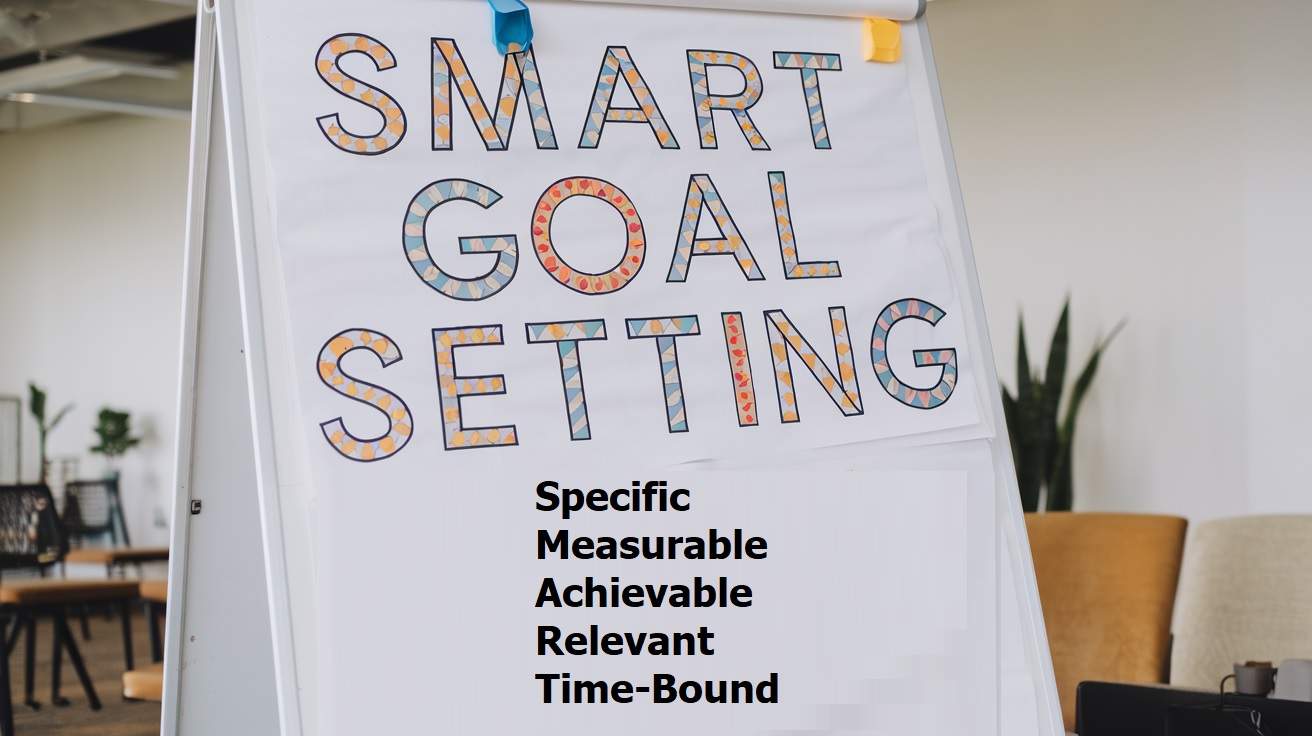
SMART is a useful checklist for writing clear objectives. Doran’s 1981 article in Management Review is widely cited as a source of the SMART objective format.
A student-friendly SMART style keeps the goal simple, measurable, realistic, and time-bound.
A simple SMART template
“By [date], I will [action] [frequency/quantity], and I will track it using [method].”
Examples:
-
“By April 30, I will write 10 short research summaries and track feedback notes in a notebook.”
-
“By June 15, I will finish one portfolio project and publish a one-page explanation of what I built and what I learned.”
-
“By the end of this semester, I will apply to 8 internships and record outcomes and improvements after each attempt.”
Strong examples students can copy
-
Career planning goal: “By the end of the month, I will interview two professionals in roles I am considering and write a one-page comparison of daily tasks and required skills.”
-
Skill proof goal: “By the end of 12 weeks, I will complete 12 practice presentations, record them, and note one improvement point after each.”
-
Experience goal: “By the end of this academic year, I will complete one internship or one field project and document responsibilities and results in a portfolio.”
Career readiness competencies as goal categories
When students do not know which goals to choose, career readiness competencies offer a clear menu. NACE outlines eight career readiness competencies: Career & Self-Development, Communication, Critical Thinking, Equity & Inclusion, Leadership, Professionalism, Teamwork, and Technology.
Turn competencies into weekly actions
Examples:
-
Communication: write one clear email per week for a real purpose (club, class, internship inquiry)
-
Professionalism: meet every deadline for four weeks and record what helped
-
Teamwork: take a defined role in a group project and write a short reflection on what worked
-
Technology: build one small tool, report, or project each month using a common tool in your field
-
Career & self-development: update your CV once per month and save one proof item from your work
These actions produce evidence that supports applications and interviews.
Tracking and review
Goals fail when they sit on paper and never return to your week. A light system is enough.
Weekly check-in
Pick one day each week. Answer three questions in five minutes:
-
What did I do that matched my goals?
-
What blocked me?
-
What is my next small action?
Short notes are fine. Consistency matters more than perfect writing.
Monthly proof log
Each month, save three items:
-
One work sample (project, report, essay, presentation slides)
-
One feedback note (teacher, mentor, peer)
-
One improvement note (what changed since last month)
Over a year, this becomes a strong record of growth.
Common obstacles and practical workarounds
Students face real limits. A goal plan should respect them.
Time limits
If school and family responsibilities fill your day, use small actions:
-
20 minutes on four days each week
-
one focused task per session
-
one weekly review
Small actions repeated often beat large plans that do not happen.
Money limits
Many career steps cost little:
-
school labs and libraries
-
free public webinars and workshops
-
student clubs
-
volunteer roles linked to your target field
Choose goals based on access and proof, not spending.
Access limits
Some students lack mentors or career offices. Build a small support circle:
-
one teacher or advisor
-
one senior student
-
one working adult in your community
If face-to-face access is hard, a short email with clear questions can start the connection.
Conclusion
Career goals for students work best when they cover three time horizons. Short-term goals build weekly traction and visible proof. Medium-term goals build a portfolio, experience, and credible milestones. Long-term goals set direction and keep your choices consistent, even when you adjust plans. Use trusted tools for interest and role exploration, write clear goals you can track, and review progress weekly. Over time, you collect proof of skills and growth that supports your next step.
FAQs
What are good short-term career goals for students?
Good short-term career goals focus on skills, exposure, and habits. Examples include completing one small project each month, attending one career event each month, or writing one weekly reflection on what you learned and what to improve.
How can a student set career goals without knowing their career yet?
Start with interest-fit tools and role descriptions. Use the O*NET Interest Profiler to narrow options, then pick three roles to explore through reading task lists, skill requirements, and short interviews with working adults.
What is the best way to set medium-term career goals in college?
Focus on proof. Build a portfolio, gain experience through internships or projects, and add credentials that match your work samples. Track progress monthly and update goals based on feedback and outcomes.
Are SMART goals useful for students?
SMART goals help students turn vague aims into trackable actions. The SMART objective format is widely linked to Doran’s 1981 paper in Management Review, and it remains a practical checklist for writing clear goals.
Which skills support long-term career goals across many fields?
Skills that travel across roles include communication, teamwork, professionalism, basic technology skills, and problem solving. Competency frameworks such as NACE’s career readiness competencies can help students turn these skills into weekly actions.







Comments 0
No comments yet. Be the first to start the conversation.