



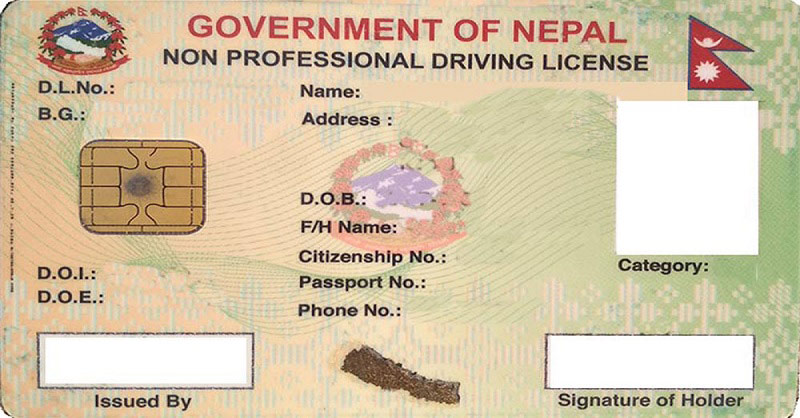
Driving License Online in Nepal: Complete Guide
Are you also tired of long queues at the transport office, unnecessary expenses paid to middlemen, and the constant frustration of “system down”? Or have you just reached the eligible age and are planning to apply for your first driving license?
For the past 10 years, I have been closely studying Nepal’s transport sector and digital systems. This article is not just ordinary information; it is a distillation of my years of experience, the latest directives of the Department of Transport Management (DoTM - Yatayat Byabastha Bibhag), and practical solutions to the problems faced by thousands of service seekers.
Let us understand the process of obtaining a driving license in Nepal from A to Z.
1. Introduction: Reality of the Smart License and Online System
After the Government of Nepal replaced handwritten licenses with the “Smart Driving License”, the process has become largely digital. However, “digital” does not mean that everything happens from home.
It is a hybrid system—where the form is filled online, but you still have to visit the office for biometric capture (fingerprints and photo) and exams.
Many service seekers, like college students, get confused when they visit dotm.gov.np. Due to a lack of correct information, people are forced to spend up to 5,000 rupees for work that can be done for 500 rupees.
The purpose of this article is to make you self-reliant so that you can obtain your license without depending on anyone else.
2. Required Preparation: Are You Eligible?
Before applying, you must check whether you are legally eligible. According to the Transport Management Act, 2049:
Age Limits
-
Two-wheelers (motorcycle/scooter – Category A/K): Must have completed 16 years of age.
-
Four-wheelers (car/jeep/van – Category B): Must have completed 18 years of age.
-
Heavy vehicles (bus/truck – Category C, D, E, etc.): Must have completed 21 years of age.
Health Requirements
-
Eyesight must be sufficiently good.
-
People with color blindness (inability to distinguish certain colors) are considered ineligible for a driving license. This is discussed in more detail below.
3. Documents: Which Documents Are Mandatory?
Before filling the online form, keep the following documents scanned or clearly photographed on your mobile. It is better if the file size is less than 200 KB.
-
Nepali citizenship (Citizenship):
-
Clear photo of the front and back of the original citizenship certificate.
-
Special tip: If the citizenship is very old or the text is unclear, obtain a “copy of citizenship” or “recommendation” from the ward office and then apply. Otherwise, problems may arise later during biometric verification.
-
-
Passport-size photo:
-
Recently taken, with a plain background.
-
You should not be wearing glasses or a cap.
-
-
Blood group card:
-
Card issued by any recognized laboratory or hospital.
-
Note: If you do not have a card, you can check your blood group on the day of your office visit at a nearby clinic for about 50–100 rupees.
-
-
Signature:
-
A photo of your own signature made with black ink on white paper.
-
4. Step-by-Step Online Application Process
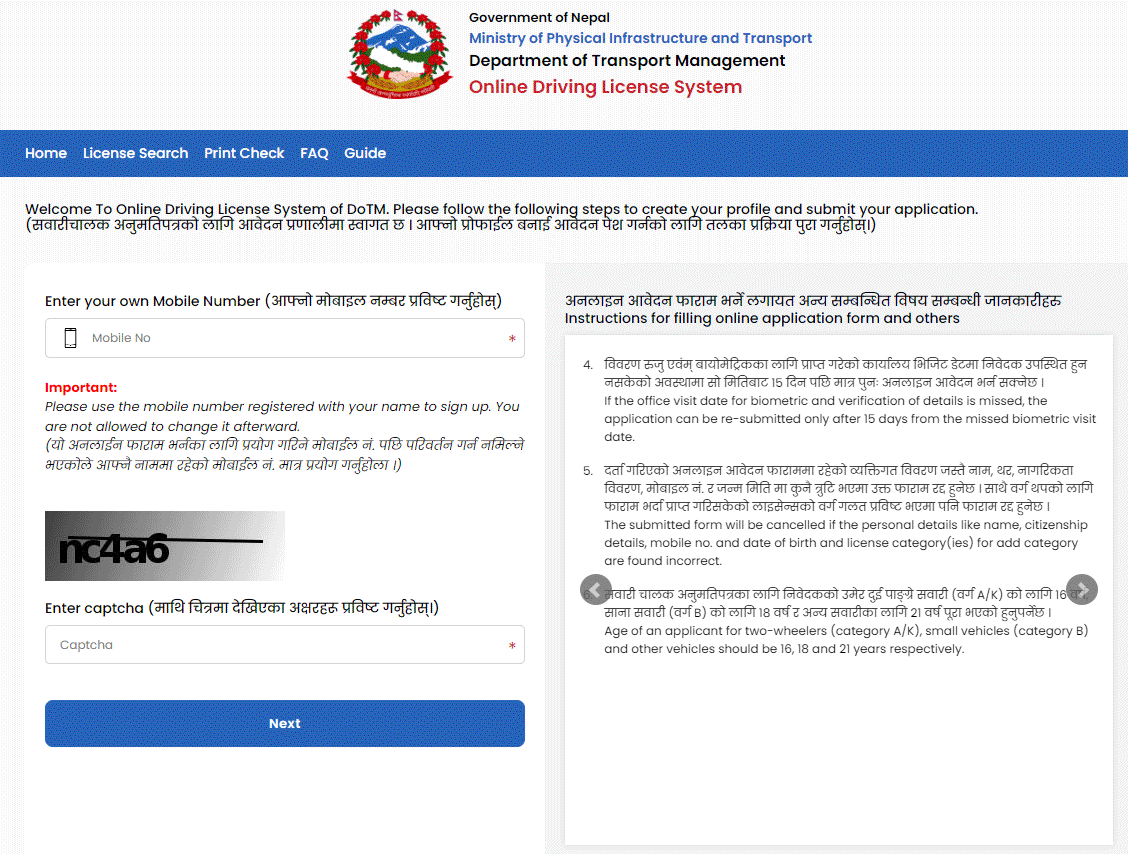
At present, there are two portals in discussion for Nepal, but the new and official portal is applydlnew.dotm.gov.np. Since data from the old server has already been migrated, you should always use the new link.
Step 1: Account Registration (Sign Up)
-
Type applydlnew.dotm.gov.np in your browser. Click the “Sign Up” button.
-
Enter your full name, date of birth (as per citizenship), and mobile number.
Important: Use your own mobile number or that of a close family member, because the OTP and later the notification that your license has been printed will come to this number.
-
Enter the OTP (One Time Password) code received on your mobile and verify it.
-
Create an account by setting a strong password (for example: Nepal@123).
Step 2: Personal Details
After logging in, a dashboard opens. You have to fill in three sections here:
-
Personal Details: Name, date of birth, blood group, and guardian’s details.
-
Address: Permanent address (as per citizenship) and current address.
Expert Note: While entering your current address, it is better—though not mandatory—to give an address in the district or nearby area of the transport office from which you want to obtain your license.
-
Citizenship Details: Citizenship number, issuing district, date of issue, and type (Bansaj/Janma). You must also upload the photo of the citizenship here.
Step 3: Selecting License Category
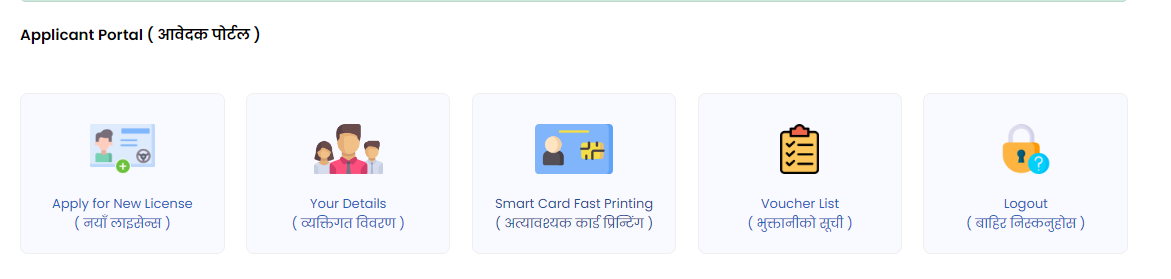
Click “Apply for New License”.
Choose the vehicle category you wish to drive:
-
A: Motorcycle
-
K: Scooter
-
B: Car/Jeep/Van
Note: You can apply for only one category (for example A or K) at a time. You can add another category only after you have obtained one.
Step 4: Office and Date Selection
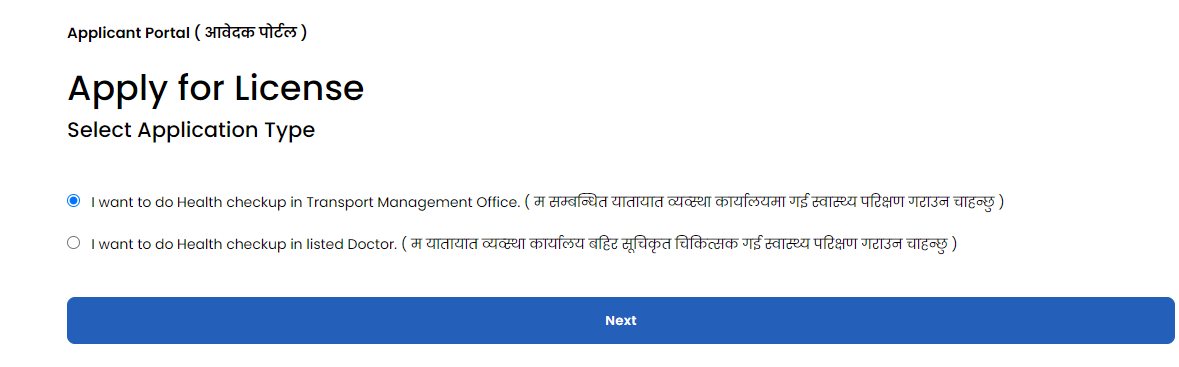
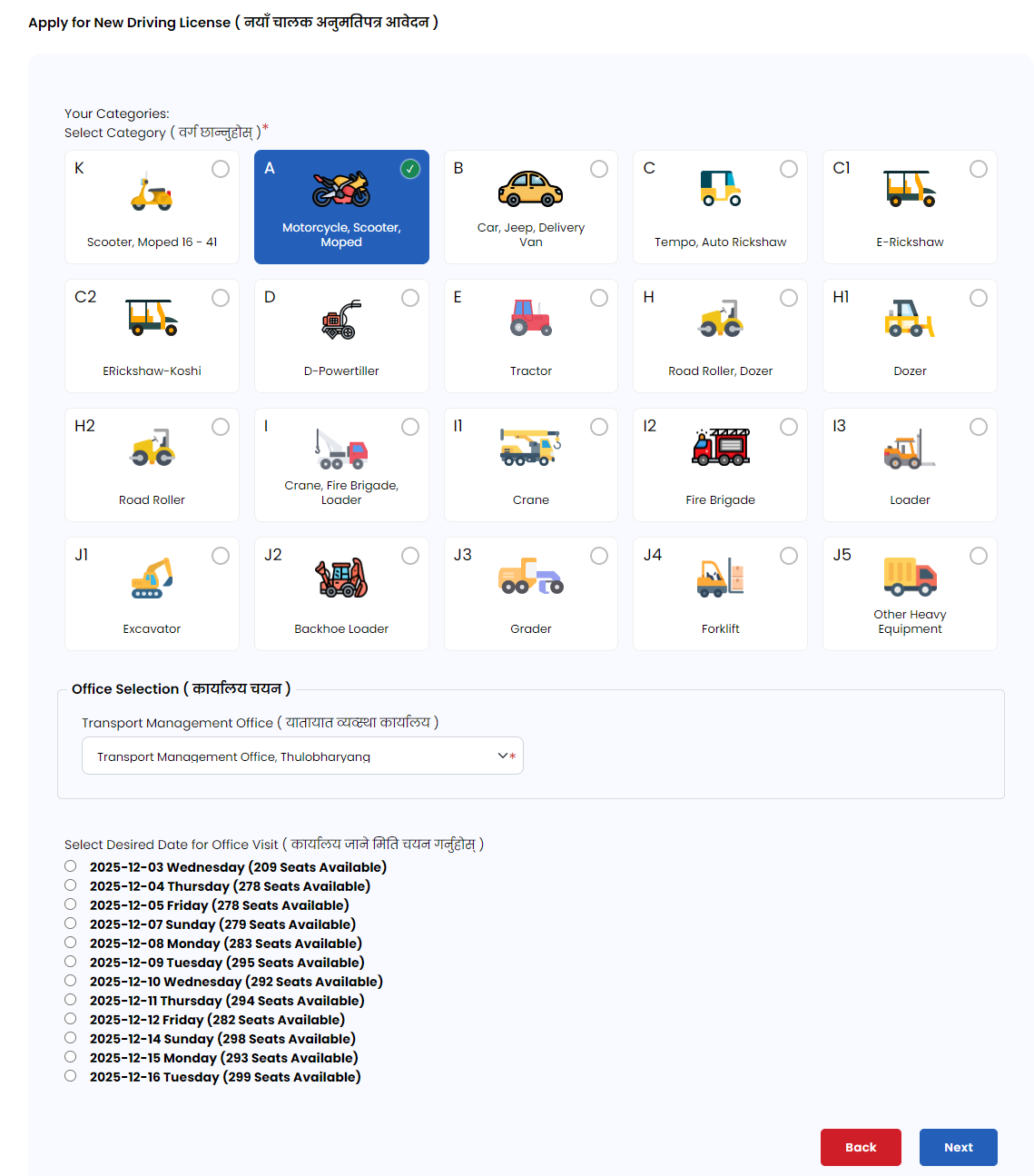
This is the most important and “difficult” step.
-
Select the province and the transport office that is convenient for you.
-
Transport offices inside the Kathmandu Valley include: Ekantakuna, Thulo Bharyang, Chabahil, and Jagati (Bhaktapur).
-
You will see dates with available “quota” (slots) marked in green.
-
Choose a suitable date and click “Apply”.
5. Quota (Slot) Issue and Its “Hack” (Expert Tips)
Many users complain that “quota is never available” (Quota Full). Here are some insider tips:
16-Day Rule
The DoTM system does not open new quota every single day. Generally, the quota automatically opens for dates that are 16 days ahead of the current date.
Right Timing (The Golden Hour)
-
Quota is usually updated between 7:00–8:00 in the morning or after 5:00 in the evening.
-
Therefore, the chances of finding an available slot are higher if you try early in the morning or after office hours.
Fridays and Saturdays
-
On these days, there is often less traffic on the system, or new slots are released, so it can be easier to submit applications.
Refresh Trick
-
If a particular date is showing as red (Full), do not give up immediately.
-
Sometimes, when another user’s session times out, that slot becomes free.
-
By refreshing the page continuously for 5–10 minutes, you may get a slot.
6. Biometric and Office Visit: What to Do and What Not to Do
You must visit the transport office on the appointment date you received online. This is called a “biometric visit”.
What to Bring
-
Printed copy of the online form (Applicant Copy).
-
Original citizenship and one photocopy of it.
-
Blood group card (if you have it).
-
A 10-rupee ticket (available outside the office, but it is better to buy it earlier).
-
Examination fee of 500 rupees.
Process Flow
-
Document verification:
-
Go to the designated counter and show your documents.
-
The staff will verify your online details against the original citizenship.
-
-
Biometric:
-
All 10 fingerprints are taken, your digital signature is recorded, and a photo is taken with a webcam.
-
Tip: Wear appropriate clothes, because this photo will appear on your license.
-
Medical Checkup
-
Medical tests are performed either within the office premises or at a designated nearby place.
-
The main checks are eyesight and color blindness.
-
Fee: This varies by place (around 50 to 100 rupees).
Caution: If you cannot distinguish red and green colors (color blind), you will be considered ineligible for a driving license.
Revenue Payment for Written Exam
-
After passing biometric and medical checks, you must pay 500 rupees as revenue for the written exam.
-
Keep the receipt safely.
7. Written Exam (Likhit): 100% Pass Formula
The written exam takes place the next day after biometric or on the date specified.
-
Full marks: 100
-
Pass marks: 60 (Previously 50; currently 60 is applied. Although some people mention 80, you pass with 60.)
-
Number of questions: 20 (each carries 5 marks).
-
Time: 30 minutes.
Expert Formula to Pass
-
The Department of Transport Management has published a collection (question bank) of 500 questions.
-
The 20 questions asked in the written exam are taken only from these 500 questions.
What to study?
-
Do not buy bulky market books.
-
Memorize only those 500 questions from the department’s website or from mobile apps such as “Nepal Driving License Exam”.
Trick:
-
For many questions, the correct answer is often “all of the above” or the option that describes “safe driving behaviour”.
-
However, not always—so you must know traffic signs very well.
8. Trial Exam: 70-Point System (The 70-Point System)[26]
After passing the written exam, you can take the trial (practical exam). The 70-point system introduced in 2021 has made it easier to obtain a license. Earlier, a small mistake meant failure; now you pass if you score 70 out of 100.
a) Mark Distribution for Motorcycle/Scooter (Category A/K)
Step 1 – Figure 8
-
Total marks: 20
-
Mistake: putting a foot down once – 5 marks deducted (you still pass if it happens once; if you put your foot down twice, you fail).
-
Mistake: touching the line once – 5 marks deducted (you still pass if it happens once).
Step 2 – Narrow Plank
-
Total marks: 10
-
Mistake: putting your foot on the ground or going off the plank – 10 marks deducted (fail).
Step 3 – U-Turn
-
Total marks: 10
-
Mistake: not turning on the indicator – 10 marks deducted (fail).
-
Mistake: touching the line – 10 marks deducted (fail).
Step 4 – Traffic Light
-
Total marks: 15
-
Mistake: not following the light signal – 15 marks deducted (fail).
Step 5 – Speed Breakers (Bumps)
-
Total marks: 15
-
Mistake: putting your foot down once – 5 marks deducted.
-
Mistake: engine stopping once – 5 marks deducted.
Step 6 – Ramp (Uphill/Downhill)
-
Total marks: 20
-
Mistake: crossing the designated line or rolling back after stopping – 20 marks deducted (fail).
Step 7 – Behavioural Aspect
-
Total marks: 10
-
Mistakes such as not locking the helmet or not checking the mirrors: 3/4/3 marks are deducted for these smaller errors.
Summary: On a motorcycle, even if you put your foot down once on the figure 8 and touch the line once (5+5 = 10 marks deducted), you can still pass. However, you must not make mistakes on the ramp or at the traffic light.
b) Mark Distribution for Car/Jeep (Category B)
For cars as well, you pass if you score 70 marks.
-
Figure 8: 20 marks (you may touch the line up to twice; 5 marks are deducted each time).
-
Traffic light: 15 marks (mandatory).
-
Garage parking: 20 marks (while reversing, you may move forward once; 10 marks are deducted).
-
Ramp (uphill): 20 marks (this is the most important component).
-
L-shape (back): This has been removed or modified; in many places, only garage parking is now used instead.
9. Payment and Revenue: eSewa/Khalti or Bank Voucher?
Most offices now have an online payment system in place.
When to Pay?
-
For the written exam: 500 rupees.
-
After passing the trial:
-
1,500 rupees for bike/scooter, or
-
2,000 rupees for car.
-
How to Pay?
-
Through the portal:
-
Log in to applydlnew.dotm.gov.np and go to “Make Payment”.
-
From there, choose ConnectIPS, eSewa, or Khalti and pay directly.
Benefit: You do not have to stand in line, and you can print the receipt immediately.
-
-
Bank voucher:
-
If there are problems online, you can pay in cash at the bank counter located in the office.
-
After Passing the Trial
-
Within about 10 days after passing the trial (or as per the office’s rules), you must pay the revenue (1,500/2,000).
-
This receipt itself serves as your “temporary license”.
-
Until your smart card is printed (which may take up to one year), you must show this receipt to traffic police when asked.
10. Main Problems and Solutions (Troubleshooting Common Errors)
As a subject expert, these are some of the major technical problems I have observed and their solutions:
1. “Citizenship Details Not Found in MOHA”
This is currently the biggest headache. While filling the online form, the message
“Your details are not found from Citizenship information management system of Ministry of Home Affairs” appears.[27]
Reason:
-
Your citizenship details have not been synced into the central database of the Ministry of Home Affairs (MOHA).
-
This occurs especially with old citizenship certificates or newly issued ones that have not yet been updated from the district to the centre.
Solutions (Expert Solutions):
-
Method 1:
-
Visit the District Administration Office (CDO Office) where your citizenship was issued and request that your data be updated in the “MOHA” system.
-
-
Method 2:
-
Some transport offices also perform manual verification.[28]
-
Even if you get an error online, take a screenshot of the error and your original citizenship to the “IT section” of the transport office.
-
Sometimes, they can bypass or correct the system and enter your details manually.
-
-
Method 3:
-
Download the Nagarik App.[28]
-
If your citizenship details appear there, your data is correct.
-
If it does not appear there either, Method 1 is the only option.
-
2. OTP Code Not Received
Solution:
-
Check mobile network coverage.
-
If Do Not Disturb (DND) is activated, disable it.
-
Many users have experienced that OTPs arrive faster on Nepal Telecom (NTC) numbers than on Ncell.
3. If Name or Details Are Incorrect (Correction)
Solution:
-
If your name or date of birth is entered incorrectly while filling the online form, you can correct it as long as you have only clicked “Save”.
-
Once you click “Submit”, you can no longer edit it.
What to do?
-
When you go for biometric, tell the staff at the counter, “My details are incorrect, please correct them.”
-
They can edit the system before taking your biometric data.
-
After biometric is recorded, it becomes very difficult to correct your details.
11. License Renewal (Renewal)
If your license has expired:
-
If you renew it within three months after expiry, no penalty is charged.
-
After that, the penalty increases each year.
-
If more than five years pass after expiry, the license is cancelled.
For renewal as well, you must select the Renewal option online, complete a medical checkup, and pay the required revenue. You may have to visit the office once to update your biometric data.
12. Conclusion and My Suggestions
The process for obtaining a driving license in Nepal has become more systematic than before, but technical errors and quota issues still exist.
My final suggestions (Pro Tips):
-
Stay away from middlemen (dalal):
-
Paying 500–1,000 rupees just to fill an online form is unnecessary.
-
If you follow this guide, you can fill it yourself in 10 minutes.
-
-
Be patient:
-
Server downtime is common. Do not panic.
-
-
Practise at the trial centre:
-
Before going for the trial, practise at the official trial centre of the related office (or at a driving centre that uses the same layout).
-
The size of the “8” and the gap for the U-turn can feel different depending on the place.
-
-
Do not leave your original documents:
-
During biometric or trial, keep your original documents safely with you. Do not hand them over to anyone unnecessarily.
-
Driving on Nepal’s roads is a responsibility. A license is not just a card; it is proof of your commitment to your own safety and that of others. Complete the process and drive safely.
(Note: This article is based on the latest update available at the time of writing. Since the Department of Transport Management may change rules from time to time, please also keep checking the official website.)
Also Read
Driving License Exam 500 Questions and Answer
Major trial centers in Nepal
A. Kathmandu Valley and nearby
Vehicle Academy and Research Center, Gurjudhara
-
Commonly used for official practical tests linked to Kathmandu Valley offices.
-
Named among the Valley’s notable trial centers in official monitoring reports.
Easy Way Trial Center, Radhe Radhe, Bhaktapur
-
Long-running, well-known center used for practical tests for Bhaktapur and nearby offices.
-
Listed in oversight reports covering Valley trial centers.
Nepal Driving and Reconditioning Center, Gokarneshwor, Kathmandu
-
Recognized center in Gokarneshwor for practical exams and training.
-
Included among Valley centers referenced by monitoring authorities.
Suzuki Driving School, Ekantakuna, Lalitpur
-
Private center working in coordination with Ekantakuna TMO for practical tests.
-
Cited as one of the noted Valley trial centers in oversight reports.
Transport Management Offices with trial yards or linked centers within Kathmandu Valley
-
Examples: Ekantakuna office, Chabahil office, Thulobharyang office, Jagati/Bhaktapur office.
-
These offices operate or coordinate trial exams, sometimes using their own yards or officially designated centers.
-
The official online system confirms quota and schedule; the system itself notes how dates open in a timed manner.
B. Major provincial hubs outside Kathmandu Valley
Below are prominent provincial or district transport offices where practical trials are typically coordinated. Exact trial grounds may be in the office compound or at designated nearby centers. Applicants should confirm the current trial site and schedule through the office or online system.
Pokhara and Kaski, Gandaki Province
-
Transport Management Office, Driving License, Kaski (Pokhara) and nearby locations serve as main trial hubs for the province.
-
Applicants from Gandaki Province commonly use these sites for practical exams.
Butwal, Rupandehi, Lumbini Province
-
Transport Management Office, Driving License, Rupandehi is a major regional center.
-
Often the primary trial location for Lumbini Province applicants.
Surkhet, Karnali Province
-
Transport Management Office in Birendranagar, Surkhet handles driving license services and related practical tests for the region.
Mahendranagar or Dhangadhi, Sudurpaschim Province
-
Key offices in Kanchanpur or nearby districts manage trial arrangements for the province.
Transport Management Office, Nepalgunj
- This is the government office responsible for processing all license applications and conducting the final trial exams in the Banke district.
Other provincial centers
-
Depending on the district or province, main transport offices in hubs such as Janakpur, Itahari, Baglung, etc., coordinate trial exams either on office property or at designated grounds.
-
Confirm on the local office notice boards or via the official online system for current trial location and dates.
How to use this list
-
Treat the Valley centers above as the better-known, frequently mentioned options, but always verify whether they are currently open or active for trials. Oversight actions and temporary closures have occurred in the past, affecting some centers.
-
For provincial applicants, start with the nearest Transport Management Office and check the current trial site, as it can be the office yard or a contracted ground.
-
When in doubt, use the official online driving license system or the specific office’s notices to confirm slot availability, date, and exact trial venue before traveling.
Koshi Province
Driving license services (written + trial) are run through TMOs/Service Offices in these districts:
Jhapa (Birtamod)
Morang (Biratnagar)
Sunsari (Itahari – vehicle + driving license offices)
Ilam (Ilam)
Dhankuta (Debrabas area)
Udayapur (Gaighat)
Okhaldhunga (Rumjatar)
Madhesh Province
From available sources, trials are conducted at least in:
Parsa (Birgunj – Narayani Transport Management Office)
Dhanusha (Janakpur – Transport Management Office, Janakpur)
(There are likely additional TMO/TMSO locations in Madhesh, but they are not all clearly listed in a single official public directory. So for a factual article, you can phrase it as “including Birgunj (Parsa) and Janakpur (Dhanusha), among other Madhesh-based TMOs.”)
Bagmati Province
According to Bagmati’s official TMO/Service Office directories, license trials are conducted via offices in these districts:
Kathmandu
-
Chabahil (Driving License Office)
-
Thulobharyang (Driving License Office)
-
Gurjudhara (Motorcycle TMO)
-
Sanobharyang (Service Office)
Lalitpur
-
Ekantakuna (Light–heavy vehicle TMO + DL office)
Bhaktapur
-
RadheRadhe (DL office – Jagati)
-
Sallaghari (Service Office)
Sindhuli
-
Khurkot (Transport Management Office)
Kavrepalanchok
-
Banepa (Transport Management Office)
Makwanpur
-
Hetauda (Transport Management Office)
Chitwan
-
Bharatpur (Transport Management Office + Service Office)
Gandaki Province
From Gandaki’s official TMO list:
Kaski (Pokhara – vehicle + driving license offices)
Baglung (Transport Management Office)
Nawalparasi (Nawalpur – Transport Management Office)
Tanahun (Dumre/Bimalnagar – Transport Management Office)
Lumbini Province
Lumbini’s Ministry of Industry, Tourism and Transport listings show these TMO/TMSO locations:
Rupandehi
-
Butwal (Vehicle TMO)
-
Rupandehi DL office (separate driving license office)
Dang
-
Tulsipur (Transport Management Office)
Banke
-
Nepalgunj (Transport Management Office, Bheri)
Nawalparasi (Bardaghat Susta Purba – service office, Nawalparasi)
Palpa (Transport Management Service Office, Palpa)
Kapilvastu (Transport Management Service Office, Kapilvastu)
Bhairahawa (TMSO, Bhairahawa – Rupandehi)
Bhalubang (TMSO, Bhaluwang – Dang)
All of these are places where license-related written/practical exams are handled.
Karnali Province
Karnali has at least these active license centres:
-
Surkhet (Birendranagar – TMO, Karnali Province)
-
Jumla (Transport Management Service Office, Jumla)
Surkhet has a dedicated trial centre discussed in provincial reporting.
Sudurpashchim Province
In the far west:
Kailali (Dhangadhi – TMO, Seti)
Kanchanpur (Mahendranagar – TMO, Mahakali)
Both offices run written and trial exams for multiple categories (A, K, B, C, etc.).


Comments 0
No comments yet. Be the first to start the conversation.