Rapti Gyanodaya Secondary School (राप्ती ज्ञानोदय माध्यमिक विद्यालय, सिम्ली, रूकुम पश्चिम) is located in Simli, Ward No. 9 of Sanibheri Rural Municipality, Rukum West, Nepal. The school provides education from Early Childhood Development (ECD) through Class XII, covering primary, secondary, and higher secondary levels.
Its academic offerings include Science, Management, and Education at the higher secondary level, alongside technical education in Animal Science and veterinary studies. The school combines classroom instruction with practical learning, sports, extracurricular activities, and community-oriented initiatives.
The educational approach emphasizes academic development, critical thinking, creativity, and social responsibility. Under the leadership of Principal Chandra Bahadur Pariyar, Rapti Gyanodaya Secondary School provides general and technical education for students in the local community.
School Name: Rapti Gyanodaya Secondary School
Location: Sanibheri Rural Municipality–9, Simli, Rukum (West), Nepal
Education Levels: Early Childhood Development (ECD), Primary, Secondary, and Higher Secondary
Classes: ECD to Class XII
Higher Secondary Studies: Science, Management, and Education
Technical Education: Animal Science, Pre-Diploma, Veterinary Studies, and JTE
Principal: Chandra Bahadur Pariyar
SEE Result (2081): 131 students passed out of 158 examinees
Extracurricular Activities: Sports, student clubs, and community-oriented activities
Rapti Gyanodaya Secondary School provides general and technical education in Simli, Rukum (West). Its academic structure covers early childhood, primary, secondary, and higher secondary education, allowing students to continue their studies through Class XII.

The school emphasizes academic learning, practical knowledge, and student participation in educational activities. Teaching methods include classroom discussions, assignments, group projects, practical exercises, and assessments appropriate to different education levels.
At the higher secondary level, students can study Science, Management, and Education-related subjects. Technical education includes Animal Science, veterinary studies, and other vocational learning areas.
The school also incorporates sports, extracurricular activities, and community engagement into its educational environment, supporting students' academic and personal development.
Rapti Gyanodaya Secondary School is situated in Simli, Ward No. 9 of Sanibheri Rural Municipality, Rukum (West), Nepal.
The school serves students from the surrounding community through its general and technical education programs. Its learning environment supports classroom instruction, independent study, practical activities, and extracurricular participation.
Teachers use discussions, assignments, collaborative activities, and assessments to encourage student engagement. The school also emphasizes cooperation, discipline, creativity, and social responsibility.
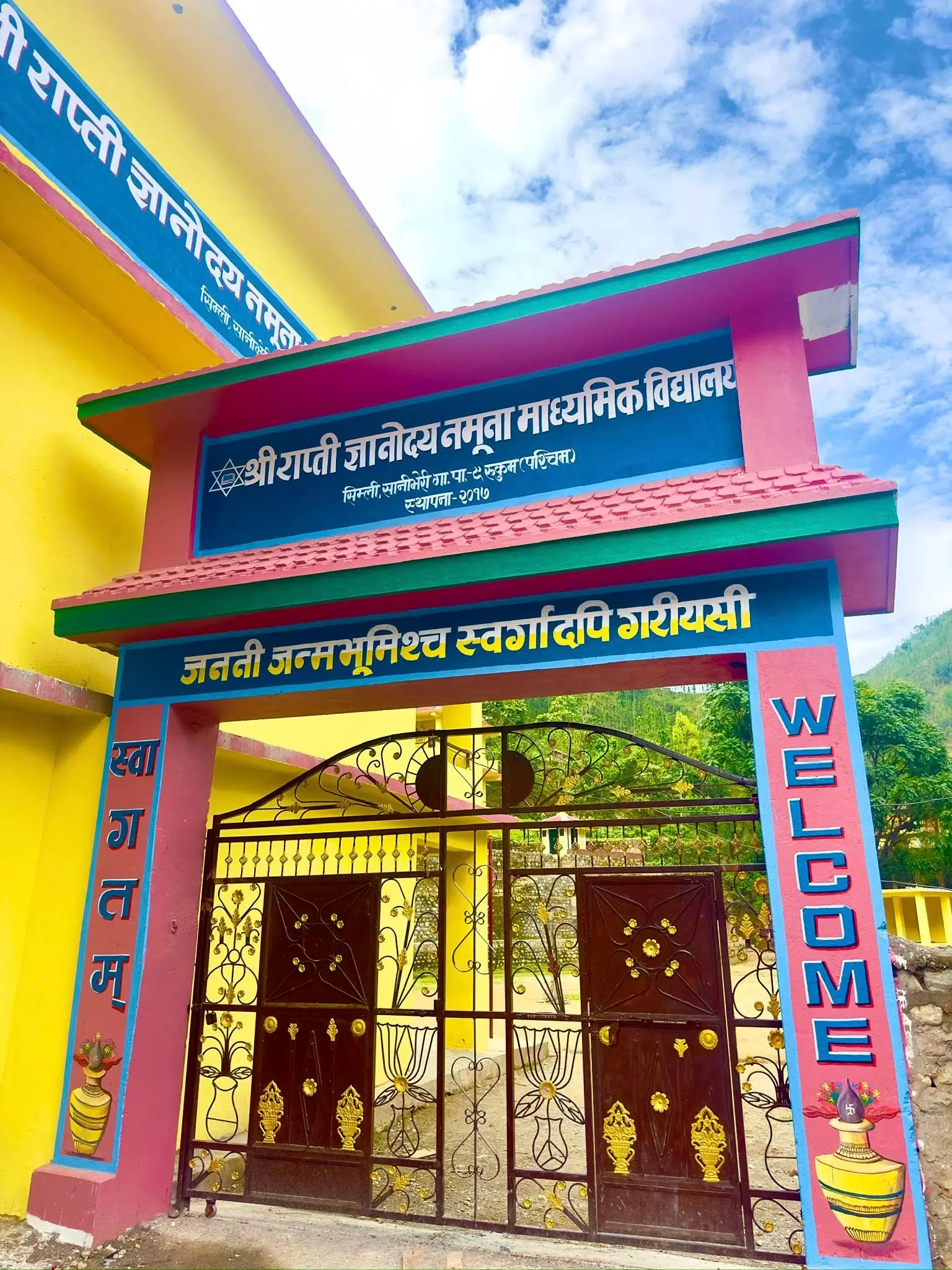
Rapti Gyanodaya Secondary School provides education from Early Childhood Development through Class XII. Its academic offerings include general education and technical study options.
Early Childhood Development is the beginning of the school's educational structure.
This level introduces children to an organized learning environment before they progress to primary education. It forms part of the school's continuous educational provision from early childhood through higher secondary education.
Primary education provides the foundation for students' progression to secondary-level studies.
This stage is included in the school's general academic structure and supports the development of basic knowledge and learning habits required for subsequent education.
Secondary education at Rapti Gyanodaya Secondary School includes Classes IX and X.
The academic curriculum covers language studies, Mathematics, Science, and Social Studies. Teaching emphasizes subject understanding, problem-solving, analytical thinking, communication, and preparation for higher levels of education.
Class IX introduces more advanced academic concepts and structured learning activities.
Major learning areas include language and literature, Mathematics, Science, and Social Studies. Mathematics covers algebra, geometry, and introductory trigonometry, while Science includes concepts from biology, chemistry, and physics.
Classroom activities involve lectures, discussions, assignments, group projects, and regular assessments. These activities help students strengthen subject knowledge, develop independent study habits, and prepare for Class X.
Class X continues secondary education with an emphasis on academic understanding, examination preparation, and the application of subject knowledge.
The curriculum includes language studies, Mathematics, Science, and Social Studies. Students study mathematical concepts, scientific principles, written communication, and research-related activities.
Teaching methods include classroom discussions, practical exercises, collaborative assignments, and assessments. Class X also prepares students for the Secondary Education Examination (SEE) and further academic studies.
Rapti Gyanodaya Secondary School provides higher secondary education through Classes XI and XII.
Its higher secondary academic offerings include Science, Management, and Education. These areas extend the knowledge developed during secondary education and introduce students to more specialized subjects.
Science education in Classes XI and XII focuses on scientific principles, theoretical understanding, and practical application.
Major learning areas include:
Physics
Chemistry
Biology
Mathematics
Students study scientific concepts through classroom instruction, problem-solving, laboratory activities, projects, and scientific investigations.
The learning process emphasizes observation, analytical thinking, scientific reasoning, and the application of theoretical knowledge.
Science studies also provide an academic foundation for students interested in further education in scientific and related disciplines.
Management studies in Classes XI and XII introduce students to business operations, organizational activities, and management principles.
The major learning areas include:
Business ethics
Organizational behavior
Marketing principles
Financial management
Human resource management
Business decision-making
Accounting is also among the subjects taught at the higher secondary level.
Management education combines theoretical instruction with classroom discussions, case studies, assignments, and practical exercises.
Students examine business situations, organizational processes, and management decisions while developing analytical and problem-solving skills.
These studies provide subject knowledge relevant to further education in management, business administration, accounting, economics, and related disciplines.
Education is another academic area available at the higher secondary level.
Studies in this area emphasize academic development, subject understanding, communication, independent learning, and preparation for higher education.
Teaching activities include classroom instruction, discussions, presentations, assignments, and assessments that support students' understanding of their subjects.
Rapti Gyanodaya Secondary School provides technical education alongside its general academic programs.
Its technical offerings include Animal Science, veterinary studies, pre-diploma studies, and JTE.
Animal Science introduces students to the biological, agricultural, and practical aspects of animal health, care, and management.
Major learning areas include:
Animal anatomy and physiology
Animal nutrition
Genetics and reproduction
Animal health and diseases
Animal behavior
Animal husbandry and management
Basic veterinary practices
The program combines theoretical knowledge with practical activities, laboratory exercises, demonstrations, and agricultural fieldwork.
Students study animal health, nutrition, reproduction, and management while examining the relationship between animal science and agricultural practices.
This academic area provides a foundation for further studies related to animal science, veterinary education, and agriculture.
Veterinary studies are included among the school's technical education offerings for Classes IX–XII.
This area focuses on animal health, care, and practical veterinary knowledge. It forms part of the school's technical education structure.
Pre-diploma and JTE studies are also included in the school's technical education offerings.
These programs extend the school's educational provision beyond general academic subjects and form part of its technical and vocational learning activities.
Rapti Gyanodaya Secondary School combines classroom instruction with student participation in academic and practical activities.
Teaching methods include lectures, discussions, group assignments, projects, presentations, and assessments. Students are encouraged to engage with their subjects, develop critical thinking skills, and strengthen independent learning habits.
At the higher secondary level, subject-based instruction includes analytical exercises and practical applications. Science and technical education place additional emphasis on laboratory activities, demonstrations, and field-based learning.
Academic assessment includes tests, assignments, projects, presentations, and examinations according to the subject and education level.
The school incorporates extracurricular activities into its educational environment.
Sports, student clubs, and community-oriented initiatives provide opportunities for participation beyond regular classroom instruction.
These activities support teamwork, communication, cooperation, leadership, and social responsibility. They also encourage students to participate in group activities and engage with their school community.
The school's educational objectives include creativity, critical thinking, personal development, and responsible participation in society.
Rapti Gyanodaya Secondary School aims to provide a supportive learning environment that encourages academic achievement, personal growth, and social responsibility.
Its mission emphasizes curiosity, critical thinking, creativity, and continued learning. The school seeks to develop students' knowledge, skills, and values while preparing them for further education and responsible participation in society.
The school's vision focuses on educational quality, student development, and community engagement.
It seeks to strengthen academic knowledge, practical abilities, and personal values through education, cooperation, and creative learning activities.
Its educational aspirations include preparing students to respond to changing social and educational needs and contribute constructively to their communities.
Rapti Gyanodaya Secondary School recorded the following Secondary Education Examination (SEE) result for academic session 2081:
Academic Session: 2081
Examination: Secondary Education Examination (SEE)
Total Examinees: 158
Students Passed: 131
The result reflects the school's reported SEE performance for academic session 2081.
Chandra Bahadur Pariyar serves as the principal of Rapti Gyanodaya Secondary School.
He is from Sanibheri Rural Municipality, Ward No. 9, Rukum (West).
His responsibilities include school administration, educational activities, and institutional development.
The school's leadership emphasizes academic performance, student learning, and the continued development of teaching resources and physical infrastructure.
Rapti Gyanodaya Secondary School is located in Simli, Ward No. 9 of Sanibheri Rural Municipality, Rukum (West), Nepal.
The school provides education from Early Childhood Development (ECD) through Class XII, including primary, secondary, and higher secondary education.
The school offers higher secondary studies in Science, Management, and Education. Accounting is also taught, while Animal Science is available as a technical study area.
Yes. The school's technical education offerings include Animal Science, veterinary studies, pre-diploma studies, and JTE.
Yes. Animal Science is included at the higher secondary level. Its learning areas cover animal anatomy, physiology, nutrition, genetics, reproduction, animal health, and management.
Chandra Bahadur Pariyar is the principal of Rapti Gyanodaya Secondary School.
In the SEE examination for academic session 2081, 131 students passed out of 158 examinees.
Yes. The school includes sports, student clubs, and community-oriented activities alongside its academic programs.