Overview
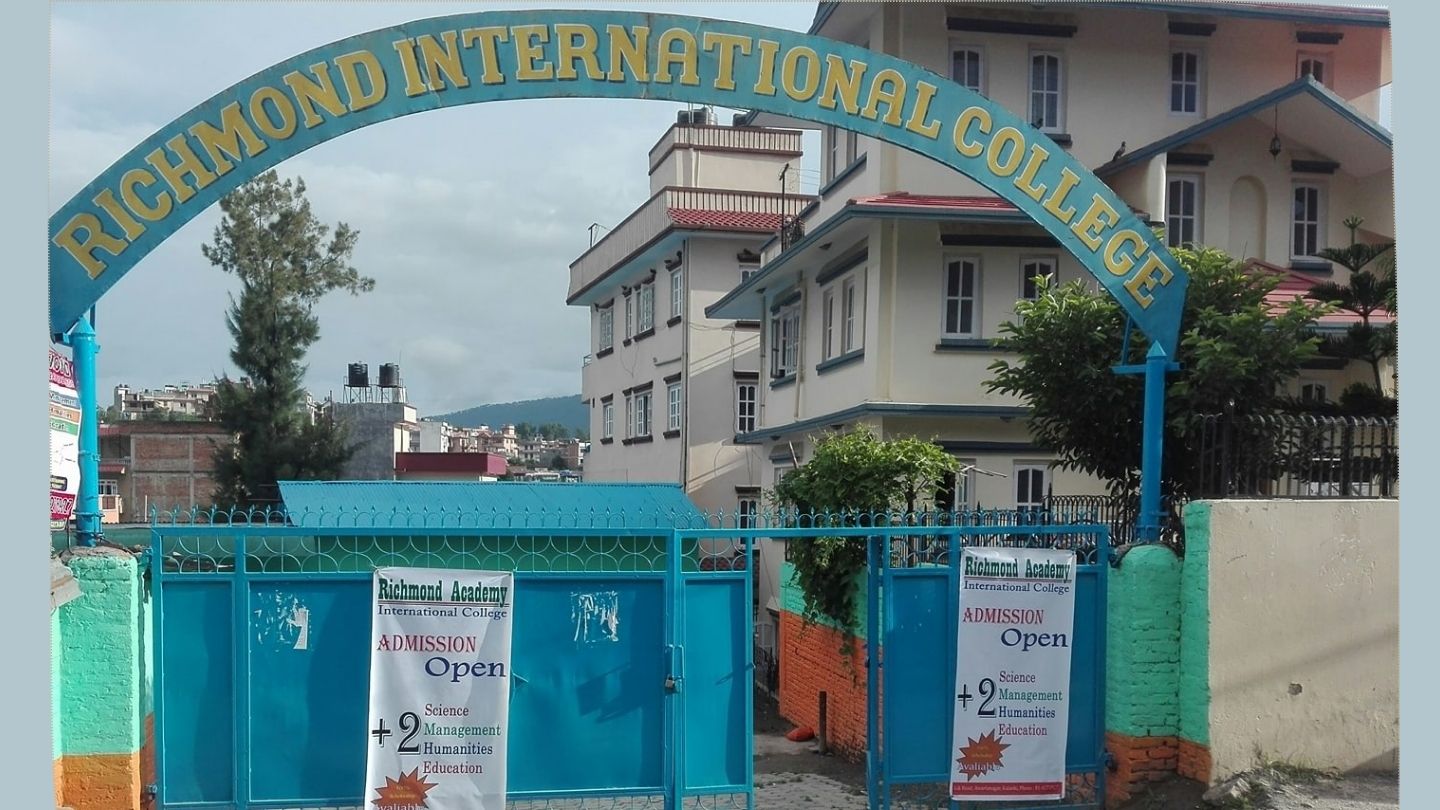
Richmond International College (RIC) is a secondary and bachelor’s institution in Kathmandu that traces its roots to 1989. The college sits to the south-east of Kalanki Chowk, off the main road, offering a study-friendly pocket away from heavy traffic yet close to city routes.
The college frames its purpose around clear learning outcomes and character development. Its mission outlines high-quality learning, whole-person growth, fair and welcoming classrooms, work with the local community, a global lens, and ethical conduct. The vision points to steady academic standards, graduate readiness, research activity, sustainable practice, cultural exchange, and service to society.
Quick Highlights
Established: 1989
Location: Link Road, Awarnagar, Kalanki (Kathmandu-14), in a quiet yet accessible area near Kalanki Chowk.
Academic Levels: Secondary (+2 under NEB) and Bachelor’s (TU)
Streams & Degrees: +2 in Management, Computer Science, Humanities, Law; Bachelor’s in BBS, BA, BSW (Tribhuvan University).
Mission & Values: Quality learning, inclusive college culture, community engagement, global outlook, and ethics.
Vision Areas: Educational excellence, empowered graduates, research culture, sustainability, cultural integration, and service.
Leadership Note: college Chief: Shailaj Nepal.
Scholarships: Annual scholarship examination for Grade 11 (+2) and merit-based support for deserving learners.
Add-on Trainings: Web Design, Graphic Design, Public Speaking, Office Handling.
Academic Programs Offered
RIC runs NEB-affiliated +2 programs and TU-aligned bachelor’s programs. Prospective students should confirm the latest subject combinations and seats with the academic office.
Secondary (+2) Programs
Management
Students cover Accounting, Economics, Business Studies, and Marketing alongside English and Nepali. The stream builds a platform for BBS, BBA, CA, hospitality management, and entry-level business roles.
Computer Science
The track includes Mathematics, Physics, programming fundamentals, databases, and networking. It prepares learners for further study in computer science, software fields, and IT engineering.
Humanities
Learners explore Sociology, Psychology, History, Mass Communication, and Rural Development, with English and Nepali as core subjects. This path suits interests in social research, media, education, and public service.
Law
Students study foundational constitutional, civil, and criminal law with Political Science. The stream offers an early understanding of legal systems and progression routes such as BALLB.
Bachelor’s Programs
BBS (TU)
BBS is a four-year program that covers Accounting, Finance, Marketing, Human Resource Management, and Business Law. It suits students seeking an affordable management degree oriented to Nepal’s business context.
BA (TU)
The BA is a three- to four-year degree with options across Sociology, English, History, Economics, Psychology, and Rural Development. It allows flexible pathways toward roles in teaching, public communication, research, and administration.
BSW (TU)
BSW prepares graduates for roles in social work, community projects, NGOs, and rights-focused initiatives. Students learn to support individuals and groups, advocate fairly, and connect policy with field realities.
Admission Process (NEB +2 and TU Bachelor’s)
Eligibility (NEB +2): SEE or equivalent, meeting NEB and college criteria.
Eligibility (TU Bachelor’s): +2 or equivalent in a relevant stream as per TU rules.
General Steps:
-
Collect the application form during the admission window.
-
Submit academic records (mark sheets, character certificate, photos, ID).
-
Attend any college-conducted assessment/interaction if announced.
-
Check merit standings, scholarship routes, and confirmation dates with the office.
Scholarship Route:
Richmond conducts a Grade 11 scholarship examination each academic year to recognize strong academic performance at the secondary level and extends merit-based support for deserving learners. Applicants should watch for the official call, dates, and criteria.
Teaching Faculty and Learning Methodology
RIC mentions a student-centred classroom culture where learners take part in planning, activities, and reflection. Faculty shift from directive teaching toward consultative guidance that responds to learner needs. Practical work complements theory across subjects, and classroom discipline standards set a steady tone for learning.
The college describes its academic environment as purposeful and supportive, with teachers aiming to help students grow steadily in their subjects and wider skills. RIC also notes attention to fresh study practices where suitable, alongside clear expectations on punctuality and conduct.
Infrastructure and Learning Facilities
The college location—away from major road noise yet close to Kalanki—supports concentration for study while keeping public transport access. Students should ask the office for the latest list of facilities (library holdings, computer labs, seminar rooms, and any accessibility features) and visit the site to match the environment with their learning needs.
Student Life and college Experience
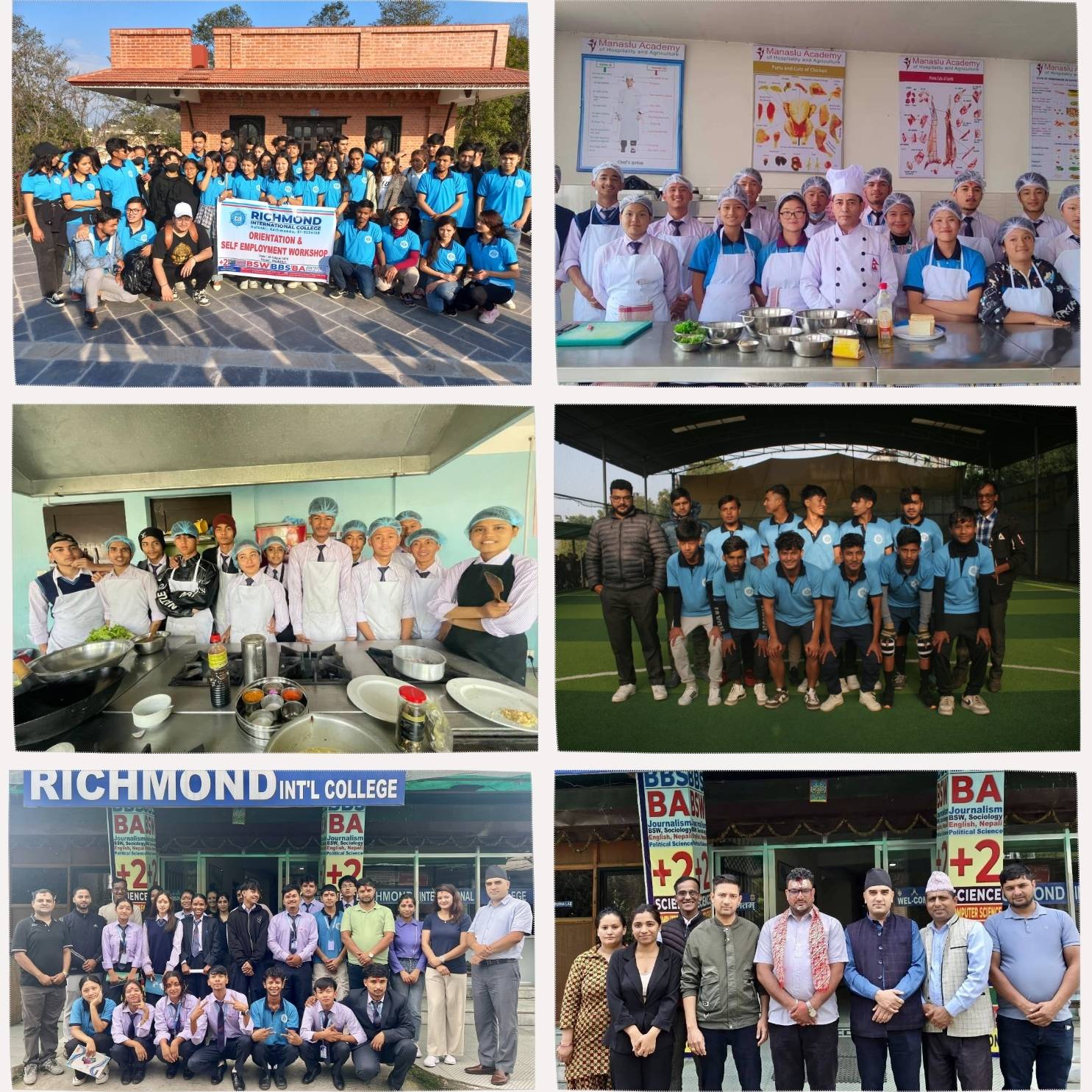
RIC highlights co-curricular and extra-curricular activities (ECA/CCA) that run alongside classes. Participation helps students build confidence, teamwork, and leadership and gives them a chance to apply what they learn in real settings. The college also lists short skills trainings—public speaking, web and graphic design, office handling—that extend day-to-day coursework.
Extracurricular Activities (ECA)
Learners can expect activity-based events and clubs across arts, communication, IT, and sports, along with college events that encourage initiative and collaboration. RIC notes a focus on overall growth through ECA and CCA, encouraging students to engage actively beyond class time. Interested applicants should request the current ECA calendar during admission.
Scholarships and Financial Support
RIC runs a scholarship exam for Grade 11 every year, aiming to spot strong academic achievement. In addition to exam-based awards, the college mentions support for deserving students who excel in areas such as academics, sports, and music, and for learners from marginalized groups. Ask the office for the latest policy, coverage, renewal terms, and how scholarships are applied to fees.
Achievements and Institutional Milestones
The college notes its service since 1989, growing through secondary and bachelor’s cohorts in Kathmandu. It also lists 8+ courses, 30+ teachers, and 10+ trainings, which shows a multi-program operation with several skills modules running alongside formal study. Figures can change by year, so confirm the current counts when applying.
Why Choose Richmond International College?
-
Location helps learning: Quiet study area near Kalanki with convenient access for daily commuters.
-
Clear program map: +2 streams across Management, Computer Science, Humanities, and Law, plus TU bachelor’s options in BBS, BA, and BSW.
-
Student-centred classes: Active participation, guided planning, and practical tasks, with steady classroom expectations.
-
Scholarship access: Grade 11 scholarship exam and merit-based support for deserving learners.
-
Skills add-ons: Short trainings (web/graphic design, public speaking, office handling) to strengthen communication and workplace readiness.
Teaching Faculty and Academic Governance
RIC names role holders across coordination, administration, and IT. Applicants can request the latest faculty roster during admission counselling to understand subject-wise teaching experience and class schedules. Named roles include +2, management, ECA, administration, and academic leadership.
Community Engagement and Ethics
The mission speaks to community links and ethical conduct. In practice, this positions students to connect classroom learning with local needs and to make fair choices in projects and fieldwork. Such values are particularly relevant in social work (BSW), media and social sciences (BA), and group assignments in business-related courses.
Quality Assurance and Student Support
RIC’s mission and college messaging emphasize a supportive learning environment and steady academic expectations. Students should ask about:
-
Academic advising and remedial support.
-
Library and digital access.
-
Safety protocols and grievance handling.
-
Internship or field links for BSW/BA, and business project work for BBS.
These checks help align personal goals with course delivery on college.
Message from the college Chief
Dear students, parents, and colleagues,
I’m grateful you’ve chosen Richmond International College as your learning home. Since 1989, our Kalanki campus has grown through simple habits that matter: arrive on time, ask honest questions, finish what you start, and treat one another with respect. Your classes link ideas with practice—projects, field tasks, and short trainings in communication and digital skills—so you leave with knowledge you can use.
Teachers keep lessons clear and are approachable outside class. If you need help—academic advising, counselling, or scholarship guidance—please speak with us early. Grade 11 applicants may sit our annual scholarship exam; details are shared each intake.
Parents and guardians, your steady feedback keeps us on track. Let’s stay in touch.
Together, we’ll build calm, purposeful study and prepare each learner for meaningful next steps.
Shailaj Nepal
Campus Chief, Richmond International College
Conclusion
Richmond International College offers NEB +2 and TU bachelor’s programs in a location that supports study while staying within reach of Kathmandu’s transport routes. The college’s stated mission and vision underscore learning quality, fair participation, community links, and personal conduct. Applicants are encouraged to verify current subject combinations, seats, calendars, and scholarship rules during a college visit and through official notices.
Frequently Asked Questions (FAQ)
1) Where exactly is the college?
Link Road, Awarnagar, Kalanki (Kathmandu-14), to the south-east of Kalanki Chowk; the area is quiet and accessible.
2) Which +2 and bachelor’s programs are currently listed?
+2: Management, Computer Science, Humanities, Law. Bachelor’s: BBS, BA, BSW under Tribhuvan University. Confirm annual subject allocations with the office.
3) Is there a scholarship exam?
Yes. RIC conducts a scholarship examination for Grade 11 each year and also mentions merit support for deserving students. Check forms, dates, and coverage before applying.
4) What kind of college activities are available?
Co-curricular and extra-curricular activities (ECA/CCA) run during the year. The college also lists short trainings in web and graphic design, public speaking, and office handling.
5) What learning approach does the college mention?
Student-centred classes with active involvement, practical tasks along with theory, and clear classroom discipline to sustain study habits.
6) When was the college founded?
The college notes its establishment in 1989 and its growth through secondary and bachelor’s levels in Kathmandu.
7) Who can I contact for academic guidance?
Richmond lists coordination and leadership roles across +2, management, ECA, admin, and IT/Academics; ask the office for the latest contact points and counselling schedule.