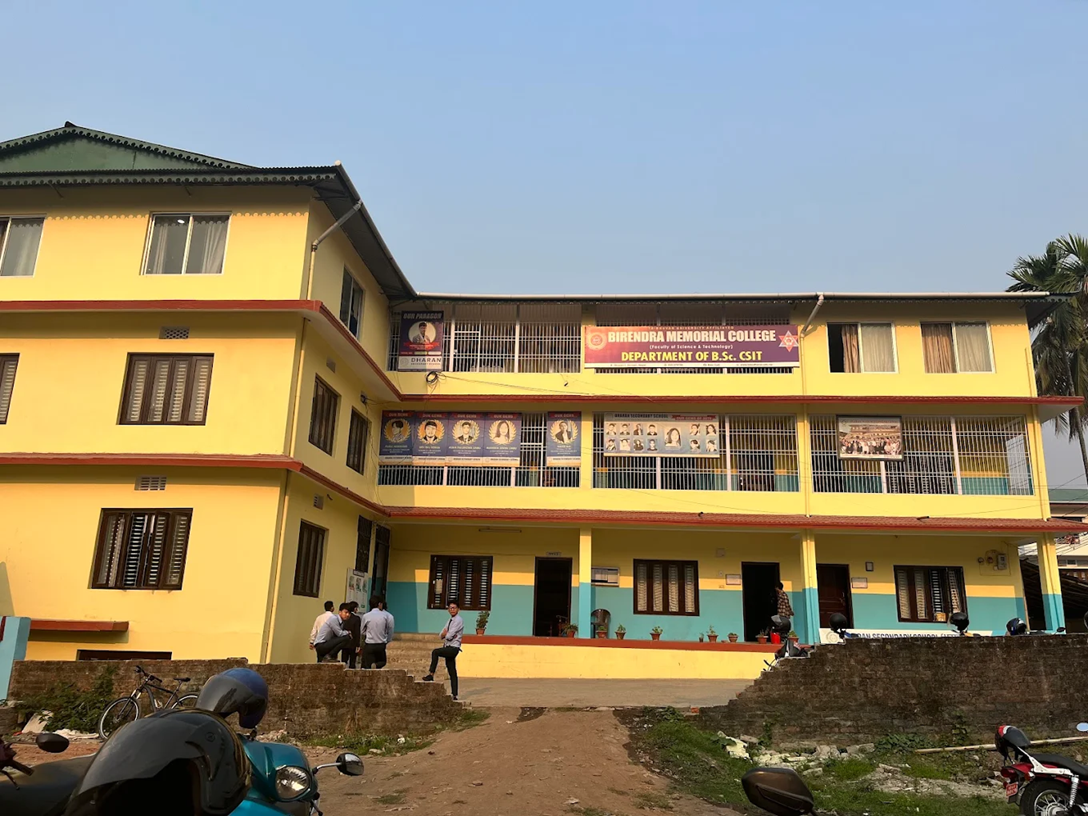
If you are a science student curious about microbes and lab work, BSc in Microbiology at Birendra Memorial College (BMC), Dharan, Sunsari—affiliated to Tribhuvan University—offers organized lab-based study.
Many students search “BSc Microbiology Birendra Memorial College Dharan,” “Microbiology TU Nepal,” and “lab practicals Dharan.” This page explains the course path, lab exposure, and outcomes.
The program runs across eight semesters, covering bacteriology, virology, mycology, immunology, microbial genetics, environmental and industrial microbiology, and research basics.
TU curriculum with semester-wise practicals
Program-specific labs with safety guidance and lab manuals
Field or industry visits when coursework requires exposure
Library support for journals, reference texts, and exam prep
Scholarship access for at least 10% of students under policy
Here’s how learning progresses:
Biology and chemistry foundations for microbiology
Microscopy, staining, culture media, and aseptic techniques
Bacteriology and virology with diagnostic procedures covered in class
Mycology and parasitology basics
Immunology, microbial genetics, molecular concepts as per TU scope
Environmental and industrial microbiology, food microbiology
Project, seminar, and report writing in advanced semesters
Lab records, spot tests, and internal assessments run alongside theory classes.
Understand core microbial concepts and safe lab conduct
Carry out culture, isolation, and identification steps
Read test results and record data in standard formats
Link theory to clinical, environmental, and industrial settings
Students ask where this program leads. Graduates prepare for master’s study in Microbiology or allied life sciences as per eligibility. Work areas include clinical labs, food and beverage quality control, pharmaceuticals, water testing, agriculture support labs, and research units.
Use microscopes and staining methods effectively
Prepare media and manage contamination risks
Perform identification workflows introduced in class
Write lab reports that include method, results, and references
Biosafety, waste handling, and documentation
Basic statistics for lab data
Quality control procedures used in testing labs
Scientific writing and citation basics
Students learn through concept classes, demonstrations, guided practicals, and seminars. Field visits and guest sessions run when relevant to course units. Faculty provide feedback during practical checklists and viva.
Worried about grades or subject combinations? Intake follows TU rules for +2 Science or equivalent.
Eligibility: +2 Science or equivalent as per TU criteria; subject requirements and grade thresholds per the current TU notice
Process: Submit the application, attend interaction/entrance if asked, complete fee steps, and confirm your seat
Documents: Academic transcripts, character certificate, citizenship or equivalent ID, photos, and equivalence where needed
Follow TU and college notices for updates on seats and intake windows.
Entry roles include lab technician, quality control assistant, field sampling assistant, and junior analyst in clinics, hospitals, food companies, water plants, and research support units. Graduates also prepare for master’s programs in Nepal or abroad based on interest and eligibility.
At least 10% of total students receive scholarships under college policy. Categories, criteria, and renewal are declared during admission.
TU affiliation with steady lab-theory integration
Practical learning through regular sessions and field exposure
Clear reporting habits through lab records and seminar work
Scholarship access and academic guidance
BSc in Microbiology at BMC supports Nepali learners who want structured lab experience under TU. For subject-wise eligibility, entrance/interaction updates, and dates, check current TU circulars and contact the BMC admission desk.