



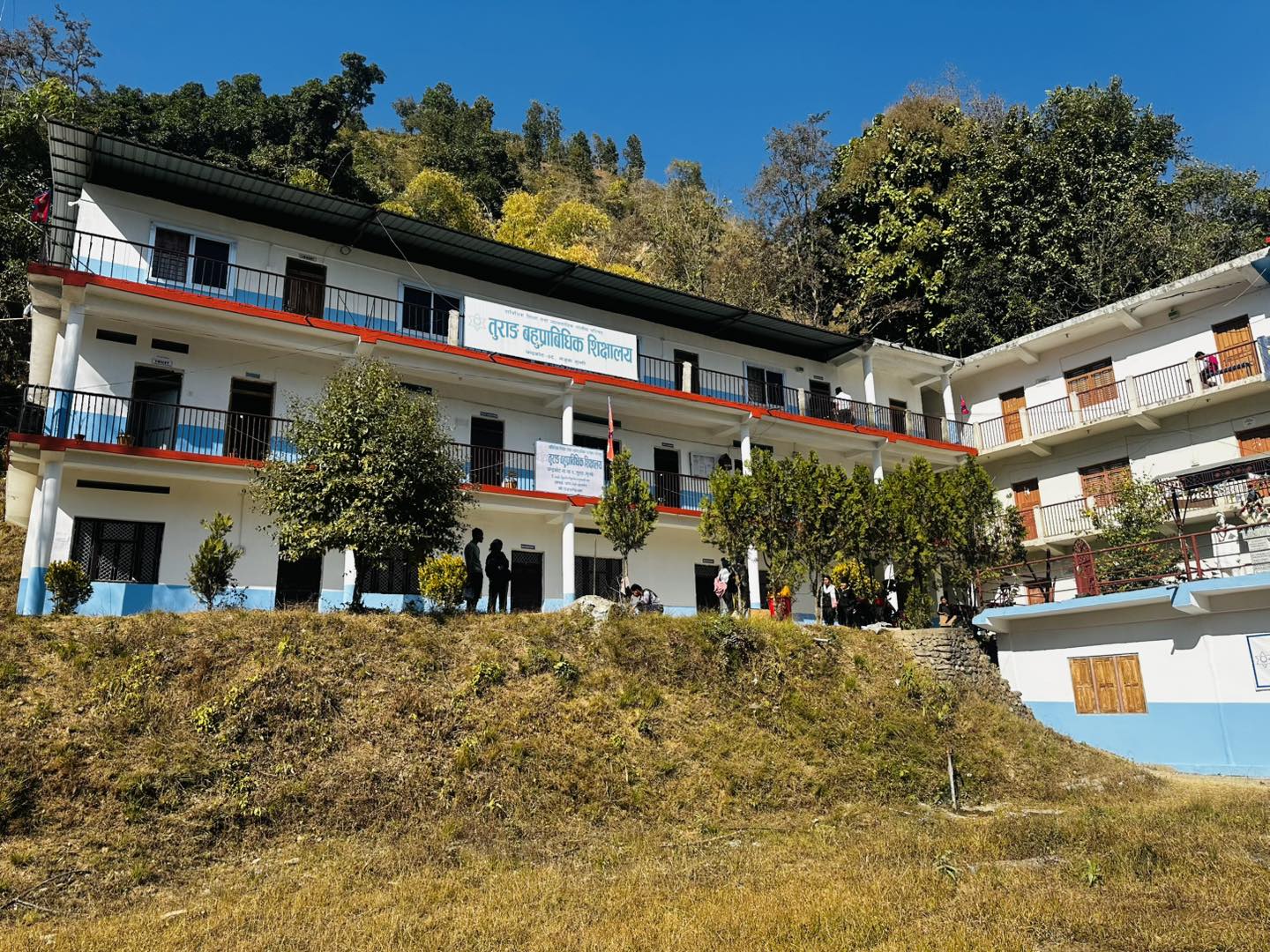
The Diploma in Agriculture – Plant Science at Turang Polytechnic Institute, located in Chandrakot, Majuwa, Tamghas, Gulmi, offers a practical, field-focused education in agricultural science. This program is affiliated with the Council for Technical Education and Vocational Training (CTEVT), Nepal, and follows the national curriculum standards. Students must have completed their Secondary Education Examination (SEE) and pass the CTEVT entrance exam to be eligible for admission.
This course provides foundational and technical skills in agriculture, focusing on plant production, crop management, and sustainable farming methods. It addresses local agricultural needs while aligning with broader agronomic practices relevant across Nepal.
Duration: 3 Years
Seats Available: 40
Affiliation: CTEVT, Nepal
Eligibility: Minimum SEE Passed
Entrance: CTEVT Entrance Required
Scholarships: 10% Merit-Based (CTEVT Entrance)
The curriculum is structured over six semesters (three academic years) and includes theoretical knowledge and practical sessions. Core subjects include:
Soil Science
Agronomy
Horticulture
Crop Production Techniques
Irrigation and Water Management
Pest and Disease Management
Seed Technology
Agricultural Economics
Extension Education and Communication
Farm Machinery Use and Maintenance
Agro-Meteorology
Internship and Field Practice
Each semester balances classroom instruction with real-world field exposure, preparing students for employment and entrepreneurial opportunities.
To provide foundational and technical knowledge in plant science.
To develop applied skills for managing crops sustainably.
To prepare students for employment in the agriculture sector or further study.
To encourage critical thinking and problem-solving related to plant-based farming.
Graduates of this course can contribute to developing Nepal’s agricultural sector through scientific practices, community outreach, and technical expertise. They may work in:
Government agriculture offices
Agricultural cooperatives and NGOs
Agro-industries and seed companies
Farm consultancy services
Research support roles in field trials
They are also eligible for higher education, such as a BSc in agriculture or other advanced diploma-level specializations.
By the end of the program, students will be able to:
Apply scientific techniques in crop production.
Identify soil types and recommend suitable crops.
Use basic agricultural tools and machinery.
Diagnose plant diseases and recommend control measures.
Understand local and regional agricultural policies and practices.
Communicate agricultural information effectively to farmers and communities.
Skill-based modules include:
Nursery Management
Compost and Organic Fertilizer Preparation
Farm Layout Planning
Agro-Tool Handling
Weed and Pest Identification
Seedling Production and Grafting
Post-Harvest Handling and Storage
Data Collection and Farm Record Keeping
These hands-on modules aim to improve technical and transferable skills needed in diverse agricultural settings.
The program uses classroom instruction, group discussions, supervised fieldwork, demonstrations, and internship placements. Evaluation methods include:
Written assessments
Oral and practical tests
Project work
On-farm observation and reporting
Internship performance reviews
Completion of SEE or equivalent examination
Pass the entrance examination conducted by CTEVT
Submit academic transcripts, identification documents, and application forms within the admission period
Graduates can work as:
Junior Agriculture Technicians
Field Assistants in Agro Projects
Private Farm Managers
Extension Workers in Rural Municipalities
Sales Technicians in Agri-Input Suppliers
Many students also begin farming enterprises using the knowledge acquired during the program.
Turang Polytechnic Institute reserves 10% of the total seats for scholarship candidates based on the CTEVT entrance ranking. Scholarship students are selected according to the guidelines provided by CTEVT. Tuition fees follow the standard structure approved by the CTEVT governing body.
This diploma serves as a stepping stone for students interested in agriculture. It offers localized learning with field training aligned to the conditions of rural Nepal. The blend of scientific principles with hands-on training makes it suitable for both rural development efforts and professional farming careers.






