Dharche Rural Municipality (Gaupalika - धार्चे गाउँपालिका, गोरखा) in Gorkha District, under Gandaki Province, is home to indigenous communities, mainly followers of Bon, a nature-worshipping faith. The name “Dharche” is derived from two local words: “Dharj,” meaning “flag,” and “Gang,” meaning “hill.” Locals believe in placing flags on hilltops and riversides during departures or special prayers, symbolizing their deep connection with nature and spiritual traditions.
Recognizing its rich natural and cultural heritage, the municipality has adopted the tourism slogan “Dharche – An Open Museum of Nature and Culture.” Another notable phrase is “For Tourists: Me; For Me: Tourism,” indicating the community's commitment to tourism-led development.
Latitude/Longitude: 28.1357° N, 84.5228° E
Total Area: 652 square kilometers
Elevation Range: 630 to 7,309 meters above sea level
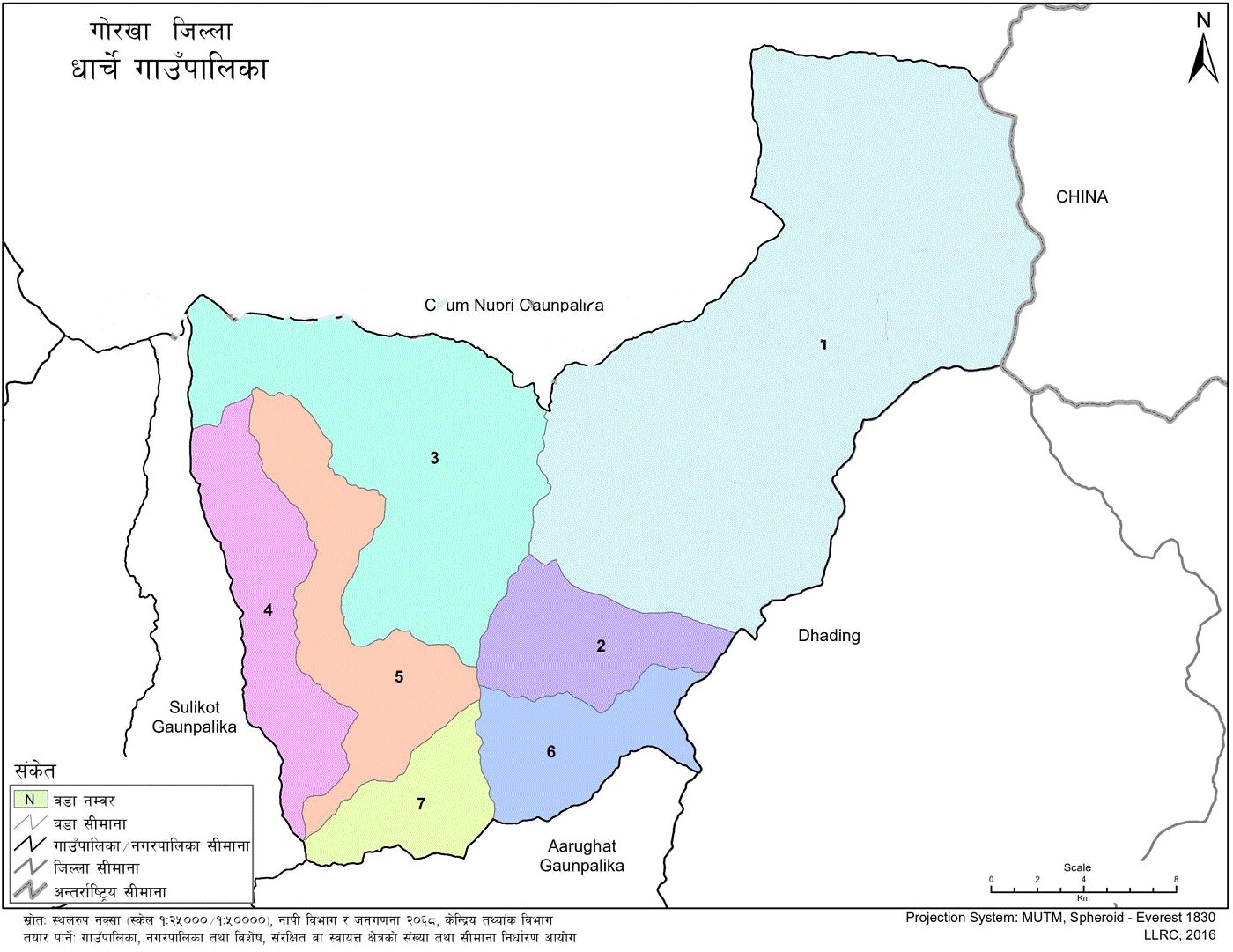
Dharche is divided into 7 wards and was formed by merging the previous VDCs of Kerauja, Uhiya, Laprak, Gumda, Kashigaun, and Lapu from the former Ilaka No. 12.
Eastern Border: Dhading District and Tibet, China
Western Border: Barpak Sulikot Rural Municipality
Northern Border: Chumnubri Rural Municipality
Southern Border: Aarughat Rural Municipality
Temperature Range: 5°C (minimum) to 29°C (maximum)
Total Households: 3,932
Total Population: 18,724
Annual Population Growth Rate: 2.18%
Bon
Buddhist
Hindu
Christian
Gurung: 83.9%
Ghale: 11%
Bishwakarma: 4.9%
Other ethnicities: 0.2%
Agriculture: 40%
Wage Labor: 23%
Students: 22.5%
Foreign Employment: 7.5%
Other Professions: Remaining percentage
Agricultural Land: 9.83%
Forest Area: 36.67%
Grasslands and Shrubs: 20%
Barren and Rocky Land: 30.38%
Snow-covered Area: 2.53%
The remaining includes ponds, lakes, etc.
The Constitution of Nepal (2072 BS) defines Nepal as a federal democratic republic, with power divided among federal, provincial, and local levels. Currently, there are 7 provinces and 753 local governments operating under this structure.
The constitution assigns 22 exclusive and 15 concurrent powers to local governments, ensuring the executive, legislative, and judicial branches. These rights help deliver democratic services, promote inclusion, and ensure representation of marginalized groups.
The Local Government Operation Act (2074) was introduced to implement constitutional mandates.
As per Chapter 6, Section 24(1) of the Act, every rural municipality is required to develop periodic and mid-term plans, followed by annual planning. Dharche Rural Municipality has formulated and implemented its periodic development plan in accordance with this provision.
Coordinates: 28.1357° N, 84.5228° E
Area: 652 sq. km
Altitude: 630 to 7,309 meters above sea level
Number of Wards: 7
Formed by Merger of: Kerauja, Uhiya, Laprak, Gumda, Kashigaun, and Lapu
East: Dhading District
West: Barpak Sulikot Rural Municipality
North: Chumnubri Rural Municipality
South: Aarughat Rural Municipality
Northeast Border: Connects with China (Tibet Autonomous Region)
Maximum Temperature: 29°C
Minimum Temperature: 5°C
Household Count: 3,932
Population: 18,724
Population Growth Rate: 2.18% annually
Religion:
Buddhist: Majority
Hindu: Second highest
Bon: Third
Christian: Least
Ethnicity:
Gurung: 83.9%
Ghale: 11%
Bishwakarma: 4.9%
Others: 0.2%
Agriculture: 40%
Daily Wage Labor: 23%
Students: 22.5%
Foreign Employment: 7.5%
Others: Remaining share
Cultivated Land: 9.83%
Forest Coverage: 36.67%
Grassland and Shrub Area: 20%
Barren and Rocky Land: 30.38%
Snow-covered Region: 2.53%
Lakes and Water Bodies: The Remaining portion

.jpg)