



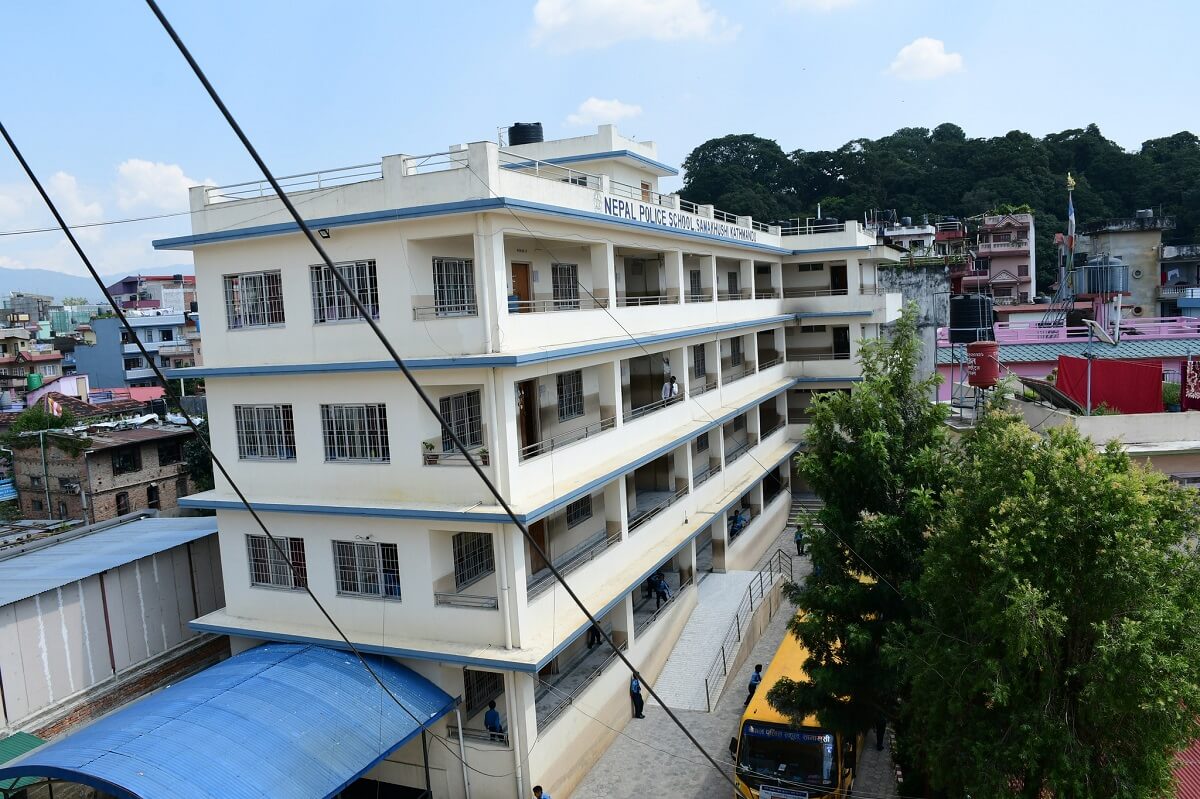
Nepal Police School, Samakhusi is a co-educational, non-profit day school established in 2055 B.S. (1999 A.D.) under the welfare program of the Nepal Police organization. The school was founded to provide academic opportunity to the children of Nepal Police families and also admits students from the general public. Located at Ranibari, Samakhusi, Kathmandu, it offers education from Nursery to Grade 10.
The school combines classroom study with discipline, values, and practical learning. Its stated focus is not limited to academic performance alone. It gives attention to physical, social, emotional, and moral development, and it organizes teaching in ways that connect study with daily life. Students learn through regular classwork, assignments, tests, presentations, group activities, and practical exercises. Digital classes, library use, lab work, sports, counseling, and co-curricular participation are all part of the school environment. Nepal Police School also places importance on parent-school communication and presents education as a shared effort among students, teachers, guardians, and school leadership.
Co-educational, non-profit day school
Established in 2055 B.S. (1999 A.D.)
Operates under the welfare program of Nepal Police
Located at Ranibari, Samakhusi, Kathmandu
Offers education from Nursery to Grade 10
Serves Nepal Police families and the general public
Follows the national curriculum
Uses virtual classrooms and multimedia-based digital classes
Provides computer lab, science lab, library, and e-library
Uses MIDAS, Kullabs, and UCMAS in the learning environment
Offers counseling for students and parents
Runs merit-based and need-based scholarship schemes
Provides transportation service across the valley
Conducts sports, scouting, and Red Cross Circle activities
Motto: Better schooling for ideal citizens
Nepal Police School, Samakhusi was established with a defined welfare and educational purpose. It began as a school for the children of Nepal Police personnel and later expanded its reach to include students from outside the police community. This dual identity remains central to the school. It continues to serve Nepal Police families while functioning as an open day school for a wider student population.
The school presents itself as a place where academic work and conduct are closely linked. It welcomes students from different faiths, races, and backgrounds, and it emphasizes value-based education alongside regular classroom instruction. Its educational direction rests on the idea that children should develop intellectually, socially, emotionally, and physically during their school years.
The school motto, “Better schooling for ideal citizens,” reflects that position clearly. Nepal Police School does not frame education only in terms of examinations. It places equal weight on discipline, responsibility, cooperation, and moral conduct. This approach appears in its teaching methods, scholarship structure, counseling services, sports training, and leadership messages. The school also identifies family involvement as an important part of student progress and encourages continued communication between the school and guardians.
Nepal Police School, Samakhusi was established in 2055 B.S. (1999 A.D.) under the welfare program of the Nepal Police organization. Its original purpose was to provide academic privilege to the children of Nepal Police families. Over time, it also began enrolling students from the general public while keeping its original mission in place.
The school is located at Ranibari, Samakhusi, Kathmandu. Its location is described as central within the valley and set away from crowding. This gives the school a peaceful setting while still remaining accessible to families living in different parts of Kathmandu Valley.
The institution identifies itself with the national curriculum and with the aim of contributing to educational development. It does not describe schooling only as routine instruction. Its stated goals connect formal education with character formation, social service, and preparation for responsible citizenship. The school has also expressed an institutional goal of promoting itself into higher secondary level with different academic streams.
Its admission culture is inclusive. Although it was established under a welfare structure linked to Nepal Police, it welcomes students from different communities and backgrounds. This combination of a defined founding purpose and wider public access gives the school a distinct institutional character.
Nepal Police School provides formal school education from Nursery to Grade 10.
Nursery
Primary level classes
Lower secondary level classes
Secondary level classes up to Grade 10
The school follows the national curriculum and organizes teaching through regular classes, assignments, tests, presentations, and examinations. Evaluation includes formative assessment and regular classroom performance. This means student progress is tracked through continuing academic work rather than through a single examination pattern alone.
The school also uses MIDAS, Kullabs, and UCMAS as part of its learning environment. Virtual classrooms and multimedia-based digital classes are included in the teaching structure. These tools support subject learning and classroom participation and show the school’s effort to combine the national curriculum with digital learning support.
The school’s admission process includes form submission, document verification, and admit card issuance.
Students are required to fill in and submit the admission form
After proper submission, the student receives an identity number called “Application ID”
The submitted documents are verified and approved by the school
After verification and approval, the admit card is sent through email
The admit card can also be obtained through the given link by entering the Application ID and the student’s date of birth
Applicants are requested to provide an official email address and mobile number during the process
The school also operates scholarship support on merit basis and need basis. Merit test performance is part of the scholarship scheme in relevant cases.
The listed documents for the form and admission process include:
Digital copy of the student’s passport-size photograph
Digital copy of the parent’s photograph
In the case of police personnel, a photograph in uniform
Birth certificate
Mark sheet of the last quarterly examination of the class being studied
Recommendation letter from the office where the rank is opened, for incumbent police personnel
Pension certificate for children of retired and deceased police personnel
These requirements reflect the school’s admission structure for both Nepal Police families and other applicants.
Nepal Police School describes its teaching approach as holistic, constructive, child-friendly, and student-centered. The school states that it tries to connect brain, body, and spirit in the learning process. This approach is intended to help students fulfill their potential and become lifelong learners.
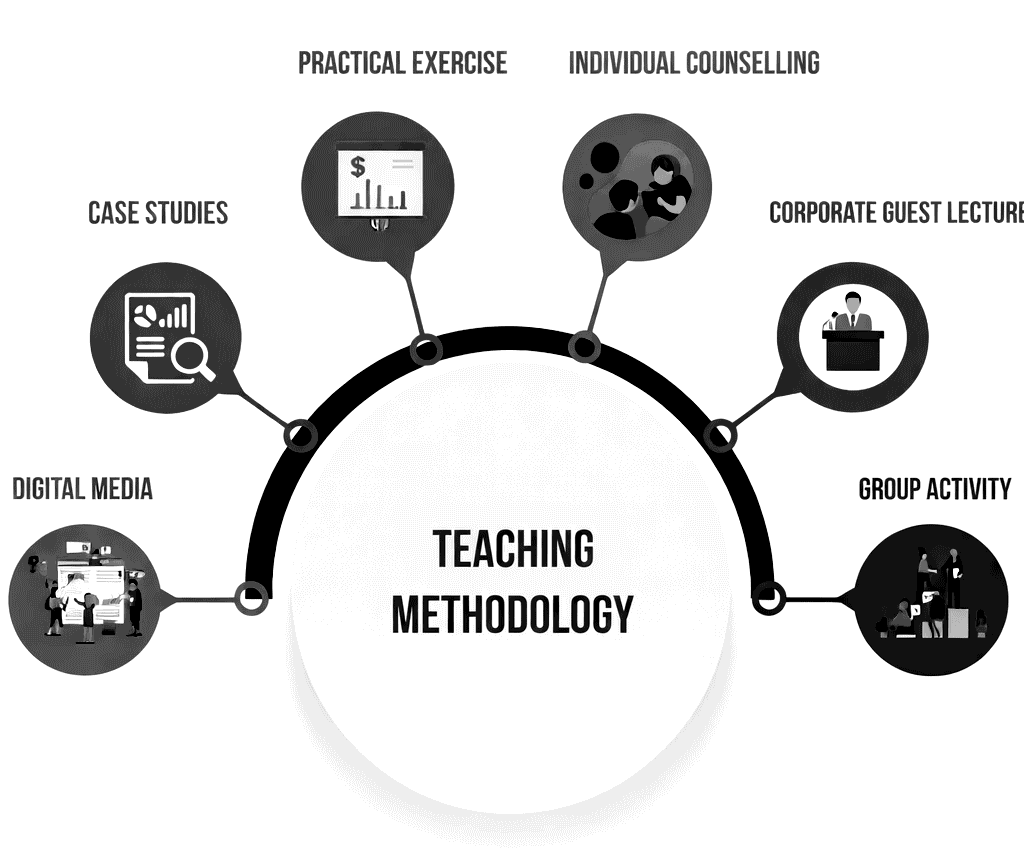
Teaching is linked to a curriculum that the school describes as meaningful and relevant to life. Students are guided not only in knowledge but also in character, values, simplicity, cooperation, and mutual respect. The school emphasizes cooperative action, social service, and critical thinking within the teaching-learning process.
The school also presents the learning environment as familiar and supportive. It describes the school as a second home and the home as the first school. On that basis, classroom teaching is organized in a friendlier setting, with preference given to student-centered techniques instead of passive instruction.
Assessment is regular and structured. Students take tests, assignments, and examinations on a continuing basis. The school states that it applies formative evaluation and a reward system rather than negative motivation and punishment. This gives the teaching system a clear framework for monitoring progress and encouraging participation.
Practical and interactive learning activities listed by the school include:
Practical exercises
Individual counselling
Case studies
Corporate guest lecture
Digital media
Group activity
The school also uses virtual classrooms and multimedia-based digital classes, and its leadership has highlighted the move toward digital instruction in place of only traditional classroom delivery. Within this structure, teachers are expected to support learning, discipline, skill-building, and personal development.
Nepal Police School has developed a set of academic and support facilities for school-level education.
Virtual classrooms
Multimedia-based digital classes
24-hour internet access
Computer lab
Science lab
Library
E-library
Well-ventilated classrooms
Peaceful school setting
Transportation service across the valley
The school states that it is committed to providing technology and laboratory support. Students use the computer lab, library, and e-library as part of their regular academic environment. The science lab supports experiments and practical science learning.
The library and e-library add reading and reference support to classroom study. These facilities are presented as part of the school’s effort to strengthen study habits, independent learning, and access to educational resources. The school has also stated a mission of enhancing the ability of the science department to address different learning styles and provide a stronger academic environment.
Transportation is another established service. The school provides bus service to the nearest school bus stations connected to wards throughout the valley. This supports daily attendance and offers families a secure and organized transport option.
Student life at Nepal Police School is built around discipline, participation, and shared responsibility. The school aims to create an environment where students learn through routine study, respectful conduct, sports, service activities, and regular engagement with teachers and peers.
Its educational culture combines academic expectations with moral and social learning. Students are encouraged to cooperate with others, show mutual respect, and take responsibility for their work and behavior. This gives school life a clear structure in which classroom performance and conduct are closely connected.
Counseling is part of the school experience for both students and parents. This indicates that the school treats emotional support and family communication as part of the educational process rather than as separate concerns. Parent-school communication is also emphasized in the leadership messages.
Because the school admits students from Nepal Police families as well as the general public, the student body includes learners from different backgrounds. The school’s focus on discipline, value-based education, and shared participation provides a common framework for that experience. Annual sports meets and cultural programs also add to student life by creating opportunities for school-wide participation beyond regular lessons.
Co-curricular and extracurricular activities are treated as part of the school program.
Football
Basketball
Cricket
Martial arts
Karate
Badminton
Indoor games
Outdoor games
Annual sports meets
Cultural programs
Scout activities
Red Cross Circle participation
The school states that sports training is conducted through expert sports persons from Nepal Police personnel. This gives the sports program a structured basis and connects it with the school’s emphasis on discipline, teamwork, and persistence.
Scout activities and the Red Cross Circle add a service-oriented dimension to school life. These activities are linked with qualities such as loyalty, courtesy, courage, trustworthiness, duty, and cleanliness in thought, word, and deed.
The school provides scholarships under both merit-based and need-based criteria.
Scholarship scheme available on merit basis
Scholarship scheme available on need basis
Merit test performance is used in scholarship criteria
Need-based scholarship support is available for talented but needy students
Special scholarship program is available for children of police personnel
Special scholarship support extends to children of retired police personnel
Special scholarship support also includes children of deceased police personnel and Ammar Praharis
This scholarship structure reflects the school’s welfare foundation and its stated effort to keep education accessible for eligible students.
The school’s growth and development can be seen through a series of institutional milestones.
Established in 2055 B.S. (1999 A.D.) under the Nepal Police welfare program
Expanded admission beyond Nepal Police families to the general public
Continues to provide education from Nursery to Grade 10
Introduced virtual classrooms and multimedia-based digital classes
Integrated MIDAS, Kullabs, and UCMAS into the learning environment
Maintains computer lab, science lab, library, and e-library facilities
Provides counselling support for students and parents
Organized Red Cross Circle within the school
Continues regular sports and co-curricular training
Provides transportation service across the valley
Expressed institutional direction toward higher secondary expansion
Established under the welfare program of Nepal Police
Offers education from Nursery to Grade 10
Admits both Nepal Police families and the general public
Follows the national curriculum
Combines academic work with discipline and value-based learning
Uses virtual classrooms and multimedia-based digital classes
Provides computer lab, science lab, library, and e-library
Includes counseling support for students and parents
Offers sports, scouting, and Red Cross Circle participation
Runs scholarship schemes on merit basis and need basis
Provides transportation across the valley
Located at Ranibari, Samakhusi, Kathmandu
The Commandant’s message presents Nepal Police School as a caring school community where student needs are treated as a priority. He states that the school offers comprehensive education from Nursery to Grade 10 and links that purpose with the school motto, “Better schooling for ideal citizens.” His message also places emphasis on academic learning, social growth, personal growth, and extra-curricular activity.
The Commandant states that every student is unique and capable of learning and that the responsibility of the school is to nurture each learner to maximum potential. He also stresses appreciation of diversity, care for others, and active respect for the country. Parent-school cooperation is another major part of his message. He encourages parents to contact the school, ask questions, and share suggestions about the school and its programs.
The Principal’s message welcomes students, parents, and guardians to Nepal Police School, Samakhusi and describes the school as committed to quality and value-based education. He expresses thanks to academicians, Nepal Police personnel, teachers, parents, students, and well-wishers for their contribution to the development of the school.
His message also states that the school is committed to knowledge, skill, responsibility, discipline, and commitment as five pillars of success. He connects these qualities with the combined effort of students, teachers, guardians, police staff, the school management committee, and the community. He further notes that the school has initiated multimedia-based digital classes and encourages continued participation and cooperation from all stakeholders.
Nepal Police School, Samakhusi is a school with a clear founding purpose and a defined educational structure. Established under the Nepal Police welfare program, it continues to serve the children of police families while also admitting students from the general public. It offers Nursery to Grade 10 education supported by the national curriculum, regular assessment, digital classes, library and lab facilities, sports training, counseling, scholarships, and transportation.
Its school model combines academic study with discipline, values, practical learning, and participation. The institution’s stated direction remains closely tied to responsible citizenship, structured teaching, and inclusive access within its admission framework. With its location at Ranibari, Samakhusi, and its continued emphasis on both education and conduct, Nepal Police School holds a clear place within the school landscape of Kathmandu.
Nepal Police School, Samakhusi is a co-educational, non-profit day school.
The school was established in 2055 B.S. (1999 A.D.).
It was established to provide academic opportunity to the children of Nepal Police families.
Yes. The school also admits students from the general public.
The school is located at Ranibari, Samakhusi, Kathmandu.
The school offers education from Nursery to Grade 10.
Yes. The school uses virtual classrooms, multimedia-based digital classes, MIDAS, Kullabs, and UCMAS.
The school provides a computer lab, science lab, library, e-library, internet access, and transportation service.
Yes. The school provides scholarships on merit basis and need basis, including support for eligible children of police personnel, retired police personnel, deceased police personnel, and Ammar Praharis.
The school offers football, basketball, cricket, martial arts, karate, badminton, scouting, Red Cross Circle participation, annual sports meets, and cultural programs.
Yes. Counseling services are available for students and parents.
The school motto is “Better schooling for ideal citizens”.

