




Skills-First Hiring: The Quiet Shift in the Global Job Market
In past decades, the main basis for getting a job was a university degree. Having a certificate from a reputed institution was taken to mean, “You are competent.”
But at this turning point in 2026, a major silent revolution is unfolding in the global labor market. It is called “Skills-First Hiring,” or “skills-first recruitment.”
Its direct meaning is this: instead of focusing on which university stamp appears on your résumé, employers are increasingly prioritizing what you can actually do. This change is not limited to the tech sector. It is spreading rapidly across finance, health, management, and manufacturing as well.
Problem: The Growing Gap Between Degree and Skill
The main problem many students face today is being “unemployed despite having a degree.” The core reason is the mismatch between academic curricula and industry demand.
-
Irrelevant curricula: Many universities still teach theory based on models from 10–15 years ago, while technology and ways of working in the market change every two years.
-
Lack of experience: By the time students complete undergraduate study, they may have theoretical knowledge, but they often lack practical problem-solving experience.
-
Financial burden: After earning an expensive degree, if they still must learn new skills again to enter the job market, students face mental and financial pressure.
To address this problem, large companies around the world have changed their hiring policies.

What Is “Skills-First” Hiring?
According to the World Economic Forum (World Economic Forum), “Skills-First Hiring” is a practice where a worker’s qualification is evaluated not on the basis of academic certificates or past titles, but on the basis of real capability and skills.
In this, companies focus on three main things:
-
Hard Skills: Technical capability (for example: coding, data analysis, operating machines).
-
Soft Skills: Human capability (for example: communication, leadership, problem-solving, adaptability).
-
Aptitude: The ability to learn new things (Learnability).
Global Statistics and Evidence
According to research, around 45% of employers on LinkedIn have now started giving more importance to a candidate’s skills than to their degree. Companies such as Google, IBM, Apple, and Tesla have already announced that a university degree may not be mandatory for many roles.
-
IBM example: IBM has removed the degree requirement for many of its technical roles in the United States. They introduced the concept of “New Collar Jobs,” where skills are the main qualification.
-
LinkedIn report: Looking at data from 2022 to 2025, companies that use “Skills-Based Hiring” show a 9% higher employee retention rate.
What This Means for Students: What to Do Now
If you are a student, this shift is not only a challenge, but also a major opportunity. Now you need to change how you build your career.
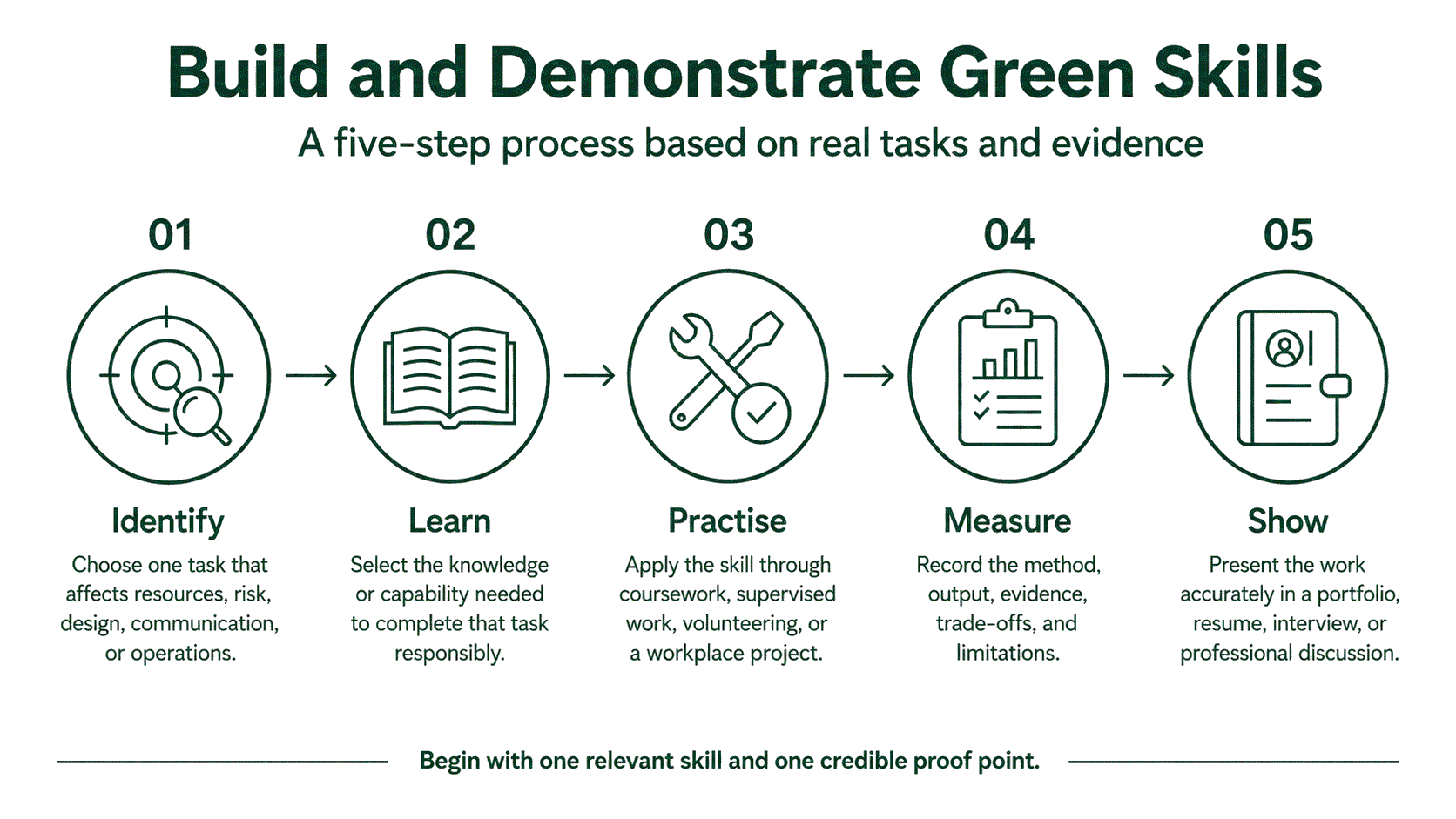
a. Skill Identification
Research which skills are most in demand right now in the field you want to enter.
For example, if you want to go into marketing, a “marketing degree” alone is not enough. You need practical knowledge of SEO, content strategy, and data analytics.
b. “Micro-credentials” and Online Learning
A degree takes four years, but learning a skill may take only a few months. Specialized courses from platforms like Coursera, edX, or Google Career Certificates can validate your qualifications.
Employers around the world have started recognizing these certificates.
c. Building a Portfolio
Showing what you learned is more powerful than only saying it.
-
If you are a programmer, keep your code on GitHub.
-
If you are a writer, build a collection of blogs or articles.
-
If you are a designer, publish your designs on Behance.
Your portfolio is the new era’s “degree.”
The Necessity of Soft Skills
With the rise of AI (Artificial Intelligence), technical skills can change quickly, but human skills remain valuable.
In the “Skills-First” model, companies give high priority to the following skills:
-
Critical Thinking: The ability to understand any problem deeply and find a solution.
-
Emotional Intelligence: The ability to understand others’ feelings and perspectives while working in a team.
-
Adaptability: The ability to adjust to changing technology and environments.
So, Is a Degree Now Useless?
The purpose of this article is not to undervalue a degree. A degree gives you foundational discipline, a network, and theoretical knowledge.
But a degree alone is not a guarantee of employment. The ideal situation is a combination of degree plus solid skills.
Even if you do not have a degree but have exceptional skills, doors are now open for you. This is the most positive aspect of the “Skills-First” era.
It helps reduce inequality in education.
Practical Solution: 5 Things Students Should Do Starting Today
-
Skill Mapping: List the five key skills required for your dream job.
-
Project-based Learning: Build something—whether a small app or a business plan.
-
Networking: Connect with experts in your field on LinkedIn and ask what skills they use.
-
Mentorship: Treat an experienced person in your field as a mentor. Advice from someone with 20 years of experience can reduce 10 years of struggle.
-
Lifelong Learning: Do not think learning ends after college. In a skills-first world, the one who keeps learning is the one who lasts.
Psychological Impact and Confidence
Many students feel discouraged when they do not get into a “good college.” Skills-first hiring gives such students new self-confidence.
Where you came from can no longer stop where you can go. Your hard work and skills are your identity.
Conclusion
“Skills-First Hiring” is not just a trend. It is a global labor market necessity. It has democratized qualification.
The future belongs to students who do not only have a degree certificate, but also have skills in their hands and problem-solving thinking in their minds.
The final truth students must understand is this: your value is not determined by your certificate, but by the value you create for society and for a company.
So, start learning a specific skill from today. The world is waiting for your skills.






Comments 0
No comments yet. Be the first to start the conversation.