



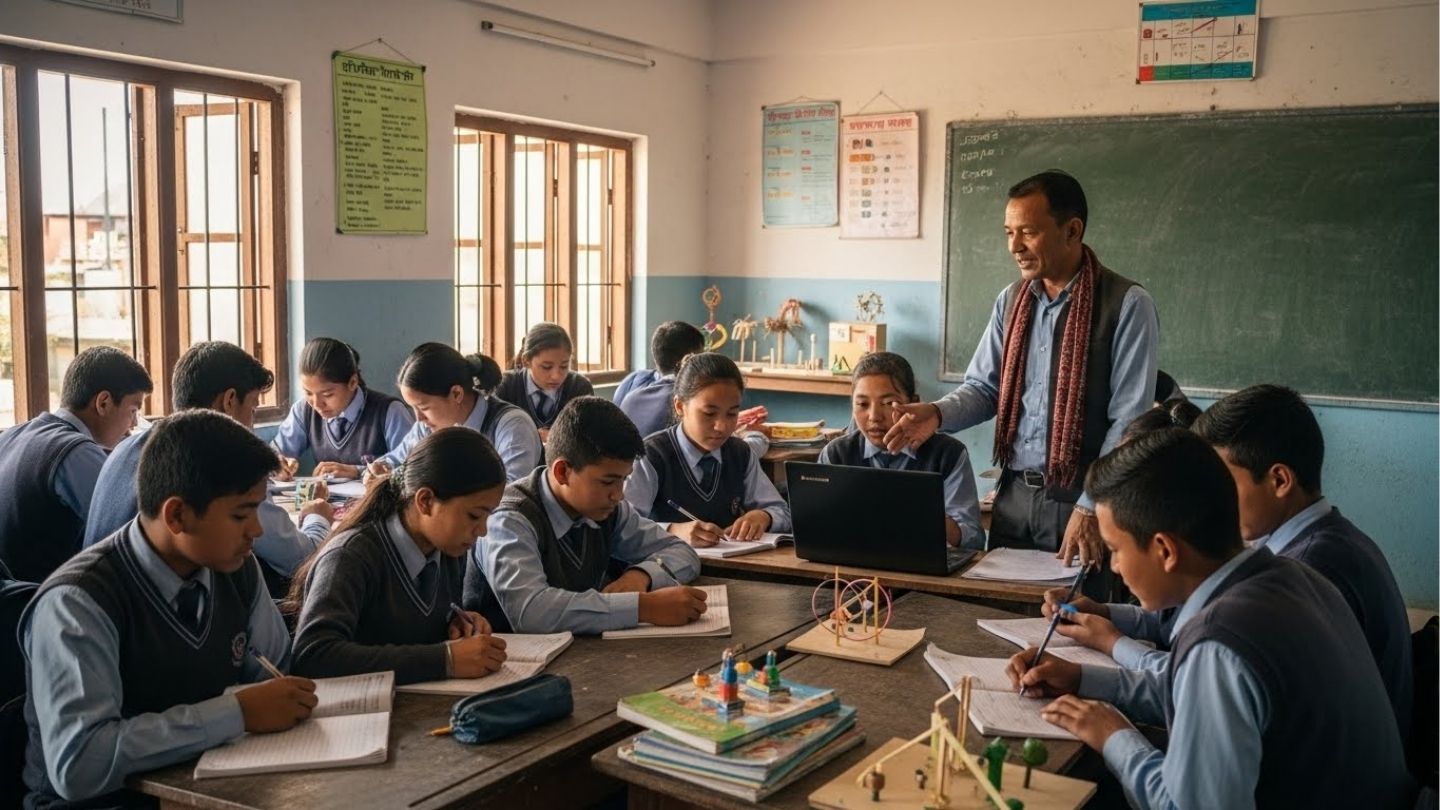
Full Learning and Human Resource Development in Nepal
In Nepal, many efforts have been made, from school to higher education, to improve learning and produce competent human resources.
In addition to focusing on physical facilities such as buildings, libraries and laboratories for educational institutions, significant investment has gone into curriculum development, conceptual orientation, training, refresher training, teaching material development and teaching methods in line with changing times.
Educational personnel have also been managed in what appears to be adequate numbers.
However, only a small number of individuals seem to pass through all levels of education, and even among those who do, there is a noticeable lack of quality.
Only a few of the produced human resources obtain employment or manage to create self-employment.
The fact that the system produces relatively few human resources, and that even those produced struggle to find work, is mainly due to the absence of complete learning in the classroom.
For full learning, students in the classroom need to acquire knowledge, skills, attitude and competence.
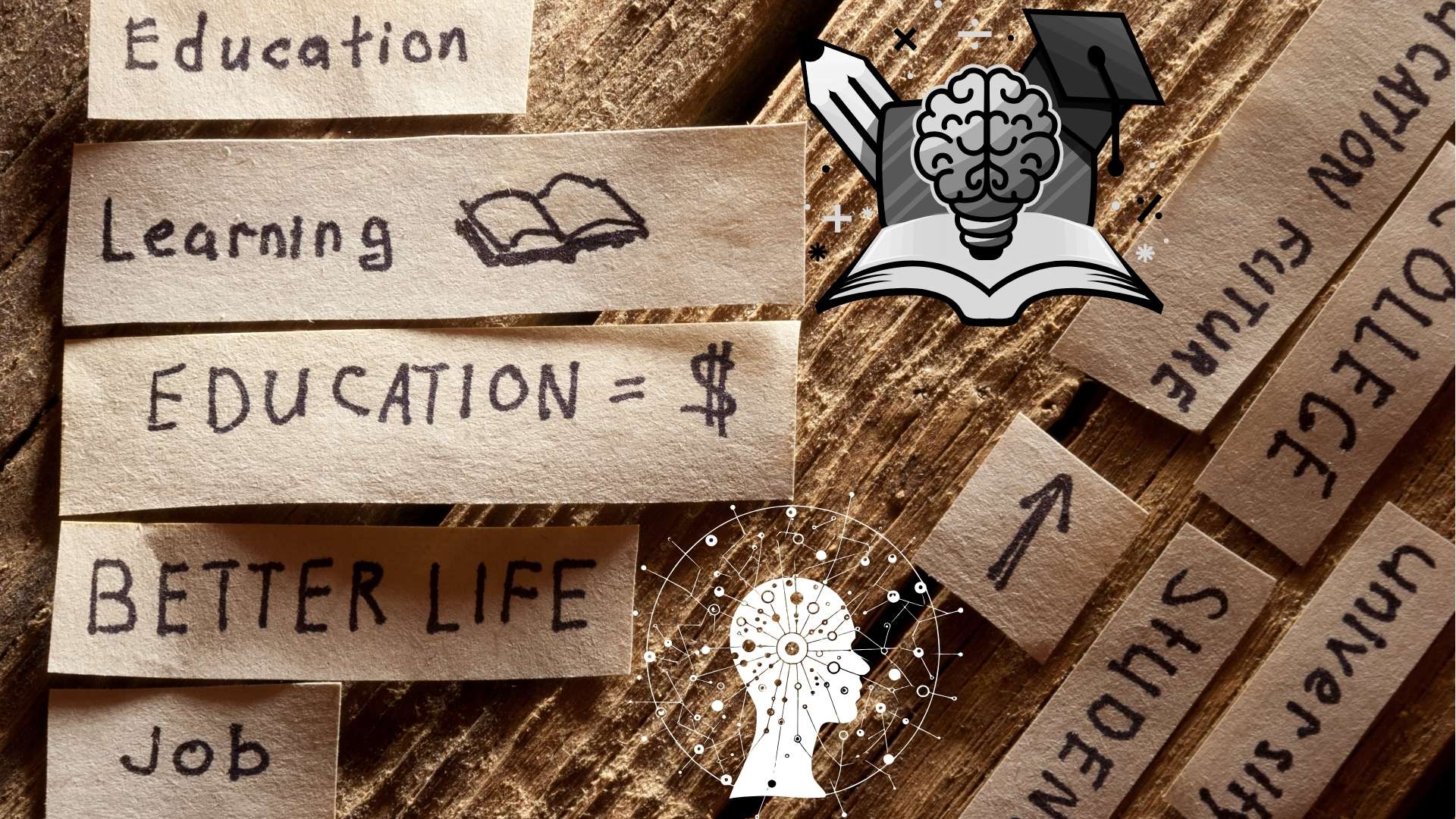
Knowledge, Skills, Attitude and Competence
Knowledge
Knowledge refers to the information that the mind receives.
Facts, principles, rules and the concepts of subject matter being retained in the mind constitute knowledge.
This type of knowledge stays in the brain but can also fade with time and forgetfulness.
Skills
Applying knowledge in practice is skill.
Solving problems, using one’s hands and body, making things, operating tools, preparing tables, and expressing acquired knowledge in one’s own way to make it lasting are all aspects of skill.
Examples include operating a computer, playing volleyball, drawing maps and being able to communicate effectively.
Attitude and Disposition
Attitude includes positive thinking and perspective, the ability to adjust oneself to family, society, nation and the wider world, showing respect to parents, relatives, elders and seniors, speaking kindly, and being a person with minimal greed and attachment.
Loving and embracing the civilisation, culture and traditions of one’s own society and country, respecting rather than rejecting external styles of dress and food, proudly owning one’s own identity and becoming a truly patriotic citizen are part of behavioural and attitudinal development.
Working for the welfare of family, society and the nation, and becoming a good citizen, fall within this practical attitude dimension.
Competence and Capability
The state in which knowledge, skills and attitude are put into practice is competence or capability.
The overall capacity arising from the mix of knowledge, skills and attitude is what we call competence.
The ability to display and demonstrate one’s knowledge, skills and attitude directly to others is competence.
At a minimum, those who complete school education should be able to enter the labour market in their own field.
Higher education should be something they pursue only when it is genuinely needed.
Conditions for Continuous Learning and Development
Developing all four dimensions requires continuous learning.
Such learning can be gained through self-experience and through training.
To expand knowledge, learners must be able to access learning resources.
Libraries should have sufficient books and, in particular, there should be adequate availability and access to electronic (digital) materials.
Learners should be able to understand the same subject from multiple angles and be able to solve problems on their own.
To develop skills, there needs to be practical exercises, cooperative activities, peer-to-peer knowledge exchange and the use of technology in learning.
If individuals do not acquire the skills required in the twenty-first century during their learning process, they will struggle to establish themselves in society.
To develop the attitude dimension, it is necessary to foster positive thinking.
Educational environments should enable learners to give constructive feedback, integrate ethical and moral values into learning, love their family, society and country, show appropriate respect to parents, neighbours and relatives, dedicate themselves to the welfare of all human beings, and build self-confidence.
They should be prepared to play leadership roles.
To enhance competence or capability, learners must be able to solve real-life problems, learn continuously from experience, conduct self-assessment, design and complete projects, draw conclusions from them and communicate those conclusions.
They should become human resources capable of generating new knowledge.
Classroom Environment and Student-Centred Learning
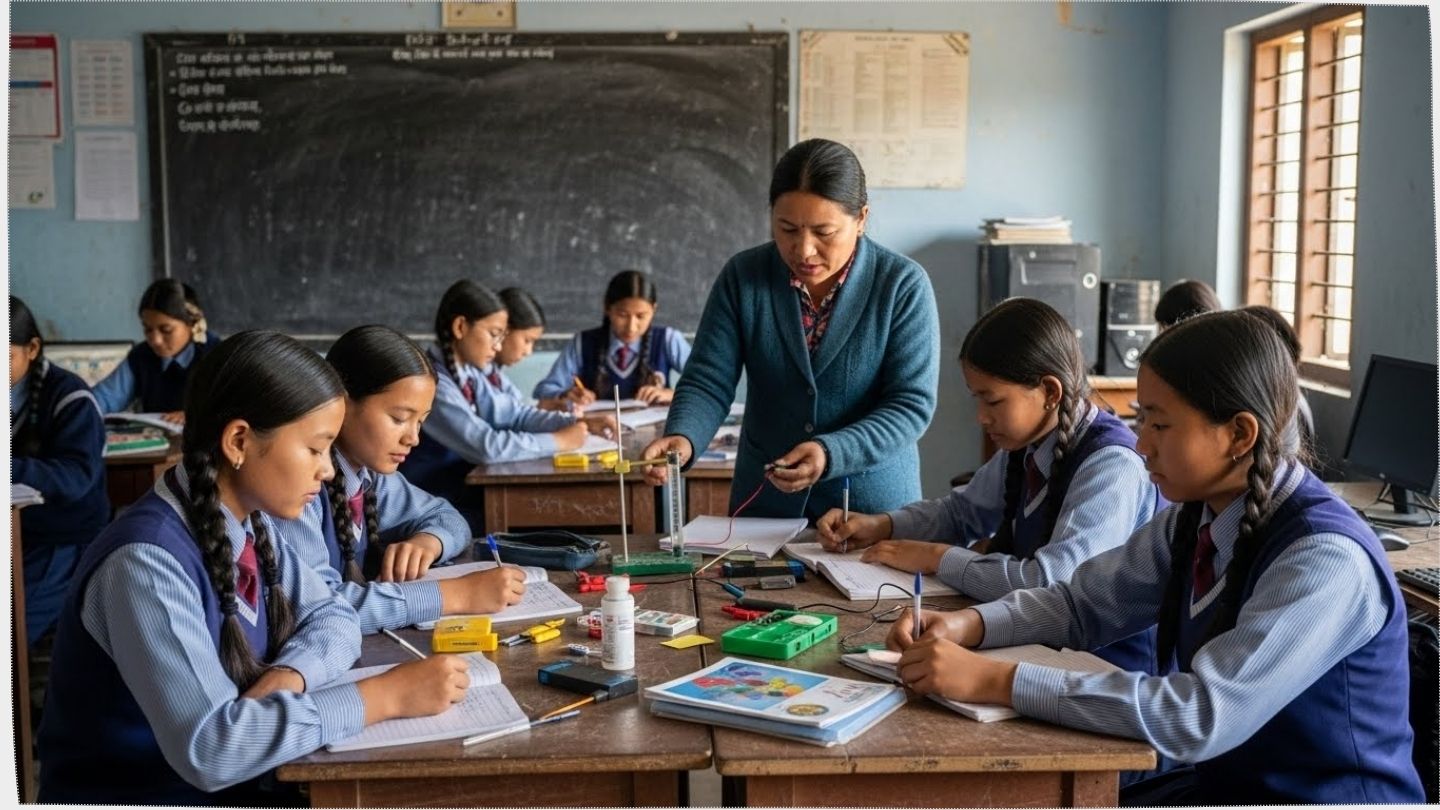
For complete learning, a basic learning environment must be created.
Student-centred teaching methods are a crucial element.
Students should be encouraged to ask questions, engage in open dialogue, and participate in classrooms that are inclusive and allow everyone to learn at their own pace.
The teacher should act primarily as a counsellor or facilitator who creates an environment where students can learn.
A teacher is like a stage builder, and students are the performers who display their talents on that stage.
It is essential to manage the overall educational institution, manage the classroom, connect and use technology appropriately, and adopt suitable teaching methods.
If the classroom offers adequate space for discussion, creation and construction, presentation and conceptual clarification, all four dimensions can be achieved and full learning can take place.
Nurturing Inherent Talent and Providing Guidance
In Nepal, schools have not yet been able to create an environment where children’s innate qualities and inherent talents are identified and nurtured, and where students can achieve complete learning while developing their skills.
There is also a shortage of teachers who can identify each child’s inherent talent and provide guidance on which field of study would enable that child to achieve their full potential.
In countries that have successfully made teaching and learning child-centred and that have advanced not only education but also politics, government functioning, transparency and the right placement of competent people in appropriate roles, teachers and professors are able to provide strong counselling services.
They are found to support students in their learning by offering correct guidance.
If at least one counsellor teacher could be produced in each educational institution in Nepal, timely guidance could be provided so that students are not confused or misled.
They could be helped to choose fields of study that match their abilities and interests, to complete those studies successfully, and to establish themselves in society.
Such human resources could become good citizens, contribute to the country and, ultimately, also contribute to the wider world.
Teacher Professionalism and Collaboration
Teachers need to be made professional.
Conditions for national and international collaboration should be created.
Teachers must be prepared to transfer learning in ways that fit changing times and circumstances, to bring about change in teaching, and to integrate technology into teaching methods.
In today’s world, the strong belief that “I can do something on my own” is important because it builds self-confidence.
However, work done through collaboration tends to be more reliable and trustworthy.
If international collaboration can also be built on top of this, it becomes even better and teachers’ confidence grows further.
Teachers and professors do receive in-service training and refresher training.
The capacities mentioned above are not completely absent.
Even if they are not of a world-class standard, there is no complete drought of confidence either.
However, these capacities have not been fully used in the classroom.
There is a need to bring change in the development and enrichment of teachers.
Teachers and professors should be able to devote themselves tirelessly to the development of their family, society and country, as well as to the advancement of their educational institutions.
Service Conditions, Motivation and Responsibility
It is not enough to simply blame teachers and walk away.
It is not sufficient to say that they failed to manage schools, failed to manage classrooms, failed to use their teaching skills in the classroom, failed to ensure complete learning for students, produced unemployed graduates, failed to foster self-employment, failed to be truly academic, or failed to be professional.
We must also ask whether the services and facilities they receive are enough to meet their minimum living needs.
Are they able to run their households and educate their own children without constant worry?
Do they receive even a fraction of the pay and benefits that teachers in neighbouring countries receive?
These questions need serious consideration.
To encourage educational human resources to walk firmly on the path of duty, we must pay attention to their livelihoods.
They must be provided with adequate remuneration to keep them motivated.
To manage their lives, many are forced to run to other institutions as well.
The attention of stakeholders in the federal, provincial and local governments is necessary.
How can a human resource with an empty stomach and a discouraged face remain fully alert to their responsibilities?
Even in terms of hierarchy, there seems to be a sense of discriminatory treatment in the services and facilities received by government employees of the same level.
There appears to be a relationship that looks like one group always gives and the other always takes.
Conditions must be created that attract the best human resources into the teaching profession.
If people choose teaching only when they cannot find anything else, can such a situation reform the education system?
When teachers are constantly worried about their service conditions and are in a state of agitation, how can teaching be excellent and how can human resources with full learning be produced?
The Need for Complete Learning
What is needed today is an overall educational environment that ensures complete learning.
Education should not stop at knowledge alone.
It must also develop practical skills, positive thinking and the capacity to apply learning in real life.




Comments 0
No comments yet. Be the first to start the conversation.