



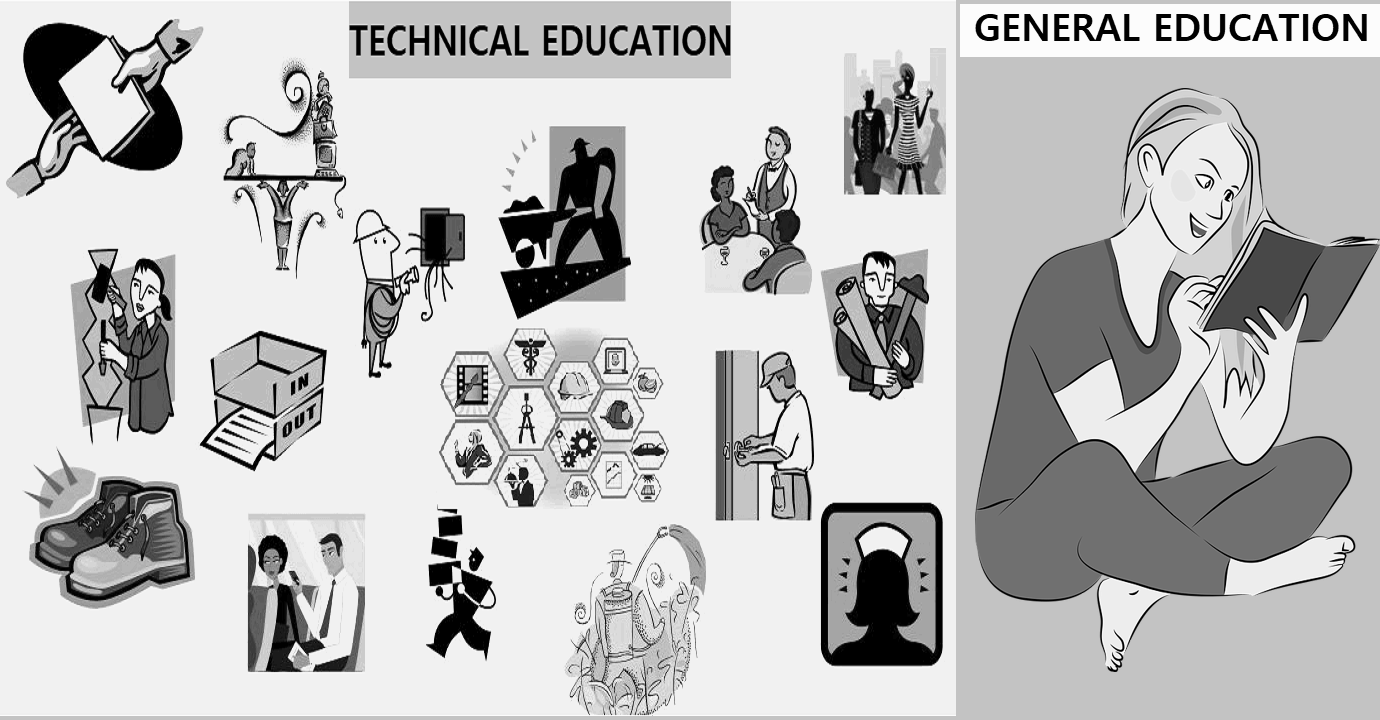
Choosing between academic education and technical education is not a question of which path is superior. The real decision is which route fits the student’s goal, learning style, study timeline, financial situation, recognition needs, and next step after graduation.
Academic education usually builds broad subject knowledge, theory, analysis, communication, and preparation for higher studies. Technical education focuses more directly on practical skills, tools, field methods, workshops, laboratories, and occupation-linked training. Both can be useful. Both can also disappoint when chosen through pressure, weak information, or unrealistic expectations.
Quick Answer:
Academic education may suit students who want broad future options, university study, research, professional degrees, or more time to choose a specialization. Technical education may suit students who prefer hands-on learning, want earlier practical exposure, and already have interest in a specific field such as engineering technology, agriculture, health support, hospitality, construction, electronics, or computer-related work.
Neither route should be chosen only because it sounds prestigious, job-oriented, affordable, or popular. The practical choice depends on program quality, qualification recognition, eligibility for further study, facilities, cost, location, and the student’s ability and interest.
Table of Content
- The Real Issue Behind the Choice
- Comparison Methodology
- Evidence Snapshot
- What Is Academic Education?
- What Is Technical Education?
- Quick Comparison Table
- Key Differences Between Academic and Technical Education
- Academic vs Technical Education in Nepal
- Personal and Social Factors
- Recommendation
- What Would Change the Verdict?
- Who Should Avoid Each Option?
- Common Mistakes to Avoid
- Decision Checklist
- Final Verdict
- Freshness and Verification Note
The Real Issue Behind the Choice
The confusion often begins with labels. Academic education is sometimes dismissed as “only theory,” while technical education is sometimes promoted as a direct route to employment. Both views are incomplete.
A strong academic program can include laboratories, projects, research, presentations, internships, and applied learning. A weak academic program can become exam memorization. A strong technical program can connect theory with supervised practice, competency assessment, and field exposure. A weak technical program can become narrow training without proper facilities or recognition.
The decision should not be based on advertisements, peer pressure, family comparison, or the belief that one route is automatically safer. The useful questions are practical: What does the student want to do next? What does the program actually teach? Who recognizes the qualification? What options remain open after completion?
Comparison Methodology
This comparison uses criteria that matter to students and parents: learning focus, curriculum, assessment, practical exposure, higher-study pathway, career relevance, flexibility, recognition risk, cost-related caution, and suitability for different learner types.
No numerical score is used because program quality, fees, facilities, teaching delivery, recognition, and progression routes vary by institution and must be checked from current official sources. The article separates verified facts from editorial judgment and avoids claims that cannot be supported.
Evidence Snapshot
Verified: The Council for Technical Education and Vocational Training (CTEVT) is Nepal’s national autonomous apex body in the TVET sector and works in areas such as policy formulation, quality control, competency-based curriculum, skill standards, and skills testing. The National Examination Board (NEB) is the official national examination-board source for school examination context. The Center for Education and Human Resource Development (CEHRD) is an official school-education body whose site includes education notices, including technical-stream-related notices.
Needs verification: Fees, eligibility, scholarships, admission deadlines, quotas, equivalence, licensing, salary, placement, and specific higher-study routes.
Depends on context: Institution quality, location, facilities, instructor capacity, student goal, family budget, and market condition.
Should not be assumed: Technical education guarantees employment, academic education is only theoretical, or one route is automatically better for all students.
What Is Academic Education?
Academic education is the study route most people associate with schools, colleges, and universities. It emphasizes subject knowledge, concepts, reasoning, reading, writing, examinations, research, and preparation for further study.
At school and college level, academic education may include science, management, humanities, education, law, social science, or other subject-based streams. Its main strength is flexibility. Students may later move toward degree, professional, teaching, research, business, public-service, or other pathways, depending on eligibility and performance.
Its limitation is that it may feel disconnected from real work if the institution provides little practical exposure. Students who choose academic education should actively build projects, internships, writing skills, presentations, portfolios, or field experience.
What Is Technical Education?
Technical education is education designed around practical knowledge and occupational skills. It is often linked with fields such as engineering technology, agriculture, health sciences, hospitality, construction, electronics, food technology, computer technology, and other applied areas.
In many systems, technical education is part of TVET, meaning Technical and Vocational Education and Training. In Nepal, recognized technical education is not the same as informal short training when it is delivered through approved institutions and follows formal curriculum, assessment, and certification systems.
Its strength is direct connection with practice. Its risk is narrower flexibility if the student later wants a different pathway. Before enrolling, students should check affiliation, recognition, facilities, practical hours, instructor capacity, licensing rules, and higher-study options.

Quick Comparison Table
| Criteria | Academic Education | Technical Education | Editorial Judgment |
|---|---|---|---|
| Main focus | Concepts, theory, analysis, broad subjects | Applied skills, tools, methods, practice | Academic education keeps options wider; technical education gives earlier practical identity. |
| Learning style | Reading, writing, lectures, discussion, exams, projects | Laboratories, workshops, demonstrations, fieldwork, competency tasks | The better fit depends on how the student learns and what the program provides. |
| Career link | Often indirect at first; stronger after specialization | Often more direct, depending on field and quality | Technical education may feel clearer early, but no route guarantees employment. |
| Higher study | Usually stronger for long academic progression | Possible in some routes, but rules vary | Technical students must verify equivalence and eligibility before admission. |
| Flexibility | Broad, especially before specialization | Strong within a specific field, sometimes narrower | Students unsure about one occupation may need a broader route. |
| Main risk | Too theoretical if practical exposure is weak | Too narrow if recognition or facilities are weak | Quality and official recognition matter more than labels. |
Key Differences Between Academic and Technical Education
1. Learning Focus: Broad Knowledge or Applied Skill
Academic education is stronger when a student needs a broad base before specialization. It supports careers and study plans that require long-term academic preparation, written analysis, conceptual understanding, research, or professional degrees.
Technical education is stronger when a student wants applied competence in a defined field. A technical student may learn how to use tools, follow procedures, work in laboratories, complete field tasks, prepare drawings, manage equipment, or solve practical problems in a sector.
The practical judgment is this: choose academic education when broad preparation matters more; choose technical education when hands-on training in a known field matters more.
2. Curriculum and Assessment
Academic programs usually organize learning by subjects. Assessment may include written exams, assignments, presentations, projects, laboratory work, and research tasks. The quality improves when students are required to think, write, discuss, solve problems, and apply ideas instead of only memorizing notes.
Technical programs usually organize learning around competencies. Assessment may include theory, practical demonstration, laboratory performance, fieldwork, project work, and skill testing. Technical education should not ignore theory. Good technical training explains why a process works, not only how to repeat it.
The verdict changes when program quality is weak. A strong academic program with projects may be more useful than a technical course with poor laboratories. A strong technical program with proper facilities may be more useful than an academic program that offers only classroom memorization.
3. Higher Study and Career Path
Academic education often supports a longer study route. Many students use academic streams as preparation for bachelor’s degrees, professional programs, research-based study, or competitive academic pathways. The first stage may not be job-specific, but it can keep several options open.
Technical education may provide earlier occupational exposure and a clearer skill identity. However, it should not be treated as a guaranteed job route. Employment depends on training quality, field demand, licensing or regulatory requirements, communication skills, location, experience, and individual performance.
For higher studies, technical students should be careful. Progression depends on the program, institution, equivalence rules, and university requirements. Ask for official written confirmation rather than relying on verbal counseling.
Academic vs Technical Education in Nepal
In Nepal, this comparison commonly appears after SEE/Class 10 and around Class 11 or Class 12. Students may compare general academic streams with technical streams, CTEVT diploma or pre-diploma pathways, or other skill-based routes.
For TVET-related decisions, CTEVT is the key official source. For national school examination context, NEB is relevant. For school-education implementation notices, including technical-stream related notices, CEHRD is also relevant. For current program, admission, examination, or equivalence details, students should also check the relevant institution, university, council, or regulatory body.
Students should not rely only on social media posts, banners, or verbal claims. If an institution says a diploma leads to a specific bachelor’s program, ask which university accepts it and under what rule. If it claims strong employment outcomes, ask for transparent evidence, not only testimonials.
Personal and Social Factors
Education choices are affected by family expectations, local reputation, travel distance, cost, peer influence, and fear of choosing the wrong path. Technical education can be reasonable when the student is interested in the field and the program is recognized. Academic education can be reasonable when the student wants higher studies or is not ready to specialize.
Either choice becomes risky when it ignores interest, recognition, practical exposure, or long-term planning. Parents should avoid treating one route as a status symbol and the other as a shortcut. The better discussion is whether the path fits the student’s ability, support system, and verified next step.
Recommendation
Choose Academic Education If
Choose academic education if you want broad study options, enjoy subject-based learning, plan to enter university, need preparation for professional degrees, or are not ready to choose one occupation.
It may also suit students who want time to develop writing, reasoning, mathematics, research, communication, or analytical skills.
Choose Technical Education If
Choose technical education if you prefer hands-on learning, already have interest in a specific field, want earlier practical exposure, and have verified the program’s recognition, facilities, assessment method, and future pathway.
It may suit students who learn better through laboratories, workshops, fieldwork, and practical tasks.
Be Careful If
Be careful if the decision is based only on trend, discount, scholarship advertisement, employment promise, or the belief that one route is easier. Both routes require discipline. Technical education requires precision and practice. Academic education requires sustained study and independent learning.
Verify Before Deciding
Verify affiliation, recognition, eligibility, total cost, scholarship rules, practical facilities, examination system, licensing requirements, and higher-study progression.
What Would Change the Verdict?
The recommendation changes when the institution, cost, location, recognition, or student goal changes. A well-run technical program with strong facilities and a clear progression route may be the right choice for a student committed to that field. A strong academic program with practical exposure and good counseling may be the right choice for a student who wants broad options.
Market demand can also change the practical value of a route, but it should not be guessed. Salary, employment rate, and “scope” claims require current evidence. Without reliable data, it is safer to discuss skill development, pathway fit, and verification steps rather than promising outcomes.
Who Should Avoid Each Option?
Academic Education May Not Fit Students Who
Academic education may not fit students who strongly dislike long theoretical study, want immediate applied training, and already have a clear technical field in mind. Even then, they should not avoid academics completely because communication, mathematics, reasoning, and theory still matter in technical work.
Technical Education May Not Fit Students Who
Technical education may not fit students who are unsure about one occupation, want maximum flexibility for university pathways, or cannot verify the recognition and progression route of a program. It may also be risky if the institution lacks proper laboratories, workshops, instructors, supervision, or transparent assessment.
Common Mistakes to Avoid
Students and parents often make five mistakes: treating academic education as always safer, treating technical education as a guaranteed job route, following friends, trusting promotional claims without official documents, and comparing labels while ignoring institution quality.
Another mistake is ignoring hidden costs. Technical programs may require tools, materials, uniforms, field practice, or travel. Academic programs may require coaching, entrance preparation, books, technology, or extra training. The total cost matters more than the advertised fee.
Decision Checklist
Before choosing between academic and technical education, check these points:
-
Does the route match my learning style and career direction?
-
Is the institution officially recognized or affiliated?
-
What are the full costs, including travel, materials, tools, exam fees, and living costs?
-
Are there proper laboratories, workshops, instructors, projects, or field exposure?
-
Can I continue higher studies if I want to?
-
Are job, salary, or placement claims supported by evidence?
-
Have I checked the latest official notice before admission?
Final Verdict
Academic education and technical education are different routes, not opposing camps. Academic education is usually stronger for broad knowledge, higher studies, and long-term specialization. Technical education is usually stronger for hands-on learning, applied skills, and occupation-linked preparation.
The practical choice is not the route with the stronger label. It is the route that fits the student’s goal, learning style, financial situation, access, recognition needs, and verified next step. In Nepal, students should check CTEVT, NEB, CEHRD, the relevant institution, and any university or regulatory body involved before making admission decisions.
Do not choose based only on advertisements, social pressure, or unsupported employment claims. A sound decision is personal, evidence-aware, and verified before admission.
Freshness and Verification Note
Readers should verify the latest official information before deciding, especially for fees, admission deadlines, eligibility, scholarship rules, quotas, equivalence, licensing, curriculum updates, examination rules, and higher-study progression. These details can change and should not be assumed from older articles, social media posts, or verbal counseling.







Comments 0
No comments yet. Be the first to start the conversation.