




Graduation confirms that a student has completed an academic programme. It does not automatically show whether that student can assess a doubtful claim, write a clear email, manage a shared project, protect personal information, plan basic expenses, or explain a contribution to a piece of work.
These abilities are often called transferable skills because they apply across subjects, workplaces, communities, and daily decisions. They do not replace academic knowledge or field-specific technical competence.
No single checklist fits every country, age group, disability, discipline, or career path. The practical goal is not to master every skill before graduation. It is to identify the largest gaps, practise them in real tasks, request useful feedback, and keep honest evidence of progress.
Answer Summary: The main skills students should build before graduation are critical thinking, problem-solving, independent learning, communication, teamwork, digital and information literacy, responsible AI use, financial literacy, time and project management, career self-development, adaptability, and ethical judgment. Priorities depend on a student’s stage, field, country, and access to opportunities.
Table of Content
- What Counts as a Transferable Skill?
- Thinking and Learning Skills
- Communication and Collaboration Skills
- Digital and Ethical Judgment
- Financial and Practical Self-Management
- Career Readiness and Adaptability
- Graduation-Readiness Self-Assessment
- A 30-Day Skill-Building Plan
- What This Checklist Cannot Decide
- Final Takeaway
Key Takeaways
-
Transferable and technical skills serve different purposes.
-
Skills improve through practice, feedback, and reflection.
-
Digital literacy includes verification, privacy, safety, and AI judgment.
-
Career readiness is preparation, not an employment guarantee.
-
Evidence can come from school, home, volunteering, or paid work.
What Counts as a Transferable Skill?
A transferable skill is an ability used in more than one setting. Communication, planning, teamwork, source evaluation, and problem-solving may support study, work, family responsibilities, and community participation.
Technical or hard skills relate more directly to a field or task, such as coding, laboratory testing, bookkeeping, translation, or operating specialist equipment. “Soft skills” usually refers to interpersonal and self-management abilities. A competency combines knowledge, skill, judgment, and observable behaviour in a defined context. Collegenp’s comparison of hard skills and soft skills explains the distinction in more detail.
A student may understand a subject but struggle to explain it, while a confident speaker may lack the technical knowledge needed to complete a task safely.
UNICEF’s Global Framework on Transferable Skills treats transferable skills as relevant across formal education, non-formal learning, and community settings. This supports a broad view of skill development rather than limiting it to paid employment.
How priorities differ by graduation stage
Secondary-school students may need more practice with independent study, source checking, digital safety, basic budgeting, and asking for help. College or university students may place greater emphasis on project ownership, professional communication, career research, portfolios, and field-specific standards.
A student with part-time work, volunteering, caregiving, or household responsibilities may already have strong evidence of planning, communication, or reliability.
Thinking and Learning Skills
1. Critical Thinking and Problem-Solving
Critical thinking means examining information, assumptions, evidence, and possible consequences before reaching a conclusion. Problem-solving adds action: define the issue, compare options, test a response, and review the result.
Students use these abilities when evaluating sources, interpreting data, revising arguments, or troubleshooting errors. Critical thinking is not constant suspicion. It includes recognising when evidence is adequate and when uncertainty remains.
Practise: Select a claim from an article, advertisement, video, or class discussion. Record who made it, what evidence is offered, what context is missing, and which alternative explanations deserve attention.
Proof to keep: An annotated source comparison, research log, revised argument, solved case, or decision note showing how your reasoning developed.
2. Learning How to Learn
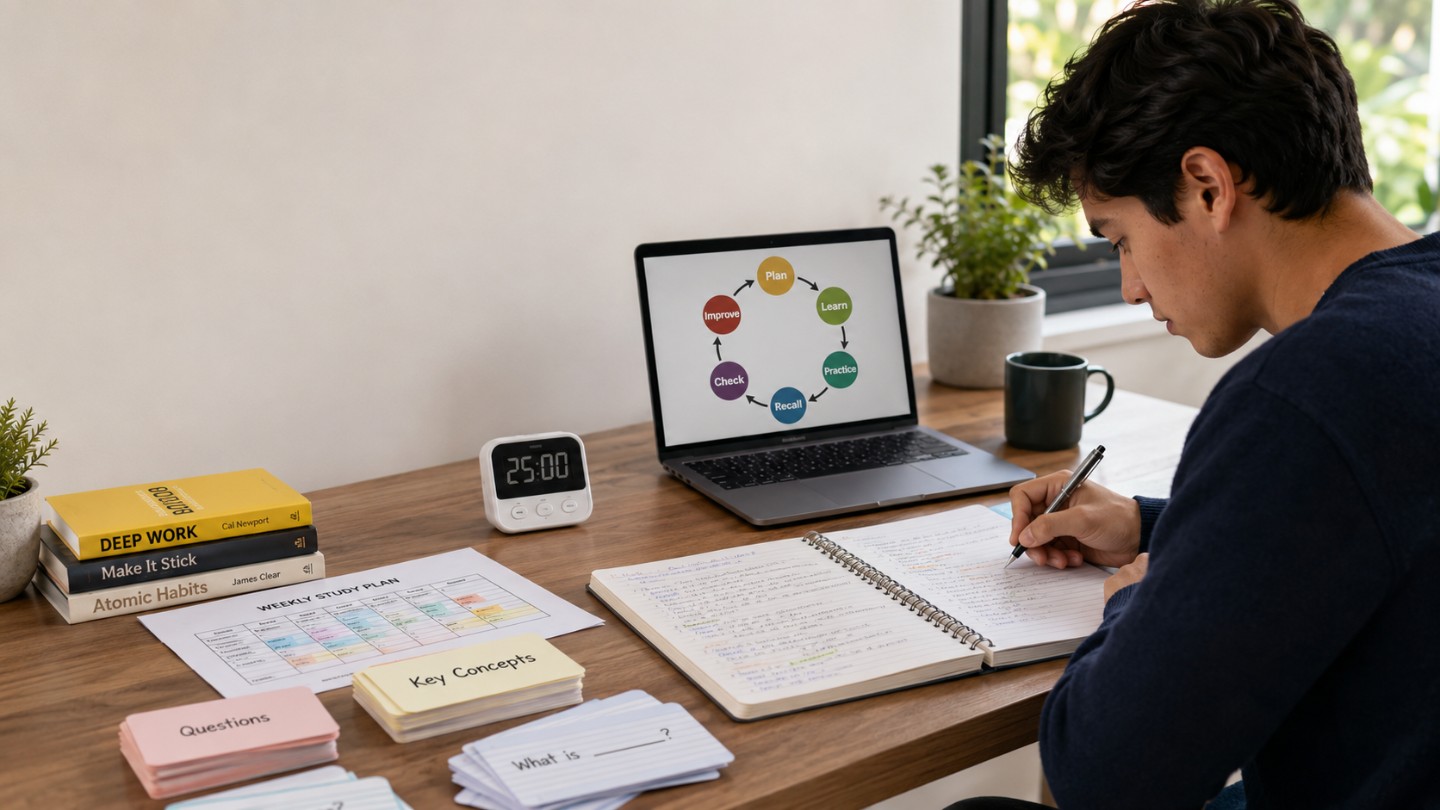
Learning how to learn is the ability to plan, monitor, and improve the process of acquiring new knowledge or ability. It includes setting a goal, selecting suitable resources, practising retrieval or application, seeking feedback, and reflecting on the method.
Re-reading can create familiarity without showing whether the material can be explained or applied. Practice questions, demonstrations, and explanations from memory reveal gaps more clearly.
Practise: Choose one small skill that can be tested within two weeks. Define the expected result, schedule short practice sessions, apply the skill, and ask someone to review the work.
Proof to keep: The learning plan, dated practice samples, feedback, and a brief before-and-after reflection.
Communication and Collaboration Skills
3. Clear Communication
Communication includes writing, speaking, listening, questioning, and adapting a message for its audience. Clear communication does not require a particular accent, personality, or speaking style. The main test is whether the intended meaning is understood.
Practise: Write an email requesting information. Check whether the subject line, purpose, context, tone, and requested next step are clear. Then explain a familiar idea to someone outside the subject and ask which part was difficult to follow. These communication exercises for students provide additional practice.
Proof to keep: The revised email, presentation notes, feedback, and a short record of what changed.
4. Teamwork, Leadership, and Conflict Management
Teamwork involves agreeing on an outcome, clarifying roles, sharing information, meeting commitments, and addressing disagreement without personal attacks.
Leadership does not require a formal title. A student may show it by documenting decisions, identifying a neglected task, inviting quieter members to contribute, or raising a risk early.
Practise: At the beginning of a group task, record the goal, roles, deadlines, communication method, and decision process. After completion, review what helped, what created delay, and what should change next time.
Proof to keep: The role plan, meeting record, final output, peer feedback, and an accurate statement of your contribution.
Digital and Ethical Judgment
5. Digital, Information, and AI Literacy
Digital literacy is more than knowing how to use familiar apps. It includes finding and evaluating information, communicating online, creating content responsibly, managing privacy and security, understanding digital identity, and solving routine technical problems.
The European Commission’s DigComp 3.0 covers information, communication, content creation, safety, and problem-solving, with artificial intelligence integrated across the current framework.
UNESCO’s media and information literacy work focuses on the ability to access, evaluate, use, and create information and media content responsibly.
AI-generated material may contain unsupported claims or false citations. Students remain responsible for checking important information, protecting confidential data, and following institutional rules.
Practise: Compare three sources answering the same question. Record who produced each source, the evidence used, the date, likely purpose, and unresolved points. Then audit an AI-assisted draft by checking every factual claim and citation.
Proof to keep: A source trail, fact-check notes, revision history, privacy checklist, and any AI-use disclosure required by the institution.
6. Ethical Judgment and Responsible Participation
Ethical judgment concerns honesty, fairness, privacy, consent, attribution, and responsibility. It applies to academic work, group projects, digital content, data use, and professional conduct.
An action may still be inappropriate if it misuses another person’s work, exposes confidential information, or misrepresents authorship. Students should follow the rules of their institution, course, profession, or country rather than assuming one standard applies everywhere.
Practise: For a difficult decision, list who may be affected, which rule or value applies, the available options, and the reason for your choice.
Proof to keep: A decision note, source record, disclosure, correction, or revision that shows responsible action. Do not retain another person’s private information as evidence.
Financial and Practical Self-Management
7. Financial Literacy and Basic Administration
Financial literacy at student level includes understanding income and expenses, planning a basic budget, comparing costs, recognising risk, keeping records, and knowing when official or qualified guidance is needed.
The OECD’s financial education work describes financial literacy through knowledge, skills, attitudes, and behaviours that support informed financial decisions.
Banking, tax, credit, insurance, contracts, student finance, and consumer protection differ by country. This section provides general educational information, not personal financial or legal advice.
Practise: Build a one-month budget using realistic income and necessary expenses. Add irregular costs, a contingency, and the assumptions behind each figure. Compare the plan with actual spending and revise the next plan.
Proof to keep: The budget, assumptions, comparison, and one decision changed after reviewing the figures.
Basic administration also includes storing documents securely, reading instructions, completing forms accurately, tracking deadlines, and knowing which official body can answer a question.
8. Time, Project, and Self-Management
Time management means deciding what matters, estimating effort, protecting focused work, and leaving room for rest, delays, and other responsibilities. Project management adds a clear outcome, task sequence, milestones, dependencies, and review points.
Plans can fail when tasks are poorly sequenced, estimates are unrealistic, or difficulties are raised too late. Time management should not be framed as fitting more work into every hour.
Practise: Plan a two-week project. Break the outcome into tasks, estimate the time required, identify one likely obstacle, and schedule a halfway review. Compare estimated and actual effort after completion. This guide to time management for students provides more planning ideas.
Proof to keep: The plan, completed work, deadline record, and a short review of what you would estimate differently next time.
Career Readiness and Adaptability
9. Career and Professional Readiness
Career readiness involves researching options, understanding expectations, describing evidence, seeking feedback, and continuing to develop. It does not mean choosing one occupation for life or receiving a guaranteed job.
The National Association of Colleges and Employers presents eight career-readiness competencies, including career and self-development, communication, critical thinking, leadership, professionalism, teamwork, and technology. This is a US higher-education and employment framework, not a universal hiring rule.
Students may have useful experience but describe it vaguely. Labels such as “good leader” or “hard worker” provide little evidence unless supported by a task, action, and result.
Practise: Select one course, project, volunteer role, household responsibility, or part-time job. Write three statements explaining the situation, what you did, and the result.
Proof to keep: Achievement statements, feedback, a simple portfolio, and work samples you have permission to share. Remove private or confidential information.
10. Adaptability, Self-Awareness, and Resilience
Adaptability is the ability to revise a plan when evidence, circumstances, or requirements change. Self-awareness involves recognising strengths, limits, habits, and support needs. Resilience means recovering and continuing after difficulty.
When conditions change, students need to revise the plan and seek support where needed.
Resilience should not be confused with tolerating harmful conditions, ignoring exhaustion, or managing serious distress alone. General skill-building guidance is not a substitute for qualified support.
Practise: After receiving feedback, separate it into changes you understand, points requiring clarification, and suggestions that do not fit the task. Apply one suitable change and compare the result.
Proof to keep: The feedback, revised work, and a short note explaining your decision.
Graduation-Readiness Self-Assessment
A student skills checklist becomes useful when it leads to a specific next step. Review each skill using four questions:
| Area | Question |
|---|---|
| Importance | How important is this skill for my next stage? |
| Consistency | How reliably can I use it now? |
| Evidence | What real example can I show? |
| Next action | What small practice task would strengthen it? |
Choose three priorities rather than trying to improve every area at once. Choose priorities that address an immediate problem, support long-term learning, and fit your next stage.
Evidence does not require an internship. A class presentation, family budget, community activity, group assignment, caregiving duty, club role, part-time job, or personal project may demonstrate a skill. Describe the task, your contribution, the result, and what you learned.
A 30-Day Skill-Building Plan
Week 1: Assess and choose
Complete the four-question assessment. Select three priority skills and define one observable result for each.
Week 2: Practise and request feedback
Complete one small task for each skill. Ask for feedback on a specific feature such as clarity, organisation, accuracy, or reliability.
Week 3: Apply the skills together
Use the selected skills in one real assignment or project. Research a question, evaluate sources, plan the work, communicate with another person, and record important decisions.
Week 4: Document and review
Collect the evidence, remove confidential details, and write a short reflection. Decide what to continue, what to change, and which skill should receive attention next.
What This Checklist Cannot Decide
No global article can determine the exact skills required for every profession, licence, institution, country, or employer. Field-specific standards, local laws, financial systems, academic-integrity rules, and professional requirements must be checked with the relevant official body.
Access is unequal. Time, money, devices, disability support, language support, transport, and professional networks affect how students practise and demonstrate skills. A lack of formal experience is not proof of a lack of ability.
Transferable skills do not replace technical competence. Preparation involves both: knowing how to perform a task and being able to learn, communicate, collaborate, adapt, and act responsibly.
Final Takeaway
Graduation readiness is not a collection of impressive labels. It is the growing ability to evaluate information, explain ideas, work with others, manage responsibilities, adapt to change, and make defensible decisions.
Choose a small number of gaps, practise them in real situations, and keep evidence. Repeat the process as your education, work, and responsibilities change.







Comments 0
No comments yet. Be the first to start the conversation.