Brooklyn College at Sukedhara, Kathmandu, operates under the Brooklyn Education Foundation, a network created by experienced educators who wanted a practical and student-focused learning space in Nepal. The institution runs school-level and undergraduate programs that link academic knowledge with life skills, technology, and community engagement.
Located in an accessible urban area of Kathmandu, Brooklyn College welcomes SEE graduates, +2 students, and bachelor-level learners who are looking for structured pathways in management, social sciences, law, computing, and chartered accountancy. The motto “Quest for Excellence” reflects an ongoing effort to raise academic standards, connect with global trends in higher education, and support students from different social and economic backgrounds.
The institution gives equal weight to classroom learning, field exposure, internships, research activities, and personality development. Small class sizes, accessible faculty, and a clear focus on guidance, counseling, and community service shape the daily experience of students on campus.
Location: Sukedhara, Kathmandu, Nepal
Governing Body: Brooklyn Education Foundation
School Wing: Brooklyn Academy Secondary School (NEB-affiliated +2)
College Wing: Brooklyn College (TU, RJU, NEB, ICAN programs)
Major Affiliations:
NEB – Ten Plus Two (+2) programs
Tribhuvan University (TU) – BBS, BSW, BA
Rajarshi Janak University (RJU) – BCA, BSc CSIT
ICAN – Chartered Accountancy (CA)
Approximate Class Size: Around 30–35 students per section
Scholarships: Merit- and need-based schemes up to 80% in specific categories
Learning Focus: Academic achievement, life skills, employability, research habits, and community responsibility
Brooklyn College and Brooklyn Academy offer a full continuum of study from NEB +2 to bachelor-level and professional courses. Students can progress from secondary school to undergraduate and professional qualifications within the same institutional network.
Brooklyn Academy Secondary School runs NEB-affiliated +2 programs for SEE graduates:
This stream suits students who wish to move onward to medicine, engineering, information technology, applied sciences, or research-oriented fields. Core subjects such as Physics, Chemistry, Biology, and Mathematics are combined with English and Nepali, along with optional subjects that support ICT or environmental studies.
The management stream gives students an early grounding in accounting, business studies, economics, and finance. It is a pathway toward BBS, BBA-type degrees, CA, and other business and finance careers.
Humanities offers combinations such as Sociology, Psychology, History, Culture, Political Science, and languages. This track prepares learners for degrees in arts, social work, media, development studies, and public policy.
The law stream introduces constitutional law, civil and criminal law basics, legal systems, and legal writing. It supports students who plan to study law at bachelor level or who wish to work in governance, justice, and rights-based organizations.
Brooklyn College offers TU-affiliated four-year bachelor programs:
BBS covers core areas of business such as accounting, finance, marketing, organizational behavior, economics, and business law. Graduates can move into corporate roles, entrepreneurship, banking, insurance, and public sector management, or continue to MBS and other postgraduate degrees.
The BA program allows students to select subjects from disciplines such as English, Sociology, Psychology, Political Science, and related fields. It is suitable for careers in education, media, civil services, NGOs, and community development.
BSW prepares students for professional engagement in social work, community mobilization, social policy, and welfare agencies. Fieldwork, community visits, and internships are part of the program structure, helping students connect theory with lived realities.
Under the Brooklyn Education Foundation, the institution offers RJU-affiliated computing degrees:
BCA focuses on software development, database systems, programming, and ICT applications used in business and service sectors. The course combines technical subjects with communication and management units to prepare students for roles in software firms, IT service companies, and digital startups.
BSc CSIT goes deeper into algorithms, data structures, networks, operating systems, and emerging areas of computing. The degree supports career paths in systems development, data handling, research, and higher studies in computer science or related areas.
Brooklyn also delivers CA education under the Institute of Chartered Accountants of Nepal (ICAN).
The CA route suits students who want to specialize in accounting, auditing, taxation, and financial analysis. The college environment supports exam preparation, practical exposure, and professional ethics needed for work in audit firms, corporate finance, and consulting.
Since Brooklyn College works under NEB, TU, RJU, and ICAN, its admission procedures follow the rules and eligibility criteria set by these bodies.
In practice, admission usually involves:
Meeting minimum academic requirements set by NEB for +2 entry and by TU/RJU/ICAN for bachelor and CA programs.
Submitting an application form within the deadline announced by the college.
Presenting relevant mark sheets, character certificates, photographs, and identification documents.
Sitting for entrance tests or interviews where required by the university or board.
For the most current information on entry criteria, quotas, and seat availability, prospective students are encouraged to refer to the college’s official notices and the respective board or university guidelines. This helps students and parents make realistic decisions about stream and program selection.
Brooklyn College keeps class sizes around 30–35 students so that teachers can observe individual progress while still encouraging group learning. Faculty members handle core subjects on a full-time basis and are accessible to students outside scheduled classes for academic guidance and mentoring.
Teaching approaches combine:
Classroom lectures linked to prescribed syllabi of NEB, TU, RJU, and ICAN.
Learner-centered activities such as group discussions, presentations, seminars, and projects.
IT-based instruction using smart boards, digital content, and e-learning modules.
Regular internal assessments, term tests, home assignments, and “sent-up” exams before board or university examinations.
There is a separate guidance and counseling program, offered in both group and individual formats, that helps students set academic and career goals, understand their strengths, and plan higher studies or employment pathways. Personality Development Programs (PDP) add training in communication, teamwork, creativity, and public speaking through workshops, conferences, motivational sessions, and mentoring.
Brooklyn College has invested in physical and digital infrastructure that supports both study and campus life:
Classrooms and Learning Spaces - Classrooms are equipped with PCs and digital projectors. Seating and layout support interactive sessions, group work, and multimedia presentations. Dedicated study areas with power outlets and network connections allow students to use laptops and other devices for research.
Computer Laboratory and IT Facilities - The institution maintains a well-equipped computer lab with a sufficient number of computers and updated software for computing, business, and research tasks. Students can use campus Wi-Fi in non-classroom spaces, and a virtual learning system supports communication between students, faculty, administration, and parents.
Library and E-Library - The library holds books, textbooks, reference materials, journals, magazines, manuals, and periodicals across management, humanities, social work, science, and IT. An automated system helps students locate and borrow books. The e-library increases access to digital resources and international materials.
Auditorium - A centrally used auditorium with audio-visual facilities hosts the Brooklyn Corporate Quiz, speaker series, TED-style talks, cultural events, and academic sessions. An adjoining terrace supports informal networking and small gatherings after events.
Cafeteria - The cafeteria offers hygienic food and a menu that changes regularly. It serves as a social space where students from different streams interact.
Life Skills and Simulation Tools - The institution uses simulation software, projects, and practice modules to build research skills, employability skills, and academic literacy. These activities help students apply classroom concepts to practical and community contexts.
Student life at Brooklyn College is shaped by academic work, personality development, and social interaction. The campus encourages students to participate in clubs, events, and community work while keeping up with coursework and examinations.
The Student Council, with representation from several levels, organizes welcome and farewell programs, festivals, academic competitions, and social initiatives. This helps students develop leadership skills, event management experience, and confidence in public interaction.
Regular parent–teacher meetings keep families informed about performance, attendance, and personal development. This three-way relationship among college, student, and home supports early intervention when academic or personal difficulties arise.
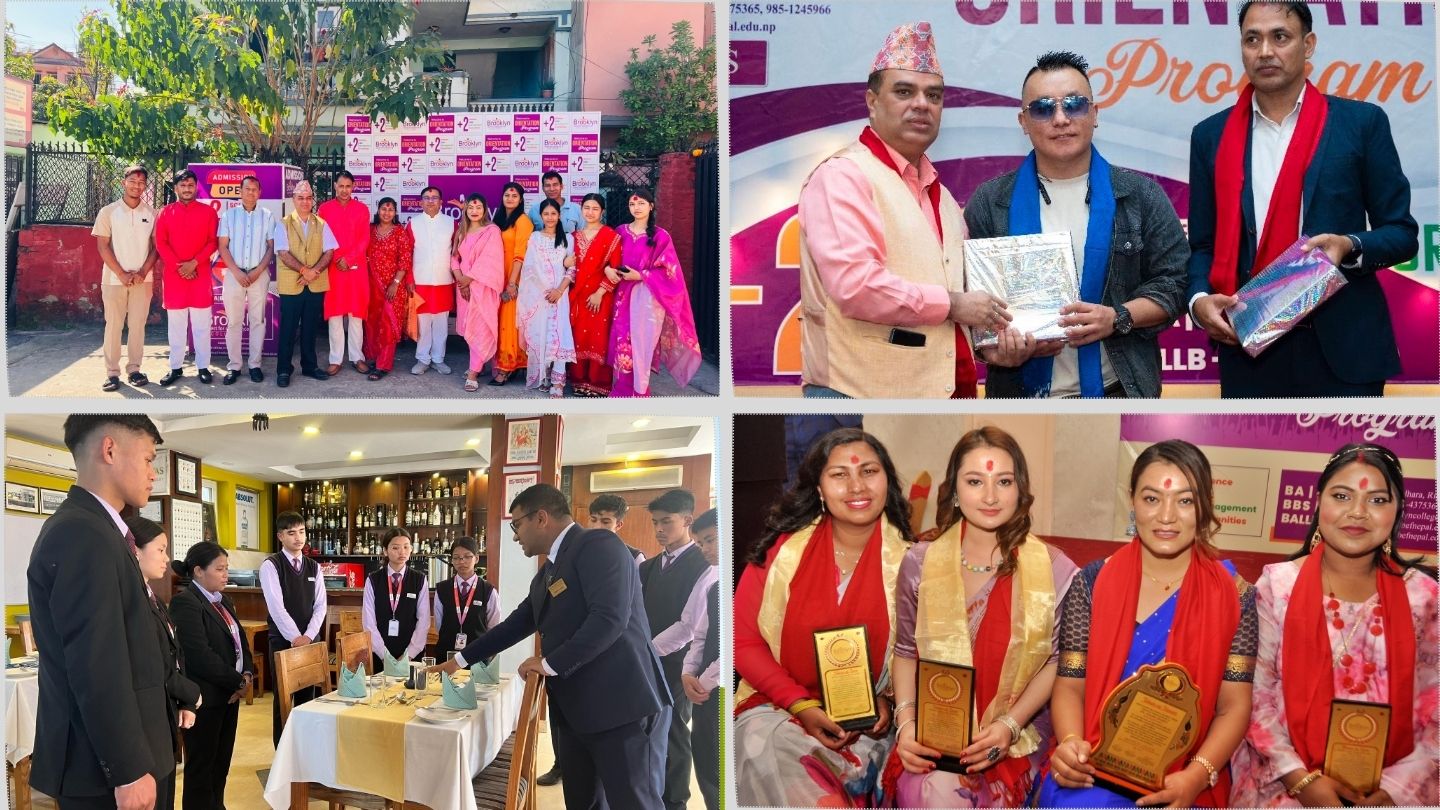
At Brooklyn College, life after class is still part of learning. Once lectures end, students move toward the court, the stage, or club rooms, where they can explore interests that may not fit inside a textbook. These spaces give shy students a chance to come forward and active students a place to channel their energy in a meaningful way.
Common activities include:
Sports: basketball, football, cricket, futsal and other games that keep students active and teach fair play.
Cultural programs: dance, music, singing, poetry and talent shows where students share their language, culture and creativity.
Academic and intellectual forums: debates, speech contests, quiz competitions, TED-style talks and guest lectures that sharpen thinking and public speaking.
Social engagement: social work clubs, charity events and volunteering groups that take students into the community and expose them to real issues.
Through these platforms, students learn how to work with different personalities, handle schedules, take responsibility for a task and speak with clarity in front of others. Friendships often form across streams and levels, so a science student may plan an event with a management or humanities student. Over time, this mix of interests, faces and activities helps the campus feel like a shared community rather than separate classrooms.
For many families, college fees are a serious concern. Brooklyn College acknowledges this reality and has framed its scholarship system to recognize hard work while also paying attention to financial circumstances. The goal is simple: capable students should not step back from education only because of money.
According to institutional provisions:
Merit- and need-based scholarships can cover up to 80% of tuition for eligible students.
Separate categories are reserved for:
Students with strong records in sports
Learners from underprivileged backgrounds
Students whose families have been affected by earthquakes
Students who show special creative ability
Scholarship decisions usually consider entrance results, board examination scores, internal evaluations and verified financial documents. In this way, financial help is linked to clear criteria, and students from different economic backgrounds can sit in the same classroom, work on the same projects and plan their next academic step with more confidence.
Rather than highlighting single trophies or rankings, Brooklyn College’s track record can be understood through structural achievements described in its official materials:
Building a network that connects NEB +2 courses, TU bachelor programs, RJU technology degrees, and ICAN professional qualifications under one foundation.
Introducing internships and work modules as an integral expectation in several programs, so that students gain exposure to real workplaces during their studies.
Establishing community service and social work as a recurring practice through rural camps, fundraising events, and collaborations with social organizations.
Developing PDP and guidance counseling as formal components of student support, rather than informal add-ons.
These milestones show a gradual move from narrow examination-only schooling to a broader academic culture that includes research habits, life skills, and social awareness.
Students and parents looking at secondary and higher education options in Kathmandu often compare institutions on affiliation, range of programs, teaching approach, and support systems. Brooklyn College stands out in the following ways, based on verified institutional information:
Multiple Study Levels in One Network - The Brooklyn Education Foundation covers NEB +2, TU bachelor programs, RJU computing degrees, and ICAN CA, allowing students to plan long-term pathways within a familiar environment.
Balanced Class Size and Faculty Access - With class groups around 30–35 students and full-time faculty for major subjects, learners can receive attention while still benefiting from peer interaction and group work.
Integrated Academic and Life Skills Training - PDP, guidance counseling, internships, and life skills modules are built into the institutional culture, not treated as occasional events.
Strong IT and Library Support - Computer labs, digital projectors, Wi-Fi, electronic library access, and tablets for e-supplements help students develop digital literacy along with subject knowledge.
Commitment to Social Responsibility - Social work, volunteering, and community programs are regular activities, especially for BSW and other social science students, linking academic study with real community needs.
Prospective students who value both academic qualifications and personal development may find this combination suitable for long-term growth.
The Campus Chief underlines that Brooklyn aims to create an environment where students learn to think independently, stay creative, and commit to lifelong learning. Faculty members engage in academic and research activities and bring those experiences into the classroom, encouraging students to observe changes in society and draw lessons from them.
The message highlights how co-curricular and extracurricular activities form a regular part of campus life. Students receive platforms to present their work, lead activities, and develop confidence alongside formal study. Visitors are invited to interact with teachers and learners on campus to understand daily practices rather than relying only on prospectuses.
The Chairman’s note presents Brooklyn as an institution that aims to shape both career readiness and personal character. Courses are structured to build practical skills, while day-to-day campus life encourages discipline, self-confidence, and ethical behavior. Graduates are expected to continue higher study within Nepal or abroad or move into employment with a solid academic and professional base.
The leadership message reinforces a clear expectation: education should go beyond earning a degree and help students respond to real social and economic challenges.
Brooklyn College, Sukedhara, positions itself as a multi-level institution connecting secondary education, undergraduate study, and professional qualifications within one educational foundation. With affiliations to NEB, TU, RJU, and ICAN, it supports students interested in management, law, humanities, social work, computing, science, and chartered accountancy.
Small class sizes, structured academic programs, modern IT and library facilities, internships, life skills training, and community engagement form the core of the college experience. For students and families seeking a fact-based understanding of the institution, Brooklyn offers a clear profile grounded in official curricula, board and university norms, and documented institutional practices.
Brooklyn College and Brooklyn Academy work with several bodies: NEB for +2 Science, Management, Humanities, and Law; TU for BBS, BA, BSW; RJU for BCA and BSc CSIT; and ICAN for CA education.
SEE graduates can join NEB Ten Plus Two (+2) programs in Science, Management, Humanities, or Law at Brooklyn Academy Secondary School. These tracks provide a base for later entry into bachelor and professional courses in business, social sciences, law, science, and IT.
Yes. The college has merit- and need-based scholarships that can reach up to 80% in specific categories. There are separate provisions for students with strong academic records, athletes, learners from economically weaker backgrounds, learners from earthquake-affected families, and students with special creative abilities. Exact criteria and quotas are published in institutional notices each academic year.
Typical class sections include around 30–35 students, which helps teachers track individual progress without losing the benefits of group interaction. Full-time faculty members teach core subjects and are available outside lectures for queries, mentoring, and academic support.
Students have access to ICT-enabled classrooms, a computer lab with updated software, Wi-Fi in non-classroom spaces, a physical library and e-library, a cafeteria, an auditorium for events, and dedicated study areas. The campus also uses e-learning tools, virtual learning platforms, and simulation resources to strengthen research and employability skills.
Yes. Brooklyn integrates internships and short-term work modules into its programs, particularly at bachelor level. The foundation actively explores work opportunities during term breaks and holidays so that students can apply classroom learning in real workplaces, understand job expectations, and start building a professional network while studying.
Contact Brooklyn College's administrative office for detailed information on the course, admissions, location, fees, scholarships, facilities, counseling, or eligibility.
Brooklyn College
Email Address: info@befnepal.edu.np
Phone Number: +977-1-4375365, +977-1-4375429, +977-9851011780
Website: https://www.befnepal.edu.np
Location: Sukedhara, Ringroad, Kathmandu, Nepal