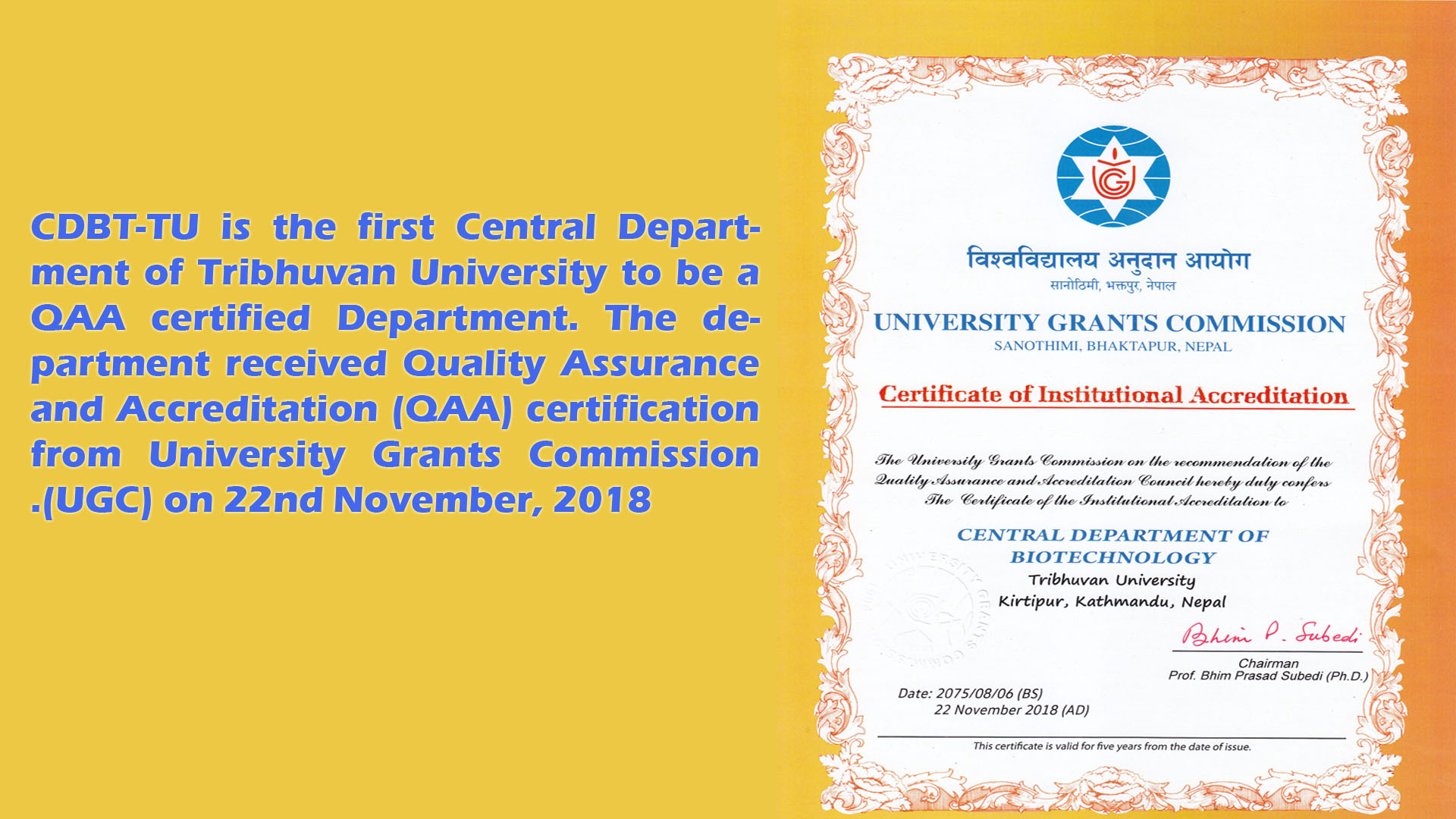
The Central Department of Biotechnology at Tribhuvan University was established in 2008 for biotechnology education and research. The department works in teaching, laboratory training, research, and academic activities connected with biotechnology and national needs. CDBT-TU is QAA-accredited by UGC Nepal.
Its academic areas include plant biotechnology, food technology, bioinformatics, biochemistry, immunology, microbiology, genetic engineering, cell biology, animal cell and tissue culture, and bioprocess studies. The department offers MSc Biotechnology and PhD in Biotechnology programs.
Name: Central Department of Biotechnology Tribhuvan University
Short Name: CDBT-TU
University: Tribhuvan University
Established: 2008
Academic Area: Biotechnology
Programs Offered: MSc Biotechnology and PhD in Biotechnology
Facilities: Green House, laboratories, plant tissue culture, food technology, bioinformatics, animal cell/tissue culture, sterilization unit, bioprocess facilities, and library
Scholarships and Awards: Central Department of Biotechnology Scholarship, Drs. Rekha and Sreerama Scholarship, Dr. L. Sreerama Scholarship, Dr. G.K. Rekha Scholarship, and Drs. Rekha and Lakshmaiah Sreerama Gold Medal
Central Department of Biotechnology Tribhuvan University is an academic department focused on biotechnology education and research. CDBT-TU works with postgraduate students, PhD scholars, postdoctoral researchers, and scholars in biotechnology.
Its academic role includes teaching, research guidance, laboratory development, and scientific skill-building in areas connected with plant biotechnology, food technology, bioinformatics, biochemistry, immunology, microbiology, genetic engineering, cell biology, animal cell and tissue culture, and bioprocess studies.
CDBT-TU aims to contribute to biotechnology education and research connected with life sciences, nature conservation, and national development. Its mission focuses on country-specific and competitive biotechnology-based teaching and research.
The department gives academic attention to research, laboratory development, scientific skills, and biotechnology teaching that connects theory with practical work.
The department aims to strengthen bioscience study, teaching, and research through laboratory development and application-oriented academic work. Its goals include building teaching and research facilities, supporting national research needs, preparing biotechnologists, and encouraging international research collaboration.
Its objectives include creating academic and research spaces, improving laboratory capacity, developing biotechnology teaching courses, attracting postgraduate and research scholars, increasing student intake, publishing original research, supporting faculty research projects, and building scientific knowledge among faculty, staff, and students.
CDBT-TU has academic and laboratory facilities linked to different branches of biotechnology. These facilities support practical learning, research work, and technical training.
The Green House facility supports plant-related research. It allows students and researchers to study plant growth, development, and responses under controlled conditions.
The department has laboratories for different areas of biotechnology. These laboratories support experiments, analysis, and practical academic training.
Plant tissue culture is included as a study and practice area. This area is used for producing disease-free plants and working with plant cells and tissues.
Food technology is included in the department’s academic and research areas. It connects biotechnology with food production, safety, product development, and related processes.
Bioinformatics combines biology, computer science, and statistics to study biological data. CDBT-TU includes bioinformatics training so students can work with biological datasets and related tools.
Biochemistry, immunology, and microbiology are included in the department’s academic coverage. These subjects support the study of biological processes, immune systems, microorganisms, and their applications in biotechnology.
CDBT-TU includes genetic engineering and cell biology as specialized study and research areas. These areas involve work related to genes, cells, cell structure, and biological function.
The department has facilities and academic work related to animal cell and tissue culture. This area supports controlled study of animal cells and tissues for biotechnology, medical, and pharmaceutical research contexts.
The sterilization unit supports laboratory work by helping maintain clean experimental conditions. Sterile handling is central to biotechnology research and practical laboratory work.
CDBT-TU includes bioprocess engineering through courses and research opportunities. This area covers fermentation, downstream processing, scale-up techniques, and process development in biotechnology.
The department has a library with books, journals, and research publications for students and researchers. The library supports academic study and research reference needs in biotechnology.
Tribhuvan University offers the Master of Science in Biotechnology through CDBT-TU. The program is intended for students who have completed a bachelor’s degree in biological and biochemical sciences.
The MSc Biotechnology program covers training in biotechnological techniques, genetic engineering, bioinformatics, plant tissue culture, and animal tissue culture.
Tribhuvan University offers the Doctor of Philosophy in Biotechnology for students pursuing research in biotechnology. The program is designed for students with a biotechnology background who want to work in specialized research areas.
PhD students conduct research under faculty guidance and contribute through independent study, scholarly publications, and specialized academic work.
CDBT-TU offers scholarships and academic awards for eligible students.
The department offers one full scholarship and two partial scholarships. The full scholarship covers the semester fee, while the partial scholarship covers up to 50 percent. Scholarship decisions are based on performance in the previous semester’s final examination. If a male candidate receives the full scholarship, one partial scholarship is reserved for a deserving female candidate.
Drs. Rekha and Sreerama Scholarship provides a partial scholarship of Rs. 10,000 to a financially disadvantaged student each semester. Selection includes academic performance, first-division results, and public school attendance at SLC, +2, and B.Sc. levels. Rural background or Nepali-medium study at the SLC level may also be considered.
Dr. L. Sreerama Scholarship provides a partial scholarship of Rs. 10,000 to one of the top ten performing students each year. The recipient should not have received another scholarship during that year.
Dr. G.K. Rekha Scholarship provides a partial scholarship of Rs. 10,000 to one of the top ten performing female students annually. The recipient should not have received another scholarship during that year.
The Drs. Rekha and Lakshmaiah Sreerama Gold Medal fund was established by Prof. Dr. Sreerama and Prof. Dr. G.K. Rekha. The gold medal is awarded to the student who secures the top position each year and is presented during the convocation ceremony organized by Tribhuvan University.
The Central Department of Biotechnology Tribhuvan University combines teaching, laboratory work, and research activity in biotechnology. Its academic areas include plant biotechnology, food technology, bioinformatics, biochemistry, immunology, microbiology, genetic engineering, cell biology, animal cell and tissue culture, and bioprocess studies.
The department’s work is connected to postgraduate education, research training, laboratory development, scientific publication, faculty research engagement, and scientific skill development among faculty, staff, and students.
Central Department of Biotechnology Tribhuvan University is an academic department of Tribhuvan University focused on biotechnology teaching and research. It was established in 2008.
CDBT-TU offers MSc Biotechnology and PhD in Biotechnology through Tribhuvan University.
The department includes a Green House, laboratories, plant tissue culture facilities, food technology, bioinformatics, animal cell/tissue culture, a sterilization unit, bioprocess facilities, and a library.
The MSc Biotechnology program provides training in biotechnology for students with a background in biological and biochemical sciences. It includes biotechnological techniques, genetic engineering, bioinformatics, plant tissue culture, and animal tissue culture.
Yes. CDBT-TU offers scholarships such as the Central Department of Biotechnology Scholarship, Drs. Rekha and Sreerama Scholarship, Dr. L. Sreerama Scholarship, and Dr. G.K. Rekha Scholarship.
The Drs. Rekha and Lakshmaiah Sreerama Gold Medal is awarded to the student who secures the top position each year and is presented during the Tribhuvan University convocation ceremony.