Grammar College is an English-medium, co-educational institution located at Setiopi Marga, west of Koteshwor Chowk, Kathmandu-32. It operates under Grammar Foundation Pvt. Ltd. and traces its origin to 1993 A.D. (2050 B.S.).
The college environment focuses on academic learning alongside personal growth, with attention to students’ physical and mental development. At the college level, Grammar College offers the Bachelor of Business Studies (BBS), affiliated with Tribhuvan University (TU). The broader institution also runs school and +2 programs on the same premises.
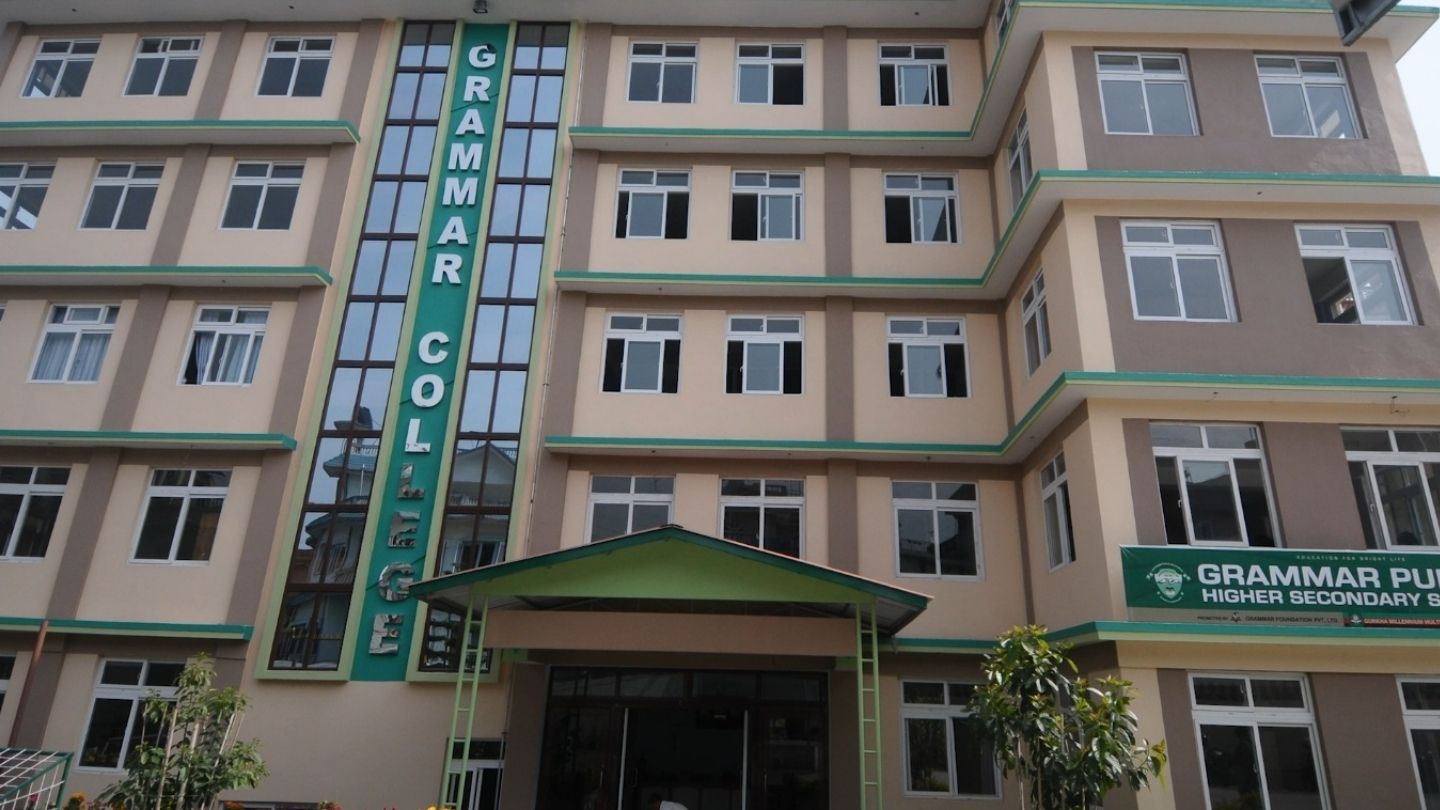
Location: Setiopi Marga, west of Koteshwor Chowk, Kathmandu-32
Establishment: 1993 A.D. (2050 B.S.); managed by Grammar Foundation
Academic scope on premises: Montessori to school, +2 level, and TU-affiliated BBS at the college level
Medium of instruction: English; co-educational setting
Program at college level: Bachelor of Business Studies (BBS), Tribhuvan University affiliation; three graduating cohorts completed, fourth in preparation
Infrastructure: six-storey earthquake-resistant building, labs (science, computer, math), library and e-library, digital classrooms, safe drinking water on every floor, separate restrooms, CCTV, hostel and cafeteria
Student life: sports ground and seasonal swimming, internet access, notice and publication boards
Scholarly output: Journal of Indigenous Knowledge and Practice (JIKaP), biannual, open access; also indexed on NepJOL
Grammar College runs the BBS program under TU. The program builds core understanding in accounting, finance, marketing, and general management, combining theoretical study with practical activities to help learners connect classroom knowledge with sector realities. The college notes it has already sent three batches of BBS graduates to the market and is preparing the fourth.
What students study:
Foundation courses in business principles and administrative concepts
Subject areas spanning accounting, finance, marketing, and management
Applied components that require assignments, presentations, project work, and term papers
Guided opportunities for interaction with subject experts and exposure through workshops or seminars
Intended outcomes:
Develop capable graduates for business and administration roles
Strengthen practical skills alongside conceptual knowledge
Encourage responsible citizenship and readiness for contemporary managerial challenges
The institution reports that, besides the college-level BBS, it operates school and +2 programs on campus. Program-specific details, combinations, and shift options at the +2 level should be confirmed with the administration for the current academic session.
Eligibility:
BBS admissions follow Tribhuvan University regulations in effect at the time of intake. Prospective students should verify the currently applicable TU criteria (e.g., minimum secondary level qualification from a recognized board) and any college-level requirements stated in the latest official notice. Grammar College guides applicants through the process at its administration office.
How to apply:
Collect or download the application form from the college or its official communication channels.
Check TU eligibility and required supporting documents (citizenship/ID, academic records).
Submit the form within the announced deadline.
Attend any orientation, counseling, or interview if scheduled by the college.
Complete fee formalities within the stipulated period.
For current dates, seat availability, and document checklists, contact the college administration directly.
Grammar College highlights a team of trained, experienced teachers, and a learning approach that mixes classroom instruction with active participation. The campus points to activity-based and project-based learning methods and a structured academic plan spanning yearly, term, unit, and daily lesson plans.
Students engage through classwork, assignments, note-making, and guided exercises; they present individually or in groups using slides or board work; and they produce experiments, practicals, project reports, and term papers.
The approach includes discussion, role-play, guest lectures, workshops, seminars, case studies, and internships. Remedial plans are in place to support learners who need additional help.
The college also mentions the “E3” principle—Enabling, Engaging, and Empowering—as a framing for classroom participation and learning support. Taken together, these methods aim to connect subject knowledge, technical skills, and real-life application.
Academic spaces and safety
Six-storey, earthquake-resistant building
Well-lit, ventilated classrooms with digital multimedia support
CCTV coverage across key areas
Laboratories and library
Separate science labs (chemistry, physics, biology)
Computer and math labs
Library and e-library with newspapers, journals, research documents, textbooks, and reference titles
Student services and amenities
Safe, purified drinking water on each floor
Separate restrooms for boys and girls
Notice, display, and publication boards for academic updates
Hostel facilities for boys and girls
Cafeteria serving hygienic food options
Campus internet and e-learning support
Sports and well-being
Playground space for basketball, table tennis, badminton, and volleyball
Seasonal swimming (weather permitting)
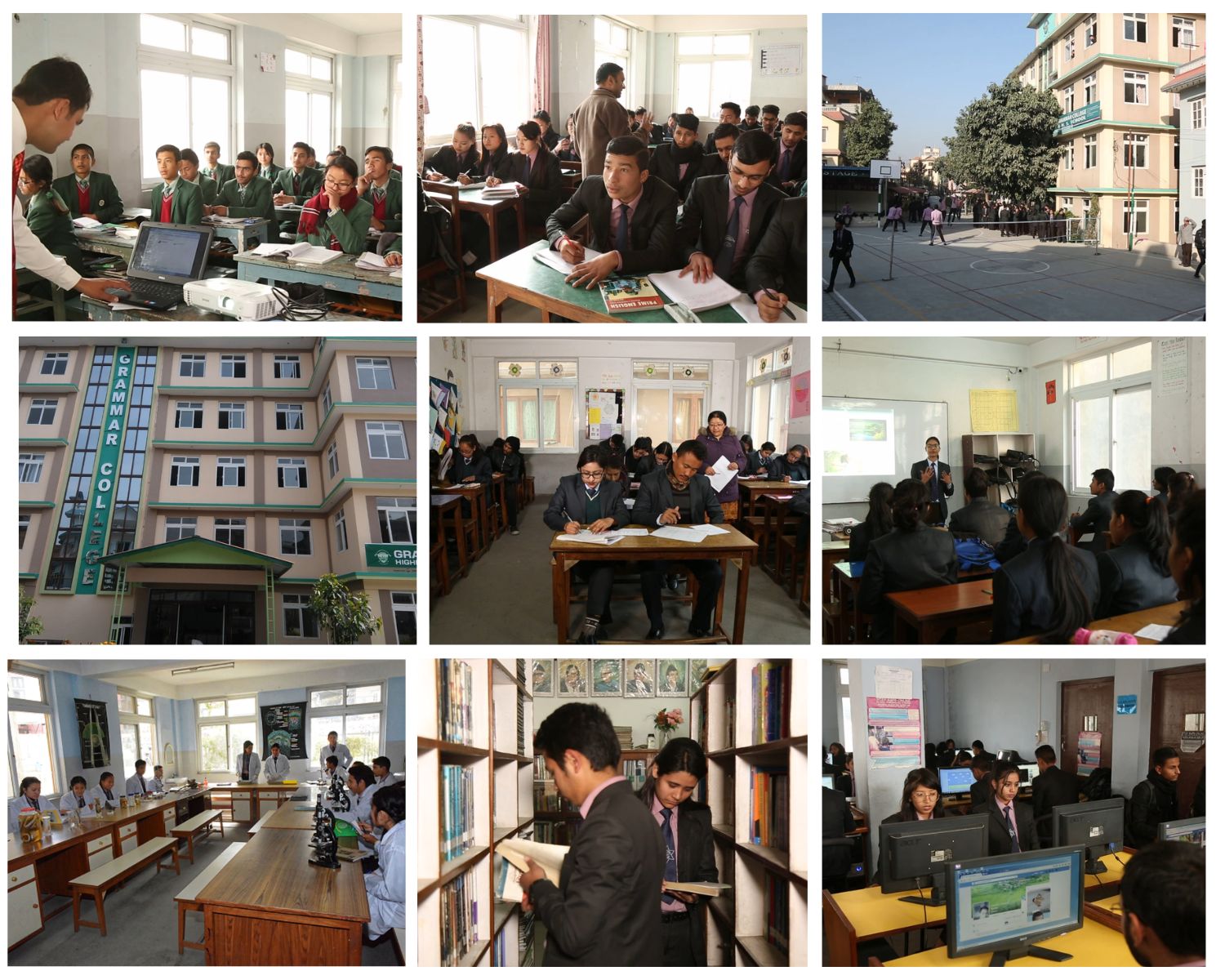
Day-to-day life on college centers on focused study with practical exposure. Students benefit from digital classrooms, library access, and structured assignments. Sports and periodic co-curricular sessions add balance.
The institution describes an environment that values peace, cultural tolerance, and steady academic engagement. Notice boards and official communication keep the student body informed about events, deadlines, and academic matters.
Facilities support multiple indoor and outdoor games, including basketball, badminton, volleyball, and table tennis. Academic ECAs—workshops, seminars, guest talks, and case-based discussions—are integrated during the academic year. Where possible, departments arrange field observations or surveys connected to coursework.
The college states that scholarships are available on various grounds, including academic achievement, financial need, and special talents. Details—such as categories, application procedures, and renewal rules—are handled by the administration office. Students are encouraged to check current notices for deadlines and required documents.
Institutional history: Founded in 1993 A.D. (2050 B.S.) by four directors—Jaya Kumar Rai (Founder Chairperson), Dilendra Kumar Rai (Founder Director), Raj Kumar Rai (Founder, Principal), and Bharat Kumar Rai (Founder, Finance Director).
Program continuity: Successful completion of three BBS cohorts; the fourth cohort is in preparation.
Scholarly publication: Launch of the Journal of Indigenous Knowledge and Practice (JIKaP), a biannual, peer-reviewed, open-access journal published by Grammar College and listed on NepJOL. Focus areas include Language, Culture, Science, IT, Arts, Management, Law, Sociology, Anthropology, Economics, Education, Health, Agriculture, Forestry, Geography, and Politics.
TU-affiliated business degree: A single-stream focus at the college level helps maintain clarity around program requirements and outcomes for BBS learners.
Applied learning culture: Activity-based and project-based methods, presentations, experiments, and term papers promote practical understanding.
Learning infrastructure: Purpose-built building, labs, digital classrooms, library/e-library, and reliable utilities add consistency to study routines.
Student support: Scholarships, remedial plans, and accessible administration enable students to address academic or financial questions in a timely way.
Academic publishing ecosystem: JIKaP offers a platform for research-oriented learners and faculty to engage with scholarly writing and peer review.
Grammar College presents a focused pathway for students seeking the TU-affiliated BBS in Kathmandu within an English-medium, co-educational setting. The campus blends classroom study with active assignments, practical tasks, and guided presentations. Facilities include a multi-storey building with safety features, science and computer labs, a library with e-resources, sports amenities, and essential student services. With the presence of an in-house academic journal, learners interested in research also have a channel to explore scholarly writing.
1) Where is Grammar College located?
Setiopi Marga, west of Koteshwor Chowk, Kathmandu-32.
2) Which college-level program is offered?
The Bachelor of Business Studies (BBS) under Tribhuvan University.
3) What is the medium of instruction?
English, in a co-educational environment.
4) Does the institution run school and +2 programs on the premises?
Yes. The institution states that it runs Montessori, school, +2, and BBS programs within the same premises. Program-wise details for +2 should be confirmed each session.
5) What facilities are available on campus?
Earthquake-resistant building; digital classrooms; labs (science, computer, math); library and e-library; purified drinking water on each floor; separate restrooms; CCTV; hostel and cafeteria; sports ground; seasonal swimming; campus internet; notice and publication boards.
6) Are scholarships available?
Yes. Scholarships are offered on criteria such as merit and financial need. Details are handled by the administration office.
7) How does the college deliver practical learning?
Through activity-based and project-based methods, presentations, experiments, practicals, project work, term papers, workshops, seminars, guest lectures, and internships.
8) Is there an academic journal linked to the college?
Yes. Grammar College publishes the Journal of Indigenous Knowledge and Practice (JIKaP), a biannual open-access journal that is listed on NepJOL.
9) Who founded the institution?
The founders listed are Jaya Kumar Rai (Founder Chairperson), Dilendra Kumar Rai (Founder Director), Raj Kumar Rai (Founder, Principal), and Bharat Kumar Rai (Founder, Finance Director).
10) How can applicants confirm current admission requirements and dates?
By contacting the administration office and referring to the latest official notice aligned with TU BBS rules in effect for the intake year.
Contact Grammar College's administrative office for detailed information on the course, admissions, location, fees, scholarships, facilities, counseling or eligibility.
Grammar College, Koteshwor, Kathmandu
Email Address: info@grammarschool.edu.np
Phone Number: +977-1-4602735, +977-1-4600367, +977-1-4601213
Website: http://grammarschool.edu.np