Hetauda Janapriya Campus (HJC) is an autonomous, not-for-profit, community-based higher education institution located at Hatiya Chisapani, Hetauda-16, Makawanpur District, Bagmati Province. Established in September 2023 under the legal framework of Hetauda Sub-Metropolitan City, the campus focuses on technical and professional education connected with local needs. HJC offers the B.Sc. (Hons.) Agriculture program under Purbanchal University.
The program has 48 seats and requires an entrance examination for admission. Its academic approach combines classroom study with laboratory sessions, field visits, project work, internship, and thesis research. The campus places agriculture education within the broader concerns of sustainable farming, food security, rural development, and community responsibility.
| Particular | Details |
|---|---|
| Institution | Hetauda Janapriya Campus (हेटौडा जनप्रिय क्याम्पस) |
| Short Name | HJC |
| Established | September 2023 |
| Institution Type | Autonomous, not-for-profit, community-based campus |
| Location | Hatiya Chisapani, Hetauda-16, Makawanpur |
| Province | Bagmati Province |
| Affiliation | Purbanchal University |
| Program | B.Sc. (Hons.) Agriculture |
| Duration | Four years |
| Academic System | Semester system |
| Available Seats | 48 |
| Entrance Examination | Required |
| Campus Chief | Atish Pandit |
Hetauda Janapriya Campus was established within the local-government framework of Hetauda Sub-Metropolitan City. It operates as a community-based institution rather than a privately owned commercial college.
The campus was founded with shared responsibility among the local community, academic personnel, and institutional administration. Its establishment added a technical higher education option within Makawanpur District, with agriculture serving as its initial academic focus.
As a not-for-profit campus, HJC is structured around community participation and local educational responsibility. Its academic direction connects higher education with the agricultural conditions, production concerns, and development needs of the surrounding region.
The campus is situated at Hatiya Chisapani in Hetauda-16, Hetauda Sub-Metropolitan City, Makawanpur District, Bagmati Province, Nepal.
This location places the agriculture program within a district where farming, livestock, horticulture, and related rural activities form an important part of local life. Field-based learning can therefore be connected with agricultural settings beyond the classroom.
The B.Sc. (Hons.) Agriculture program is affiliated with Purbanchal University.
The university curriculum sets the degree at four years under a semester system. English is the medium of instruction and examination. Students complete an internal assessment in each semester before appearing in the final semester examination, with assignments forming part of the internal evaluation.
The B.Sc. (Hons.) in Agriculture at Hetauda Janapriya Campus is the campus’s principal academic program. It was introduced as the first B.Sc. Agriculture honours program in Makawanpur District.
The course covers scientific, technical, social, and economic aspects of agriculture. Students study crop production, soil science, horticulture, animal science, agricultural economics, rural sociology, agricultural extension, plant protection, biotechnology, and resource management.
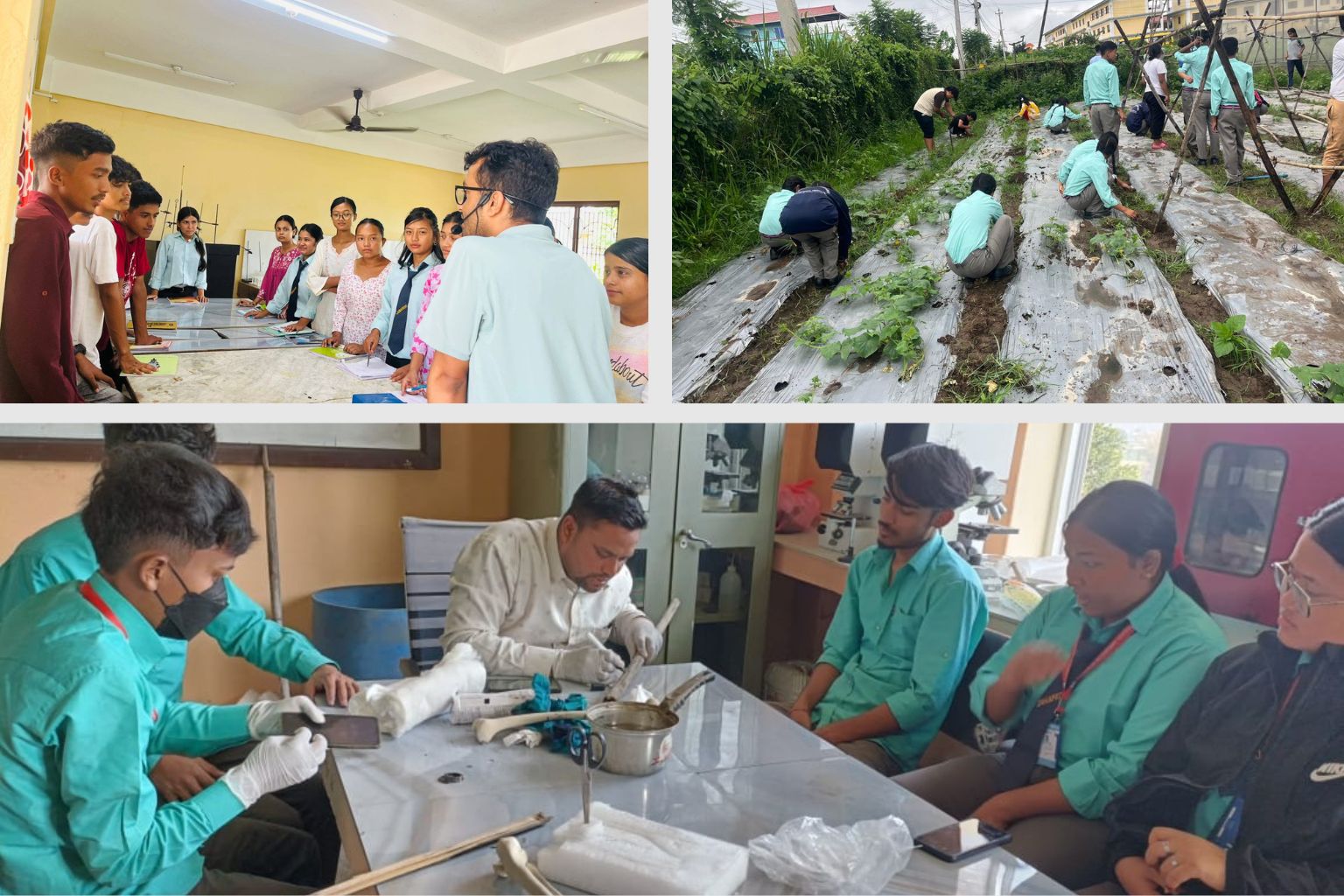
The program is designed to connect academic concepts with laboratory work, field observation, agricultural practices, project assignments, and research.
The program has 48 seats.
Admission requires an entrance examination. Enrollment is based on the marks obtained in the entrance examination conducted by Purbanchal University.
Applicants must have secured at least 45 percent, or second division, in +2 Science or an equivalent grade to apply for the bachelor’s program. Admission is determined through the Purbanchal University entrance process.
The B.Sc. (Hons.) Agriculture program runs for four years across eight semesters.
English is used for instruction, tests, and examinations. The semester structure includes theory courses, laboratory practicals, project work, field-based activities, elective study, internship, and thesis research.
The course begins with foundational subjects before moving into applied agricultural study, production management, research, and elective specialization.
The first year introduces students to core scientific and social subjects related to agriculture, including:
Plant Physiology
Microbiology
Introductory Soil Science
Crop Science
Introductory Animal Science
Rural Sociology
Economics
General Biochemistry
Soil Physics and Conservation
Crop Production
Horticulture
Livestock Production and Management
Extension Education and Communication
Farm Power and Machinery
Agricultural Meteorology and Climate Change
The second year moves towards crop improvement, plant health, production systems, and farm-resource management. Major areas include:
Plant Genetics and Plant Breeding
Plant Pathology
Entomology
Crop Production
Vegetable and Spice Crop Production
Irrigation and Water Management
Plantation Crop Production
Plant Propagation and Nursery Management
Animal Nutrition and Fodder Production
Crop Disease and Pest Management
Soil Fertility and Nutrient Management
Fruit Crop Cultivation
Plant Biotechnology
Plant Clinic
The third year covers broader agricultural systems and management subjects, including:
Agroforestry
Aquaculture
Post-Harvest Technology
Integrated Pest Management
Agricultural Resource and Marketing Management
Seed Technology
Animal Biodiversity and Management
Livestock and Poultry Production
Animal Genetics and Breeding
Social and Economic Development
Sustainable Agriculture and Rural Development
Ornamental Horticulture
Apiculture and Sericulture
Agriculture Policy and Planning
Agricultural Biotechnology
Project components begin from the third semester alongside laboratory practicals, allowing students to work with applied agricultural topics during the course.
Students select an elective area during the seventh semester. The available fields are:
Sustainable Agriculture
Horticulture
Plant Breeding
Plant Protection
Animal Science
Soil Science
Agricultural Economics and Business Management
Development Studies
The seventh semester also includes Biostatistics, Research Methodology, and Proposal and Thesis Writing. These courses prepare students for research work and the final-stage thesis requirement.
Students complete a field-based internship during the final semester. The internship is intended to broaden their understanding of agricultural work and provide practical exposure related to their selected field.
Internship arrangements may involve agro-based industries, research farms, private farms, and non-governmental organizations working in different agro-ecological settings. Students also prepare a thesis based on their research.
The campus presents classroom study and field experience as connected parts of the agriculture degree. Students are expected to understand agricultural science through lectures while also working with practical activities, laboratory sessions, field observation, and project assignments.
The learning approach gives attention to:
Scientific understanding of crops, soil, livestock, and agricultural systems
Practical experience in production and resource management
Communication and agricultural extension
Identification of production constraints
Research, proposal writing, and thesis preparation
Sustainable farming and food-security concerns
Agricultural economics and enterprise-related study
HJC provides academic resources and practical support associated with the agriculture program. Available facilities and services include:
Laboratory facilities
Library membership
Online learning resources
Field visits and practical activities
Reading materials
Mock-test support
The field and laboratory components support subjects that require observation, experimentation, production practice, plant-health assessment, soil study, and other applied work.
Atish Pandit serves as the Campus Chief of Hetauda Janapriya Campus.
The campus leadership has placed classroom learning and practical field experience at the centre of the B.Sc. Agriculture program. Its academic direction also addresses agricultural entrepreneurship, sustainable agriculture, food security, and the preparation of graduates for work connected with farming and agricultural development.
| Contact Field | Information |
|---|---|
| Address | Hatiya Chisapani, Hetauda-16, Hetauda Sub-Metropolitan City, Makawanpur District, Bagmati Province, Nepal |
| Phone | 9855071433, 9855071456 |
| hjc.bsc.ag@gmail.com | |
| Contact Days | Sunday–Friday |
Hetauda Janapriya Campus was established in September 2023.
The campus is located at Hatiya Chisapani, Hetauda-16, Hetauda Sub-Metropolitan City, Makawanpur District, Bagmati Province, Nepal.
The B.Sc. (Hons.) Agriculture program is affiliated with Purbanchal University.
The campus offers the four-year B.Sc. (Hons.) Agriculture program.
The program has 48 seats.
Yes. Admission is based on the entrance examination conducted by Purbanchal University.
Applicants need at least 45 percent, or second division, in +2 Science or an equivalent grade.
Yes. The program includes laboratory practicals, project work, field visits, internship, and thesis research.
The elective areas include Sustainable Agriculture, Horticulture, Plant Breeding, Plant Protection, Animal Science, Soil Science, Agricultural Economics and Business Management, and Development Studies.
Students can call 9855071433 or 9855071456 or email hjc.bsc.ag@gmail.com.