Himalaya Kiran Public Campus (हिमालय किरण पब्लिक क्याम्पस) is a community campus located at Khandbari-07, Nayabazzar, Khandbari, Sankhuwasabha, Koshi Province, Nepal. Established in 2005 AD (2062 BS), the campus is affiliated with Purbanchal University.
The campus began its academic activities with a three-year Bachelor of Education program and later expanded its education programs with One Year B.Ed. and Master of Education. It also offers the Bachelor of Business Studies program. Its institutional direction centers on higher education access, applied teaching and learning, community participation, research development, student support, educational management, and the gradual development of academic infrastructure.
| Particular | Details |
|---|---|
| Institution | Himalaya Kiran Public Campus |
| Nepali Name | हिमालय किरण पब्लिक क्याम्पस |
| Institution Type | Community Campus |
| Established | 2005 AD (2062 BS) |
| Affiliation | Purbanchal University |
| Location | Khandbari-07, Nayabazzar, Khandbari, Sankhuwasabha |
| Province | Koshi Province, Nepal |
| Academic Areas | Education and Business Studies |
| Programs | B.Ed., One Year B.Ed., M.Ed., BBS |
| Phone | +977-29-561165 |
| info@himalayakpc.edu.np | |
| Website | https://himalayakpc.edu.np |
Himalaya Kiran Public Campus was established in 2062 BS as a community campus affiliated with Purbanchal University. Its establishment was linked with the growing demand for higher education in Sankhuwasabha and an institutional intention to make degree-level study available at comparatively affordable fees.
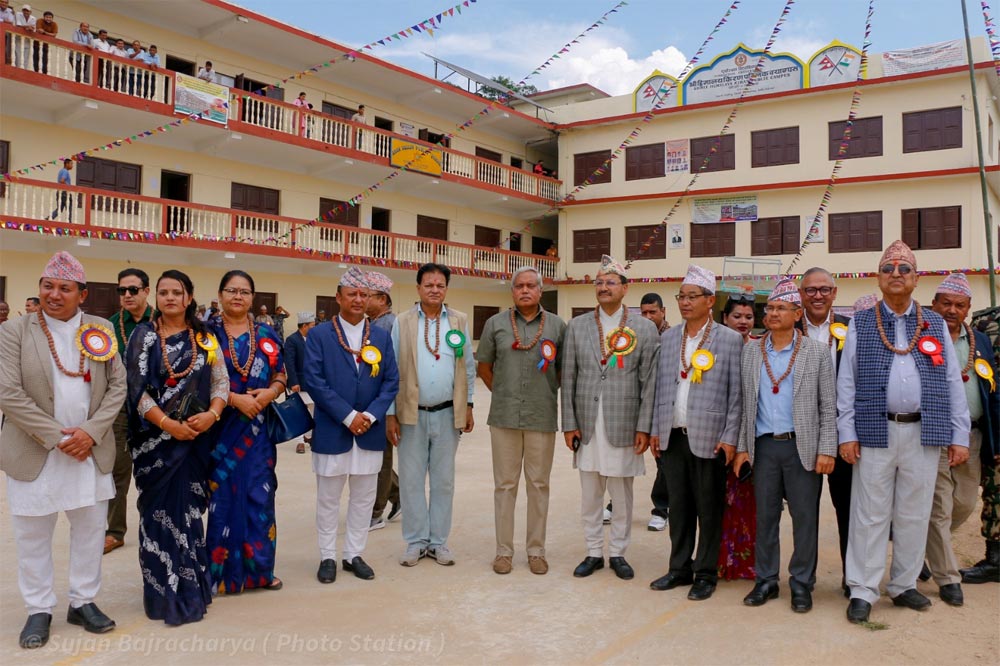
Academic activities started on 2062/05/14 with the three-year Bachelor of Education program. The first B.Ed. group consisted of 60 students.
The campus expanded its education programs within the same year. On 2062/08/14, it commenced the One Year B.Ed. program.
A further academic expansion took place on 2069/05/12 with the introduction of the two-year Master of Education program. The campus later included Bachelor of Business Studies among its academic offerings.
This development gave the campus a combination of undergraduate and postgraduate education programs along with undergraduate business studies.
Himalaya Kiran Public Campus offers four listed programs under Purbanchal University. The stated seat capacities are as follows:
| Program | Seats |
|---|---|
| Bachelor of Education (B.Ed.) | 80 |
| One Year B.Ed. | 40 |
| Master of Education (M.Ed.) | 180 |
| Bachelor of Business Studies (BBS) | 60 |
The Bachelor of Education program forms part of the campus's original academic foundation. The campus started its academic operation with a three-year B.Ed. program in 2062 BS with 60 students.
The currently listed B.Ed. seat capacity is 80.
The One Year B.Ed. program was added on 2062/08/14. Purbanchal University's One-Year Bachelor in Education curriculum is designed as a professional and academic teacher-education program.
The university curriculum includes professional core study and subject specialization. Professional areas include philosophical and sociological foundations of education, educational psychology, curriculum and evaluation, research methods, and practice teaching or practicum.
The listed seat capacity at Himalaya Kiran Public Campus is 40.
The campus introduced its Master of Education program on 2069/05/12. M.Ed. is a postgraduate education qualification under Purbanchal University.
The university's M.Ed. curriculum covers core education study, specialization, research work, teaching-related practicum, and thesis work. The listed M.Ed. seat capacity at the campus is 180.
Bachelor of Business Studies extends the campus's academic scope beyond teacher education. Purbanchal University's BBS is a four-year undergraduate program covering business and management-related study.
Its academic areas include accounting, economics, finance, marketing, management, business communication, organizational behavior, business law, entrepreneurship, and related business subjects.
The listed BBS seat capacity at Himalaya Kiran Public Campus is 60.
The campus places education within the broader context of social and professional development. Its academic direction gives attention to applied learning and the use of technology in teaching and learning activities.
Faculty members use different teaching techniques and approaches to support students in building subject knowledge and professional skills. The institutional approach also places importance on coordination among academic and administrative units rather than treating teaching as an isolated activity.
The Campus Management Committee works with department heads, faculty members, and non-teaching staff in coordinating academic activities. This structure connects institutional management with day-to-day teaching and administrative work.
The vision of Himalaya Kiran Public Campus is centered on social transformation through quality education.
Its long-term institutional direction includes developing the campus as a stronger higher education center in the district while improving the academic environment, physical resources, student services, and educational management systems.
The campus mission focuses on higher education, community participation, and research development.
Its stated areas of attention include:
maintaining an academic environment focused on higher education;
encouraging community involvement in campus development;
strengthening research capability;
supporting students through academic and institutional services; and
preparing qualified human resources through contemporary and inclusive educational programs.
The campus seeks to run contemporary and inclusive academic programs that prepare human resources for further academic study and work in different sectors.
This goal is connected with its broader plans for teaching, research, institutional management, student access, technology use, and campus development.
Himalaya Kiran Public Campus has identified several areas for institutional development.
The campus intends to improve and expand safe and spacious physical structures for teaching and learning. Infrastructure development is also connected with its long-term plan to strengthen the environment required for higher education.
One institutional objective is to examine different rational and alternative approaches to instructional delivery. This gives the campus a framework for reviewing how teaching activities are organized and how students engage with academic content.
The campus plans an Educational Management Information System covering areas such as:
library management;
financial systems; and
teaching and learning processes.
The objective is to connect major academic and administrative functions through a structured information-management system.
The campus has identified student enrollment and academic performance as development priorities. Its objectives include expanding higher education opportunities while supporting student progress within academic programs.
The campus gives attention to higher education opportunities for socially and economically marginalized groups. This objective connects community-campus education with broader access to university-level study in the district.
Another objective is to maintain an academic environment that combines broad-based education with specialized study and skills development.
The intention is to support students preparing for professional work as well as those who may continue to further academic study.
Research development forms part of the campus's academic objectives. The campus seeks to build a stronger research culture alongside its regular teaching responsibilities.
This focus is also reflected in the postgraduate education program, where research work forms part of the academic structure.
The campus includes assessment and improvement of administrative and academic staff performance among its institutional objectives.
Staff development is connected with the broader need for consistent academic delivery, administrative coordination, and student services.
Strengthening student support systems is another stated priority. The campus seeks to improve the institutional support available to students during their academic study.
A student grievance redressal mechanism is also included among its objectives, giving students a channel for raising concerns and seeking institutional responses.
The campus intends to develop an institutional environment that encourages creativity, new ideas, and problem-solving activities among members of its academic community.
Institutional objectives also include increasing publications and public information so that stakeholders can participate more actively in campus development and academic affairs.
Environmental and biodiversity conservation, sanitation, and health are included among the campus's development priorities.
The campus aims to strengthen resource mobilization and the management of available resources as part of its institutional development planning.
The Campus Management Committee has a central role in campus administration and coordination.
Its work is connected with department heads, teaching faculty, and non-teaching staff. This arrangement supports the coordination of academic programs, administrative responsibilities, and educational activities across the campus.
Team-based coordination has been an important part of the campus's operational approach, particularly in managing its education programs and institutional activities.
Himalaya Kiran Public Campus has faced financial limitations that have affected its ability to develop facilities at the level it seeks for B.Ed. and M.Ed. education.
The campus's development direction therefore includes improvement of physical structures and other facilities required for higher learning. It also maintains an institutional focus on keeping higher education comparatively affordable while working toward improved academic infrastructure.
These priorities connect financial planning, resource mobilization, physical development, and academic services within the campus's longer-term institutional planning.
Student support appears across several of the campus's stated objectives rather than as a single administrative function.
The campus intends to strengthen support systems for students, improve academic performance, widen access for marginalized groups, establish a grievance-handling mechanism, and develop an academic environment that supports both broad learning and specialized skills.
Students seeking course-specific information can contact the campus administration regarding admission, fees, scholarships, eligibility, counseling, facilities, and related academic matters.
College: Himalaya Kiran Public Campus
Location: Khandbari-07, Nayabazzar, Khandbari, Sankhuwasabha, Koshi Province, Nepal
Phone: +977-29-561165
Email: info@himalayakpc.edu.np
Website: https://himalayakpc.edu.np
Himalaya Kiran Public Campus was established in 2005 AD (2062 BS) as a community campus.
The campus is located at Khandbari-07, Nayabazzar, Khandbari, Sankhuwasabha, Koshi Province, Nepal.
Himalaya Kiran Public Campus is affiliated with Purbanchal University.
The campus offers Bachelor of Education (B.Ed.), One Year B.Ed., Master of Education (M.Ed.), and Bachelor of Business Studies (BBS).
The stated seat capacities are 80 for B.Ed., 40 for One Year B.Ed., 180 for M.Ed., and 60 for BBS.
The campus began its academic activities with a three-year Bachelor of Education program on 2062/05/14, starting with 60 students.
One Year B.Ed. commenced on 2062/08/14, while the Master of Education program was introduced on 2069/05/12.