The Institute of Advanced Communication, Education, and Research (IACER), Kathmandu is based in New Baneshwor, Kathmandu, and concentrates on English Studies, communication, humanities, social sciences, writing, and interdisciplinary research. IACER began in February 2001 and has offered MPhil in English since its inception.
The institute is affiliated with Pokhara University and offers the Bachelor of English and Communication Studies (BECS), MPhil in English, and MA in English. Its academic environment connects literary study with cultural, political, social, and environmental questions.
The Writing Center, library, computer lab, seminars, workshops, reading activities, conferences, and research programs extend this academic work beyond scheduled classroom sessions.
| Particular | Details |
|---|---|
| Institution | Institute of Advanced Communication, Education, and Research (IACER) |
| Location | New Baneshwor, Kathmandu |
| Affiliation | Pokhara University |
| Academic beginning | February 2001 |
| Main academic areas | English Studies, communication, humanities, social sciences, interdisciplinary research |
| Programs | BECS, MPhil in English, MA in English |
| Academic support | Writing Center, library, computer lab, seminar rooms |
| Academic activities | Conferences, reading groups, guest lectures, writing workshops |
| Research orientation | Literature, cultural studies, South Asian studies, interdisciplinary inquiry |
IACER's academic work is built around the relationship between disciplinary study and interdisciplinary inquiry. English Studies occupies a central place, while students also encounter subjects connected with literature, culture, society, politics, identity, environment, and research.
English is approached through more than literary texts alone. Academic discussions extend to globalization, conflict transformation, gender relations, environment, race, ethnicity, class, nation, and other cultural questions. This gives students opportunities to consider how texts, language, social relations, and cultural conditions interact within different contexts.
The postgraduate programs reflect the same academic orientation. Master's-level study incorporates literature and cultural discourses, while MPhil study draws from the humanities and social sciences. Students work with concepts, research approaches, and academic vocabulary from different fields before concentrating on a specific research interest.
IACER's approach to specialization gives researchers room to develop a defined area of study after broader interdisciplinary exposure. The underlying academic principle is that focused disciplinary research can grow from engagement with more than one field of inquiry.
IACER is located in New Baneshwor, Kathmandu. Its academic environment includes regular classroom teaching together with seminars, workshops, guest lectures, literary readings, conferences, and cultural activities.
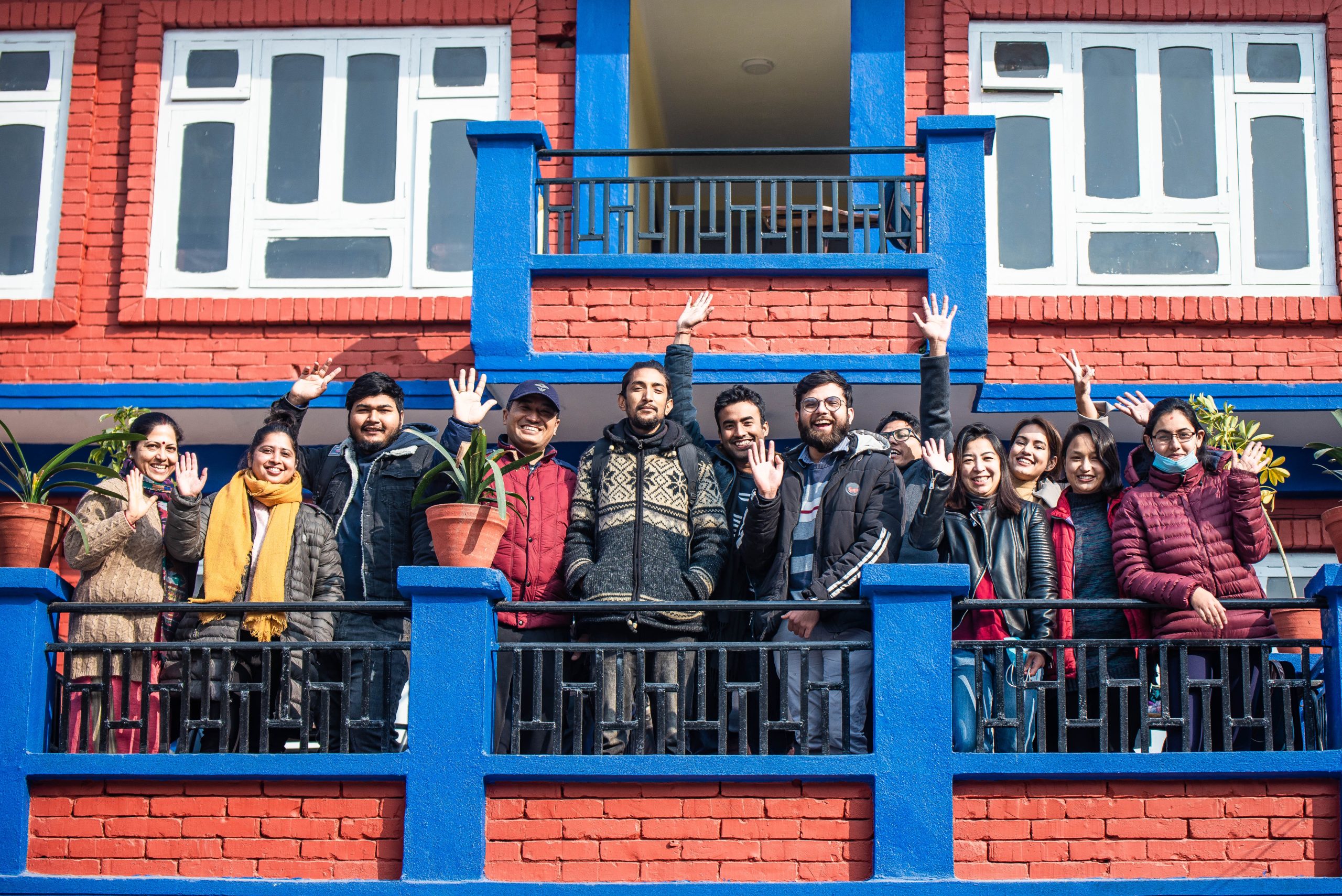
Students come from varied academic and professional backgrounds. The student community includes recent graduates as well as people with professional experience. This mix can bring different perspectives into discussions, particularly in courses dealing with literature, identity, culture, politics, gender, conflict, and social questions.
Small class sizes form part of IACER's teaching setting. Students and faculty are able to work through discussion, presentation, reading, writing, and research in a setting designed for closer academic interaction.
This classroom structure is especially relevant to programs where interpretation, argument, critical reading, and academic writing are central to study.
IACER is affiliated with Pokhara University and offers three programs under this academic connection:
Bachelor of English and Communication Studies (BECS)
MPhil in English
MA in English
The program range covers undergraduate study in English and communication, master's-level study in English, and postgraduate research through MPhil in English.
| Program | Seats |
|---|---|
| Bachelor of English and Communication Studies (BECS) | 48 |
| MPhil in English | 30 |
| MA in English | 30 |
The available tuition fee waivers include:
A tuition fee waiver for 5 students in BECS.
A tuition fee waiver for 3 students each semester in MA in English.
The Bachelor of English and Communication Studies (BECS) is IACER's undergraduate program. It has 48 seats.
BECS sits within an institutional setting centred on English, communication, writing, interpretation, cultural questions, and interdisciplinary discussion. Students also study in an environment where reading activities, writing workshops, seminars, library resources, and academic events form part of campus life.
The program has a tuition fee waiver provision for 5 students.
MPhil in English has 30 seats and holds a longstanding place in IACER's academic history. IACER has offered the program since the institute began in February 2001.
MPhil study works across the humanities and social sciences. Students engage with concepts, vocabulary, methods, and research questions from several areas before developing focused research interests.
This structure allows research in English Studies to interact with questions drawn from culture, politics, society, identity, regional studies, and related fields where these perspectives are relevant to the research problem.
The interdisciplinary framework does not replace disciplinary research. Instead, it provides a wider base from which students can define and pursue a particular research interest.
MA in English has 30 seats.
The master's program incorporates literature and cultural discourses. Its academic concerns include English Studies together with themes such as race, ethnicity, class, nation, gender, and conflict.
This approach connects textual interpretation with broader cultural and social inquiry. Students work within an academic environment that also includes writing activities, seminars, reading groups, research discussion, and academic exchange.
MA in English has a tuition fee waiver provision for 3 students each semester.
Interdisciplinary study is a central feature of IACER's academic structure.
Literature, communication, cultural studies, and social questions are approached as areas that can intersect rather than remain completely separate. A literary or cultural text may therefore be considered alongside questions of gender, nation, ethnicity, class, conflict, globalization, or environment when those perspectives are relevant to the subject being studied.
The same approach carries into research. MPhil students work with ideas and methods from the humanities and social sciences before narrowing their attention to a particular research problem.
This academic model also places substantial importance on reading and writing. Students are expected to interpret texts and arguments, compare perspectives, form research questions, develop positions, and communicate those positions through academic writing and discussion.
The Writing Center, reading activities, workshops, seminars, and research events support this part of academic life.
The IACER Writing Center supports students with academic writing through peer-led workshops, mentoring, supervision, editing-related assistance, and online resources.
Graduate and research writing requires students to organize ideas, construct arguments, work with readings, connect evidence with claims, and revise written work. The Writing Center gives students a dedicated setting for working on these areas.
Its activities include:
Peer-led writing workshops
Mentoring sessions
Discussion of ideas and arguments
Support for academic writing assignments
Editing-related guidance
Online writing resources
Workshops on different forms and aspects of writing
The Center also introduced an instant editing service in Fall 2015 for write-ups of 100 to 200 words. Students using this service arrange an appointment with the Center's coordinator.
Peer interaction is an important part of the Writing Center's model. Students can discuss whether their arguments are clear, whether their ideas follow a logical sequence, and whether the technical aspects of a written assignment support the intended argument.
IACER maintains library resources focused on literature, humanities, and social sciences. The library combines printed material with digital academic resources connected to student reading and research.
Resources include:
Hard-copy books and other written materials
Access to thousands of online journals
Nearly ten thousand online books
Online information about library materials for registered students
Literature, humanities, and social science resources
Digitalization of the library system has also been part of IACER's library development. Registered students can access information about library materials remotely.
For students engaged in literature, humanities, social sciences, and research, access to a range of books and journals supports work that requires comparison of authors, theories, arguments, and research perspectives.
IACER has a computer lab with internet access, word-processing facilities, and research databases available for student use during academic hours.
The computer lab supports work connected with essays, research papers, presentations, and other academic assignments. It also complements the library and Writing Center by providing digital resources for research and writing.
Seminar rooms are used for presentations, discussions, guest lectures, and other academic events.
These facilities correspond closely with the institute's academic activities: the library supports reading and research, the Writing Center supports written work, the computer lab provides digital academic access, and seminar rooms provide space for presentation and discussion.
IACER's academic calendar includes activities that accompany regular coursework and research.
The institute organizes an annual academic conference that includes student and faculty research presentations and keynote addresses.
The conference gives students and faculty a setting in which research can be presented and discussed beyond ordinary classroom assignments.
Reading groups bring students and faculty together to discuss literary texts, theoretical works, and current issues.
These sessions provide space for close reading, interpretation, and exchange of views around selected texts and questions.
Guest lectures involve scholars, writers, journalists, and public intellectuals from Nepal and abroad.
The series connects classroom study with discussions involving people working across academic, literary, journalistic, and intellectual fields.
Writing workshops cover areas such as academic writing, creative writing, grant writing, and publication.
These workshops complement the regular activities of the Writing Center and give students structured opportunities to work with different forms of writing.
South Asian Studies forms an important part of IACER's research activity.
IACER initiated South Asia discourse with South Asian and U.S. academicians in 2008. Early workshops included Prof. Ashish Nandy and Prof. Susie Tharu. From 2011, Prof. Gayatri Spivak and scholars from Columbia University have regularly conducted workshops with researchers at the institute.
This area of research examines regionalism and conventional approaches to area studies. It considers how South Asia can be understood differently when the point of analysis changes, including a shift from an India-centred perspective toward Nepal or the Himalayas.
The research also considers how local and South Asian questions can contribute to wider theoretical work. Comparative study across and within regions is part of this intellectual direction.
These questions fit IACER's broader interdisciplinary approach by connecting regional knowledge with issues of theory, research method, comparison, culture, and academic interpretation.
IACER's student community includes people with different academic, cultural, and professional backgrounds.
This diversity can shape classroom discussion because students may approach the same text, cultural issue, or research problem from different educational and professional positions.
Small class sizes support regular interaction between students and teachers. This is particularly relevant in programs where reading, writing, argument, interpretation, presentation, and research depend on discussion and feedback.
Peer interaction also extends beyond regular classes through the Writing Center, reading groups, workshops, conferences, and other academic activities.
Students therefore participate in an environment where reading, discussion, writing, revision, presentation, and research are closely connected.
IACER's academic identity is centred on English Studies, communication, writing, interdisciplinary scholarship, humanities, social sciences, and research.
Its three programs cover different stages of academic study: BECS at the bachelor's level, MA in English at the master's level, and MPhil in English at the postgraduate research level.
The academic infrastructure surrounding these programs includes the Writing Center, library, computer lab, seminar rooms, reading groups, workshops, conferences, and guest lectures.
Across these areas, English and literary study are connected with broader cultural and social questions. Writing, discussion, interdisciplinary reading, and research remain recurring elements of the academic environment.
IACER is located in New Baneshwor, Kathmandu.
IACER is affiliated with Pokhara University.
IACER offers the Bachelor of English and Communication Studies (BECS), MPhil in English, and MA in English.
BECS has 48 seats. A tuition fee waiver is available to 5 students.
MPhil in English has 30 seats.
MA in English has 30 seats. A tuition fee waiver is available to 3 students each semester.
Yes. The IACER Writing Center supports academic writing through peer-led workshops, mentoring sessions, online resources, discussions, and editing-related activities.
The library includes literature, humanities, and social science resources, hard-copy materials, access to thousands of online journals, and nearly ten thousand online books.
Activities include the annual conference, reading groups, guest lectures, writing workshops, seminars, literary readings, and cultural events.
Academic work includes English Studies, literature, communication, cultural discourses, race, ethnicity, class, nation, gender, conflict, globalization, environment, and interdisciplinary research.