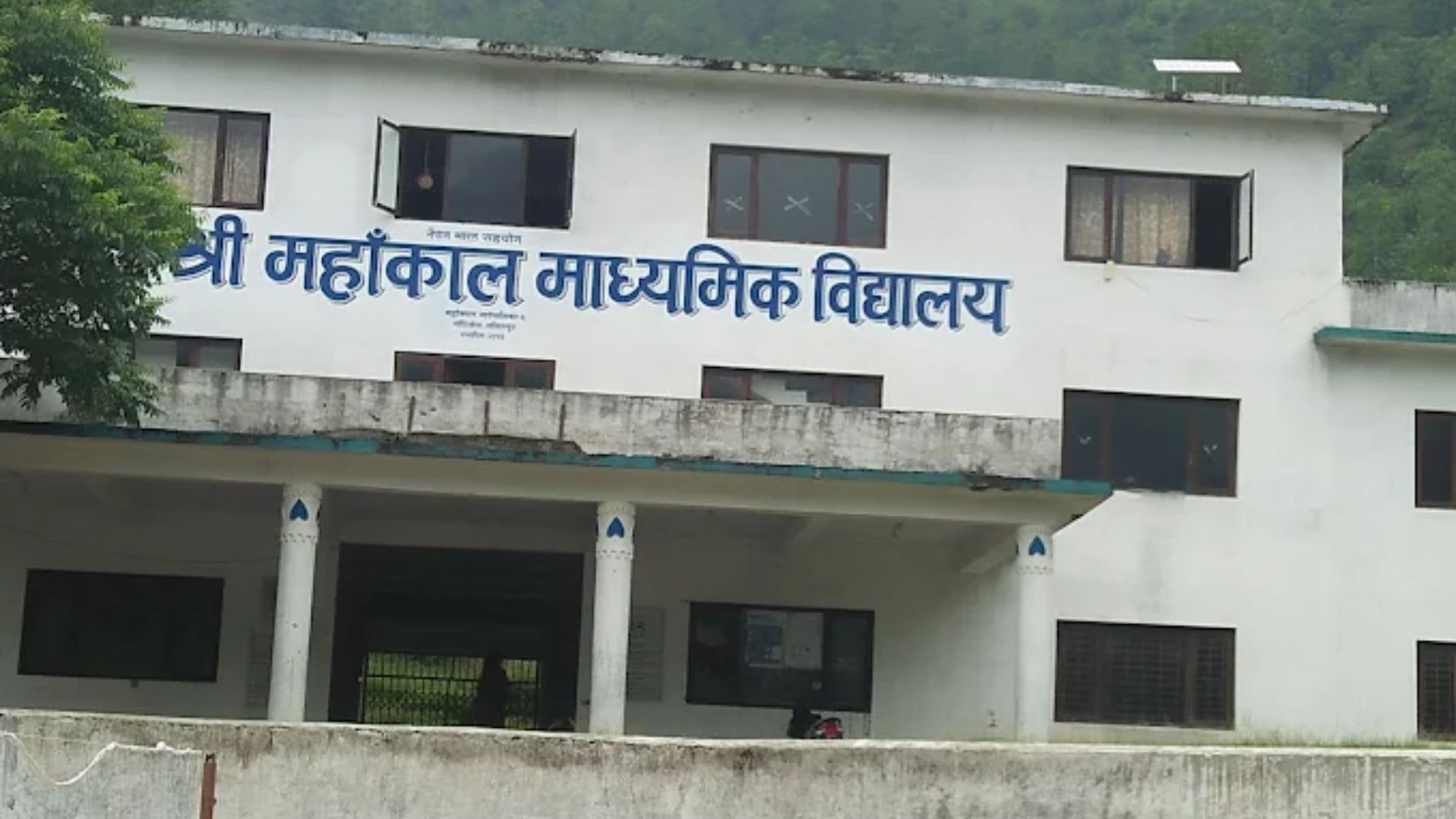
Mahankal Campus (महाँकाल क्याम्पस, गाेटिखेल, ललतिपुर) is a community campus located in Gotikhel, Mahankal Rural Municipality Ward No. 3, Lalitpur, Nepal. The campus was established in 2006 AD (2063 BS) as a local response to a long-standing education access gap in southern Lalitpur.
For many families, higher education often meant long travel to Lagankhel or Chapagaun, or renting a room in the city after Grade 12. These options raised monthly costs and created pressure on households with limited income, sometimes leading students to stop their studies even after passing Grade 12.
The campus sits near the religious site known as the Mahankal Temple and lies in a hill valley setting that is away from Kathmandu’s dense traffic and daily noise.
As a TU-affiliated community campus, Mahankal Campus supports bachelor-level study in disciplines linked with common career paths in the local context, especially school teaching and administrative or accounting-related work. It mainly serves students from nearby rural municipalities and border-adjacent areas, including parts of Makwanpur.
Institution Type: Community campus
Established Year: 2006 AD (2063 BS)
Affiliation: Tribhuvan University (TU)
Location: Gotikhel, Mahankal-3, Lalitpur
Programs Offered: Bachelor of Business Studies (BBS), Bachelor of Education (B.Ed)
Medium of Instruction: Nepali and English
Key Facilities Mentioned: Library, computer lab, sports space, counseling, multimedia, journals, conference hall, ECA
Sister School Mentioned: Mahankal Secondary School (up to secondary level)
Mahankal Campus runs two bachelor-level programs under Tribhuvan University. The selection reflects common study choices in rural and semi-rural Nepal where students often aim for public-sector pathways, school teaching, local administration, cooperatives, and finance-related roles.
The B.Ed program is closely connected with school teaching, which remains one of the most visible public-sector career routes in many local areas.
The program supports students who plan to work in schools and who want a TU bachelor degree in education while staying closer to home.
Subject areas stated in the campus profile include:
Nepali
English
Population
Health and Physical Education
After completing the program and meeting the relevant requirements, graduates may apply for teaching-related opportunities, including participation in the Teachers Service Commission (TSC) process. Graduates may also pursue teaching positions in local private and government schools depending on vacancy announcements and selection rules.
The BBS program relates to business and administrative knowledge used in cooperatives, micro-finance, local government offices, and small enterprises. As local institutions expand and formal reporting becomes more common, demand increases for people who understand accounts, office administration, and basic financial practices.
Subject areas stated in the campus profile include:
Accounting
Finance
Economics
Marketing
Graduates may explore roles in rural municipality offices, cooperatives, agricultural firms, micro-finance institutions, and the broader banking and finance sector, based on job requirements and recruitment processes.
Mahankal Campus admission basics are presented through document-based requirements, with TU rules used as the reference point for eligibility.
Documents commonly required (as stated):
Grade 12 transcript
Character certificate
Copy of citizenship
Minimum grade reference (as stated):
For BBS and B.Ed, TU rules require a minimum of D+ or above.
Since admission timelines and internal processing steps can differ by academic year, students and guardians should confirm current admission dates, fee structure, and document submission steps directly through the campus administration.
A frequent question about rural campuses is whether qualified teachers are available. The campus profile states that many teaching staff members are local and have completed higher degrees such as Master’s or M.Phil from universities in Kathmandu.
Smaller class size is another practical feature of many community campuses. With fewer students, teachers can provide closer academic guidance, check student progress more often, and support students who need extra help in core subjects. This setting can be helpful for first-generation college students who may need clearer academic direction in the early semesters.
Instruction is described as bilingual, with Nepali and English used as needed. Teachers adjust explanations based on student understanding, which can support learners from different schooling backgrounds.
Mahankal Campus is presented as a campus that focuses on essential learning infrastructure rather than luxury facilities. The profile highlights the following learning supports.
Campus building and classrooms
The campus is stated to have its own permanent building. Classrooms are described as bright and spacious, which supports everyday teaching and group-based learning activities.
Library
A library is mentioned as an important support for students who cannot afford to purchase all course books. The profile states that students can borrow books using a card system, including taking books home.
Computer lab
A computer lab is mentioned as part of the campus facilities. This matters for basic computer literacy and academic tasks such as typing assignments, preparing presentations, and working with common office tools used in many jobs.
Conference hall, counseling, and learning supports
The campus profile lists counseling and a conference hall among the facilities. In practical terms, these can support student guidance, orientation sessions, academic discussions, and campus events.
Sports space and open ground
Gotikhel’s open ground and campus surroundings are described as providing space for sports. Volleyball and football are stated as popular activities.
Student life at Mahankal Campus is shaped by the realities of rural higher education. A major factor is cost. The campus profile describes typical city expenses for students who move to Kathmandu for study, where room rent, food, and transport can raise monthly spending to NPR 15,000–20,000. Over a four-year bachelor program, this can total NPR 700,000–800,000 depending on living arrangements.
Studying in Gotikhel allows many students to remain with family, avoid city rent, and continue household responsibilities. For some students, staying near home also reduces stress linked with city adjustment and strengthens family supervision during the early adulthood years after Grade 12.
Another factor is study time. A village-based campus often reduces commuting time compared to long travel to city colleges. The campus profile also notes that students may have more time for exam preparation, including preparation for the Public Service Commission (Lok Sewa Aayog) and the Teachers Service Commission.
The campus profile lists extracurricular activities among its features. Sports, especially volleyball and football, are mentioned as common activities supported by the open ground available in the local setting.
The profile also lists tours among campus activities. Students who participate in tours and ECA programs should follow campus notices for schedules, participation rules, and safety guidance. In many cases, ECA participation helps students build teamwork, communication, and time management skills that support both study and work.
Financial support is one of the key reasons community campuses matter in rural Nepal. The campus profile states a policy direction that students should not be pushed out of education due to lack of money.
Scholarship and support areas mentioned include:
UGC scholarships: Scholarships received through the University Grants Commission (UGC) are provided to students.
Academic performance support: Fee waivers are mentioned for students who achieve strong results in exams (campus toppers).
Support for disadvantaged and reserved groups: Concessions are mentioned for Dalit, Janajati, and economically disadvantaged students.
Local government support: Scholarship programs from Mahankal Rural Municipality are mentioned as a way to encourage local students.
Students should confirm scholarship eligibility, required documents, and deadlines through the campus administration because scholarship quotas and criteria can differ by year and program.
Mahankal Campus milestones, based on the provided campus profile, can be stated clearly without adding claims that require external verification.
Establishment as a community campus in 2006 AD, linked with local education access needs.
TU affiliation and continued operation of BBS and B.Ed bachelor programs.
Service coverage for students from Mahankal Rural Municipality (including surrounding settlements), Konjyosom Rural Municipality, Bagmati Rural Municipality, and border-adjacent areas of Makwanpur.
Development of basic academic supports such as a library, computer lab, and sports space, along with student guidance supports listed in the profile.
This section is best understood as a fit-check based on practical needs rather than a sales claim.
Mahankal Campus may fit students who:
Need a TU bachelor program without moving to Kathmandu for four years.
Want to reduce household spending linked with city rent and daily living costs.
Prefer study within family supervision during early years after Grade 12.
Aim for teaching-related study through B.Ed, or business and administration-related study through BBS.
Want a setting with basic academic facilities such as a library and computer lab, along with space for sports and ECA.
Mahankal Campus in Gotikhel, Lalitpur serves as a TU-affiliated community campus that responds to rural higher education needs in southern Lalitpur. Established in 2006 AD, it supports bachelor-level study through BBS and B.Ed and provides basic learning facilities such as a library, computer lab, classrooms, and space for sports and student activities.
Mahankal Campus is located in Gotikhel, Mahankal Rural Municipality Ward No. 3, Lalitpur, Nepal, near the Mahankal Temple area.
Mahankal Campus is affiliated with Tribhuvan University (TU).
The campus offers Bachelor of Business Studies (BBS) and Bachelor of Education (B.Ed).
The stated documents include Grade 12 transcript, character certificate, and a copy of citizenship.
The stated minimum grade requirement is D+ or above, based on TU rules.
The campus profile states that both Nepali and English are used as the medium of instruction, based on student understanding.
Contact Mahankal Campus's administrative office for detailed information on the course, admissions, location, fees, scholarships, facilities, counseling, or eligibility.
Mahankal Campus
Email Address: school@mahankal.edu.np
Phone Number: +977-1-6226858
Location: Gotikhel, Lalitpur, Nepal