Nepal Mega College in Babarmahal, Kathmandu, runs NEB +2 programs in Science, Management, and Law alongside university-level studies under Tribhuvan University (BBM, BBS, BCA, BSW, MBS, MA in Rural Development) and Rajarshi Janak University (BBA, MBA).
Established in 2011, Nepal Mega College is an urban campus serving students from diverse districts. It operates NEB +2 streams and university programs with structured evaluation, classroom-practice links, and field exposure. Academic notices and intake updates are announced on official channels during admission seasons.
The college maintains regular teaching schedules, lab-based work where required, and moderated student activities during the academic year. Program choices allow learners to plan pathways from +2 to bachelor’s and master’s levels.
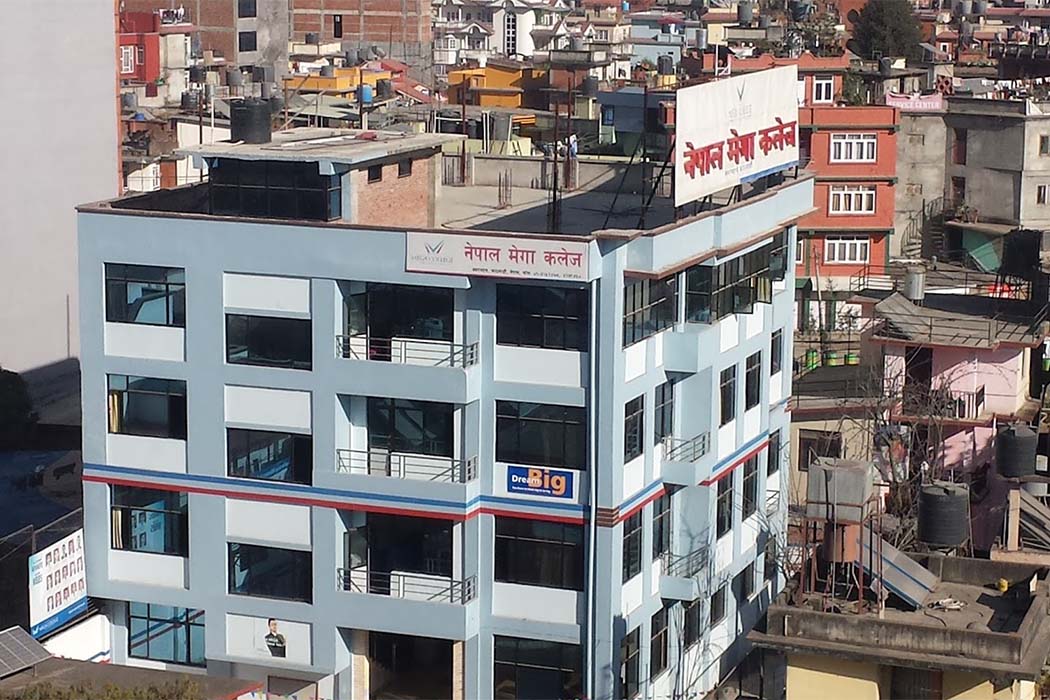
Location: Babarmahal, Kathmandu
Established: 2011
Affiliations: NEB, Tribhuvan University (TU), Rajarshi Janak University (RJU)
Current Programs: +2 Science, +2 Management, +2 Law; BBM, BBS, BCA, BSW; MBS, MA in Rural Development; BBA, MBA
Academic Calendar: Annual intakes with entrance processes where applicable
Evaluation: Unit tests, terminals, internal assessments, and university/board examinations
Student Activities: Fieldwork, rural/industry visits, sports and clubs, seminars and presentations
Affiliation: NEB
Duration: 2 years
Entry Requirements: C+ in Science and C+ in Mathematics at Grade X (as practiced nationally; verify intake notice for the current session)
Key Study Areas: Physics, Chemistry, Biology/Mathematics, English, Nepali, practicals and project work
Learning Focus: Lab sessions, problem-solving, numerical practice, exam preparation for medical, engineering, and science entrances
Progression: MBBS/MD entrance tracks, BE/Engineering, Pharmacy, BSc, CS/IT, and allied sciences
Affiliation: NEB
Duration: 2 years
Entry Requirements: Minimum C in all subjects at Grade X
Key Study Areas: Accountancy, Economics, Business Studies, Mathematics/Computer, English, Nepali
Learning Focus: Accounting practice, project assignments, presentations, business communication
Progression: BBS, BBM, BBA, BCA (with math/computer background), CA/ACCA pathways, banking and finance
Affiliation: NEB
Duration: 2 years
Entry Requirements: Minimum C in all subjects at Grade X
Key Study Areas: Jurisprudence basics, Constitutional Law (intro), Civil/Criminal fundamentals (as per NEB), social studies and language subjects
Learning Focus: Legal reasoning, civic understanding, case summaries, debates and seminars
Progression: BALLB/LLB tracks, public policy, governance, social research
Affiliation: TU
Duration: 4 years (8 semesters)
Entry Requirements: 10+2 or equivalent with minimum criteria set by TU; CMAT compulsory
Key Study Areas: Management foundations, quantitative techniques, economics, finance, marketing, operations, electives
Assessment: Internal evaluations, presentations, projects, end-semester exams
Career Paths: Entry roles in administration, marketing, finance, operations, entrepreneurial projects
Affiliation: TU
Duration: 4 years (annual system)
Entry Requirements: 10+2 or equivalent meeting TU norms
Key Study Areas: Accounting, Finance, Marketing, Economics, Organizational Studies, Business Law
Assessment: Internal tests, practical tasks, annual exams
Career Paths: Accounting support, banking and finance, sales and distribution, office administration
Affiliation: TU
Duration: 4 years (8 semesters)
Entry Requirements: 10+2 or equivalent with eligibility per TU; selection as per university/college process
Key Study Areas: Programming, Data Structures, DBMS, Networking, Web Technologies, Software Engineering, projects
Assessment: Labs, internal assignments, viva, end-semester exams
Career Paths: Software development, QA/testing, web/app development, IT support roles
Affiliation: TU
Duration: 4 years
Entry Requirements: 10+2 or equivalent per TU criteria
Key Study Areas: Social Work theory, Community Organization, Social Research, Human Behavior, Fieldwork and placements
Assessment: Field reports, presentations, internal reviews, annual/semester exams as per structure
Career Paths: NGOs/INGOs, community programs, social research assistance, school/social counseling support
Affiliation: TU
Duration: 2 years
Entry Requirements: Bachelor’s degree meeting TU criteria; admission per TU/college process
Key Study Areas: Managerial Economics, Organizational Theory, Accounting and Finance, Marketing Analysis, Research Methodology, specialization papers
Assessment: Term work, project/report, university examinations
Career Paths: Corporate roles, financial analysis support, teaching eligibility per rules, entrepreneurship
Affiliation: TU
Duration: 2 years
Entry Requirements: Bachelor’s degree in a relevant field per TU norms
Key Study Areas: Development Theory, Research Methods, Local Governance, Rural Livelihoods, Project Planning, field-based components
Assessment: Term papers, field reports, presentations, university examinations
Career Paths: Development agencies, local governance projects, research and monitoring units
Affiliation: RJU
Duration: 4 years (8 semesters)
Entry Requirements: 10+2 or equivalent; admission test/criteria as per RJU guidelines (check intake notice)
Key Study Areas: Management principles, accounting, economics, business analytics basics, marketing, finance, HR, internships/projects
Assessment: Continuous internal work, presentations, project report, end-semester exams
Career Paths: Business administration roles, banking and finance, marketing coordination, sales, entrepreneurship support
Affiliation: RJU
Duration: Usually 2 years (semester system)
Entry Requirements: Bachelor’s degree from a recognized institution; admission process as per RJU scheme
Key Study Areas: Strategic Management, Managerial Economics, Accounting and Finance, Marketing Decisions, Operations, Research Methods, specialization electives, project/thesis
Assessment: Internal evaluations, casework, project/thesis, end-semester exams
Career Paths: Corporate coordination roles, project supervision, banking and financial services, consulting support, start-up management
Application: Form submission during the admission window
Screening: Eligibility based on SEE/Grade X results per stream
Interaction: Orientation or counseling as scheduled
Documents: SEE marksheet, character certificate, photos, ID copy (confirm current list)
BBM: CMAT registration under TU; shortlist and further steps at the college
BBS/BCA/BSW: Eligibility per TU; placement or orientation as announced
Documents: 10+2 marksheets, character certificate, photos, ID copy
Eligibility: Bachelor’s degree as per TU policy
Selection: Merit-based with internal steps where applicable
Documents: Bachelor’s transcripts, character certificate, photos, ID copy
Eligibility: 10+2 (BBA) and Bachelor’s (MBA) meeting RJU norms
Selection: University/college-level entrance or interview as announced
Documents: Academic records, character certificate, photos, ID copy
Teaching teams include experienced subject instructors and coordinators. Classroom delivery is supported by tutorials, assignments, presentations, and guided projects. Departments schedule seminars with invited speakers. Social Work organizes field placements. Management and BCA classes include software tools or case tasks as needed. Students receive progress updates through scheduled tests and internal reviews.
Classrooms and Seminar Halls: Audio-visual support for lectures, workshops, and talks
Science Laboratories: Physics, Chemistry, Biology practicals for +2 Science
Computer Labs: Programming practice, networking setups, database workstations for BCA and related courses
Library and Reading Spaces: Course texts, references, exam preparation resources
Sports and Activity Areas: Basketball and outdoor games as available, with scheduled events in the academic year
Student life includes academic clubs, intra-campus events, and exposure visits. Social Work conducts rural camps and community engagement. Management students visit business organizations for observation and short study reports. The calendar features sports days, quiz contests, literary activities, and subject weeks coordinated by departments.

Clubs and Committees: Student-led groups with teacher guidance
Seminars and Talks: Sessions with professionals and alumni
Competitions: Debates, quizzes, art and science exhibitions
Sports: Team events and seasonal tournaments
Community Work: Clean-up drives, awareness programs, and field projects
Scholarship information is announced during admissions. Categories may include merit based on prior results or entrance performance, and limited support on need or criteria set by the institution. Each intake publishes the number of seats, eligibility rules, and required documents. Applicants should prepare academic records early and follow deadlines closely.
The college communicates academic results, entrance successes, and activity highlights through notices and news posts. Business studies recognition, participation in inter-college events, and fieldwork reports appear in public updates during the year. Alumni contributions and mentoring sessions are featured when scheduled.
Program Range: +2, bachelor’s, and master’s tracks across management, IT, social work, and development studies
Location Access: Central Kathmandu with nearby offices, libraries, and hubs for internships or field visits
Structured Evaluation: Unit tests, terminal exams, and internal reviews help track progress
Practice Elements: Labs, projects, fieldwork, and presentations connect coursework with real settings
Advising and Counseling: Academic guidance and mentoring during study periods
The chairperson underscores community trust, program growth since 2011, and a steady commitment to clear academic processes. Guardians and students are encouraged to review notices and participate in scheduled interactions.
The principal focuses on student learning, transparent assessments, and consistent classroom engagement. Faculty coordination and timely feedback support steady improvement.
The vice principal highlights skill-building through research tasks, group work, internships, and presentations, aiming for confident academic performance and workplace readiness.
Nepal Mega College is a Kathmandu-based institution running NEB +2 streams and university programs under TU and RJU. The program list includes +2 Science, +2 Management, +2 Law; TU’s BBM, BBS, BCA, BSW, MBS, and MA in Rural Development; and RJU’s BBA and MBA. Prospective applicants should read the latest intake notices for entrance dates, scholarship windows, and document checklists before submission.
1) Which university affiliations does the college hold?
Affiliations: NEB for +2; Tribhuvan University for BBM, BBS, BCA, BSW, MBS, MA in Rural Development; Rajarshi Janak University for BBA and MBA.
2) Does BBM require CMAT?
Yes. TU’s CMAT is mandatory for BBM. Registration and dates follow TU’s calendar.
3) What is the title of the Social Work bachelor’s program?
BSW under TU. Some sources write BASW, but TU typically uses BSW.
4) How are scholarships announced?
Scholarships are posted during admissions with eligibility, seat counts, and deadlines. Applicants should track official notices.
5) Are field activities available?
Yes. Social Work runs field placements and camps. Management and Science plan visits or practical sessions as per the schedule.
6) What are the common +2 eligibility benchmarks?
+2 Science usually requires C+ in Science and C+ in Mathematics; +2 Management/Law generally requires C in all subjects. Always check the current notice for the exact criteria.
7) What facilities are available on campus?
Classrooms with AV support, science labs, computer labs, library resources, and sports activities scheduled through the year.
Contact Nepal Mega College's administrative office for detailed information on the course, admissions, location, fees, scholarships, facilities, counseling, or eligibility.
Nepal Mega College
Email Address: nepalmegacollege@gmail.com
Phone Number: +977-1-5705488, +977-9851350091
Website: http://nepalmegacollege.edu.np
Location: Babar Mahal, Kathmandu, Nepal