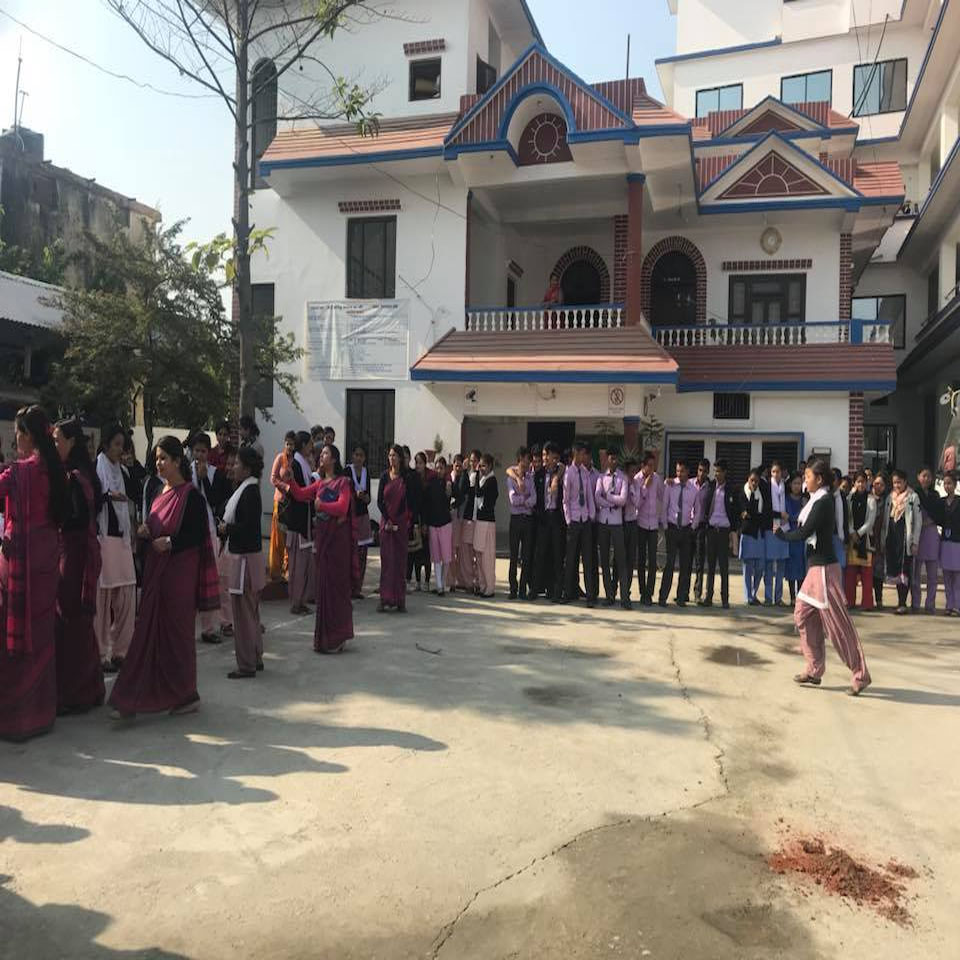
Nepalgunj Nursing Campus, Banke is a constituent nursing campus of the Institute of Medicine under Tribhuvan University. The campus is located in Nepalgunj Sub-Metropolitan City, Ward No. 10, Banke, Lumbini Province, close to Bheri Hospital. Its academic work is centered on bachelor-level nursing education, practical nursing preparation, clinical learning, research activity, and institutional support for students pursuing nursing as a regulated health profession.
The campus has developed through several stages of nursing education. It began as an Auxiliary Nurse Midwife training school, later moved into Proficiency Certificate Level nursing education, and subsequently introduced bachelor-level nursing programs. Its present academic focus is Bachelor of Science in Nursing and Bachelor of Nursing Science.
As a constituent campus, Nepalgunj Nursing Campus works within the academic structure of Tribhuvan University (TU) and the Institute of Medicine, Tribhuvan University (TU IOM). Admission to bachelor-level nursing education follows the applicable Medical Education Commission framework, while professional nursing registration and licensing fall under the Nepal Nursing Council.
| Field | Details |
|---|---|
| Institution | Nepalgunj Nursing Campus (नेपालगंज नर्सिङ क्याम्पस) |
| Institution type | Constituent nursing campus |
| Parent university | Tribhuvan University |
| Institute | Institute of Medicine |
| Location | Nepalgunj Sub-Metropolitan City, Ward No. 10, Banke, Lumbini Province |
| Academic field | Nursing education |
| Programs | BSc Nursing and Bachelor of Nursing Science |
| Academic framework | Tribhuvan University, Institute of Medicine |
| Admission system | Medical Education Commission framework for bachelor-level medical education |
| Professional regulator | Nepal Nursing Council |
| Nearby healthcare institution | Bheri Hospital |
| Main academic areas | Nursing theory, practical learning, clinical education, community health, management, and research |
Nepalgunj Nursing Campus is not an independent degree-awarding university. Its academic programs function within the TU-IOM system. The campus manages teaching, practical activities, local administration, student services, and other institutional responsibilities, while the wider university and institute structures govern important academic and examination functions.
This relationship is central to understanding the campus. Students are enrolled at Nepalgunj Nursing Campus, but their academic program sits within the Institute of Medicine and Tribhuvan University framework.
The institutional history of Nepalgunj Nursing Campus began with nursing workforce preparation at the auxiliary level. An Auxiliary Nurse Midwife training school was established in Nepalgunj by the Ministry of Health in 1969. The early phase of the institution was therefore closely connected with the preparation of ANM-level nursing personnel.
The next major stage came in 1987, when the institution entered Proficiency Certificate Level nursing education. PCL Nursing became an important part of the campus's academic role for many years and established the institution more firmly within formal nursing education.
Bachelor-level development followed later. A two-year Bachelor in Nursing program began in 2011. From 2013, the bachelor structure was revised into the three-year Bachelor of Nursing Science program.
The four-year Bachelor of Science in Nursing program was introduced in 2021. With the later phase-out of PCL Nursing, the campus moved toward a bachelor-level academic identity centered on BNS and BSc Nursing.
The broad institutional progression can be summarized as follows:
Some older institutional records contain differences in the chronology of the earliest administrative transition into the Tribhuvan University structure. The development from ANM training to PCL Nursing and later to bachelor-level nursing is the clearer long-term academic sequence.
Nepalgunj Nursing Campus functions within the Institute of Medicine under Tribhuvan University. This institutional relationship shapes its curriculum, examinations, academic administration, and degree structure.
At campus level, day-to-day responsibilities include teaching, internal academic work, student administration, practical education, local facility management, and campus support functions.
At the Institute of Medicine level, the campus follows the prescribed academic framework and curriculum for its nursing programs. Bachelor-level theoretical and practical examinations operate through the TU-IOM examination structure.
Tribhuvan University remains the parent university and provides the university structure under which the nursing degrees are awarded.
The arrangement can be understood through several connected levels:
This structure separates university education, admission regulation, and professional regulation while keeping them connected throughout a student's nursing education.
Nepalgunj Nursing Campus is situated in Nepalgunj Sub-Metropolitan City, Ward No. 10, Banke, within Lumbini Province.
Its location close to Bheri Hospital is relevant to the practical nature of nursing education. Nursing students require exposure to clinical environments in addition to classroom and skills-laboratory study, and Bheri Hospital has served as a documented practicum setting for students from the campus.
One documented example involved BNS third-year students completing Student Ward Management work in medicine and general wards under the Leadership and Management practicum. The placement lasted six weeks and was followed by presentation-related academic work.
This establishes Bheri Hospital as one confirmed clinical-practice setting connected with the campus. It should not be interpreted as evidence that every clinical rotation for every nursing program takes place only at that hospital.
The campus location therefore combines a university nursing environment with access to a functioning healthcare setting in Nepalgunj.
Nepalgunj Nursing Campus frames its academic direction around nursing education, research, service, professional competence, compassionate care, and contribution to healthcare.
Its approach to nursing education connects theoretical knowledge with practical learning and professional responsibilities. Nursing students are expected to develop knowledge and skills relevant to patient care while also studying community health, leadership, management, teaching, and research-related areas.
The institutional mission includes several recurring priorities:
The campus goal also places the patient within a wider nursing context. Nursing care may involve individuals, families, communities, and populations rather than only hospital-based patient care.
This orientation is reflected in the academic subjects, practical components, community-health content, management study, research work, and clinical activities incorporated into the nursing programs.
Nepalgunj Nursing Campus currently centers its academic work on two bachelor-level nursing programs.
The Generic Bachelor of Science in Nursing (BSc Nsg/BSc Nursing) is a four-year bachelor-level nursing program.
Its study areas include health sciences, nursing foundations, community health nursing, adult and geriatric nursing, psychiatric nursing, midwifery, child health, family and reproductive health, management, education, research, biostatistics, and practical nursing components.
The program provides a direct bachelor-level route into nursing education under the TU-IOM academic structure.
The Bachelor of Nursing Science (BNS) is a three-year bachelor program designed for candidates who already have nursing preparation at the PCL level.
The academic structure includes integrated basic health sciences, nursing concepts and principles, adult health nursing, child health nursing, geriatric nursing, community health nursing, midwifery, psychiatric nursing, teaching and learning, health economics, leadership and management, research, and later-stage major or elective study.
The two programs therefore represent different entry routes into bachelor-level nursing education rather than two versions of the same admission pathway.
Admission to bachelor-level nursing education operates within the national framework administered by the Medical Education Commission.
The applicable entrance route for bachelor-level medical and nursing education is MECEE-BL. Selection is linked with the prevailing entrance, merit, matching, and admission procedures established by MEC.
For BSc Nursing, applicants must meet the applicable science-background and academic eligibility requirements under the prevailing bachelor admission framework.
For BNS, applicants must have completed PCL Nursing with the required aggregate standard and must hold the applicable Nepal Nursing Council registration.
Admission is not determined by the campus alone. Entrance procedures, matching, scholarship arrangements, seat distribution, fee provisions, and related admission rules remain subject to the prevailing MEC system.
Applicants therefore need to follow the entrance and matching process applicable to the intake for which they are seeking admission.
The seat allocation supplied for the two bachelor programs totals 70 seats: 40 for BSc Nursing and 30 for BNS.
| Seat category | BSc Nursing | BNS |
|---|---|---|
| Total seats | 40 | 30 |
| Foreign quota | 3 | 3 |
| Paying seats | 7 | 4 |
| Total scholarship seats | 30 | 23 |
| Open scholarship | 16 | 13 |
| Reservation seats | 14 | 10 |
Together, the two programs account for:
The 14 reservation seats within the stated BSc Nursing allocation are divided among the following categories:
The 10 reservation seats within the stated BNS allocation are distributed as follows:
Seat allocation in medical and nursing education is determined under the applicable MEC system. Total seats, foreign quota, paying seats, scholarship allocation, reservation categories, fees, and related admission provisions may change from one admission cycle to another.
The figures above should therefore be read as the stated allocation rather than a permanent seat structure for every future intake.
The academic environment at Nepalgunj Nursing Campus combines classroom instruction with practical, clinical, community, management, and research-related learning.
Nursing students study scientific and professional subjects while also completing practical components connected with their program. This combination is necessary because nursing education requires students to work with both academic concepts and applied healthcare skills.
Several study areas have theory and practical components. The programs also move beyond direct bedside care into broader nursing responsibilities such as community health, teaching, management, leadership, research, and healthcare-related decision-making.
The campus follows the academic syllabus prescribed through the Institute of Medicine. Internal academic activities take place at campus level, while bachelor examinations operate within the TU-IOM system.
The learning environment therefore involves several stages of preparation:
These components form the academic base of the campus rather than functioning as separate activities.
Clinical education is one of the distinguishing requirements of nursing study. Nepalgunj Nursing Campus is located close to Bheri Hospital, and the hospital has served as a documented setting for student practicum.
The Student Ward Management placement completed by BNS third-year students provides a clear example. Students worked in medicine and general wards as part of the Leadership and Management practicum for a six-week period.
The placement connected management study with nursing work in an active hospital environment. Presentation work followed the practical posting, linking clinical experience with academic reflection and reporting.
This practicum evidence confirms a working educational connection between the campus and Bheri Hospital for that component of the BNS program.
It does not establish Bheri Hospital as the exclusive clinical facility for every year, every subject, or both nursing programs. Clinical arrangements can vary by academic requirement.
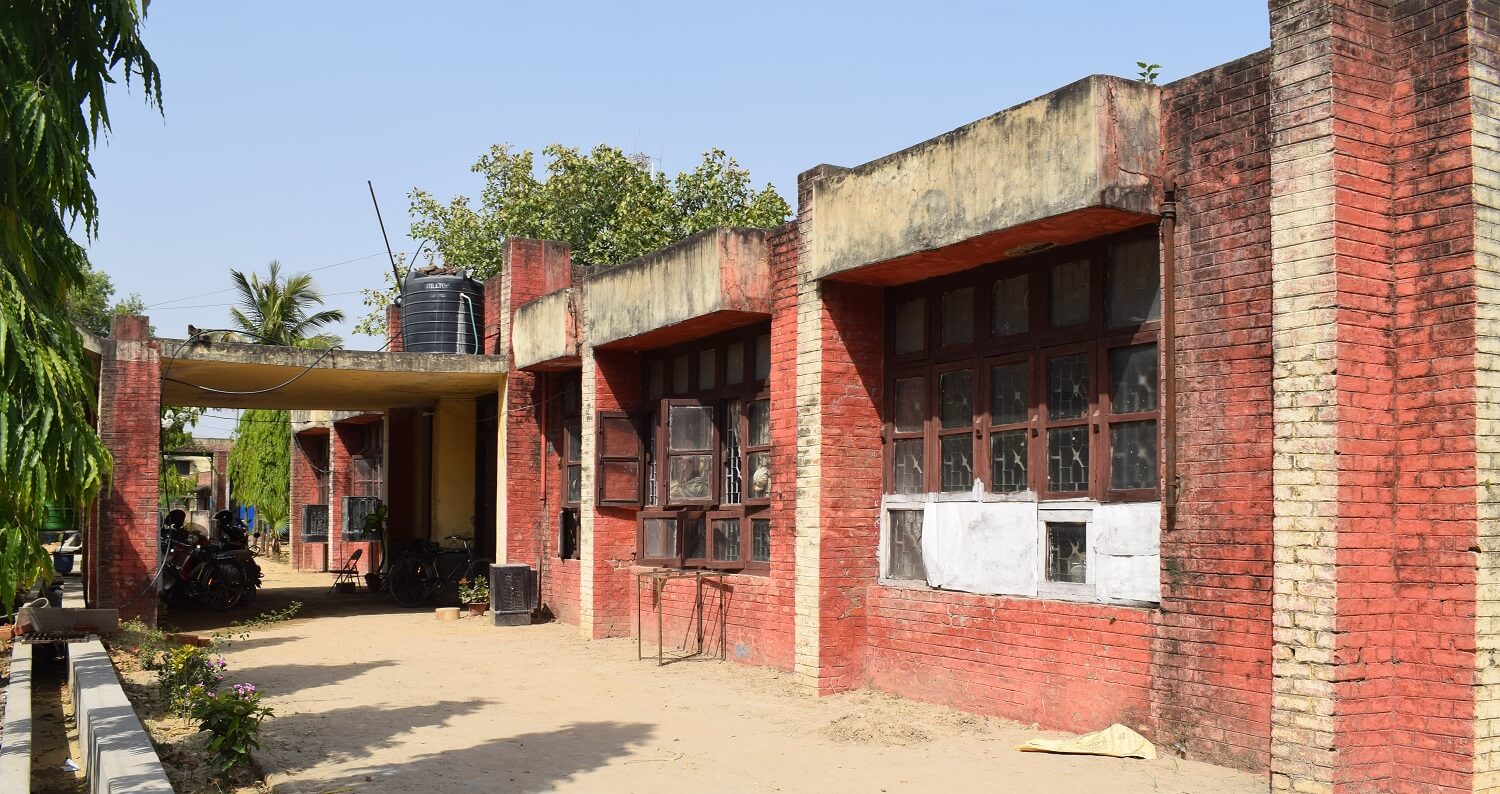
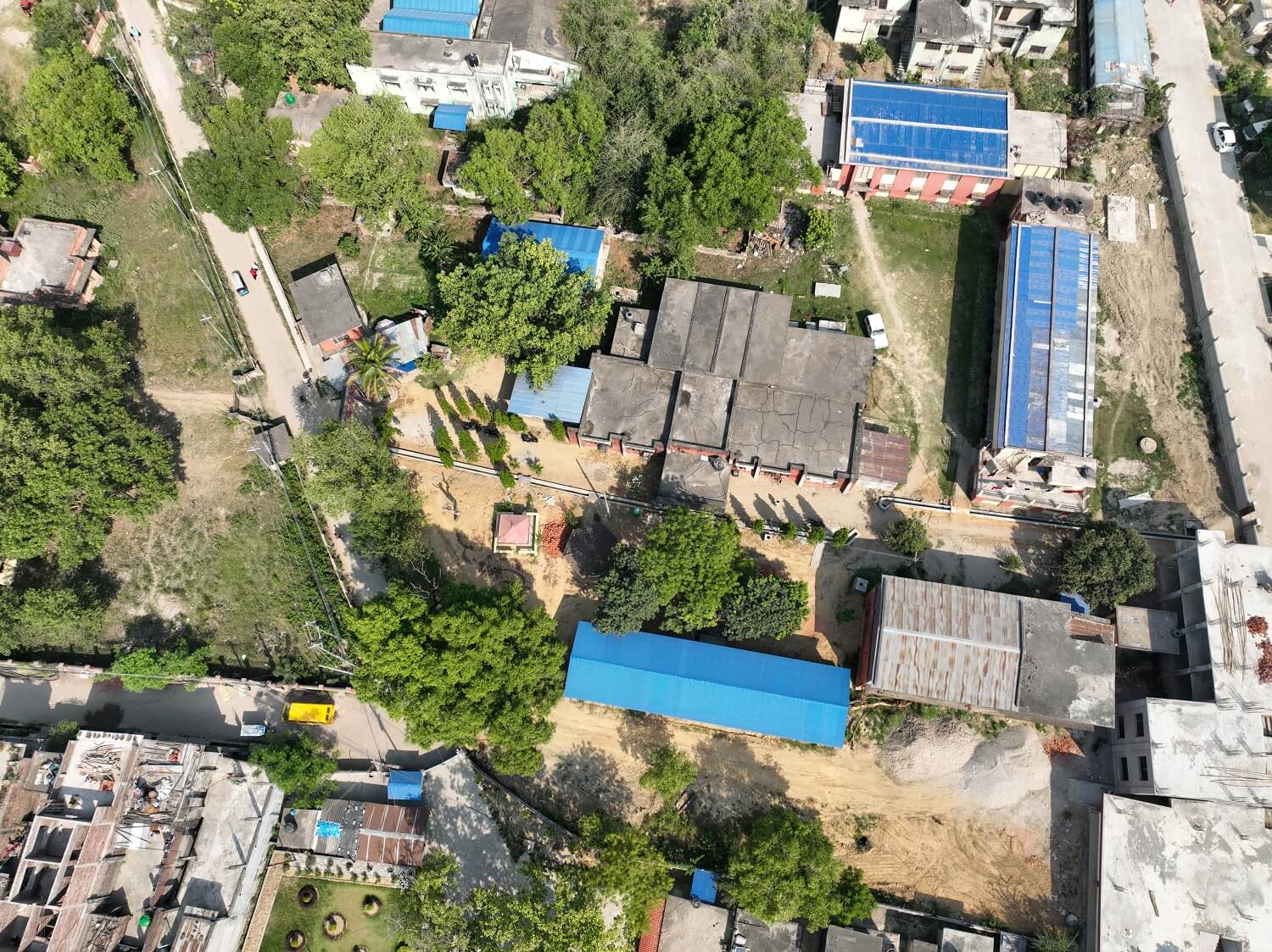
Nepalgunj Nursing Campus has infrastructure dedicated to classroom teaching, practical nursing education, administration, library services, laboratories, and other campus functions.
A nursing campus requires different types of space because classroom teaching represents only one part of professional preparation. Students also need areas where practical skills can be learned before or alongside clinical exposure.
The campus infrastructure includes:
A skills-lab building with four rooms forms part of the practical teaching infrastructure. Laboratory spaces are particularly relevant for nursing education because students need structured practical preparation as part of their academic training.
The campus has also incorporated BSc laboratory and administrative functions into its physical infrastructure.
Library development has formed another part of the campus's infrastructure planning, reflecting the need for reading, reference, and academic study resources alongside practical nursing facilities.
The skills laboratory occupies an important place in the campus environment because nursing education cannot depend on lecture-based instruction alone.
Nepalgunj Nursing Campus has a four-room skills-lab facility, along with BSc Nursing laboratory infrastructure. These spaces support practical preparation connected with the academic programs.
Laboratory management also appears within the campus committee structure. This provides an administrative arrangement for practical teaching spaces and their institutional use.
Skills-based learning helps connect theoretical nursing concepts with practical application before and during clinical education. The campus therefore brings together classroom study, laboratory practice, and healthcare-based learning rather than treating practical training as a separate stage at the end of a program.
Exact equipment and laboratory inventories can change over time, so the more durable institutional point is the campus's provision of dedicated skills and laboratory facilities for nursing education.
Library services form a defined part of the administrative structure of Nepalgunj Nursing Campus.
Library responsibilities include:
Library management is also represented within the committee structure of the campus. This gives academic-resource administration a formal place within institutional governance.
The library supports the reading and reference side of nursing education, while laboratory and clinical settings support practical learning. Together, these functions provide different forms of academic support required by bachelor-level nursing study.
Fixed numbers of books, journals, or other holdings are less suitable for an evergreen campus profile because collections can change. The stable institutional point is that Nepalgunj Nursing Campus maintains a formal library service and includes library management within its administrative system.
Digital systems have been incorporated into the academic and administrative activities of Nepalgunj Nursing Campus.
Moodle and e-learning methods have been used alongside regular teaching. They provide an additional channel for academic communication and learning activities while practical and clinical education continues to require direct participation.
The campus structure also includes Educational Management Information System functions. An EMIS and Public Information Committee is identified within the institutional committee framework.
Information management is relevant across several areas of campus administration, including admission, registration, student records, examinations, financial records, library records, and institutional reporting.
This combination of academic and administrative systems supports the record-based requirements of nursing education within a university campus.
Research forms part of both the academic curriculum and the wider institutional activity of Nepalgunj Nursing Campus.
The campus has maintained a Research Management structure connected with institutional research activity. Research grant mechanisms for faculty members and students have also formed part of its academic environment.
Student research is particularly relevant because research study forms part of bachelor-level nursing education. The BNS curriculum includes research-related theory and practical work, while BSc Nursing also contains research and biostatistics within its academic structure.
Publication activity has included the Journal of Nepalgunj Nursing Campus and related manuscript arrangements.
These elements establish research as one of the academic functions of the campus. They should not be extended into unsupported claims about publication ranking, journal indexing, research impact, or international research standing.
The more appropriate description is that research teaching, research management, student and faculty research activity, and academic publication work have a recognized place within the campus environment.
Nepalgunj Nursing Campus has an administrative structure that separates academic work from the different operational responsibilities needed to run the institution.
The academic side includes program coordination, faculty responsibilities, and teaching functions associated with BNS and BSc Nursing.
Administrative responsibilities include educational administration, employee administration, finance, general administration, library services, record keeping, maintenance, and inventory management.
| Administrative area | Main responsibilities |
|---|---|
| Educational administration | Admission, registration, student records, examinations |
| Finance and general administration | Fees, payments, salary records, purchasing, maintenance, stores, inventory |
| Library administration | Membership, circulation, book records, resource management |
Employee administration includes staff records, leave records, and public-relations functions.
Educational administration deals directly with the academic record cycle from admission and registration through student records and examination administration.
Financial administration handles fee collection, payments, salary-related work, and record keeping.
General administration manages purchasing, stores, maintenance, and inventory.
These functions form the operational base that supports the teaching responsibilities of the campus.
Nepalgunj Nursing Campus uses committees to distribute responsibilities that extend beyond normal teaching and administration.
The committee structure includes:
Each area addresses a different part of campus operation.
Research management deals with academic research activity. Student welfare concerns student-related support. EMIS and public information cover institutional information functions. Library and laboratory committees deal with two major academic-resource areas.
The Job Placement and Counselling Committee provides a designated structure for counseling and employment-related institutional functions without implying guaranteed employment outcomes.
The Grievance Redressal Mechanism Committee gives student and institutional concerns a defined administrative channel.
The committee arrangement shows that the campus's internal structure extends beyond teaching departments into academic support, information systems, welfare, laboratories, research, and administrative accountability.
Student life at Nepalgunj Nursing Campus includes formal welfare and representation mechanisms.
The campus structure identifies a Campus Students Welfare Committee, Free Students' Union, Alumni Association, Job Placement and Counselling Committee, Grievance Redressal mechanism, and Environment and Health Service Committee.
These bodies perform different functions.
Student welfare provides a framework for campus support. The Free Students' Union provides student representation within the institutional setting. The Alumni Association connects the campus with former students. Counseling and grievance structures provide designated channels for specific student concerns.
Academic counseling has also been part of the support arrangement for students requiring academic guidance.
These functions are relevant in a professional nursing campus because students move through classroom study, practical work, clinical activity, examinations, and professional preparation during their degree.
The academic direction of Nepalgunj Nursing Campus extends nursing beyond hospital-based care.
Community health forms part of the academic content of the nursing programs. The campus mission also connects nursing education with service and community-health activities.
This reflects the broad professional scope incorporated into the curriculum. Nursing students study individual care while also learning about family and community health, health education, management, and other responsibilities connected with professional nursing practice.
The institutional goal describes nursing within the relationship between the patient and the healthcare environment across the lifespan. The patient may be considered as an individual, family, community, or population.
For this reason, the academic identity of the campus is not limited to clinical ward preparation. Its nursing education combines hospital care, community health, teaching, management, research, and professional responsibility.
Nursing education at Nepalgunj Nursing Campus operates within an academic system, but professional practice is separately regulated.
The Nepal Nursing Council is the professional regulatory body relevant to nursing registration and licensing in Nepal.
For BNS admission, Nepal Nursing Council registration forms part of the applicable entry requirements because applicants enter through prior nursing education.
For nursing graduates, completion of the university degree and permission to enter regulated professional practice are separate matters. Graduates must satisfy the applicable professional council licensing and registration requirements before entering professional practice.
Students should therefore distinguish between three separate processes:
This distinction is important for understanding how nursing education and professional regulation work together.
The Medical Education Commission plays a major role in bachelor-level nursing admission in Nepal.
Its framework covers common entrance procedures, eligibility rules, matching and selection, institutional seat determination, scholarship arrangements, reservation provisions, admission procedures, and applicable fee structures.
For Nepalgunj Nursing Campus, this means that seat distribution should not be treated as fixed indefinitely.
The same principle applies to:
MEC decisions and the applicable admission calendar govern these matters for each admission cycle.
The stated 40-seat BSc Nursing allocation and 30-seat BNS allocation provide a useful picture of the supplied seat structure, but later allocations may differ.
Nepalgunj Nursing Campus has a distinct institutional character shaped by its nursing history, TU-IOM status, location in Nepalgunj, bachelor-level academic focus, and practical healthcare orientation.
Its development from ANM training through PCL Nursing to bachelor-level study reflects a long transition in the level and structure of nursing education offered at the campus.
Its academic work is now concentrated rather than spread across unrelated disciplines. The campus focuses on nursing, with BSc Nursing and BNS forming the main academic programs.
The surrounding institutional structure supports those programs through teaching, practical laboratories, library services, clinical exposure, research activity, academic administration, student welfare, information management, and committee-based governance.
The connection with Bheri Hospital gives the campus a documented link with clinical practice in Nepalgunj, while its constituent status places the academic programs within the wider Tribhuvan University Institute of Medicine structure.
Nepalgunj Nursing Campus is located in Nepalgunj Sub-Metropolitan City, Ward No. 10, Banke, Lumbini Province. The campus is situated close to Bheri Hospital.
Yes. Nepalgunj Nursing Campus is a constituent nursing campus under the Institute of Medicine of Tribhuvan University.
The campus offers Bachelor of Science in Nursing and Bachelor of Nursing Science.
BSc Nursing is a four-year bachelor program.
Bachelor of Nursing Science is a three-year bachelor program.
Bachelor-level nursing admission follows the applicable Medical Education Commission framework, including MECEE-BL, merit, matching, and related admission procedures.
The stated allocation includes 40 seats for BSc Nursing and 30 seats for BNS. Seat numbers and category distribution may be revised under subsequent MEC decisions.
Yes. The campus infrastructure includes skills-laboratory space and BSc Nursing laboratory facilities, and both nursing programs include practical components.
Bheri Hospital has served as a documented practicum setting for BNS students, including Student Ward Management work under the Leadership and Management practicum. This does not establish it as the only clinical site for all nursing activities.
Yes. Library services form part of the campus administrative structure, including membership records, circulation, book keeping, and management of learning resources.
Yes. Research-related activity includes a Research Management structure, research-grant mechanisms for students and faculty members, research components within the nursing curriculum, and publication activity associated with the Journal of Nepalgunj Nursing Campus.
Professional nursing registration and licensing fall under the Nepal Nursing Council. Graduates must meet the applicable council requirements before entering regulated professional practice.