Staff Nurse
Staff Nurse




Tsho Rolpa General Hospital, formerly known as Tsho Rolpa Nursing College, was established in 2064 BS (2008 AD) in Bhimeshwor Municipality-1, Charikot, Dolakha District, Nepal. The institution was founded with a vision to strengthen healthcare education in the region and to make professional nursing and allied health science training accessible to local students, particularly young women.
The college operates under the management of Tsho Rolpa General Hospital and is affiliated with the Council for Technical Education and Vocational Training (CTEVT). Its programs are recognized by both the Nepal Nursing Council (NNC) and the Nepal Health Professional Council (NHPC), ensuring national academic and professional standards.
While it was originally established as a dedicated nursing college, the institution has gradually expanded its scope to offer multiple technical health programs that prepare competent professionals capable of serving in hospitals, health posts, and community healthcare settings across Nepal.
Established: 2064 BS (2008 AD)
Location: Charikot, Dolakha, Nepal
Affiliation: Council for Technical Education and Vocational Training (CTEVT)
Recognition: Nepal Nursing Council (NNC), Nepal Health Professional Council (NHPC)
Parent Institution: Tsho Rolpa General Hospital
Programs Offered: PCL Nursing, PCL in General Medicine (Health Assistant), Certificate in Medical Laboratory Technology, Diploma in Pharmacy
Intake Capacity: Nursing program – 40 seats, other programs as per CTEVT allocation
Learning Facilities: Library, science and nursing labs, hospital-based clinical training, hostel facilities
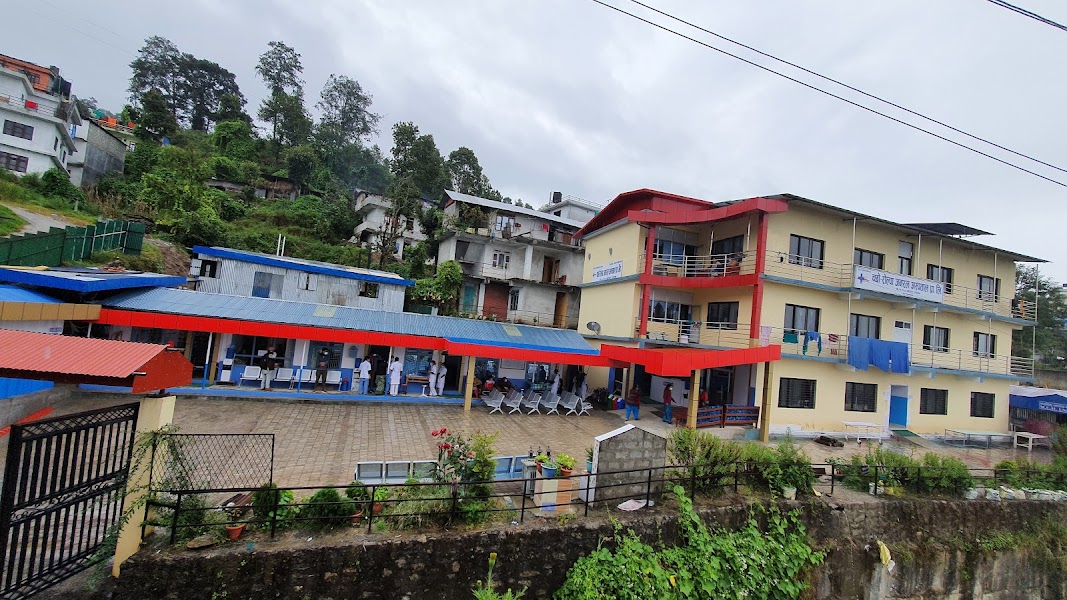
The Proficiency Certificate Level (PCL) Nursing program is the flagship course of the institution. It is a three-year program affiliated with CTEVT and recognized by the Nepal Nursing Council.
Duration: 3 years
Seats: 40
Eligibility: SEE/SLC or equivalent with a minimum of 45% aggregate in Science, English, and Mathematics, plus success in the CTEVT entrance examination.
Program Structure:
First year: Basic sciences (anatomy, physiology, microbiology, pharmacology).
Second year: Nursing foundations, pediatric and adult nursing, community practice.
Third year: Midwifery, psychiatric nursing, leadership, and management in nursing.
Career Pathways: Graduates work as staff nurses in hospitals, community health centers, NGOs/INGOs, and may pursue higher education such as B.Sc. Nursing.
This three-year program prepares Health Assistants (HAs) capable of working in primary health centers, rural hospitals, and government health posts.
Focus: General medicine, emergency care, minor surgeries, and community health services.
Career Opportunities: Government postings, private hospitals, and international healthcare opportunities.
This program trains students to conduct diagnostic tests, manage laboratory equipment, and support clinical decision-making.
Key Training Areas: Hematology, microbiology, biochemistry, parasitology.
Employment Options: Diagnostic centers, hospitals, laboratories, and public health institutions.
The diploma course develops mid-level pharmacy professionals trained in the safe preparation, distribution, and counseling of medicines.
Curriculum: Pharmacology, dispensing, hospital pharmacy, community pharmacy, and regulatory affairs.
Career Path: Hospital pharmacies, retail pharmacies, pharmaceutical companies, and government drug control programs.
Candidates must meet the minimum academic requirement set by CTEVT.
Admission is strictly based on the CTEVT entrance examination and merit list.
Reserved quotas are available under government guidelines (inclusive, disadvantaged groups, and remote area students).
The admission cycle generally begins after SEE results and follows CTEVT’s academic calendar.
The college is supported by a team of qualified faculty members with academic credentials and clinical experience. Most permanent faculty are registered with the Nepal Nursing Council or other relevant professional councils. Visiting lecturers from reputed hospitals and institutions supplement the teaching process.
The learning methodology combines:
Classroom lectures and tutorials
Laboratory practicals in nursing, pharmacy, and medical sciences
Clinical training at Tsho Rolpa General Hospital and partner hospitals
Community field postings in rural Dolakha and beyond
This approach helps students apply theoretical knowledge in real healthcare situations, developing both professional confidence and problem-solving ability.
Hospital Integration: Being attached to Tsho Rolpa General Hospital ensures access to patients, real clinical cases, and supervised practice.
Laboratories: Equipped labs for nursing, pharmacy, and medical technology training.
Library: Contains textbooks, journals, and reference materials required for technical education.
Hostel: Accommodation with supervision by an experienced matron, ensuring student safety and discipline.
Ongoing Expansion: A new dedicated college building is under construction at Charikot to provide modern classrooms, auditoriums, and extended laboratory space.
Students at the college experience a disciplined and academically focused environment. Small batch sizes allow for close mentoring by teachers. Hostel life fosters a sense of community and peer learning.
Being situated in Charikot, Dolakha, the college provides a peaceful academic setting, while also exposing students to the unique challenges of healthcare delivery in rural and semi-urban areas.
The college encourages students to take part in:
Community health awareness campaigns
Blood donation drives
Cultural programs and annual day celebrations
Inter-college sports and quiz competitions
These activities support personal development, leadership skills, and community engagement.
As per CTEVT policy, scholarships are offered to deserving students from disadvantaged groups, marginalized communities, and remote districts. Additionally, partial financial support is available for meritorious students based on academic performance.
The scholarship system makes technical education more accessible and ensures inclusivity.
Produced multiple batches of registered nurses now working in hospitals across Nepal and abroad.
Expansion of academic programs beyond nursing into General Medicine, Pharmacy, and Medical Laboratory Technology.
Active role in providing trained healthcare workers for Dolakha District, especially after the 2015 earthquake when the demand for skilled manpower increased.
Recognition by Nepal Nursing Council and NHPC, affirming academic and professional standards.
Continuous development of infrastructure, including the construction of a new academic block in Charikot.
Accredited Programs: All courses are affiliated with CTEVT and recognized by professional councils.
Hospital-Attached Learning: Students train directly at Tsho Rolpa General Hospital and other partner healthcare institutions.
Community Contribution: The college is committed to serving rural communities by preparing healthcare workers who can address local needs.
Supportive Environment: Hostel, library, labs, and faculty mentorship create a structured and nurturing academic space.
Career Pathways: Graduates secure employment in hospitals, community programs, NGOs/INGOs, or pursue advanced studies.
Tsho Rolpa General Hospital and its academic wing in Charikot, Dolakha, have grown from a small nursing college to a multi-disciplinary healthcare training institution. Affiliated with CTEVT and recognized by professional councils, it continues to contribute significantly to healthcare education in Nepal.
Contact Tsho Rolpa General Hospital: School of Science and Technology's administrative office for detailed information on the course, admissions, location, fees, scholarships, facilities, counseling, or eligibility.
Contact Details:
Tsho Rolpa General Hospital (च्छाे राेल्पा जनरल हस्पिटल)
Bhimeshwor Municipality-1, Charikot, Dolakha, Nepal
Email: tshonursingcollege@yahoo.com
Phone: +977-49-421523, +977-49-421904, 9851158722, 9840051024
Staff Nurse
Staff Nurse