



The Bachelor of Science (B.Sc.) at Aishwarya Multiple Campus is a four-year undergraduate program affiliated with Tribhuvan University. It operates under the Institute of Science and Technology and follows the annual academic system. The program combines theoretical science education with laboratory work, scientific communication, statistics, research methodology, fieldwork, computational study, and interdisciplinary learning.
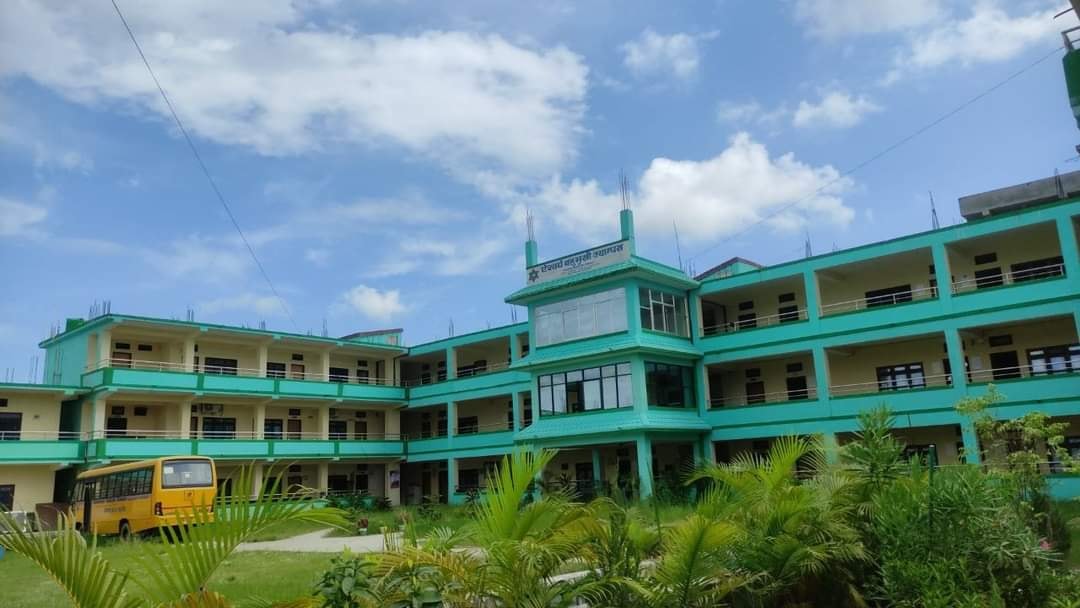
Aishwarya Multiple Campus is a community campus located in Hasanpur, Dhangadhi Sub-Metropolitan City–5, Kailali. The campus began its academic journey with the B.Sc. program in 2063 BS.
| Field | Details |
|---|---|
| Course Name | Bachelor of Science |
| Abbreviation | B.Sc. |
| Level | Bachelor’s degree |
| Duration | Four academic years |
| Academic System | Annual system |
| Affiliation | Tribhuvan University |
| Academic Body | Institute of Science and Technology |
| Institution | Aishwarya Multiple Campus |
| Location | Hasanpur, Dhangadhi–5, Kailali |
| Total Marks | 2,000 |
The B.Sc. program at Aishwarya Multiple Campus is offered in General Science. The available science subject areas are:
Physics
Chemistry
Botany
Zoology
Mathematics
The curriculum is organized around physical and biological science groups. Students begin with a combination of core subjects and gradually narrow their academic focus as they progress through the program.
The four-year structure moves from broad science study to advanced subject specialization. Each academic year carries 500 marks, giving the complete program a total of 2,000 marks.
| Year | Academic Structure | Marks |
|---|---|---|
| First Year | Three core science subjects with theory and practical components, plus Scientific Communication | 500 |
| Second Year | Continuation of the same three core subjects, plus Applied Statistics | 500 |
| Third Year | Two core subjects, Research Methodology, and two elective courses | 500 |
| Fourth Year | One major subject, project or fieldwork, computational study, and an interdisciplinary course | 500 |
Students select three core subjects from the physical or biological science group. Each core subject includes theory and practical components. Scientific Communication is included as a compulsory paper.
The first year develops foundational scientific knowledge while introducing students to laboratory procedures and formal scientific communication.
Students continue the same three core subjects studied in the first year. The theory and practical components remain central to the curriculum.
Applied Statistics is included as a compulsory paper, supporting the use of quantitative methods in scientific observation, analysis, and interpretation.
In the third year, students continue with two subjects selected from their first- and second-year combination. The curriculum also includes Research Methodology and two elective courses from the relevant subject pool.
This stage introduces formal research concepts and allows students to develop greater depth in selected scientific fields.
The fourth year focuses on one major subject selected from the student’s third-year core subjects. Students complete two advanced courses in that subject, including theory and practical work.
The year also includes project work or fieldwork, with research and presentation components, or Applied Science connected with the major subject. A compulsory computational course and one interdisciplinary course complete the final-year structure.
The B.Sc. program combines classroom lectures with laboratory-based learning, field activities, report writing, workshops, and academic presentations.
Aishwarya Multiple Campus has dedicated laboratories for Physics, Chemistry, Botany, and Zoology. A computer laboratory supports computational and technology-based learning. The campus also has library resources, journals, projectors, internet facilities, and smartboard-supported seminar spaces.
Field visits form part of the science learning environment. Students may participate in subject-related observation, environmental and population-focused field activities, report preparation, workshops, and seminars. Guest lectures provide additional academic interaction with university teachers and other educators.
Through its combination of theory, practical work, statistics, research, field study, and computational learning, the program can help students develop:
Scientific observation and analytical thinking
Laboratory handling and practical investigation
Quantitative and statistical understanding
Scientific communication and report writing
Research planning and academic presentation
Computational and interdisciplinary awareness
The level of development in each area depends on the student’s subject combination, participation, practical work, and academic performance.
The B.Sc. program provides a foundation for advanced study in relevant science disciplines. Students may continue into postgraduate education connected with their major subject or pursue other academic pathways where undergraduate scientific knowledge, research methods, laboratory experience, and analytical ability are relevant.
Further opportunities depend on the chosen subject combination, additional qualifications, practical competence, and the requirements of the concerned institution or field.
The B.Sc. program extends over four academic years and follows the annual system of Tribhuvan University.
The program operates under Tribhuvan University’s Institute of Science and Technology.
The available subject areas are Physics, Chemistry, Botany, Zoology, and Mathematics.
Yes. Core science subjects include practical components, and students use subject-specific laboratories for practical learning.
Yes. Research Methodology is included in the third year, while the fourth-year structure includes project or fieldwork with research and presentation components.
Scientific Communication is included in the first year, Applied Statistics in the second year, Research Methodology in the third year, and a computational course in the fourth year.






