



The Master of Laws (LL.M.) at Bright Vision Law College is a two-year, full-time postgraduate program affiliated with Purbanchal University. It combines compulsory courses in legal research and comparative legal systems with a dissertation and one of three specialization areas: Human Rights and Gender Justice, Criminal Law and Justice, or Business and International Trade Law.
Admission is based on an entrance examination and personal interview. The program is offered at Bright Vision Law College in Samjhana Chowk, Biratnagar, Morang, Koshi Province.
| Category | Details |
|---|---|
| Course Name | Master of Laws |
| Course Abbreviation | LL.M. |
| Level | Postgraduate |
| Duration | Two years |
| Study Mode | Full-time |
| Affiliation | Purbanchal University |
| College | Bright Vision Law College |
| Location | Samjhana Chowk, Biratnagar, Morang, Koshi Province |
| Minimum Requirement | 45 percent aggregate |
| Admission Basis | Entrance examination and personal interview |
| Program Capacity | 90 seats |
The LL.M. curriculum combines common postgraduate law courses with specialization-based study. All students complete Legal Research and Comparative Study of Legal System during the first year and a dissertation during the second year.
Students pursue one of the following specialization areas:
Human Rights and Gender Justice
Criminal Law and Justice
Business and International Trade Law
Each specialization has its own first- and second-year subjects. The course structure covers legal research, comparative legal systems, human rights, gender justice, criminal justice, business law, international trade, arbitration, taxation, insurance, and corporate management.
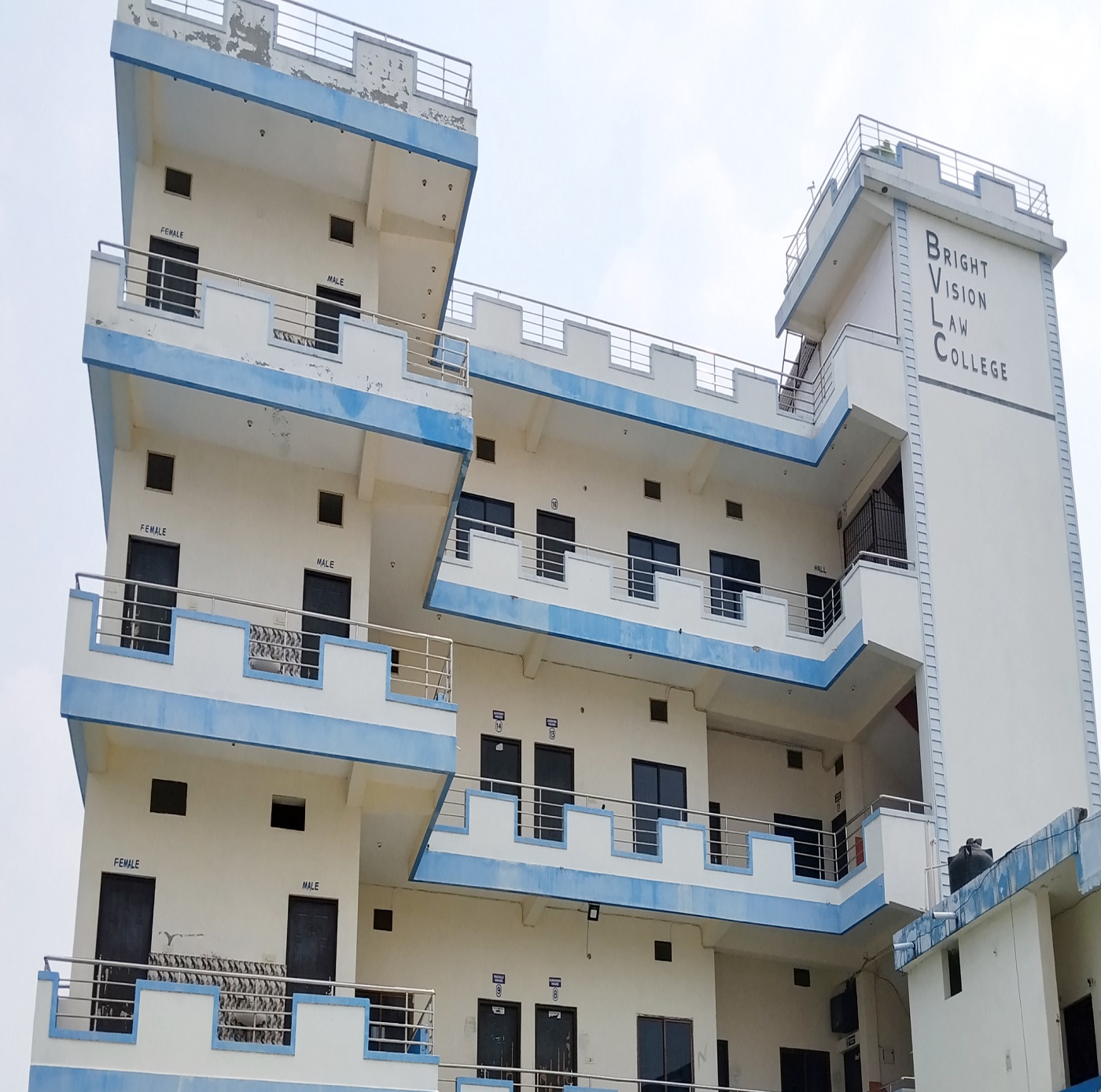
Eligibility: Completion of an LL.B. or bachelor’s degree in law from a board or university recognized by Purbanchal University.
Minimum Grade Requirement: 45 percent aggregate.
Admission Process: Entrance examination and personal interview.
Program Capacity: 90 seats.
Duration: Two years.
Mode: Full-time.
Affiliation: Purbanchal University.
The compulsory component applies across all three specialization areas.
| Code | Course | Marks |
|---|---|---|
| 501 | Legal Research | 100 |
| 502 | Comparative Study of Legal System | 100 |
| Code | Course | Marks |
|---|---|---|
| 608 | Dissertation | 100 |
Legal Research introduces structured approaches to legal inquiry and academic analysis. Comparative Study of Legal System examines legal systems through comparative study. The second-year dissertation requires independent research and organized legal writing.
This specialization covers gender justice, access to justice, civil and political rights, social and cultural rights, feminist jurisprudence, and women’s human rights.
| Code | Course | Marks |
|---|---|---|
| 503 | Nepalese Law on Gender and Accessibility to Justice | 100 |
| 504 | Civil, Political, Economical, Social Cultural Rights & Mechanisms | 100 |
| Code | Course | Marks |
|---|---|---|
| 605 | Feminist Jurisprudence | 100 |
| 606 | Women’s Human Rights | 100 |
| 607 | Economic, Social and Cultural Rights | 100 |
The specialization connects Nepalese legal study with human rights mechanisms and gender-related legal issues. Its subjects address access to justice, categories of human rights, feminist legal thought, and the legal position of women.
This specialization covers criminal-law materials, forensic jurisprudence, juvenile justice, criminology, fair-trial principles, international human rights, and white-collar crime.
| Code | Course | Marks |
|---|---|---|
| 521 | Criminal Law Cases and Materials | 100 |
| 522 | Forensic Jurisprudence | 50 |
| 523 | Juvenile Justice (Children in Conflict with Law) | 50 |
| Code | Course | Marks |
|---|---|---|
| 624 | Criminology and Penology | 100 |
| 625 | Fair Trial / International Human Rights | 100 |
| 626 | White Collar Crime | 100 |
The first-year subjects focus on criminal-law cases, forensic issues, and children in conflict with law. The second year covers theories of crime and punishment, fair-trial standards, human rights, and financial or occupational forms of crime.
This specialization covers contract law, intellectual property, banking, corporate management, international trade, arbitration, taxation, and insurance.
| Code | Course | Marks |
|---|---|---|
| 511 | Contract Law | 100 |
| 512 | Law of Intellectual Property | 100 |
| Code | Course | Marks |
|---|---|---|
| 613 | Banking Law | 50 |
| 614 | Laws on Corporate Management | 100 |
| 615 | International Trade and Arbitration | 50 |
| 616 | Taxation (Income Tax and VAT) | 50 |
| 617 | Insurance | 50 |
The specialization addresses legal matters connected with agreements, intellectual property, financial institutions, corporate administration, trade transactions, dispute resolution, taxation, and insurance.
Research is a compulsory part of the LL.M. curriculum. Students complete Legal Research in the first year and a dissertation carrying 100 marks in the second year.
The research component requires students to examine legal questions, work with relevant legal materials, organize arguments, and present findings through formal academic writing. Comparative Study of Legal System adds a comparative dimension to the common curriculum.
The curriculum relates to academic and professional work in areas such as:
Legal research and teaching
Arbitration and dispute resolution
Corporate legal advice
Policy analysis and legal drafting
Human rights work
Criminal-justice research
Judicial and administrative legal services
The relevance of each pathway depends on the chosen specialization, professional qualifications, experience, recruitment requirements, and applicable legal conditions.
College: Bright Vision Law College
Location: Samjhana Chowk, Biratnagar, Morang, Koshi Province, Nepal
Affiliation: Purbanchal University
Phone: 021-503051, 021-503404, 9715503051
LL.M. stands for Master of Laws.
The program runs for two years in full-time mode.
Applicants must have completed an LL.B. or bachelor’s degree in law from a board or university recognized by Purbanchal University. The minimum requirement is 45 percent aggregate.
Admission is based on an entrance examination and personal interview.
The stated program capacity is 90 seats.
Students can study Human Rights and Gender Justice, Criminal Law and Justice, or Business and International Trade Law.
Yes. Legal Research and Comparative Study of Legal System are compulsory first-year courses for all specializations.
Yes. The dissertation is a compulsory second-year course carrying 100 marks.
The subjects cover Nepalese law on gender and access to justice, civil and political rights, feminist jurisprudence, women’s human rights, and economic, social, and cultural rights.
It covers contract law, intellectual property, banking law, corporate management, international trade and arbitration, taxation, and insurance.






