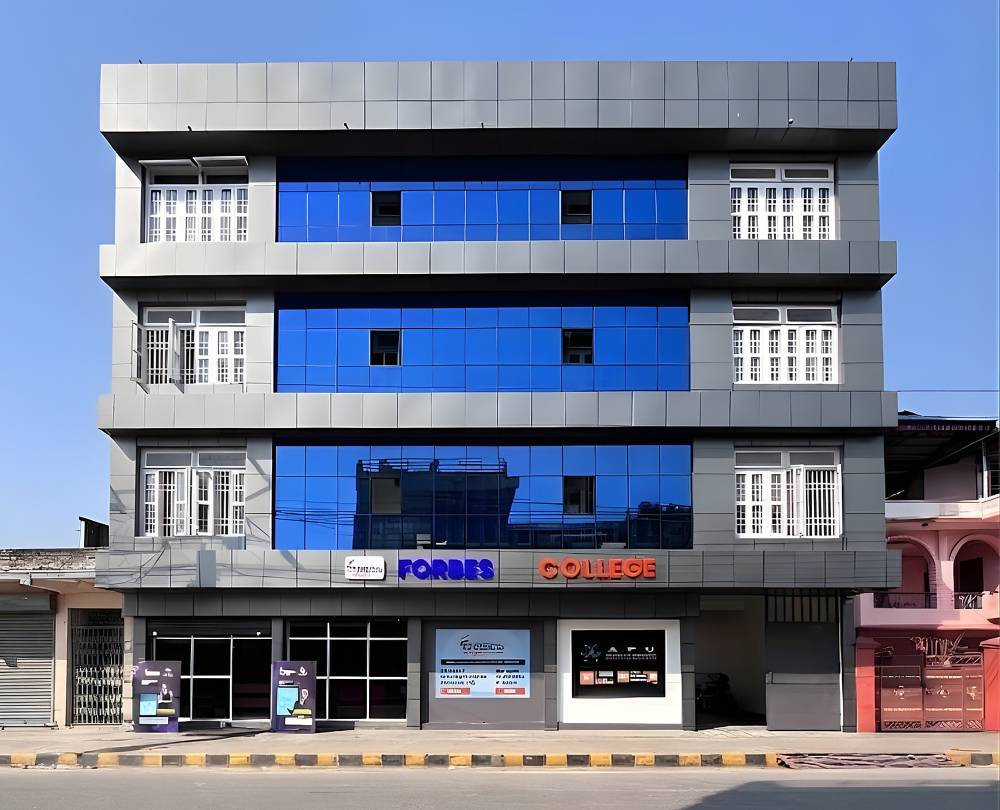
The BSc (Hons) in Hospitality and Tourism at Forbes College is a three-year, 120-credit bachelor’s program affiliated with Asia Pacific University of Technology & Innovation (APU), Malaysia. Offered at the college’s Kshetrapur campus in Bharatpur–2, Chitwan, the program covers hospitality operations, tourism management, business studies, customer service, cultural heritage, travel services, and research.
Students progress from introductory business and tourism subjects to operational management, hospitality leadership, and the Hospitality Innovation specialism. The course also includes a 24-week industrial training period during the third year.
| Detail | Information |
|---|---|
| Course | BSc (Hons) in Hospitality and Tourism |
| Specialism | Hospitality Innovation |
| College | Forbes College |
| Location | Bharatpur–2, Kshetrapur, Chitwan |
| Affiliation | Asia Pacific University of Technology & Innovation |
| Duration | 3 years |
| Credits | 120 |
| Class schedule | Sunday–Friday, 7:00 AM–1:00 PM |
| Industrial training | 24 weeks in the third year |
The program studies hospitality and tourism as connected service sectors involving accommodation, food and beverage operations, travel services, events, customer relations, cultural heritage, and business management.
Its academic structure moves through three stages. The first year introduces hospitality, tourism, communication, accounting, statistics, entrepreneurship, and human resource management. The second year concentrates on operational and supervisory areas, including cuisine, food service, front office, housekeeping, sanitation, customer service, ticketing, and tourism economics.
The final year shifts toward travel and tour management, hospitality marketing, research, leadership, and hotel innovation. Students also complete an individual project in Global Hospitality and Tourism Management and undertake industrial training.
The BSc (Hons) in Hospitality and Tourism is designed around both management theory and applied hospitality work. The course introduces students to the nature and role of hospitality and tourism activities while examining how businesses in these sectors are supervised and managed.
Key areas covered across the program include:
Hospitality and tourism operations
Food production and food service
Front office and housekeeping management
Customer service
Business communication
Human resource management
Events and cultural heritage management
Travel and tour services
Ticketing and computer reservation systems
Tourism economics
Hospitality marketing
Research and project work
Hospitality leadership and hotel innovation
The first level provides a base in hospitality, tourism, business, communication, and quantitative subjects. Students are introduced to the global hospitality and tourism sector while developing an understanding of accounting, statistics, entrepreneurship, computer applications, cultural heritage, events, and human resource management.
Computer Applications
Business and Communications Skills
Digital Thinking and Innovation
Basic Statistics
Fundamentals of Entrepreneurship
Fundamentals of Accounting
Introduction to Global Hospitality and Tourism Industry
Business Events Management for Hospitality and Tourism Industry
Cultural Heritage Management
Human Resource Management for Hospitality and Tourism Industry
These modules establish the business and service-management knowledge required for the operational subjects covered in the second year.
The second level centres on the supervision and management of hospitality and tourism operations. Students study food preparation and service, accommodation operations, customer handling, tourism services, business research, and legal considerations within the sector.
Business Research Methods
International Cuisine
Food and Beverage Service
Hygiene and Sanitation
Front Office Management
Housekeeping Management
Customer Service Management for Hospitality and Tourism Industry
Legal Aspects in Hospitality and Tourism Industry
Ticketing and Computer Reservation System
Tourism Economics
The combination of operational and management modules gives students academic exposure to both guest-facing services and the organisational work behind hospitality and tourism businesses.
The third level builds on the operational subjects studied during the first two years. It covers hospitality and tourism marketing, travel and tour management, research, leadership, current tourism issues, and hotel innovation.
Marketing for Hospitality and Tourism Industry
Managing Travel and Tour Services
Project in Global Hospitality and Tourism Management
Current Issues in Tourism Industry
Hospitality Leadership
Hotel Innovation Management
The individual project requires students to select and study a topic within global hospitality and tourism management. It brings together research, academic writing, subject knowledge, and practical understanding developed during the program.
Students undertake 24 weeks of industrial training during the third year. This part of the course places students in a working setting where they can observe and participate in hospitality or tourism operations.
The training period connects with subjects such as food and beverage service, front office management, housekeeping, customer service, travel services, and hotel management. It also gives students experience of workplace routines, service standards, communication, teamwork, and operational responsibilities.
Forbes College has basic and advanced training kitchens, a bakery laboratory, restaurant space, classrooms with LCD projectors, and library resources. These facilities support subjects involving cuisine, food production, food and beverage service, hospitality operations, presentations, and research.
The college also associates its hospitality training with Radisson Hotel Kathmandu, Meghauli Serai–A Taj Safari Hotel, Soaltee Westend Resort Chitwan, Wyndham, JW Marriott, Rotana, and Intercontinental.
Through its modules, project work, and industrial training, the program supports the development of skills related to:
Hospitality and tourism operations
Food production and service
Guest and customer communication
Front office and housekeeping supervision
Travel and reservation systems
Event planning
Business research
Service management
Teamwork and workplace communication
Academic presentation and report writing
The course also introduces students to issues affecting tourism businesses, including legal considerations, cultural heritage, customer expectations, sustainability, organisational decisions, and changing service practices.
Forbes College provides freshman scholarships based on previous academic achievement and the entrance examination conducted by the college.
Students also have access to transportation, library services, research and presentation support, career counselling, and classes conducted by visiting professors from universities in Nepal.
The program has a duration of three years.
The BSc (Hons) in Hospitality and Tourism carries 120 credits.
The program is affiliated with Asia Pacific University of Technology & Innovation, Malaysia.
Classes are scheduled from Sunday to Friday between 7:00 AM and 1:00 PM.
Yes. Students complete 24 weeks of industrial training during the third year.
The program includes a Hospitality Innovation specialism covering Current Issues in Tourism Industry, Hospitality Leadership, and Hotel Innovation Management.
Practical and operational subjects include International Cuisine, Food and Beverage Service, Hygiene and Sanitation, Front Office Management, Housekeeping Management, and Ticketing and Computer Reservation System.
Yes. Students complete a Project in Global Hospitality and Tourism Management based on an individually selected area of study.