



Bachelor of Veterinary Science and Animal Husbandry at Paklihawa Campus is an undergraduate program under the Institute of Agriculture and Animal Science (IAAS), Tribhuvan University. The program is offered at Paklihawa Campus, Siddharthanagar, Rupandehi District, Lumbini Province.
The course focuses on livestock health, production, and management. At Paklihawa Campus, the program is supported by a veterinary teaching hospital, livestock farm, laboratories, classrooms, seminar hall, and farm areas. The curriculum combines basic, practical, production, management, and clinical subjects, with a final semester of internship.
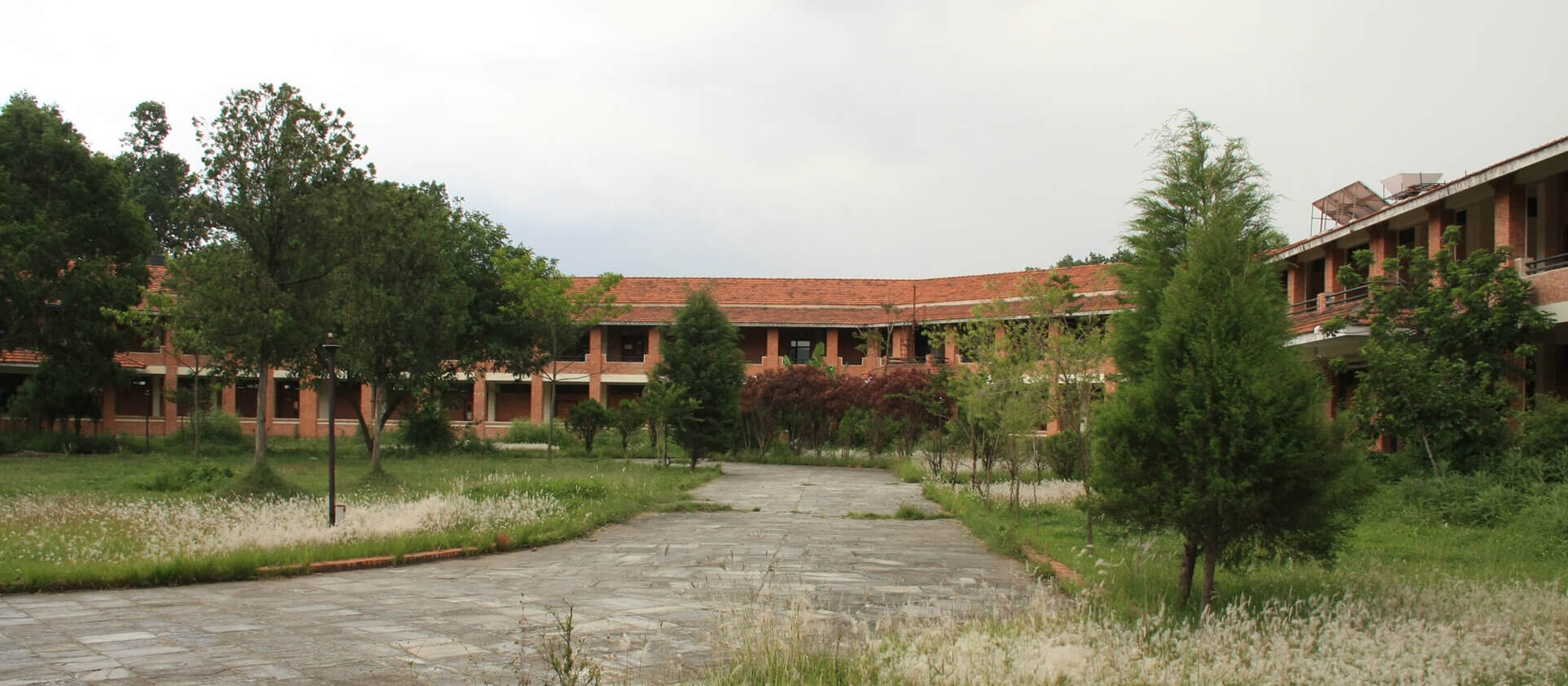
Course Name: Bachelor of Veterinary Science and Animal Husbandry
Short Name: B.V.Sc. & A.H. / BVSc AH
College: Paklihawa Campus
Institutional Unit: Institute of Agriculture and Animal Science
University: Tribhuvan University
Location: Siddharthanagar, Rupandehi District, Lumbini Province
Duration: Five years
Academic Structure: Nine semesters of academic courses and a final internship semester
Internship: Six months, non-credit
Seats: 38
Study System: Semester system
Instruction Medium: English
Total Credit Hours: 206
Theory Credit Hours: 125
Practical Credit Hours: 81
Eligibility: I.Sc. Basic Science, I.Sc. Agriculture, 10+2 Science, 10+2 Agriculture, 10+2 Forestry, or equivalent with required subjects and at least 50 percent aggregate marks
Admission Basis: Merit-based selection through entrance examination
Campus Learning Resources: Veterinary teaching hospital, livestock farm, laboratories, classrooms, seminar hall, hostels, bus, and veterinary ambulance
The B.V.Sc. & A.H. curriculum is arranged across ten semesters. The first nine semesters cover academic courses, while the tenth semester is a compulsory rotating internship. The curriculum was approved by the Academic Council of Tribhuvan University on 18th March 2020 / 2076/11/05 B.S.
The program carries 206 total credit hours.
The credit-hour distribution includes 125 theory credit hours and 81 practical credit hours.
The tenth semester consists of a six-month non-credit internship.
One theory credit means one lecture hour per week.
One practical credit means two to three practical hours per week.
Each theory or practical credit hour is equivalent to 25 marks.
A course with 2+1 credit hours carries 75 full marks, with 50 theory marks and 25 practical marks.
The curriculum includes basic, practical, production, management, and clinical subjects.
Students become eligible for the degree only after completing all prescribed curriculum requirements, including internship.
Major academic areas include:
Anatomy
Biostatistics
Livestock Production and Management
Animal Nutrition
Agricultural Economics
Biochemistry
Agricultural Extension
Physiology
Parasitology
Pathology
Microbiology
Aquaculture
Animal Breeding
Pharmacology
Veterinary Public Health
Animal Product Technology
Theriogenology
Medicine
Clinical Service
Surgery
Prepare students in livestock health, production, and management.
Build academic knowledge in veterinary clinical sciences, animal breeding, livestock production, and livestock management.
Combine basic, practical, clinical, production, and management subjects within one undergraduate curriculum.
Provide pre-service field training through the compulsory rotating internship.
Connect veterinary education with Nepalese farming systems and agro-climatic conditions.
The BVSc AH program at Paklihawa Campus is linked with veterinary science and animal husbandry education in a campus setting that includes livestock and clinical learning resources. The veterinary teaching hospital is designed to provide clinical services to farm animals and to support learning for veterinary students in later semesters.
The course covers veterinary clinical sciences, livestock health, animal breeding, livestock production and management, veterinary public health, animal welfare, surgery, medicine, pathology, microbiology, parasitology, pharmacology, and animal product technology. Its scope is academic, clinical, and field-oriented within the IAAS and Tribhuvan University framework.
Understand livestock health, production, and management through structured academic coursework.
Study veterinary clinical sciences, animal breeding, and livestock management.
Apply subject knowledge through laboratory, clinical, farm, and field-based learning activities.
Complete a compulsory rotating internship in veterinary science and animal husbandry services.
Work with basic and clinical areas such as anatomy, physiology, pathology, medicine, surgery, pharmacology, parasitology, microbiology, and public health.
Meet the academic and internship requirements for the award of the B.V.Sc. & A.H. degree.
Veterinary clinical service learning
Livestock health and management knowledge
Animal breeding and production-related study
Anatomy, physiology, pathology, and microbiology fundamentals
Veterinary pharmacology and parasitology learning
Surgery and diagnostic imaging-related academic work
Animal nutrition and fodder production knowledge
Veterinary public health and zoonosis-related study
Milk, meat, and animal product technology learning
Farm animal service experience through the veterinary teaching hospital
Field training through the compulsory rotating internship
The B.V.Sc. & A.H. program follows the semester system under IAAS, Tribhuvan University. Courses are instructed in English. Academic delivery includes classroom teaching, lecture-cum-discussion, group-based assignments, presentations, laboratory work, practical work, clinical learning, and internship training.
At Paklihawa Campus, the program is supported by veterinary and animal-related facilities that connect course learning with livestock health, clinical service, and farm-based academic work.
Teaching and learning activities include:
Classroom instruction
Laboratory work
Practical classes
Lecture-cum-discussion
Group-based assignments
Student presentations
Clinical learning through veterinary-related facilities
Livestock farm-related academic activities
Compulsory rotating internship in the final semester
Veterinary practice
Livestock health services
Animal husbandry services
Livestock production and management
Veterinary public health-related work
Research-linked veterinary and animal science work
Animal breeding-related technical work
Farm animal health and management services
Clinical, production, and management-related veterinary fields
Merit-based scholarships are available for undergraduate students.
Students who meet the scholarship criteria can receive Rs. 200 per month.
The scholarship is disbursed for a maximum duration of 10 months.
Eligible students apply through the scholarship application process.
Scholarship recipients are selected according to the specified criteria.
Admission to B.V.Sc. & A.H. at Paklihawa Campus is merit-based.
Selection is conducted through an entrance examination.
Applicants must meet the academic eligibility criteria before admission consideration.
Eligible applicants include students with I.Sc. Basic Science, I.Sc. Agriculture, 10+2 Science, 10+2 Agriculture, 10+2 Forestry, or equivalent qualifications.
Required subjects include English, Physics, Maths, Chemistry, and Biology.
Applicants must secure at least 50 percent marks in aggregate.
Qualifications must be from Tribhuvan University or from other recognized universities and boards with equivalence where applicable.
Admission policies are prepared by an admission committee formed by the Dean of IAAS under Tribhuvan University rules and regulations.
Preferences and reserved quota provisions apply for girl students and students from disadvantaged groups according to national and Tribhuvan University policies.
The program follows the semester system. Each academic year has two semesters. One semester covers 90 effective working days for teaching and about two weeks for the final examination.
In theory subjects, 20 percent of the full marks is evaluated through internal assessment. The remaining 80 percent is allocated to the final theory examination. Students must secure at least 40 percent in internal assessment to qualify for the final examination.
Practical examinations are conducted separately. Students must secure at least 40 percent marks in theory and practical separately to pass each subject. Students who fail in the final theory or practical examination may appear in a chance examination after the final result announcement, according to examination rules.
Students must attend at least 70 percent of classes in each subject to be eligible for the final examination. A student becomes eligible for the B.V.Sc. & A.H. degree after completing all curriculum requirements, including the compulsory rotating internship. The Controller of Examination of Tribhuvan University issues the transcript after the notification of results.
Bachelor of Veterinary Science and Animal Husbandry at Paklihawa Campus is a five-year undergraduate program under IAAS, Tribhuvan University. The course combines nine semesters of academic study with a final semester of compulsory rotating internship.
Paklihawa Campus gives the program a specific setting through its veterinary teaching hospital, livestock farm, laboratories, classrooms, and farm-related academic facilities. For students planning veterinary and animal husbandry education in Rupandehi, the program provides a structured route into livestock health, veterinary clinical sciences, animal production, and animal management under the TU semester system.
The Bachelor of Veterinary Science and Animal Husbandry program at Paklihawa Campus is a five-year program. It includes nine semesters of academic courses and a final semester of internship.
The program is offered under the Institute of Agriculture and Animal Science, Tribhuvan University.
Applicants must have completed I.Sc. Basic Science, I.Sc. Agriculture, 10+2 Science, 10+2 Agriculture, 10+2 Forestry, or equivalent with English, Physics, Maths, Chemistry, and Biology, securing at least 50 percent marks in aggregate.
The Bachelor of Veterinary Science and Animal Husbandry program at Paklihawa Campus has 38 seats available for admission.
Yes. The final semester includes a compulsory rotating internship of six months. Students become eligible for the degree only after completing the internship requirement.
The program is supported by a veterinary teaching hospital, livestock farm, laboratories, classrooms, seminar hall, hostels, bus, and veterinary ambulance.






