B.Sc. CSIT, Kathmandu College of Technology (KCT College), Lokanthali, Bhaktapur, is a four-year undergraduate program affiliated with Tribhuvan University (TU).
This course targets students who want a strong base in computer science and information technology and who also want steady practice through lab work, projects, and real problem-solving. The TU structure sits at the center of the program, while the college focuses on helping you connect classroom topics to skills you can use in internships and entry-level IT roles.
If you are comparing options after +2 Science, B.Sc. CSIT is often chosen by students who want both theory and applied computing without separating themselves from the wider science and technology pathway under TU.
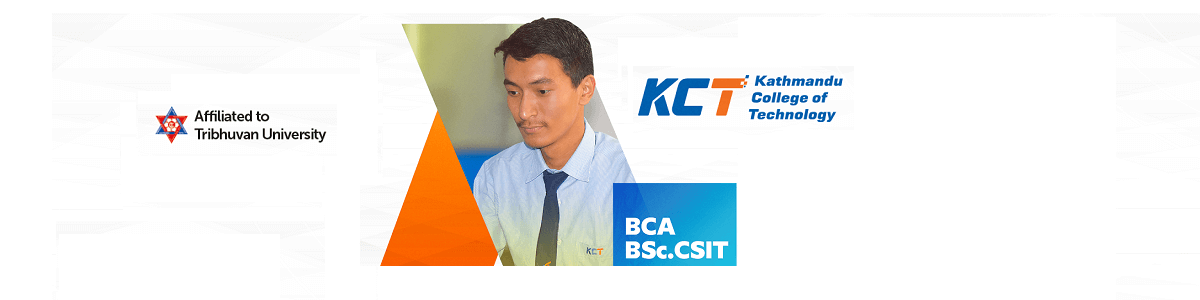
KCT’s B.Sc. CSIT course follows TU’s four-year framework.
Key points drawn from your document include:
Four-year bachelor’s degree structure.
Focus on practical learning alongside theory.
A scholarship system that recognizes academic performance and supports students from government-school backgrounds.
The TU B.Sc. CSIT curriculum requires students to complete 126 credit hours across computer science, IT, and supporting courses.
Your document notes that the program combines computer science and IT in a 60/40 pattern. This structure helps you build core computing logic and also learn how to apply that knowledge in real systems and services.
Early semesters introduce the foundations such as programming, mathematics, statistics, and basic computing concepts. The middle semesters move toward data structures, operating systems, database systems, computer networks, algorithms, web technology, and software engineering. Later phases include electives and the internship component.
B.Sc. CSIT at KCT aims to help students:
Build a clear understanding of core computer science principles.
Learn practical approaches to software systems and computer hardware concepts.
Prepare for roles that require programming, networking, database skills, and system thinking.
The scope of B.Sc. CSIT in Nepal is broad because the degree covers multiple technology tracks under one program. Students often move into software development, web and mobile applications, system administration, network roles, database work, cybersecurity-related tasks, and IT support roles depending on their interests and project exposure.
For students who plan higher studies, the mix of computer science and IT also supports progression into specialized master’s degrees in computing, data-centric fields, networking, or information security.
The document states that B.Sc. CSIT prepares students for career growth across programming, hardware, networking, computing, database, animation, and graphics domains. It also mentions that students should be able to build real-world digital products and solve technical problems across hardware and software environments by the end of the degree.
In student terms, this means you should leave the program with:
A workable command of programming logic and structured problem-solving.
Experience with databases, networks, and operating systems.
Project exposure that shows how different subjects connect in real applications.
Based on the curriculum and KCT’s stated learning focus, skill development naturally grows through:
Programming and software development subjects across multiple semesters.
Data structures, algorithms, and system analysis courses that strengthen analytical thinking.
Database and networking courses that build real IT service competence.
Project work and internship requirements that push you to apply your learning in structured tasks.
KCT’s document highlights an approach that prioritizes applying classroom learning in practical settings rather than limiting learning to lecture-based delivery.
For students, this approach matters most in three moments:
When you move from basic coding to building small applications.
When you handle group projects that require planning, testing, and documentation.
When you prepare for the TU internship, where performance depends on how well you can deliver real tasks in a professional environment.
The B.Sc. CSIT admission route at KCT follows TU standards.
Your document lists the key eligibility points:
+2 or equivalent in Science with Physics and Mathematics (100 full marks each), with a minimum GPA of C or second division in each subject.
A Level students with a science background including Physics and Mathematics, with each subject meeting the stated minimum grade.
CTEVT diploma holders who studied Physics and Mathematics and secured second division.
All candidates must pass the TU entrance exam.
The document lists a wide range of career directions for B.Sc. CSIT graduates.
Common roles include:
System Analyst
System Administrator
Project Manager
Software Programmer
Web Developer and Web Designer
IT Officer
Information Security Analyst
Database Designer/Administrator
Network Administrator
Graphics-related roles
These role categories are stated in your document as typical outcomes for CSIT graduates.
A helpful way to think about your path is to match your elective choices, projects, and internship to the role you want by third year. This timing helps you build a stronger portfolio before graduation.
KCT lists two scholarship categories for B.Sc. CSIT:
Government School Scholarship
This scholarship supports students who studied from Class 8 to 10 in government schools. The coverage is listed as 10% of the total intake.
Semester Topper Scholarship
This scholarship rewards academic performance each semester. The document states that the top-performing girl and boy of the semester receive this support.
These scholarships appear to be structured to widen access and maintain a culture of consistent academic effort within the CSIT cohort.
B.Sc. CSIT is often a good fit if you want:
A TU-affiliated degree that combines computer science theory with IT application.
A structured four-year pathway that includes projects and internship exposure.
A broad set of career options that you can narrow based on your interests and skill practice over time.
At KCT, this choice also connects to the college’s focus on practical learning and student skill growth alongside the TU course structure.
B.Sc. CSIT at Kathmandu College of Technology offers a TU-based pathway for students who want a balanced education in computer science and information technology. The degree structure, 126 credit-hour requirement, and wide selection of subjects support both technical depth and career flexibility.
If you want to build a stable foundation for software, systems, networking, and emerging IT roles, this course provides the academic map. Your personal projects, internship experience, and focused self-practice will shape how far you go with that map.
Yes. The document states that KCT offers B.Sc. CSIT under Tribhuvan University affiliation.
The program typically runs for four years.
The document states that students must complete 126 credit hours.
You need +2 Science (or equivalent) with Physics and Mathematics and must meet the stated academic criteria. You also need to pass the TU entrance exam.
KCT lists the Government School Scholarship (covering 10% of intake) and the Semester Topper Scholarship for the top-performing girl and boy each semester.