The Bachelor of Business Studies (BBS) at Modern Nepal College (MNC), Sorhakhutte, Nayabazar, Kathmandu, is a four-year annual program under Tribhuvan University (TU).
MNC runs the BBS in the morning shift, which helps many students balance study with family or work responsibilities in Kathmandu. The official schedule lists 6:30 am–9:35 am for BBS classes.
The program focuses on core business functions—accounting, finance, economics, law, and management—delivered in a sequence that builds from fundamentals in Year 1 to concentration subjects and a final report in Year 4. Students study within TU’s annual system and follow MNC’s internal policies on attendance, class tests, and internal exams.
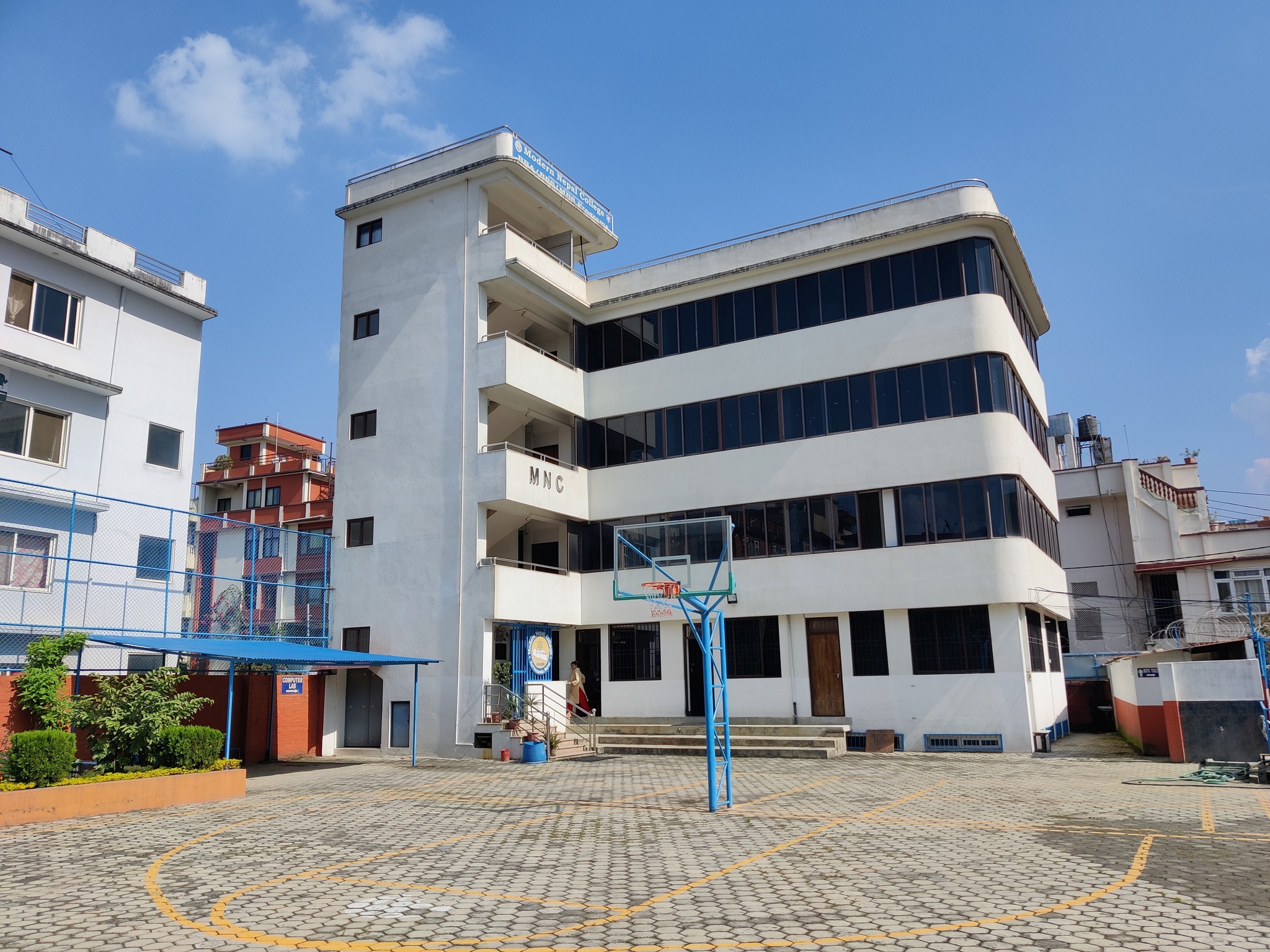
Program: TU-affiliated BBS, four years, annual exam system.
Class hours: Morning shift, 6:30 am–9:35 am.
Capstone: Project Work Report in the fourth year.
Attendance & internal tests: Minimum 80% attendance, class tests/term tests, and internal exams required for board eligibility.
Learning resources: Library and Book Bank on campus; Book Bank sets are issued for BBA (BBS students can still access the library collection).
Student activities: Study tour, industrial visit, sociology tour; academic seminars and presentations.
The course cycle for BBS is published by the college and follows TU’s structure. Subjects progress from business foundations to legal and policy areas, then to entrepreneurship, research, and concentration courses before the final report.
Year 1 (foundations)
Business English
Micro-Economics for Business
Business Statistics
Principles of Management
Financial Accounting & Analysis
Year 2 (communication, finance, people, macro)
Business Communication
Fundamentals of Financial Management
Cost & Management Accounting
Organizational Behavior & Human Resource Management
Macro-Economics for Business
Year 3 (law, systems, policy, taxes, markets)
Business Law
Foundation of Financial Systems
Business Environment & Strategy
Taxation in Nepal
Fundamentals of Marketing
Year 4 (enterprise, research, concentration, capstone)
Entrepreneurship
Business Research Methods
Concentration I, II, III
Final Report (Project Work)
Learning extends beyond the classroom. The prospectus encourages students to plan a one-week study tour; the college organizes two-day industrial and sociology tours, which help students connect theory with Nepal’s workplace context.
Build a clear understanding of accounting, finance, economics, and management that suits roles in Nepali organizations using formal systems.
Train students to read policy and legal requirements, work with cost and tax ideas, and explain decisions in writing.
Prepare final-year students to plan and complete an applied project report with basic research methods and documentation.
Graduates seek early roles in banking, insurance, trading and distribution, hospitality, manufacturing, and NGOs/INGOs. The Year-3 mix of “Business Environment & Strategy,” “Taxation in Nepal,” and “Foundation of Financial Systems,” together with Year-2 courses in finance and cost accounting, gives students a pathway toward finance, operations, and administrative work in Kathmandu’s formal sector.
Many students also use BBS as a base for further study—MBS, MBA, or specialized certifications—since the curriculum introduces research methods and offers concentration subjects in the final year.
By the end of BBS at MNC, students should be able to:
Prepare short analyses using financial accounting and cost/management accounting to explain performance, pricing, or budgeting.
Interpret Business Law and Taxation in Nepal topics to draft simple compliance notes for class cases or project work.
Summarize Business Environment & Strategy issues that affect local firms and propose brief action points for an assignment or viva.
Frame a modest research question, select a method, and write the Final Report using “Business Research Methods” as a guide.
Communicate clearly in writing and short presentations, supported by the communication courses and frequent internal assessments.
Quantitative and data skills: Business Statistics; Financial Accounting & Analysis; Cost & Management Accounting. These courses train students to read tables, compute ratios, and support arguments with numbers.
Communication and teamwork: Business Communication, OB & HRM, and class presentations help students speak, write, and work in groups—skills needed in Nepali offices and service organizations.
Policy and compliance literacy: Business Law and Taxation in Nepal build the vocabulary students must use in audits, filings, and vendor documentation.
Enterprise and research: Entrepreneurship and Business Research Methods lead directly to the Final Report, pushing students to plan, gather evidence, and justify a position.
Students benefit from campus resources during this process: a library for core texts and references, a Book Bank facility on campus, and computer access. (Book Bank sets are specified for BBA; BBS students rely on the library’s collection and shared learning aids.)
Teaching at MNC combines lectures, group discussions, case analysis, oral presentations, quizzes, and assignments. The college lists simulations, term papers, and thematic reviews among the academic activities, which encourages disciplined study habits for the annual board exams.
Learning support includes multimedia projection and sustained access to the library/Book Bank. Students also gain exposure through a study tour, industrial visit, and sociology tour, which help them link classroom topics—like markets, law, and policy—to real settings.
Internal policies help students keep pace: 80% attendance minimum, class tests and term tests, and passing internal exams to qualify for TU board examinations.
Eligibility: Applicants need 10+2 or equivalent with at least D grade in each subject and a minimum CGPA of 1.8 (TU standard followed by the college).
Entrance: The prospectus lists “CMAT/Entrance Test” topics and states that CMAT-passed candidates are interviewed. This CMAT interview step applies to BBA; BBS admission follows the college’s entrance process. Students should check the intake notice for exact BBS testing and dates.
Documents and flow: Form submission with academic records and ID photos; entrance as announced; merit list; seat confirmation inside the deadline; orientation and class start. Cross-check every step with the current intake circular.
Class hours: BBS runs in the morning shift 6:30 am–9:35 am.
BBS graduates often start as accounting assistants, front-office and operations staff, sales and client support, or administrative coordinators across banking, insurance, trading, hospitality, manufacturing, and the development sector. Year-3 coverage of Business Law, Business Environment & Strategy, and Taxation in Nepal blends well with the needs of firms that require reliable documentation and communication.
The Final Report in Year 4 helps students assemble a portfolio piece for interviews—showing they can plan a small study, interpret data, and draw a reasoned conclusion. Many graduates continue to MBS or sit for competitive exams that value accounting, economics, and policy basics.
The prospectus records two scholarship categories at the college level:
TU Special Scholarship (BBA): Listed for government/community school/college graduates. BBS students should still consult the admission desk for any current provisions that apply to them.
TU Board Topper Scholarship: One semester of full tuition waiver for TU Board Toppers (shared if more than one).
BBS students can also lower study costs by using the library collection throughout the year. The Book Bank facility operates on campus; the dedicated set issuance is specified for BBA in the prospectus.
Clear yearly map: The BBS course cycle is explicit by year, so you can plan study goals and exam prep in a predictable way.
Morning schedule: Early hours leave the day open for part-time work, family duties, or extra study. The timing is fixed at 6:30–9:35 am.
Applied capstone: The Final Report in Year 4 shows employers you can collect information, analyze it, and write to a standard format.
Discipline and support: Attendance rules, internal tests, and academic activities keep students on track; campus facilities provide study support.
Field exposure: Study tours and industry visits add local, practical context to classroom topics.
BBS at Modern Nepal College offers a steady route into management study under Tribhuvan University. The program’s morning schedule, yearly structure, attendance and internal assessment system, and project-based capstone give students a realistic study plan for four years. Applicants should rely on the latest intake notice for the BBS entrance process, deadlines, and any seat or scholarship updates.
1) How long is the BBS and what system does it follow?
Four years under TU’s annual system.
2) What are the class hours for BBS at MNC?
Morning shift 6:30 am–9:35 am.
3) Is there a capstone or project requirement?
Yes. A Project Work Report is required in the fourth year.
4) What attendance and assessment rules apply?
Minimum 80% attendance, class tests/term tests, and passing internal exams to sit TU board exams.
5) What is the eligibility for BBS?
10+2 or equivalent with at least D in each subject and CGPA 1.8.
6) Is CMAT required for BBS?
The prospectus lists CMAT topics and interview for CMAT-passed candidates; this step applies to BBA. BBS admission follows the college’s entrance process—check the current notice.
7) What study support is available?
Library and Book Bank on campus; computer access is available. (Book Bank set issuance is listed for BBA.)
8) Are hostels available?
Yes. Separate boys’ and girls’ hostels are listed.
9) Is there a dress code?
Yes. Uniform is mandatory during college hours.
10) What extracurricular exposure can students expect?
One-week study tour is encouraged; two-day industrial and sociology tours are organized by the college. Seminars and project presentations are part of the calendar.