



The Bachelor of Science (B.Sc. General) at Shaheed Smriti Multiple Campus (SSMC), Ratnanagar–3, Chitwan, is an undergraduate science program affiliated with Tribhuvan University (TU) under the Institute of Science and Technology (IOST). The program follows a year-wise system and builds a strong foundation in core science disciplines through structured coursework and practical learning.
| Item | Details |
|---|---|
| Course Name | Bachelor of Science (B.Sc. General) |
| College | Shaheed Smriti Multiple Campus (SSMC) |
| Location | Ratnanagar–3, Chitwan, Nepal |
| Affiliation | Tribhuvan University (TU) |
| Institute | Institute of Science and Technology (IOST), TU |
| Level | Undergraduate (Bachelor’s) |
| Study Mode | Year-wise (annual) |
| Key Subjects | Chemistry, Physics, Botany, Zoology, Mathematics |
| Admission Requirement | IOST entrance examination (2 hours) + eligibility criteria |
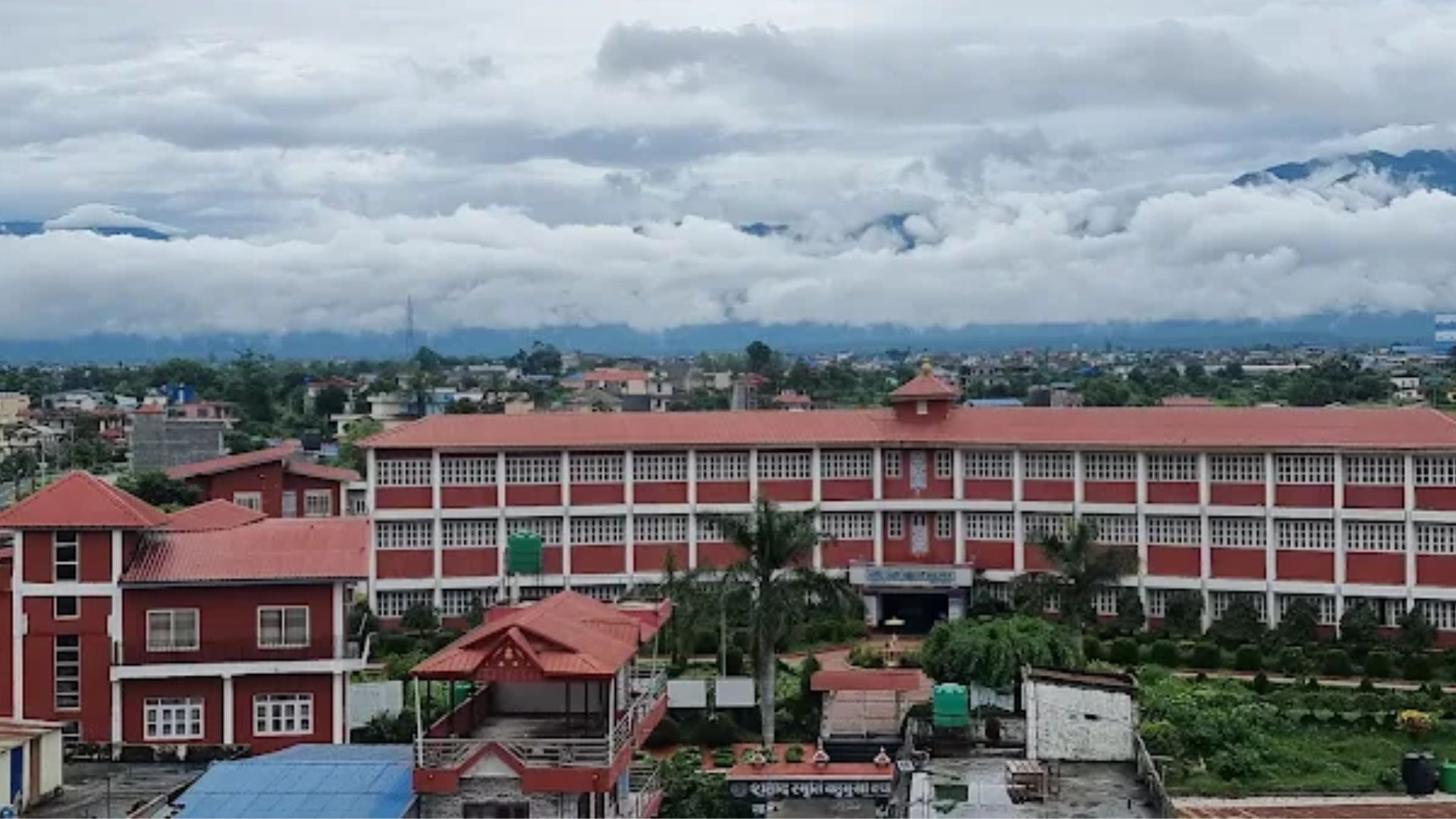
B.Sc. General runs on an annual (year-wise) basis and covers major science disciplines, allowing students to develop subject depth and academic readiness for advanced study and science-related careers.
Chemistry
Physics
Botany
Zoology
Mathematics
(Subject combinations and course sequencing follow TU/IOST curriculum guidelines.)
Applicants must have:
Completed 10+2 or equivalent with a minimum ‘C’ grade in all Grade 11 and 12 subjects
Admission is conducted through a two-hour entrance examination administered by the Central Campus of Technology, Institute of Science and Technology (IOST), TU.
Applicants who secure at least 50% in the entrance exam are eligible for admission.
Final selection is merit-based.
B.Sc. students benefit from a supportive academic setting with campus-wide learning resources, including:
Science laboratory facilities
Computer laboratory
Library services
Multimedia-supported classrooms
Academic events and learning activities conducted on campus
SSMC provides student-focused support services, including:
Counseling support
Scholarship opportunities for hardworking students and for ethnic, indigenous, deserving, and deprived students
Student engagement through campus platforms and academic activities
SSMC operates a structured Grievance Redress Mechanism (GRM) for academic, administrative, facility-related, scholarship-related, and service-delivery concerns.
GRM submission channels
Website: www.ssmcchitwan.edu.np
Email: shaheedssmriticampus@yahoo.com
In-person: Working days, 6:00 am to 11:00 am (principal’s office)
Suggestion/complaint box: First floor of the main building (opened weekly)
B.Sc. General builds a strong foundation for science-focused pathways, including:
Further studies in science and technology disciplines
Research and laboratory support roles (subject to required skills and hiring standards)
Teaching and academic support roles (subject to eligibility and institutional requirements)
Opportunities in science-related services across public and private sectors, depending on specialization and experience
B.Sc. General is offered on a year-wise (annual) basis.
The program includes Chemistry, Physics, Botany, Zoology, and Mathematics.
Applicants need 10+2 or equivalent with a minimum ‘C’ grade in all Grade 11 and 12 subjects.
Yes. Admission requires a two-hour IOST entrance examination.
Applicants must score at least 50% to be eligible, and selection is merit-based.
Yes. Scholarships are available for eligible students, including hardworking students and students from ethnic, indigenous, deserving, and deprived groups.






