Overview
Bachelor of Business Studies (BBS) at Shivapuri College, Maharajgunj, Kathmandu
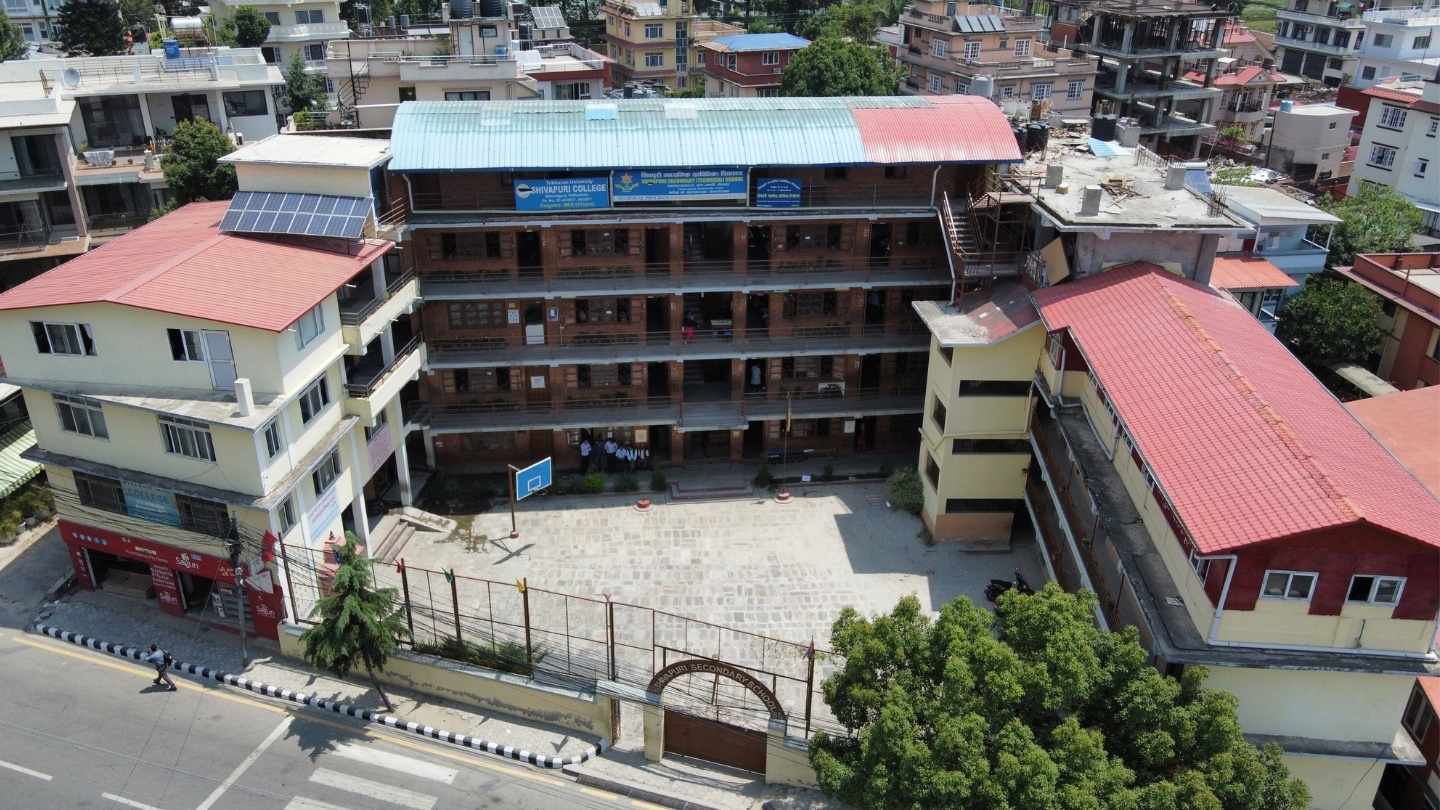
The Bachelor of Business Studies (BBS) at Shivapuri College is a four-year, annual system program under Tribhuvan University’s Faculty of Management. The campus runs morning classes from the Shivapuri Secondary School premises in Maharajgunj, Ward No. 3, Kathmandu.
Students who balance work and study find the early schedule practical. Teaching focuses on clear foundations in accounting, finance, marketing, human resource management, entrepreneurship, taxation, business research, and allied areas such as economics, statistics, business law, and communication.
You will study in compact classes with structured internal work, access year-wise groups for notices and materials, and use Google Classroom for notes and reference links. Faculty run revision and problem-solving sessions through Google Meet or Zoom when needed. The campus library access and approximately five thousand study/reference items available through the host school library help you stay on track even when you manage a job alongside college.
Highlights
-
Affiliation: Tribhuvan University (Faculty of Management)
-
Duration and System: Four academic years; annual examination system
-
Class Time: Morning session, 6:15 a.m. to 10:00 a.m.; five 45-minute periods per day (public holidays excluded)
-
Current Intake: BBS only (first to fourth year)
-
Teaching Support: Google Classroom, year-wise messaging groups, occasional online revision classes
-
Learning Resources: Smart projectors, teacher and office computers; access to the host school library (~5,000 items)
-
Learning Emphasis: Accounting, finance, marketing, HRM, entrepreneurship, taxation, research, communication, economics, statistics, and business law
Curriculum Details
BBS follows Tribhuvan University’s approved structure. Students complete core management courses, allied foundation courses, and a final-year project alongside three concentration subjects in an area such as Accounting, Finance, Management, or Marketing. A minimum of five daily periods and annual examinations are part of the academic cycle. Attendance of at least 70% is required to qualify for final exams.
Year-wise structure (indicative outline as per TU)
First Year (500 marks)
-
Business English
-
Business Statistics
-
Microeconomics / Business Economics
-
Accounting for Financial Analysis
-
Principles of Management
Second Year (500 marks)
-
Business Communication
-
Macroeconomics / Business Economics II
-
Cost and Management Accounting
-
Fundamentals of Marketing
-
Fundamentals of Human Resource Management
Third Year (500 marks)
-
Business Environment and Strategy / Business Law (as per TU structure)
-
Foundation or functional courses in Accounting, Finance, Marketing, and Management
-
Taxation in Nepal (introduced by TU in the upper years of BBS)
-
Remaining core courses as prescribed in the current TU syllabus
Fourth Year (500 marks)
-
Entrepreneurship
-
Business Research Methods (theory)
-
Final Project (fieldwork-based report and viva)
-
Three concentration courses from one stream: Accounting, Finance, Marketing, or General Management
Notes for students: Subject codes, paper distribution, and any syllabus adjustments follow the latest TU Faculty of Management publications. The campus circulates yearly updates through class groups and notice boards.
Objectives
-
Build capable middle-level managers for business, industry, government, and social enterprises.
-
Develop practical knowledge in accounting, finance, marketing, and HRM grounded in Nepal’s context.
-
Strengthen written and oral communication for professional settings.
-
Encourage entrepreneurial thinking through coursework and a final-year project.
-
Prepare students for higher studies such as MBS or MBA under TU rules and timelines.
Scope
BBS graduates work in accounting units, banks, insurance companies, trading firms, manufacturing, tourism services, retail operations, NGOs/INGOs, and public offices. Many explore small business ideas after gaining practical exposure. The program also builds the academic base for postgraduate study in management and related fields.
Learning Outcomes
By the end of the program, students should be able to:
-
Interpret financial statements, cost reports, and basic management accounts.
-
Explain market concepts and prepare practical marketing plans with local data.
-
Handle basic HR tasks such as job description drafting, attendance tracking, and support for appraisal cycles.
-
Use statistics for simple analysis, summaries, and decision support.
-
Draft clear business documents and short reports.
-
Understand Nepal’s taxation basics included in the BBS syllabus.
-
Conduct a small research or field project and present findings coherently.
-
Apply ethical judgment in business tasks and act with professional discipline.
Skill Development Modules
-
Accounting and Finance: Journal entries, ledgers, trial balance, financial statement reading, cost sheets, working capital basics, and budgeting.
-
Marketing: Consumer understanding, product and pricing basics, channel choices, promotion planning, and field observation.
-
HRM: Recruitment support tasks, record keeping, leave/attendance systems, and teamwork practices.
-
Quantitative Tools: Descriptive statistics, index numbers, correlation/regression basics for coursework.
-
Communication: Memos, letters, short proposals, meeting minutes, and presentation skills.
-
Research and Project Work: Topic selection, simple design, data gathering, referencing, and defense.
-
Taxation and Law (as per TU papers): Overview of Nepal tax heads included in the course, basic compliance awareness, and business law fundamentals.
Teaching Methodology
Faculty use lectures, guided discussions, case illustrations from Nepali businesses, problem-solving sets, and short presentations. Morning periods help working students maintain steady study time. Teachers post notes, references, and links in Google Classroom. Year-wise messaging groups support reminders, internal schedules, and exam notices. When needed, teachers run evening sessions on Google Meet or Zoom for revision and question hours. Internal work includes class tests, assignments, practical write-ups, and a research-oriented project in the final year. Students are expected to maintain attendance at or above TU’s threshold and to meet submission deadlines.
Admission Requirements
-
Completion of 10+2 (or equivalent) from a recognized board.
-
Streams accepted as per TU rules for BBS (commerce/business or equivalent pathways recognized by TU).
-
Any additional entry criteria set by TU or the campus for a given intake.
-
Document verification during admission or orientation as per notice.
Applicants apply within the campus notice period. You should prepare photocopies of mark sheets, character/provisional certificates, passport-size photos, and identity documents. The campus confirms schedules for fee payment, orientation, and class start after the merit list or verification process.
Career Opportunities
Graduates commonly enter roles such as junior accountant, store/accounts assistant, sales coordinator, client service officer, front-office associate, HR support, and operations assistant. Banks and finance companies recruit for entry-level support roles based on their criteria. Retail and trading firms hire for billing, inventory, and supplier coordination. Some graduates join NGOs/INGOs in administrative and finance support. Others begin small enterprises after the final-year project or after short job experience.
Scholarships and Financial Aid
As a community campus, Shivapuri College prioritizes access within the rules set by Tribhuvan University and local governance. Any fee concessions or aid opportunities are published through official notices. Students from low-income backgrounds should track campus updates, municipal schemes, or government support programs announced during the session. Required documents and deadlines appear in the call for applications or scholarship notices.
Why Choose BBS at Shivapuri College?
-
Morning schedule helps you study while managing part-time work or family duties.
-
Year-wise study groups and Google Classroom keep materials and deadlines transparent.
-
Faculty maintain steady internal assessments, timely feedback, and structured revision support.
-
Project work and taxation coverage add Nepal-specific relevance to coursework.
-
Library access through the host school and classroom ICT tools support daily study needs.
Conclusion
BBS at Shivapuri College offers a practical pathway for learners who want a recognized Tribhuvan University undergraduate degree in management while living and working in Kathmandu. The early timetable, structured internal work, and clear year-wise progression help students maintain momentum across the four annual cycles. The curriculum provides the essential base for junior roles in business settings or for further study in MBS or MBA. Students who follow attendance, complete assignments on time, and prepare consistently for annual exams achieve steady progress through the program.
FAQ
1) What is the study time each day?
Morning session from 6:15 a.m. to 10:00 a.m. with five periods of 45 minutes, except on public holidays.
2) Which university affiliation applies to the BBS here?
The program is affiliated to Tribhuvan University under the Faculty of Management.
3) Is attendance compulsory?
Yes. Students must meet TU’s attendance threshold (at least 70%) to qualify for annual examinations.
4) How are exams conducted?
The Office of the Controller of Examinations, Tribhuvan University, conducts annual examinations. Internal assessments run during the session.
5) What concentration areas are available in the final year?
As per TU’s BBS structure, students select three concentration subjects from one area among Accounting, Finance, Marketing, or General Management.
6) Does the campus support students who work?
Yes. The early schedule, Google Classroom, year-wise messaging groups, and occasional evening revision sessions help working students maintain continuity.
7) What documents should I prepare for admission?
Photocopies of academic transcripts, character/provisional certificates, identity documents, passport-size photos, and any category or scholarship papers requested in the notice.
8) Are library resources available?
Students access the host school library, where the campus has added textbooks, journals, and references. Around five thousand study/reference items are available.
9) Is there a final-year project?
Yes. A field-based project with a written report and viva is part of the fourth-year requirement under TU rules.
10) Where can I confirm current notices and any changes to the syllabus?
Check the campus notice board, official class groups, and TU Faculty of Management publications for the latest updates.