Overview
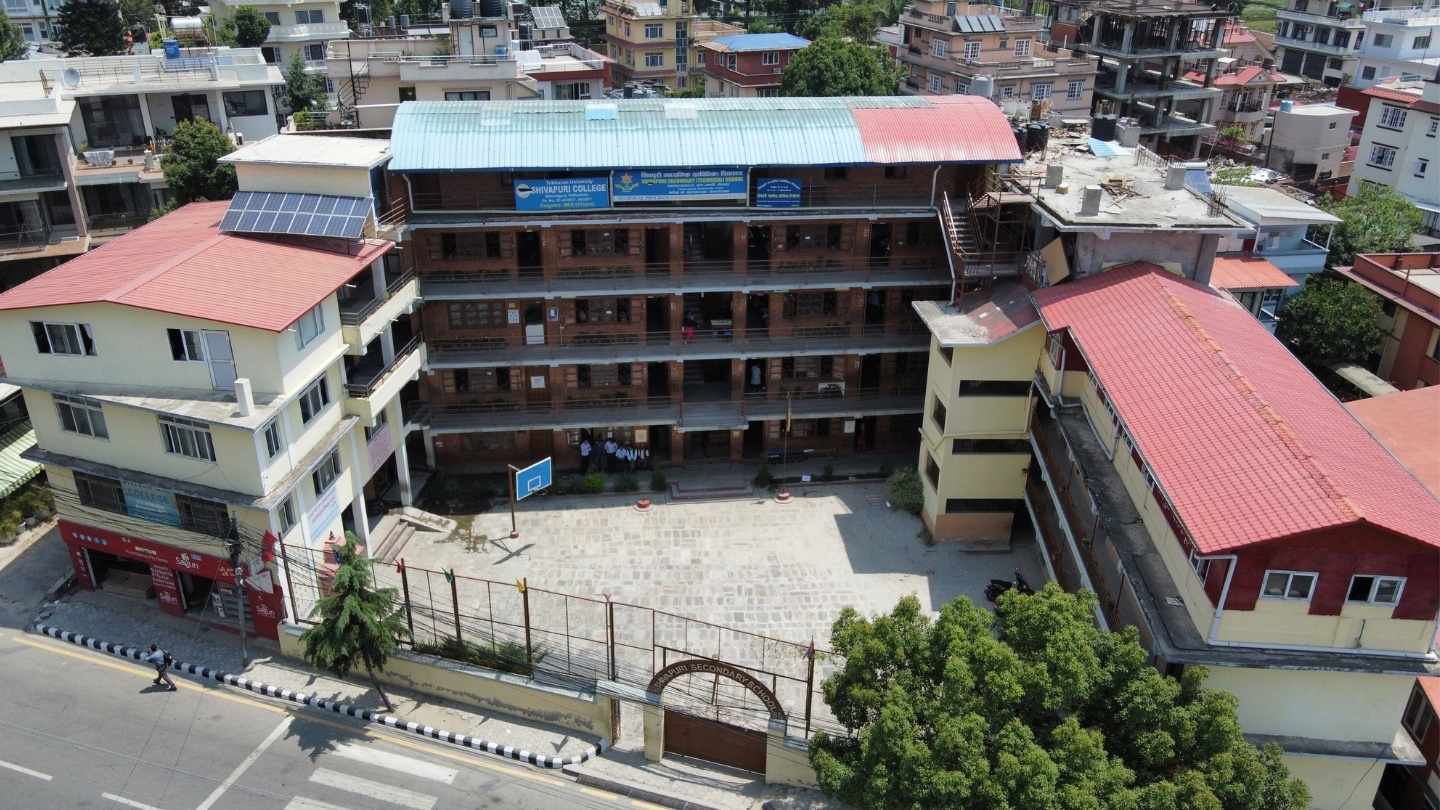
Shivapuri College is a nonprofit, community campus affiliated with Tribhuvan University (TU). It operates from the Shivapuri Secondary School premises in Ward No. 3, Maharajgunj, Kathmandu. Established in 2066 B.S., the college focuses on accessible higher education for learners from lower and middle-income families who arrive in Kathmandu from various districts.
Over the years, the campus has run bachelor-level management studies and completed its 15th Annual General Meeting, reflecting continuity in governance and community trust. At present, students pursue the Bachelor of Business Studies (BBS) across four years in morning sessions.
Quick Highlights
-
Type: Community college, nonprofit; affiliated with Tribhuvan University
-
Location: Maharajgunj, Ward No. 3, Kathmandu Metropolitan City
-
Established: 2066 B.S.
-
Current Program: BBS (Faculty of Management), morning session
-
Student Strength: 329 learners across first to fourth year in BBS (current cycle)
-
Academic Calendar: Five periods of 45 minutes each, from 6:15 a.m. to 10:00 a.m. (public holidays excluded)
-
Learning Mode: Classroom teaching with online support via Google Classroom, Google Meet, Zoom, and class groups
-
Facilities: Smart projectors, computers/laptops for teaching and administration, access to school library holdings (~5,000 study/reference items)
-
Community Linkages: Volunteer work in road safety, financial literacy, disaster response, and cultural events
-
Governance & Transparency: Regular AGMs; positive audit practices reported
Academic Programs Offered
Bachelor of Business Studies (BBS)
The BBS program runs under the Faculty of Management. Cohorts study across four academic years in a morning timetable designed for students who balance study with work or family responsibilities. Classroom instruction is supported by structured assignments, internal assessments, and periodic guidance sessions.
Pipeline (Subject to Approval and Resource Readiness)
Planned additions: BCA and BBA at the bachelor level; MBS at the master level.
These additions are under consideration to expand choice in management and computing streams in the coming years, aligned with TU norms and campus capacity. Formal rollout depends on approvals, facilities, and staffing.
Admission Process
Eligibility
Admission follows Tribhuvan University Faculty of Management regulations for BBS. Applicants typically require completion of 10+2 (or equivalent) under the rule set by TU for the academic session. Specific grade thresholds, conversion rules, and document requirements are published in TU and campus notices each year.
Key Steps
-
Application Form: Obtain and submit the campus form within the notice window.
-
Document Set: Submit academic transcripts and certificates as per the call for applications.
-
Merit and Verification: Selection follows TU and campus guidelines; verification may involve original documents at specified times.
-
Orientation: Admitted students receive schedules, class allocation, and academic calendar details.
Note: BBS admission procedures and dates are updated annually. Applicants should refer to TU Faculty of Management and campus announcements for current criteria, timelines, and any bridge requirements.
Teaching Faculty and Learning Methodology
Faculty
-
Teaching is delivered by management faculty with experience in classroom and mixed-mode instruction. Staff development involves trainings, seminars, and observation visits aimed at strengthening pedagogy and student support. Annual recognition is provided to teaching and non-teaching staff to encourage consistent performance.
Learning Approach
-
Schedule: Five periods of 45 minutes each morning (6:15 a.m.–10:00 a.m.), excluding public holidays.
-
Classroom + Online Support: The campus runs a mixed-mode approach where lectures and tutorials are complemented by Google Classroom repositories (notes, references, audio-video links) and virtual sessions through Google Meet/Zoom for revision and exam preparation. Messenger groups for each year level support timely circulation of study materials and notices.
-
Learner Profile: Many students work part-time in Kathmandu and manage tuition and living costs themselves, which can reduce physical attendance. Online resources and asynchronous materials help them keep pace without losing continuity.
-
Assessment and Feedback: Internal assessments, ongoing feedback, project/report work (especially in later years), and group activities help monitor progress and guide improvement.
Pedagogical Features
-
Mixed-mode learning: Classroom instruction is paired with digital resources and online assessment tools for deeper subject engagement.
-
Experiential components: Internships, field visits, and project work are used to connect theory with real contexts.
-
Project/problem work: Students solve case-type tasks and complete small projects that develop analysis, teamwork, and communication.
-
Academic continuity: Internal evaluations continue alongside the formal TU examination cycle.
Infrastructure and Learning Facilities
Premises
The college currently runs from the Shivapuri Secondary School building, with five rooms rented on a 10-year contract for classrooms and an administrative office. The campus plans to identify and secure suitable land in coordination with community leaders and local government, followed by construction of a dedicated building when feasible.
Equipment and ICT
-
Smart projectors in classrooms connect course delivery with ICT tools.
-
Laptops and desktop computers are available for teaching and administrative tasks.
-
The campus uses online platforms for materials, revision, and internal assessments when needed.
Library and Learning Resources
-
There is no separate college library at present. Students access the Shivapuri Secondary School library where textbooks, journals, and references are augmented for college use. Approximately 5,000 study/reference items are available for learners.
Furniture and Physical Setup
-
Classrooms use desks, benches, and whiteboards available at the school, with additions where needed. A separate office space holds the college’s cabinets, tables, and chairs.
Student Life and Campus Experience
-
Morning routine: Early hours suit students who work later in the day.
-
Study continuity: Online classrooms and messaging groups keep learners connected when attendance dips due to work obligations.
-
Peer support: Year-wise groups encourage the exchange of notes, deadlines, and academic tips.
-
Advisory touchpoints: Teachers run evening virtual sessions at intervals to handle revision and queries around tests and assignments.
Extracurricular Activities (ECA)
-
Academic contests: Quiz, chess, and spelling events promote healthy competition and sharpen recall and reasoning.
-
Community service: Students and staff volunteer in road safety exercises with traffic police, run awareness sessions on financial literacy for school students, and support local festivals as volunteers.
-
Social awareness: The campus engages in public-interest activities that address discrimination and promote inclusion.
-
Emergency response: During national emergencies, the college community contributes financial and material aid.
Scholarships and Financial Support
-
As a community campus, the college positions affordability and access as priorities. Fee support, if available in any given session, is publicized through campus notices aligned with TU and local governance rules.
-
Learners with economic constraints are encouraged to watch for need-based and merit-based announcements, service-linked waivers, or external support schemes routed through municipal or national programs.
-
Applicants should consult official notices for current criteria, required documents, and deadlines in a given academic year.
Institutional Milestones
-
Founding and growth: Established in 2066 B.S. to meet demand for higher education in Maharajgunj.
-
Governance: Completed the 15th Annual General Meeting, signaling continuity in organizational processes and community oversight.
-
Enrollment cycles: The college has reported fluctuations due to external shocks (earthquake, blockade, and the COVID-19 public health emergency). TU exam timing and result delays have also influenced national admissions in recent cycles.
-
Graduate outcomes: Alumni work across government, public institutions, private firms, banks and financial institutions, and some in international roles; a number have gone on to entrepreneurship.
Why Choose Shivapuri College?
-
TU affiliation and community ethos: A TU-linked community campus that prioritizes access to higher education.
-
Morning session for working learners: Class hours support students who hold jobs or shoulder family duties.
-
Mixed-mode support: Google Classroom, online revision sessions, and messaging groups keep learning on track.
-
Grounded student profile: The college serves learners arriving from remote districts, many of whom self-finance.
-
Community connections: Regular involvement in public-interest activities, road safety, and awareness programs.
Message from the Campus Chief
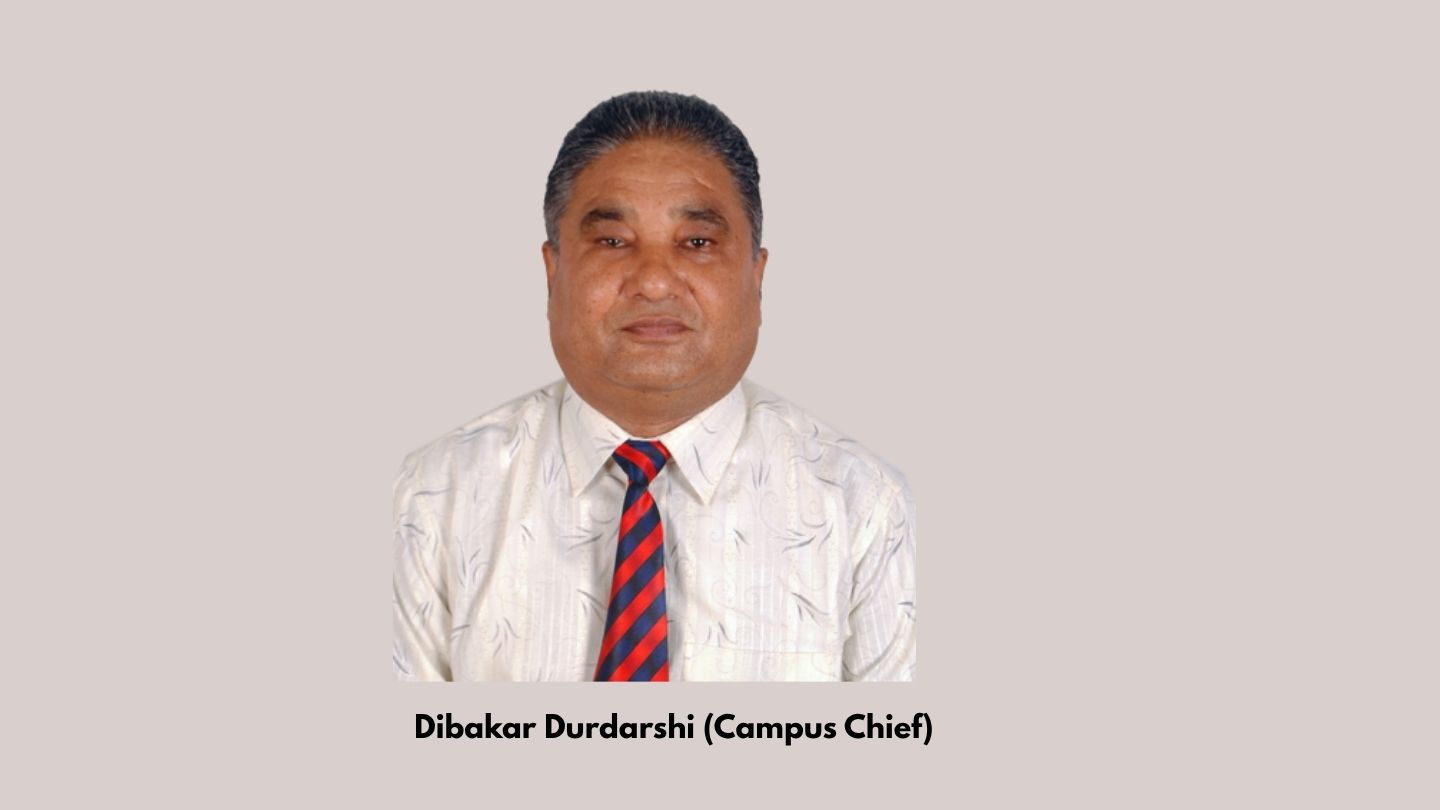
Shivapuri College was started in 2066 B.S. to widen access to higher education in Maharajgunj. Many of our learners come from working families and from districts outside Kathmandu. As a community campus affiliated with Tribhuvan University, we keep academic rules clear, classroom expectations steady, and student support close to daily practice.
Our timetable runs from 6:15 a.m. to 10:00 a.m. so learners who hold jobs can keep pace with their studies. Teaching is classroom-based with steady use of Google Classroom, periodic sessions on Google Meet or Zoom, and year-wise groups for timely updates. Internal assessments, project and report work, and regular feedback help students track progress and prepare for TU examinations.
The campus currently operates from rooms rented in Shivapuri Secondary School. While we plan, with local stakeholders, for a dedicated site in the future, our focus today is simple: reliable teaching, careful use of resources, and punctual communication. Faculty members take part in trainings and observation visits, and we maintain transparent records, including audits and annual meetings.
Beyond classes, our students and staff contribute to road safety drills, financial literacy sessions in nearby schools, and local cultural events. I welcome constructive suggestions from students, families, and partners. Together we can keep the campus practical, student-friendly, and useful to the wider community. - Dibakar Durdarshi (Campus Chief)
Conclusion
Shivapuri College serves Kathmandu’s Maharajgunj community as a TU-affiliated, nonprofit campus focused on accessible management education. With a morning schedule, mixed-mode support, and a network of community activities, the college addresses the needs of learners who balance work and study. Current operations use school premises with a medium-term plan to secure land for a dedicated facility, subject to coordination with local stakeholders and compliance steps. Academic delivery relies on classroom teaching, structured internal assessment, project/report work, and online platforms that help maintain continuity when students face time constraints.
Frequently Asked Questions (FAQ)
1) Is Shivapuri College affiliated with Tribhuvan University?
Yes. It is a community campus affiliated with TU and currently runs the BBS program under the Faculty of Management.
2) Where is the college located?
It operates in the Shivapuri Secondary School building in Maharajgunj, Ward No. 3, Kathmandu Metropolitan City.
3) What are the class timings?
Morning session from 6:15 a.m. to 10:00 a.m., five periods of 45 minutes each, excluding public holidays.
4) What facilities are available for study support?
Smart projectors, computers/laptops, online classroom platforms, and access to approximately 5,000 study/reference items through the school library.
5) Does the college have its own building?
Not yet. Classes run from rented rooms in the school building; the college is coordinating with local stakeholders to identify land for a dedicated campus.
6) Are there extracurricular activities?
Yes. Quiz, chess, spelling events, volunteering in road safety and cultural programs, financial literacy sessions, and support during emergencies.
7) How does the college support students who work part-time?
By running morning classes, providing online materials in Google Classroom, holding evening virtual sessions at times, and maintaining year-wise messaging groups for coordination.