



The Bachelor of Arts and Bachelor of Laws (B.A.LL.B.) at Shree College of Law is a five-year, full-time undergraduate program affiliated with Purbanchal University. Offered at Bharatpur-12, Chitwan, the integrated program combines arts and humanities subjects with national and international legal studies.
Students study legal theory, constitutional law, criminal law, contract law, company law, human rights, public international law, legal research, professional ethics, advocacy, and clinical legal education. The program carries 196+ credit hours, has 60 seats, runs in the morning shift, and uses Nepali and English as languages of instruction.
| Field | Course Details |
|---|---|
| Course Name | Bachelor of Arts and Bachelor of Laws |
| Abbreviation | B.A.LL.B. |
| College | Shree College of Law |
| Affiliation | Purbanchal University |
| Level | Undergraduate |
| Duration | Five years |
| Study Mode | Full-time |
| Shift | Morning |
| Total Seats | 60 |
| Credit Hours | 196+ |
| Languages | Nepali and English |
| Location | Bharatpur-12, Chitwan, Bagmati Province, Nepal |
The B.A.LL.B. is an integrated academic program that combines arts and humanities with legal education. The early part of the course introduces political theory, economics, history, sociology, logic, and foundational legal concepts.
Later years cover constitutional law, criminal law, evidence, international law, jurisprudence, contract law, company law, administrative law, labor law, legal philosophy, advocacy, and professional practice. Students also complete clinical courses, community outreach work, legal writing exercises, practical advocacy activities, and a dissertation.
Applicants must meet the following requirements:
Passed +2 or an equivalent level from any stream
Minimum 40% marks or 2.0 GPA
No age restriction
The first year establishes the social, political, historical, logical, and legal foundations of the program.
Political Theory and Thoughts
Economics
History of Nepal
Sociology
General Principles of Law
General Concept of Law
Theories of Logic and Legal Reasoning
Clinical Works
The second year introduces legal language, international relations, law-making processes, procedural law, criminal law, and practical observation.
Legal English
Legal Nepali
International Relations and Diplomacy
Legislative Principles and Law-Making Process
Principles and Rules of Procedural Law
Sociology of Law
Criminal Law
Clinical Course: Jail visits and preparation of a report on the sentencing system and reforms
The third year focuses on human rights, statutory interpretation, evidence, international law, constitutionalism, research, ethics, and community-based legal work.
International Human Rights Law
Principles of Interpretation and Interpretation of Statutes
Law of Evidence
Public International Law
Constitutional Law and Constitutionalism
Legal Research
Professional Ethics
Clinical Legal Education: Effective Legal Writing—Civil Case
Clinical Work: Advocacy Service to Community through an outreach program
The fourth year covers jurisprudence, contract, company and administrative law, international dispute settlement, criminal-case writing, and rural legal advocacy.
Clinical Education: Community Outreach and Rural Law Advocacy Service
Advanced Jurisprudence
Contract Law
Company Law
Administrative Law
Clinical Legal Education: Effective Legal Writing—Criminal Case
Settlement of International Disputes
Students select one optional group.
Forensic Science and Medical Jurisprudence
Criminology and Penology
Banking and Insurance Law
International Trade Law
Law on Good Governance
Electoral Law
Environment Law
Water and River Law
The final year includes legal philosophy, labor and agrarian law, international legal subjects, advocacy, professional development, and dissertation work.
Legal Philosophy
Agrarian Law
Labor Law
International Humanitarian Law and Conflict Resolution
Conservation Law
Private International Law
Pre-Trial Presentation, Trial Advocacy, and Appellate Advocacy
Clinical Education Course: Legal Professionalism Development
Dissertation
Students select one optional group.
Law Against Organized Crime
Fiscal Crime
Intellectual Property
Taxation Law
Law of Equity, Torts, and Consumer Protection
Law on Gender and Disadvantaged Sections of Populations
Energy Law
Civil Aviation and Tourism Law
The B.A.LL.B. curriculum covers legal subjects alongside the social and institutional settings in which laws operate. Major study areas include:
Constitutional law and governance
Criminal law and the justice system
Contract law
Company and business law
Administrative and labor law
International human rights law
Public international law
Private international law
International humanitarian law
Legal research and writing
Evidence and statutory interpretation
Professional ethics
Advocacy and dispute settlement
Environmental and development law
Students also study political theory, economics, sociology, the history of Nepal, international relations, diplomacy, jurisprudence, and legal philosophy.
Practical legal education is included across the five-year structure. Students take part in activities connected with legal writing, advocacy, research, community work, and professional conduct.
The practical components include:
Moot-court exercises
Civil and criminal legal writing
Jail visits and report preparation
Legal aid clinic activities
Case studies
Community outreach
Rural law advocacy services
Pre-trial presentation
Trial and appellate advocacy
Internship-related learning
Legal professionalism development
Dissertation work
These components support the application of legal concepts through written arguments, oral presentations, case analysis, research, and community-focused legal activities.
Shree College of Law has facilities related to classroom instruction, research, and practical legal education.
Moot court
Classrooms
Computer lab
Library
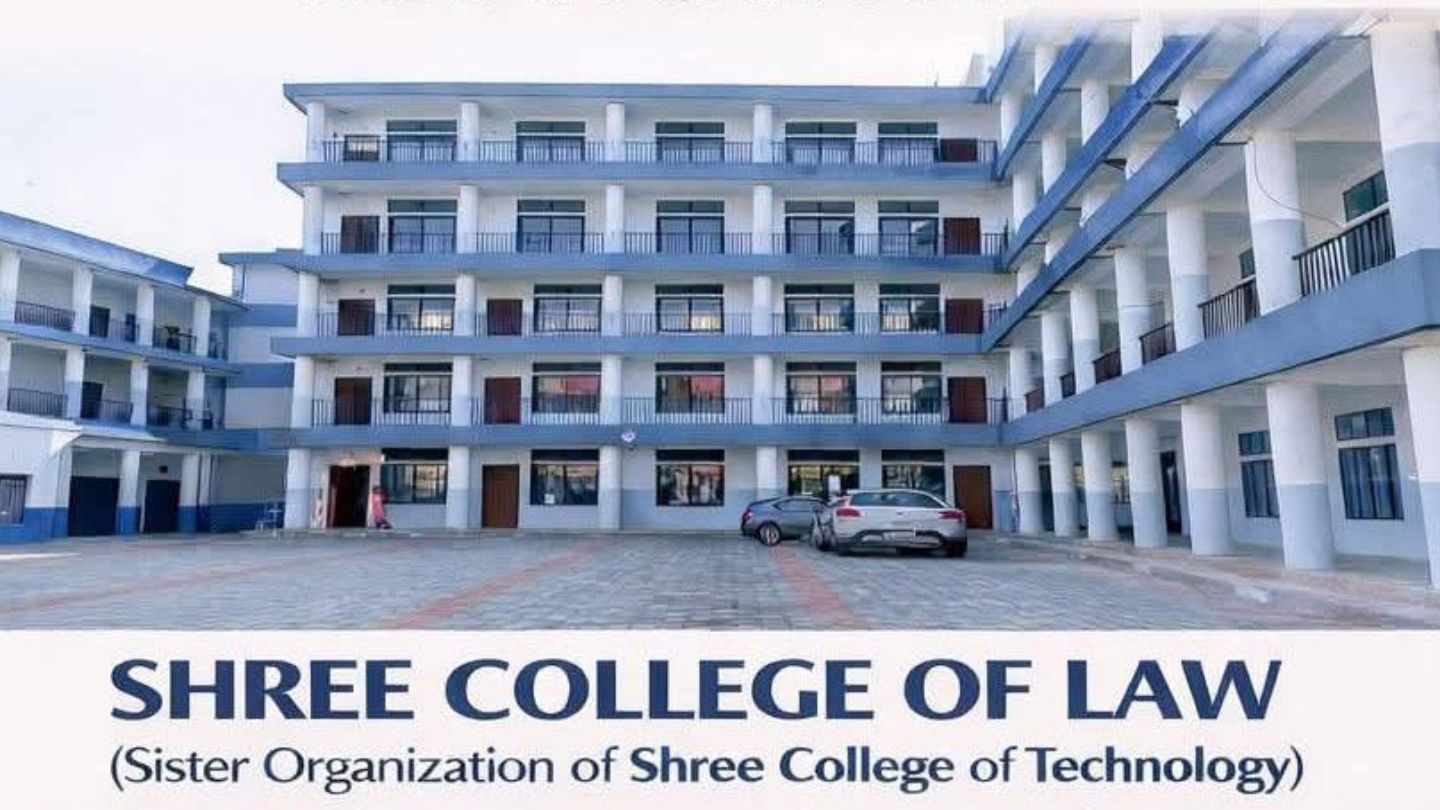
Academic building
The moot court is used for advocacy and courtroom-related exercises. The library and computer lab support legal research, academic writing, case preparation, and dissertation work.
The academic and clinical structure supports the development of:
Legal analysis and reasoning
Interpretation of laws and statutes
Legal research
Written legal argument
Oral advocacy
Case analysis
Legal drafting
Professional communication
Understanding of legal ethics
Community-based legal awareness
Understanding of national and international law
The arts and humanities component also develops an understanding of the political, social, historical, economic, and cultural contexts connected with law.
Graduates may pursue pathways in:
Legal practice as advocates or legal advisors
Judicial services
Corporate law firms and companies
Civil service
Non-governmental organizations
International non-governmental organizations
Academia and legal research
Independent legal practice
Human rights-related organizations
Corporate legal services
Commercial, environmental, and labor dispute arbitration
LL.M. study and further legal specialization
Career outcomes depend on academic performance, skills, professional requirements, experience, location, and available opportunities.
College: Shree College of Law (श्री कलेज अफ ल)
Address: Bharatpur-12, Chitwan, Bagmati Province, Nepal
Phone: +977-56-420064, +977-56-420097, +977-984635491, +977-9855060254
Email: shreelawcollege@gmail.com
B.A.LL.B. stands for Bachelor of Arts and Bachelor of Laws. It combines arts and humanities subjects with undergraduate legal studies.
The program has a duration of five years and is offered as a full-time course.
The B.A.LL.B. program at Shree College of Law is affiliated with Purbanchal University.
Applicants must have passed +2 or an equivalent level from any stream with at least 40% marks or a 2.0 GPA. There is no age restriction.
The B.A.LL.B. program has 60 seats.
The program operates in the morning shift.
Nepali and English are used in the program.
Yes. The curriculum includes moot-court activities, legal writing, jail visits, community outreach, advocacy work, legal professionalism development, and dissertation work.
Yes. Fourth- and fifth-year students select one optional group from Criminal Law, Business Law, Constitutional Law, or Environment and Development Law.






