The Ten Plus Two (+2) Hotel Management program at Tilottama Campus, Rupandehi is a Grade 11 and Grade 12 program under the National Examinations Board (NEB).
The program introduces students to major areas of hotel and hospitality operations while combining classroom study with practical exposure. Its areas of study include food and beverage service, front office operations, housekeeping management, marketing and sales, human resource management, and accounting.
Practical activities form an important part of the program. Students may participate in internships, training programs, and visits to hospitality businesses, allowing them to connect academic learning with the working environment of the hospitality sector.
| Category | Details |
|---|---|
| Course | Ten Plus Two (+2) Hotel Management |
| Institution | Tilottama Campus |
| Location | Yogikuti, Butwal, Rupandehi |
| Academic level | Grade 11 and Grade 12 |
| Board | National Examinations Board (NEB) |
| Main field | Hotel and Hospitality Management |
| Eligibility reference | Minimum 1.6 GPA in SEE for the specified 2079 cohort |
+2 Hotel Management is designed for students who want to begin studying hospitality at the higher-secondary level. Rather than concentrating only on one area of hotel operation, the program introduces several functions that students may encounter in hotels and related hospitality businesses.
The academic coverage includes service operations, guest-facing activities, housekeeping, marketing, human resources, and accounting. This gives students exposure to both operational and administrative sides of hospitality.
The course also places practical activity alongside classroom learning. Internships, training activities, and visits to hospitality businesses help students observe how hospitality services are organized and delivered in actual working settings.
For students considering further education in hotel management, hospitality, tourism, business, or related areas after Grade 12, the program provides an early foundation in the terminology, functions, and working practices associated with the sector.
The +2 Hotel Management program covers several areas connected with the daily operation and management of hospitality businesses.
Food and beverage service introduces students to an important operational area of hospitality. Students become familiar with service-related responsibilities and the role of food and beverage operations within hotels and similar establishments.
This area helps students understand how hospitality service extends beyond accommodation and includes coordinated service functions involving guests, staff, and operational procedures.
Front office operations focus on the guest-facing side of hotel work. This area introduces students to functions associated with receiving guests and managing front-office activities.
Because the front office often connects guests with different sections of a hotel, understanding its role also helps students see how various hotel departments work together.
Housekeeping management introduces students to the organization and management of housekeeping functions.
The subject area provides an understanding of how housekeeping fits into overall hotel operations and how it connects with guest service, accommodation management, and internal coordination.
Marketing and sales introduce students to the business side of hospitality. Students learn about areas connected with promoting hospitality services and supporting sales activities.
This component broadens the program beyond operational hotel functions and introduces students to how hospitality businesses connect services with customers and markets.
Hospitality businesses depend on coordinated work across different departments and employee roles. Human resource management introduces students to basic concepts associated with managing people within an organization.
This area complements the operational subjects by helping students understand the role employees and workplace organization play in hospitality services.
Accounting provides a business-oriented component within the program. It introduces students to an area that supports financial record keeping and organizational management.
Including accounting alongside operational hotel subjects gives students exposure to the financial side of hospitality activities as well as service delivery.
The +2 Hotel Management program is not limited to classroom-based study. Practical exposure is incorporated through activities such as:
Internships
Training programs
Visits to hospitality businesses
Practical observation of hospitality operations
Exposure to working environments related to hotel services
These activities allow students to relate subjects such as food and beverage service, front office operations, and housekeeping to practical settings.
Industry visits can also help students understand how different sections of a hospitality business operate together. Training and internship experiences provide another setting in which students can observe workplace routines, service procedures, staff responsibilities, and departmental coordination.
For students who completed Grade 10 in the academic year 2079 and sought admission to Grade 11, the stated eligibility requirement was a minimum average GPA of 1.6 in the Secondary Education Examination (SEE).
The requirement was associated with the decision of the National Curriculum Development and Evaluation Council dated 2079.05.19.
Because this eligibility criterion applies to the specified academic-year cohort, students seeking admission in another cycle should follow the admission requirements applicable to that particular intake.
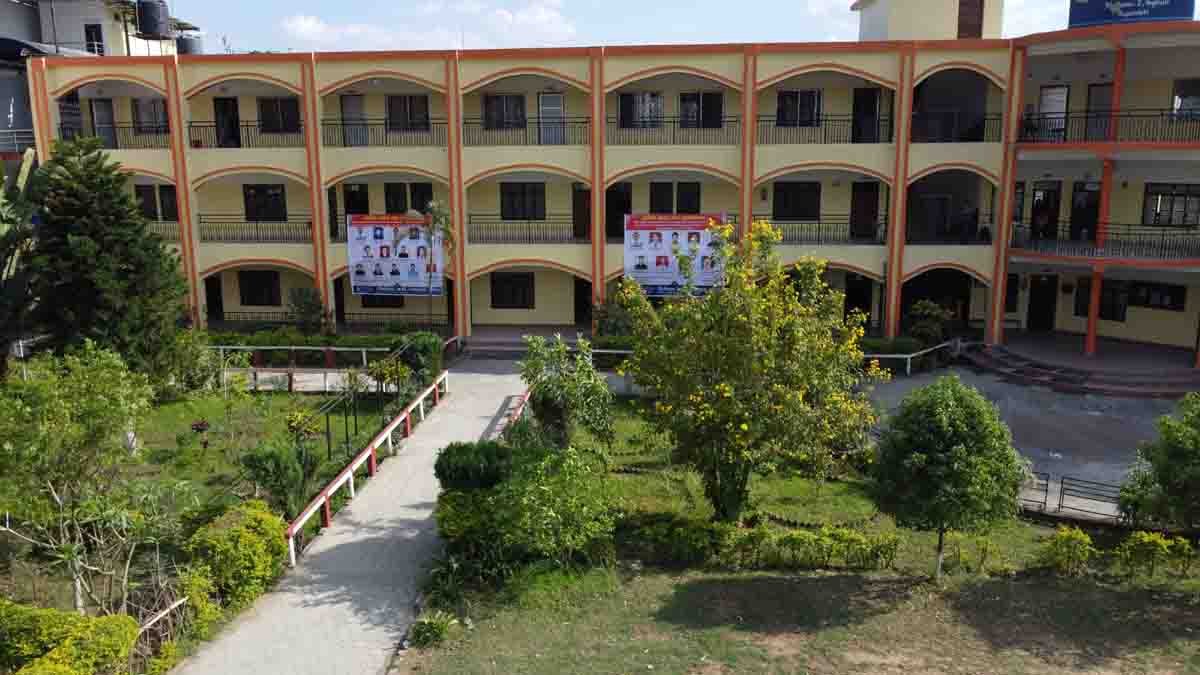
Tilottama Campus is located in Yogikuti, Butwal, Rupandehi. The campus provides an academic environment that supports classroom learning, practical activities, computer use, project work, and extracurricular participation.
Facilities available at the campus include:
Library with textbooks, research journals, and reference materials
Computer laboratory facilities
Internet facilities
Networked computer lab
Lecture rooms with digital projectors
CCTV-monitored classrooms
Project-based learning activities
Transport facility
Sports and excursion activities
Basketball court
Open ground and garden
First-aid facility
These resources support the broader learning environment for students studying at the higher-secondary level.
The combination of academic subjects and practical exposure allows students to become familiar with several parts of hospitality operations.
Students encounter areas related to:
Food and beverage operations
Guest and front-office services
Housekeeping functions
Hospitality marketing and sales
Human resource concepts
Basic accounting
Workplace communication
Coordination among hotel departments
Practical hospitality environments
The program therefore introduces both service-oriented and management-related subjects rather than treating hotel management as a single operational activity.
After completing Grade 12, students may consider continuing their education in fields related to hospitality, hotel management, tourism, business, or other areas for which they meet the applicable admission requirements.
The +2 Hotel Management program gives students prior exposure to hospitality subjects before they enter higher-level study. Areas such as accounting, marketing, human resources, service operations, and hotel functions may also provide useful academic grounding for related undergraduate programs.
Admission requirements for higher education depend on the institution and program chosen after Grade 12.
The program introduces students to functions that exist across hotels and hospitality businesses. Areas associated with the course include:
Front office operations
Housekeeping
Food and beverage services
Event-related hospitality work
Hotel operations
Marketing and sales support
Entry into a particular role depends on the employer's requirements, further education, practical experience, and the responsibilities attached to the position.
The program is therefore best understood as a higher-secondary foundation in hospitality rather than a guarantee of a specific job or professional position.
Hospitality involves regular interaction between people, services, and different operational departments. Classroom study can explain individual functions, while practical activities allow students to observe how those functions work together.
For example, front office activities may need coordination with housekeeping, while food and beverage operations involve their own service procedures and staffing requirements. Marketing, sales, accounting, and human resource functions support the wider operation of the business.
By encountering several of these areas during Grade 11 and Grade 12, students can develop a broader understanding of how hospitality organizations function before deciding on further study.
It is a Grade 11 and Grade 12 hospitality-focused program offered by Tilottama Campus under the National Examinations Board (NEB).
Tilottama Campus is located in Yogikuti, Butwal, Rupandehi.
The program covers areas including food and beverage service, front office operations, housekeeping management, marketing and sales, human resource management, and accounting.
Yes. Practical exposure includes internships, training programs, and visits to hospitality businesses.
For students who completed Grade 10 in the academic year 2079, the stated requirement was a minimum average GPA of 1.6 in SEE.
Students may consider further study in hotel management, hospitality, tourism, business, or other programs for which they meet the applicable admission requirements.
No. The program provides a higher-secondary foundation in hospitality. Employment depends on factors such as employer requirements, further education, practical experience, and the responsibilities of the particular position.