NEB - National Examinations Board
- Established2016
- Services 3 offered
- Affiliation National Examinations Board (NEB)
About NEB - National Examinations Board
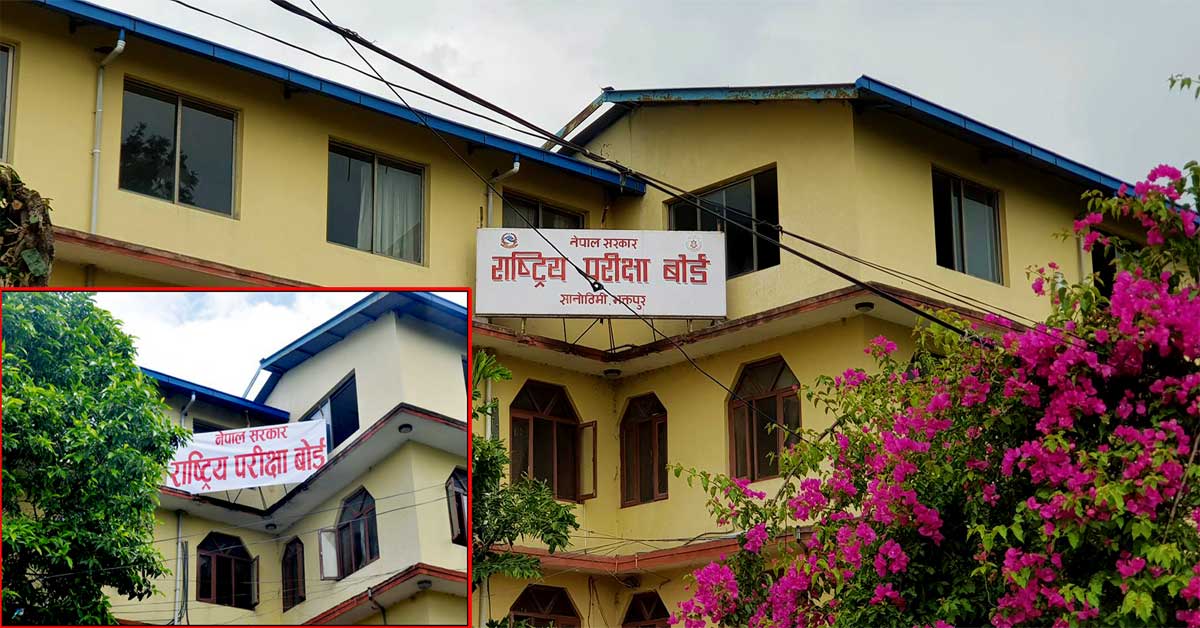
National Examinations Board (NEB), Sanothimi, Bhaktapur, Nepal
Nepal’s educational history has its own distinct journey of development and transformation in the examination system. From the establishment of the School Leaving Certificate (SLC) Board in 1990 BS, the formal examination system has gone through many legal and structural changes, culminating in the present structure of the National Examinations Board (NEB).
This institution is a major pillar of Nepal’s education sector, responsible for measuring quality, certifying, and regulating examinations for Grades 10, 11, and 12.
Quick Facts Summary
The official and technical details of the institution are presented below:
-
Official Name (in Nepali): राष्ट्रिय परीक्षा बोर्ड / Rastriya Pariksha Board
-
Official Name (in English): National Examinations Board
-
Abbreviation: NEB
-
Nature of Institution: Government autonomous body (Government Examining Body)
-
Established: 2073 BS (after the implementation of the Eighth Amendment to the Education Act)
-
Legal Basis: Education Act, 2028 (Eighth Amendment, 2073)
-
Central Office: Sanothimi, Bhaktapur
-
Scope: Nationwide (Nepal)
-
Core Responsibility: Conducting, managing, and certifying secondary-level examinations (Grades 10, 11, and 12)
-
Official Website: www.neb.gov.np
-
Contact Channels: Telephone, email, and provincial/branch offices of the Board - +977-1-6630848, +977-1-6630747
Institutional Overview
The National Examinations Board (NEB) is a high-level autonomous body established by the Government of Nepal with the primary purpose of making national-level school examinations more systematic, dignified, and reliable. In Nepal’s education history, 2073 BS became a transformative year when the functions of the former Higher Secondary Education Board (HSEB) and the Office of the Controller of Examinations (SLC Board) were integrated through the Eighth Amendment to the Education Act, 2028.
This historic integration brought secondary education into a single structure from Grades 9 to 12 and, accordingly, envisioned the Board as the authority for examination certification and regulation. The institution is not limited to conducting examinations and checking answer scripts; it also works as an academic bridge that links the quality of Nepal’s school education with international standards.
The Board’s central responsibilities include scientifically measuring students’ learning achievements, publishing results, and issuing official academic certificates to students who are qualified for higher education. With the adoption of a federal governance system, the Board has also played an important role in maintaining uniformity in the examination system by working as a coordinating link among local levels, provincial governments, and the federal education ministry.
The certificates issued by the Board serve not only Nepal’s universities but also educational institutions and employers worldwide as a credible proof of a student’s academic capacity. The Board’s scope includes long-term, high-impact areas such as developing an academic calendar, setting standards for examination centers, and ensuring the proper implementation of the letter grading system. In this way, the National Examinations Board works to uphold Nepal’s educational credibility internationally and serves as a foundation for producing a skilled workforce.
History and Evolution
The emergence of the National Examinations Board marks a historic turning point in Nepal’s examination system. To understand its development, it is necessary to review the key structural and policy milestones that shaped the present framework.
Previous Examination Structure (Before 2073 BS)
Before 2073 BS, Nepal operated two separate national examination bodies. The Office of the Controller of Examinations (SLC Board) conducted the Grade 10 examination, while the Higher Secondary Education Board (HSEB) was responsible for Grades 11 and 12. This dual structure led to duplication of responsibilities and limited institutional coordination.
Eighth Amendment to the Education Act (2073 BS)
After the Government of Nepal reclassified school education into two levels—Basic Level (Grades 1–8) and Secondary Level (Grades 9–12)—systemic reform of the examination framework became necessary. Through the Eighth Amendment to the Education Act, 2028, the Higher Secondary Education Board was dissolved and the National Examinations Board was formally established in 2073 BS.
Structural Reorganization of Examinations
Following the establishment of the Board, examination responsibilities were reorganized. The Grade 10 examination (SEE) began to be conducted at the regional or provincial level, while the Grade 12 examination remained at the national level. This policy reflected a gradual shift from a highly centralized examination system toward a more decentralized model.
Systemic Reform and Letter Grading
As part of broader assessment reform, the Board replaced the traditional marks-based system with a letter grading system. This change aimed to reduce examination-related stress among students and place greater emphasis on learning outcomes rather than numerical scores.
Legal and Governance Framework
The National Examinations Board is a legally protected and empowered institution. There are clear legal provisions for its operation.
Executive Board
The highest body of the Board is chaired by a person appointed by the Government of Nepal. The committee includes the Secretary of the Ministry of Education, representatives from various universities, and education experts as members.
Member Secretary
A Member Secretary is appointed to manage the Board’s administrative and technical operations.
Relationship with the Ministry
The Board works under the supervision and policy guidance of the Ministry of Education, Science and Technology. However, it remains autonomous in conducting examinations and publishing results.
Key Divisions
The Board includes divisions such as the Examination Management Division, Curriculum Coordination Division (especially for Grades 11–12), Information Technology Division, and Administration and Financial Administration Division.
Mandate and Core Functions
The Board’s work is not limited to the examination hall. Its functions are broad and include:
Examination Management
Setting the annual examination schedule, determining examination centers, and coordinating center chiefs and invigilators nationwide to conduct examinations.
Question Paper Preparation and Confidentiality
Preparing question sets through subject experts, refining them, and maintaining full confidentiality until the examination day. The Board has also begun sending question papers digitally for some examinations.
Registration and Application Process
Registering student details at Grade 11 admission and managing the process of filling application forms for the annual Grade 12 examination.
Answer Script Evaluation and Result Publication
Coding answer scripts, evaluation, moderation, and data processing to publish results. The Board uses information technology to ensure technical accuracy.
Retotalling and Result Improvement
Providing retotalling opportunities for students dissatisfied with published results, and conducting supplementary (grade improvement) examinations for students who failed or want to increase grades.
Certificate Issuance and Record Management
Issuing Transcript, Migration, and Provisional certificates to Grade 12 pass students, and securely preserving old academic records.
Examinations and Programs Under the Board
The National Examinations Board directly or indirectly oversees examinations at the following levels:
Grade 12 (Secondary Education Examination)
The Board’s main national-level examination. The Board conducts it, prepares question papers, and publishes results.
Grade 11 (Internal/Board Management)
Currently, Grade 11 examinations are conducted by the concerned schools, but student registration and certification remain under the Board.
Grade 10 (SEE)
The Board has a role in national coordination and certification of the Grade 10 examination (SEE), although a separate Office of the Controller of Examinations (Grade 10) remains active for management.
The Board seeks to follow an annual calendar where examinations are generally conducted in Baishakh/Jestha and results are published by Shrawan/Bhadra.
Student-Facing Services: Detailed Guide
The National Examinations Board (NEB) is not only an examining body but also the custodian of students’ academic records. From Grade 11 admission until Grade 12 completion and higher education entry, students require various Board services. To make these services systematic and less burdensome, the Board has defined specific procedures.
Methods to Access and Analyze Results
As soon as results are published, students often experience curiosity and pressure. The Board officially publishes results through the website, SMS, and IVR systems.
-
Web Portal: Students can visit neb.ntc.net.np or www.neb.gov.np and enter their symbol number and date of birth to view a detailed grade sheet. The key point is that the date of birth must be entered exactly as stated in the form (Bikram Sambat or AD).
-
SMS Service: In areas without internet access, students can type “NEB Symbol Number” and send it to 1600 to receive results.
Practical Retotalling Process
Many students feel their grade is lower than expected. In such cases, retotalling is a legal option.
-
When to Apply: The application must be submitted within 15 days from the result publication date.
-
Fees and Charges: A specified fee per subject (generally NPR 500) must be deposited into the designated bank account.
-
Process: The student must visit the concerned provincial or branch office and fill an application form. The Board does not recheck the answers; it only verifies counting errors or whether any answer was left unchecked. If marks change, a new grade sheet is issued.
Rules for Grade Improvement Examination
Under the current letter grading system, students who receive “D” or lower grade (NG — Not Graded) can appear for grade improvement.
-
Eligibility: Generally, students with up to two subjects graded as NG can participate in the chance examination held in the same year. If more than two subjects are NG, the provision requires participation in the next year’s regular examination.
-
Importance: This helps prevent loss of an academic year and supports eligibility for higher education.
Correction Process for Name, Surname, and Date of Birth
This is one of the most complex and important services. Many students face mismatches between Grade 10 certificate details and Grade 12 registration details.
-
Time Limit: Applications must be submitted within a specified period after certificate issuance (as per the current rule, within 5 years).
-
Required Documents: Grade 8 character certificate, Grade 10 marksheet, copy of citizenship or birth registration, and school recommendation are required. In major error cases, a decision from the District Administration Office may also be required.
-
Recommended Approach: It is generally considered best to appear in person at the central office in Sanothimi or the relevant provincial office.
Obtaining Academic Certificates (Transcript, Migration, and Provisional)
After passing Grade 12, students need original certificates.
-
Transcript: Shows combined academic details of Grades 11 and 12; mandatory for higher education.
-
Migration: Required when moving from one university to another.
-
Provisional: Issued for temporary use until the original certificate is available.
-
Application Process: Applications can generally be submitted only about 15 to 21 days after results are published. Students can obtain these documents by filling an online form or submitting the designated voucher.
Academic Verification Service
Especially for students going abroad for studies or entering government service, the Board provides verification services.
-
For WES or other bodies: If a student requires verification for the USA, Canada, or other countries, the Board provides official verification through a sealed envelope. Separate fees and procedures apply.
Troubleshooting Helpdesk
Sometimes, students face serious difficulties due to technical reasons.
-
If the result shows “Absent”: If a student attended the exam but is marked absent in results, an application must be submitted to the Board with a copy of the exam center attendance sheet.
-
If the symbol number is “Withheld”: This can happen if the registration card is lost or details do not match. In such cases, the school’s official letter is required to contact the IT division.
-
Counseling Service: The Board has an inquiry desk. It is safe and official to consult directly with Board staff rather than relying on intermediaries.
Students should keep all academic documents safe (especially the registration card). As many services have moved online, regularly checking the Board’s official portal helps avoid last-minute rush and possible errors.
Exams and Academic Scope
After the Eighth Amendment to the Education Act, changes in school education structure have significantly broadened the Board’s academic scope. The Board mainly carries full responsibility for conducting, managing, and certifying the final stage of secondary education (Grades 11 and 12). The scope and nature of examinations are clarified below:
Faculty Areas and Curriculum Diversity
The Board manages examinations for diverse curricula under the National Curriculum Framework. The main areas include:
-
Science: Physics, Chemistry, Biology, and Mathematics
-
Management: Accountancy, Economics, Business Studies, and Hotel Management
-
Humanities: Sociology, Mass Communication, Rural Development, Language, and Culture
-
Education: Teaching Methods, Educational Psychology, and School Management
-
Law: Basic principles of constitutional law, civil law, and criminal law
-
Technical & Vocational: Specialized technical subjects related to engineering, agriculture, and health, where exam schedules and evaluation methods may differ from general streams.
Nature and Classification of Examinations
The Board’s examinations can be classified into three categories based on student status and needs:
-
Regular Examination: The main examination held at the end of the academic session for Grade 12 students.
-
Partial Examination: Conducted for students who previously failed in one or more subjects, or for students from the marks system period.
-
Grade Improvement Examination: A chance exam held some time after results for students who received NG (Not Graded) or who want to improve grades.
Evaluation Method and Weightage
Under current policy, the Board includes both theoretical and practical (internal/practical) components. In most subjects, 75 percent weightage is for theory and 25 percent for internal assessment or practical examination conducted by the school. This weightage may differ in practice-heavy subjects such as science. To receive an academic certificate, students must secure at least 35 percent in theory, and those below fall under the “Non-Graded (NG)” system. This is expected to measure real learning and improve quality.
Academic Cycle
The Board follows a defined annual cycle. Generally, with new Grade 11 admissions in Shrawan/Bhadra, the registration process begins. In Magh/Falgun, Grade 12 exam application forms are filled, and the national-level exam is conducted in Baishakh or Jestha. The Board aims to publish results within 90 days of exam completion. This cycle supports timely eligibility for university admissions.
Specific Status of Grade 11
Under the intent of federalism and the new Education Act, authority to conduct and publish Grade 11 annual examinations has been delegated to the concerned schools. However, registration, monitoring academic standards, and managing records reflected on the final certificate remain under the Board. This provides schools autonomy while keeping the Board in a quality-control role.
International Equivalence and Recognition
The Grade 12 certificate (Higher Secondary Level) issued by the Board is considered comparable to A-Level or a high school diploma internationally. It is recognized by universities worldwide (e.g., Oxford, Harvard, Delhi University, etc.). The Board, in coordination with the Curriculum Development Centre, has been updating curricula to remain relevant, supporting Nepali students in global competition.
The Board’s academic role is not limited to checking answer scripts; it functions as a key gatekeeper that sets standards for secondary education and prepares students for university education.
Services for Schools and Educational Institutions
In Nepal’s educational administrative structure, the National Examinations Board (NEB) functions as a regulatory and coordinating body. Thousands of community and institutional schools nationwide are directly connected with the Board. This relationship goes beyond examination conduct and extends to institutional identity, quality control, and academic record management. Key services schools receive from the Board and the obligations they must follow are:
Affiliation and School Code
After receiving permission from the Ministry of Education to run Grades 11 and 12, a school must obtain a “School Code” from the Board. This code is the school’s permanent academic identity.
-
Process: The Board grants affiliation by assessing physical infrastructure, teacher quota, and laboratory conditions.
-
Importance: Without the Board’s code, a school cannot fill student registration forms or exam forms.
Student Registration and Exam Form Management
Schools must enter preliminary student data into the Board’s system.
-
Registration Form: Details of students admitted to Grade 11 must be submitted to the Board within Ashwin/Kartik. This officially registers the student in the Board’s system.
-
Exam Form Collection: For the final Grade 12 examination, schools must collect forms for regular and partial students, deposit fees in the bank, and submit forms to provincial offices. Schools are responsible for ensuring accuracy of student photos, subject codes, and details.
Online Entry of Internal and Practical Assessment
Under the current curriculum, 25 percent marks are allocated for internal or practical assessment in most subjects.
-
Online Portal: The Board provides a dedicated online portal for schools. Schools must enter practical marks within the specified time.
-
Accountability: If marks are not entered on time or entered incorrectly, a student’s result may be “Withheld.” This makes the service both important and sensitive.
Exam Center Management and Coordination
The Board designates selected schools as examination centers.
-
Role of Center Chief: The school principal is generally assigned as the center chief.
-
Infrastructure Coordination: The Board coordinates with schools to ensure compliance with security measures such as answer script safety, exam hall management, and CCTV requirements.
Implementation of Circulars, Notices, and Academic Calendar
Schools must strictly follow policy decisions, exam guidelines, and academic calendars issued by the Board.
-
Communication Channels: The Board sends notices through the official website and email. Schools act as a bridge to deliver these notices to students and guardians.
Teacher Capacity Development and Answer Script Evaluation
The Board provides orientation to teachers on answer script evaluation, question paper preparation, and evaluation methods. Schools should facilitate the participation of competent teachers in these processes, improving internal assessment quality in line with Board standards.
Document Verification and Recommendation Service
For corrections or certificate duplicates, the Board requires school recommendations. Schools must preserve old records (ledger) so they can provide recommendations when needed.
Ultimately, the stronger the coordination between the Board and schools, the more reliable and student-friendly the examination system becomes. As schools adopt technology-based services (such as digital mark entry), administrative burden decreases and result publication becomes faster.
Digital Systems and Portals
In response to current needs, the Board has been making its services more technology-friendly:
-
Online Results: Students can download their marksheet online.
-
Registration Portal: Schools can enter student details online.
-
Notice Board: The “Latest Notices” section on the Board’s website is updated daily with important notices.
-
Security Advice: Students and guardians should not enter personal details on misleading links other than the official website (neb.gov.np). The Board never calls or asks for money in person claiming to change results.
Result and Grading System
It is necessary to understand Nepal’s current letter grading system. The Board divides student scores into nine grades:
-
A+ (Outstanding): 90 to 100 percent
-
A (Excellent): 80 to below 90 percent
-
B+ (Very Good): 70 to below 80 percent
-
B (Good): 60 to below 70 percent
-
C+ (Satisfactory): 50 to below 60 percent
-
C (Acceptable): 40 to below 50 percent
-
D (Basic): 35 to below 40 percent
-
NG (Not Graded): Students scoring below 35 percent do not receive a grade and must reappear for examinations.
This system aims to reduce the psychological fear of “failing,” although higher education admissions generally require a minimum grade (commonly 35 percent or above).
Academic Certificates Issued
After passing Grade 12, the Board provides the following documents:
-
Grade Sheet: Includes grade for each subject and final GPA.
-
Transcript: Consolidated result of all subjects, required for universities in Nepal and abroad.
-
Migration Certificate: Required when moving from one academic institution to another (especially when changing universities).
-
Provisional Certificate: Used to temporarily confirm academic qualification until the official certificate is issued.
Annual Schedule and Fee Details
At the beginning of each year, the Board publishes an academic calendar, including:
-
Time for filling registration forms (generally Ashwin/Kartik)
-
Time for filling exam application forms (Poush/Magh/Falgun)
-
Annual examination (Baishakh/Jestha)
-
Result publication (Shrawan/Bhadra)
Fees:
Examination fees, certificate fees, and other service fees may be revised from time to time. For current official fees, refer to the Board’s website or the school administration office.
Branch Offices of the NEB
Seven provincial offices of the National Examination Board and branch offices in 4 districts are working in coordination with the District Education Development and Coordination Unit to streamline the service.
For obtaining the educational certificates (transcript, migration, and provisional) provided by the National Examination Board (NEB).
|
Branch Offices |
The District under the Branch Offices |
|
Lahan |
Siraha, Saptari, Udayapur, Okhaldhunga, Khotang |
|
Hetauda |
Rautahat, Bara, Parsa, Makwanpur, Chitwan |
|
Dang |
Dang, Pyuthan, Rolpa, Rukum, Salyan |
|
Kolhapur |
Banke, Bardiya, Surkhet, Dailekh, Jajarkot, Dolpa, Kalikot, Mugu, Jumla |
|
Dadeldhura |
Dadeldhura, Baitadi, Darchula, Bajhang, Bajura, Doti, Ascham
|
Provincie Wise Branch Offices of the NEB
Seven Provincial Offices and 5 branch offices of the National Board of Examination have been working in coordination with the District Development Education and Conciliation Unit.
|
Provincial Offices |
The Districts under the provincial office |
|
Biratnagar |
Taplejung; Sanldiuwasabha: Bhojpuri, Tehrathum: Panchthar: Dhankuta, Ham: Sunsari, Morang: Jhapa |
|
Janakpur |
Sindhuli, Dhanusha: Mahottari, Sarlahi |
|
Kathmandu |
Kathmandu, Lalitpur: Bhalctapur: Kavrepalanchok: Sindhupalanchok, Dolaldia: Ramechap, Dhading: Rasuwa: Solukhumbu |
|
Pokhara |
Gonda.: Kaski: Tanahu: Lamjung: Parbat, Syangja: Manang, Myagdi, Baglung: Mustang |
|
Butwal |
Gulmi. Palpa: Nawalparasi: Rupandehi, Kapilbastu: Agrakhachi |
|
Dhangadi |
Kanchanpur: Kailali |
|
Surkhet |
Dailekh, Jajarkot, Dolpa: Humla: Kalikot, Mugu: Humla |
Transparency, Accountability, and Public Complaints
As a public institution, the Board prioritizes transparency.
-
Information Officer: An information officer is designated to provide information upon request.
-
Complaint Management: Complaints about examination irregularities or staff delays can be lodged via the hotline or email.
-
Fact Verification: The Board periodically issues press statements to counter rumors circulating on social media.
Common Myths vs Facts
Myth 1: Everyone’s marks increase after applying for retotalling.
Fact: Retotalling only checks counting and whether any answer was left unchecked. Marks change only if a counting error is found.
Myth 2: NEB certificates are not recognized for studying abroad.
Fact: NEB Grade 12 certificates are recognized by universities worldwide.
Myth 3: Students receive the marksheet in hand on the result publication day.
Fact: Results appear online immediately, but it may take a few weeks for official grade sheets to reach schools and be distributed.
Conclusion
The National Examinations Board is an essential component of Nepal’s education system. It plays a role in shaping the future of millions of students. When students, guardians, and schools understand the Board’s rules and procedures correctly, the academic journey becomes easier and more manageable. The use of technology and decentralization practices are making the Board more public-facing and accessible.
Change Log:
-
Date: May 2024 — Institutional details and contact addresses updated.
-
Date: August 2023 — New provisions of the grading system included.
Final Suggestion:
This article has been prepared based on research and official sources. However, as the Board’s rules and fees may change from time to time, it is advised to contact the National Examinations Board’s official website or office before making final decisions.
Contact Address
Location: Sanothimi, Bhaktapur, Nepal
Central Office Phone: +977-1-6630848, +977-1-6630747 (For Exam Related support to Class 11 and 12)
Email: info@neb.gov.np, admin@neb.gov.np
Website: www.neb.gov.np
Offices under the NEB
1. Biratnagar Office, Biratnagar, Morang – 021-462035 / 9852022117
2. Janakpur office, Janakpur, Dhanusa – 041-522531 / 9854024543
3. Hetauda Office, Makwanpur, Hetauda – 057-524602 / 9855069912
4. Kathmandu Office, Bhimsengola, Kathmandu – 01-4465078 / 9841373803
5. Pokhara Office, Pokhara, Kaski – 061-466613 / 9856034314
6. Butwal Office, Butwal, Rupandehi – 071-543198 / 9857036366
7. Nepalgunj Office, Kohalpur, Banke – 081-541882 / 9858020958
8. Dhangadi Office, Dhangadi, Kailali – 091-416709 / 9858421500
9. Siraha Office, Siraha, Lahan – 033-562413 / 9852833054
10. Dang Office, Ghorahi, Dang – 082-414110 / 9851005639
11. Dadeldhura Office, Dadeldhura – 096-420213 / 9858752700
12. Surkhet Office, Birendranagar, Surkhet, Karnali Pradesh - 083-523584
13. NEB Sinamangal, Kathmandu Office, Phone No. 01-4288410, 01-4274924
Affiliations
Services Offered 3
Latest Updates & Notices
- 04 Sep 26 NEB Pre-requisite Course Exam New Schedule Published 2083
- 03 Sep 26 NEB Grade 11 Subject Registration Open for SEE GPA 1.6+
- 27 Aug 26 NEB Publishes Grade 12 Supplementary Re-totaling Result 2083
- 07 Aug 26 NEB Class 12 Supplementary Exam Result 2083: 81.19% Pass
- 24 Jul 26 NEB Publishes Class 12 Re-Totaling Results for 12 Subjects
- 08 Jul 26 SEE 2082 Grade Improvement Result: 64.68% Students Pass
- 08 Jul 26 SEE Pass Rate Improves, 85.37% Students Passing Overall
- 20 Jun 26 NEB Notice to Collect Appointment Letters Within 30 Days
Frequently Asked Questions
You can visit neb.ntc.net.np and enter your symbol number and date of birth to view results.
You must submit an application to the relevant provincial office with a school recommendation, Grade 8 or 10 marksheet, and a copy of citizenship.
As per the current rule, the Grade 11 annual exam is conducted by the concerned school.
The Board conducts grade improvement exams within a few months after annual results are published.
Yes. It may require publishing a notice in a newspaper or a police recommendation. Then, a duplicate can be obtained by paying the required fee at the Board.
No. You must appear at the examination center designated by the Board.
It is located in Sanothimi, Bhaktapur.
You can receive the certificate within a few days after completing the application and process, depending on office workload.
Grade improvement is available if the grade is insufficient in theory. If you fail in practical, the same required process must be completed again.
Always check www.neb.gov.np. Do not trust unauthorized Facebook pages.
Contact NEB - National Examinations Board, Bhaktapur
- AddressSanothimi, Bhaktapur, Bagmati Province, Nepal
- Phone +977-1-6630848
- Phone +977-1-6630747
- Email info@neb.gov.np
- Website neb.gov.np
- Contact personNEB Central Office


