NEB Services
- Education Board
- National Examinations Board (NEB)
- DurationYear
About NEB Services
NEB Service Guide for Students and Schools
The National Examinations Board (NEB) is Nepal’s highest authority for regulating secondary education (Classes 11 and 12), conducting examinations, and issuing certification. The board’s role is not limited to administering exams. It also provides various administrative and technical services that students may need throughout their academic life.
In many cases, students and parents face unnecessary hassle and waste time because they do not clearly understand the services available from the board and the correct procedures to receive them.
This content explains the services provided by the board, the required documents, the process, and the key points that must be carefully followed.
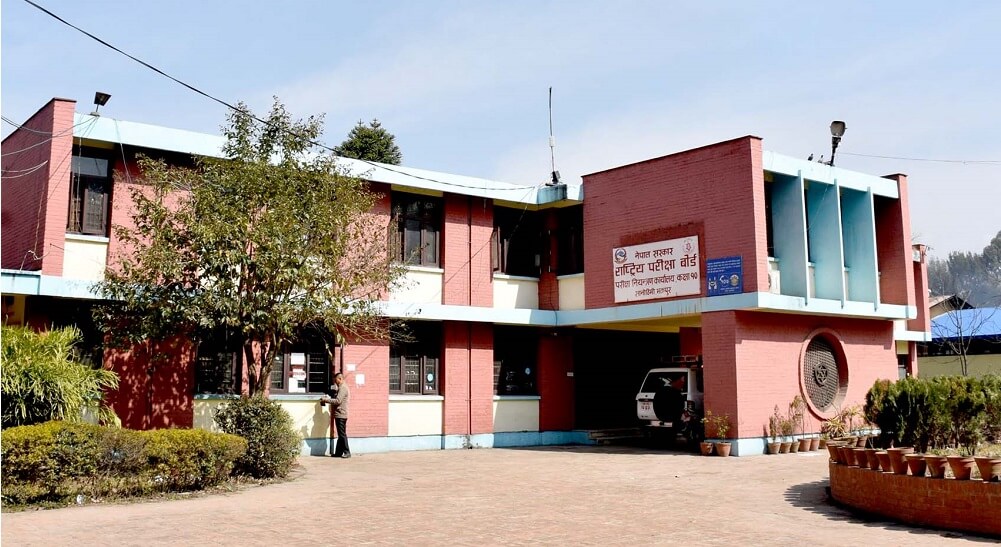
1. Certification Services
After passing Class 12, students need different certificates for higher education. These certificates can be obtained from the board’s provincial offices or the central office.
Transcript
A transcript is an integrated record of the subject-wise grades and the overall GPA achieved in Classes 11 and 12.
-
Process: An application can be submitted only about 15–20 days after the results are published. The student must pay the required bank fee and apply either online or in person.
-
Required documents: Copies of the Class 11 and Class 12 grade sheets, and a copy of the registration card.
Migration Certificate
This certificate is mandatory if a student leaves one board (NEB) and enrolls in another board or a university (such as Tribhuvan University, Kathmandu University, or a foreign university).
-
Feature: This certificate is issued only once. If it is lost, obtaining a duplicate requires a lengthy process.
Provisional Certificate
Since it takes time for the original certificate (Original Degree/Certificate) to be issued, the board provides this certificate for immediate admission purposes. It is valid only for a specified period.
2. Correction Services
This is one of the most requested but complex services. Many students have errors in their name, surname, or date of birth.
-
Name/Surname/Date of Birth correction: If the details printed on the certificate issued by the board are incorrect, a student can apply for correction based on the Class 10 (SEE) certificate and the school character certificate.
-
Deadline: As per the rules, such corrections must be completed within 5 years of the certificate being issued. After 5 years, correcting details becomes legally and administratively very difficult.
-
Process: The student must submit an application to the board office with the school’s recommendation, a letter from the relevant District Education Unit, and official supporting documents.
3. Duplicate Certificates
If a student’s marksheet, transcript, or other certificates are lost, torn, or destroyed, the board issues duplicates.
-
Required process: If the certificate is lost, a police report must be filed first, and a copy of the report must be obtained. In some cases, a “lost notice” may also need to be published in a national-level newspaper.
-
Fee: A fixed fee set by the board must be paid. This fee may usually be slightly higher than the fee for the original certificate.
4. Verification and Equivalence
This service is needed when Nepali students go abroad for study, or when foreign students come to Nepal for study.
Verification
When a foreign university or the Department of Consular Services asks whether a student’s certificate is genuine, the board issues a Verification Letter. For agencies such as WES (World Education Services), the board also provides a service to send documents in a sealed envelope.
Equivalence
If someone has completed Class 12-equivalent education abroad (such as India’s CBSE or the UK’s A-Level), the board coordinates the process of determining equivalence by comparing it with Nepal’s education system (although the primary work is done by the Curriculum Development Centre).
5. Services Focused on Schools and Educational Institutions
The National Examinations Board also provides various administrative services to schools:
-
Affiliation: Granting permission to new schools to run Classes 11 and 12, and renewing that permission.
-
School code distribution: Providing each school with a unique code, which is used for student registration.
-
Online portal access: Providing software access so schools can enter internal assessment marks for their students.
-
Exam center management: Listing eligible schools as exam centers and monitoring required infrastructure.
6. Digital and Online Services
In recent years, the board has made many services more technology-friendly:
-
Online result: Facility to view results along with the marksheet.
-
Online payment: Provision to pay fees for different services through connectIPS or other digital wallets.
-
Registration and form entry: An online system through which schools can register student details from their own offices.
-
Information communication: Rapid information dissemination through a mobile app and the official website.
7. Provincial Offices and Service Decentralization
After Nepal adopted a federal structure, major improvements were introduced in education-sector administration as well. In the past, for even small tasks of the National Examinations Board (and formerly the Higher Secondary Education Board), students from across the country were forced to travel to Sanothimi, Bhaktapur. Students from remote areas had to spend significant time and money even to correct a single letter in their name or to receive a transcript.
With the decentralization of services across all seven provinces, this burden has ended, and the concept of “education administration at the doorstep” has become meaningful.
Locations of provincial offices
The board has established empowered provincial offices in all seven provinces:
-
Koshi Province: Biratnagar
-
Madhesh Province: Janakpur
-
Bagmati Province: Hetauda
-
Gandaki Province: Pokhara
-
Lumbini Province: Butwal
-
Karnali Province: Surkhet
-
Sudurpashchim Province: Dhangadhi
These offices lead exam administration, monitoring, and post-result services for schools within their respective provinces.
Nature of decentralized services
These provincial offices are not only nominal but functionally strong. Students can now receive the following services from their own provincial offices:
-
Certificate distribution: Students no longer need to travel to Sanothimi for transcripts, migration certificates, and provisional certificates.
-
Detail correction: Correction of common errors in name, surname, or date of birth is completed at the provincial level.
-
Retotalling: Applications for retotalling submitted due to dissatisfaction with results are collected and processed by the provincial offices.
-
Exam coordination: These offices play an important role in coordinating district-level exam center allocation and question paper security.
Role of branch offices
In addition to provincial offices, the board has also operated branch offices in some major cities by considering student workload and geographic difficulty (such as Lahan, Kohalpur, Lamjung, and others). These branches coordinate with schools at the local level and facilitate the distribution of academic materials and the collection of exam forms.
This decentralization has not only reduced students’ hardship but has also eased the workload at the central office, improving service quality and speed. As a result, students can solve their issues at the local level, which is a successful practice in a federal democratic republic. Students and parents should know which provincial office their district falls under and contact the relevant office directly for quicker and more efficient service.
8. Important Points to Note
-
Document safety: Do not laminate the registration card in plastic, because the board may need to stamp the back of it for various purposes.
-
Personal presence: For detailed correction or receiving sensitive documents, it is best for the student to be present in person.
-
Beware of middlemen: Do not rely on middlemen outside the board office who claim they can “get work done faster.” All board services follow fixed procedures and timelines.
-
Digital record: Keep scanned copies or photos of all certificates safely in Google Drive or email.
9. Frequently Asked Questions
Can I apply online for a transcript?
Yes. The board has started a system to apply and pay fees online. However, to receive the certificate, you still need to visit the office.
What should I do if I lose a certificate?
Immediately file a complaint at the nearest police post, take a copy of the report, and contact the board office.
Does the board issue the Class 11 marksheet as well?
Although the Class 11 exam is conducted by the school and the result is also issued by the school, it must be recorded at the board because Class 11 marks are included in the final transcript.
Can documents be sent directly from the board to a foreign university?
Yes. The board provides services to verify and send documents to the official body through attestation and courier services, or through email.
10. Conclusion
NEB services are extremely important for a student’s academic and career development. When students know the correct procedure to receive services, they can avoid unnecessary mental and financial stress. It is a present-day need for the board to make its services more transparent, faster, and more technology-friendly. Students and parents should also follow the notices issued by the board carefully.
Last Update: 2025
Source: Official procedures and regulations of the National Examinations Board.
(Note: This content is for informational purposes only. Before receiving any service, contact the board’s official website or office to confirm the latest rules and fees.)
Service Details
- Service TypeEducation Board
- DurationYear
- Affiliated To National Examinations Board (NEB)
-
Offered At
NEB - National Examinations Board
Sanothimi, Bhaktapur
Other Services at NEB - National Examinations Board 2
Latest Updates & Notices
- 02 Jan 26 NEB Research Paper Grant Notice 2082
- 30 Dec 25 NEB Published Employees Promotion Notice 2082
- 25 Dec 25 NEB Chair Selection Committee: Call for Applications
- 20 Sep 20 Class 11 and 12 Subject Name and Code Number
- 15 Sep 20 NEB Grade 11 Compulsory English Book
- 14 Sep 20 NEB Grade 12 - List of School Name, Address and Code Number
- 06 Mar 20 New Curriculum of Class 11 and 12 All Subjects
Reviews
Questions & Discussions
Contact NEB - National Examinations Board, Bhaktapur
- AddressSanothimi, Bhaktapur, Bagmati Province, Nepal
- Phone+977-1-6630848
- Phone+977-1-6630747
- Emailinfo@neb.gov.np
- Websiteneb.gov.np
- Contact personNEB Central Office
Where else can you study Education Board?
- CTEVT - Council for Technical and Vocational Training
- Office of the Controller of Examinations (For SEE)
- Office of the Controller of Examinations (For SEE)
- CTEVT - Council for Technical and Vocational Training
- CTEVT - Council for Technical and Vocational Training
- CTEVT - Council for Technical and Vocational Training