NEB Exam
- Education Board
- National Examinations Board (NEB)
- DurationYear
About NEB Exam
NEB Exam System: A Complete Guide from Registration to Certificate
In Nepal’s current education structure, the Class 12 national examination is the final and most important milestone of school education. This exam is not only an annual assessment; it is the combined reflection of a student’s twelve years of continuous effort, patience, and learning.
After the transformation of the former Higher Secondary Education Board (HSEB), the National Examinations Board (NEB) assumed this responsibility, and many modern, scientific, and structural improvements have been introduced in Nepal’s final-stage secondary examination system.
For university entry, this examination is a mandatory gateway. Whether a student plans to study technical and professional fields such as medicine, engineering, law, or management within Nepal, or plans to pursue higher education at reputed universities abroad, the Class 12 result and its official verification determine the student’s academic pathway. In this sense, the exam functions as a strong bridge between school life and higher education.
However, many students, parents, and sometimes even educational institutions are confused about the exam’s complex administrative process, the newer letter grading system, the technical aspects of registration, and the legal documents required after results. As an educator, I have experienced that small technical mistakes—often caused by a lack of sufficient and official information—can negatively affect a student’s valuable time and even their academic future.
Most issues arise during exam application, subject-code selection, and misunderstanding the difference between the marksheet/grade sheet and the transcript after results.
Keeping this reality in mind, this detailed article examines the NEB examination system thoroughly. It presents, in a factual manner, every administrative step a student must complete from admission in Class 11 until receiving certificates, along with the board’s key rules, technical aspects, and practical solutions to common exam-related problems. This guide aims to be a reliable source to make a student’s academic journey easier, clearer, and error-free.
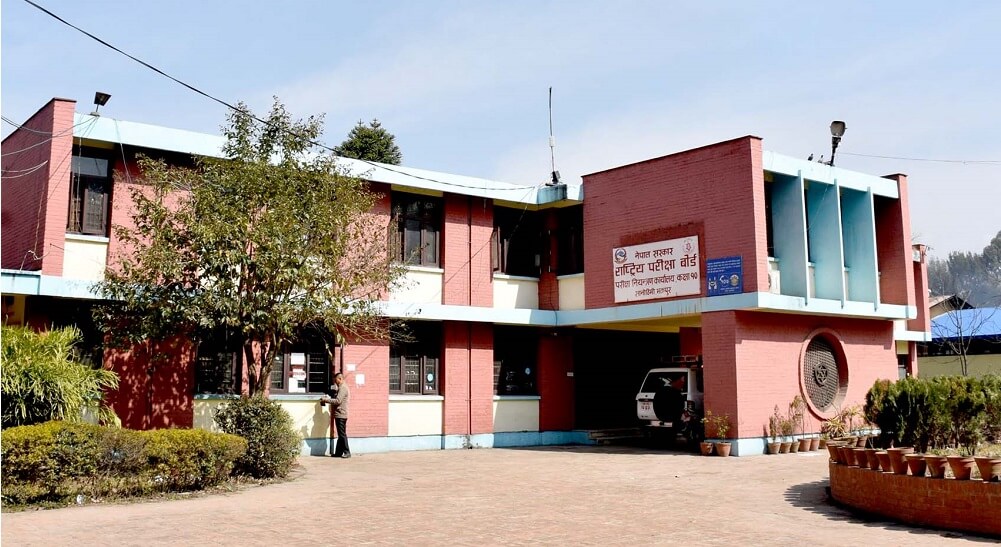
Start of the Exam Process: Student Registration
The NEB exam process starts from the moment a student is admitted to Class 11. This is called “registration.”
Importance: Without a registration card, students cannot sit for the final Class 12 examination. The card contains a unique registration number, which becomes the student’s lifelong academic identity.
Process: Generally, students admitted in Shrawan/Bhadra fill the registration form through their school within Ashwin/Kartik.
Caution: While filling the form, the student’s first name, last name, date of birth, and father’s/mother’s name must exactly match the citizenship document or the Class 10 marksheet. Even a small error here can cause major difficulties later when correcting certificates.
Examination Application Form
When students reach the middle of the Class 12 academic session (generally in Magh/Falgun), the board opens the examination application form.
Eligibility to apply: Only students who have passed the internal Class 11 examination and meet the school’s required attendance can fill this form.
Subject selection: While filling the form, students must carefully confirm that the subjects they are studying and their subject codes are correct.
Revenue/exam fee: The exam fee set by the board must be deposited in the bank, and the voucher must be submitted to the school. There is also a late-fee provision for late submissions.
Exam Center Allocation and Admit Card
About one month before the exam, the board publishes the list of examination centers nationwide.
Center allocation: Considering academic quality and security, the board has been discouraging the “Home Center” system (taking the exam in one’s own school). Students are usually required to take the exam in another designated school.
Admit card distribution: A few days before the exam, schools distribute admit cards. The admit card includes the student’s photo, symbol number, and exam routine. Entry to the exam hall is prohibited without an admit card.
Exam Conduct and Code of Conduct
The annual examination conducted by the National Examinations Board (NEB) is highly complex and sensitive, requiring strict confidentiality. Conducted simultaneously across thousands of exam centers nationwide, it represents Nepal’s academic standard. The key aspects of exam conduct can be understood as follows.
a) Exam timing and annual schedule
The board generally aims to conduct the annual examination at the end of the academic session, i.e., in Baishakh or Jestha. The detailed routine is published at least two months before the exam, providing sufficient preparation time.
In Himalayan districts or under special circumstances (such as a pandemic or natural disaster), the board may adjust the schedule. However, official updates are provided only through the board’s website and national media.
b) Nature of the question paper and specification grid
In line with modern educational principles, the board strictly follows a “Specification Grid” in question-paper development. Questions are no longer limited to memorized, textbook-based answers.
The question paper is divided into four cognitive areas:
-
Knowledge: Ability to recall basic facts and definitions.
-
Understanding: Ability to understand meaning and explain concepts.
-
Application: Ability to apply learned knowledge in new and practical situations.
-
Higher Ability: Complex questions measuring analysis, evaluation, and creative thinking.
This approach aims to measure students’ real capability, reduce rote-learning, and strengthen genuine learning.
c) Rules of discipline and exam integrity
The credibility of an exam depends on its integrity. The board issues strict instructions to maintain discipline in the exam hall.
Prohibited items: Mobile phones, smartwatches, Bluetooth devices, scientific calculators (except where allowed by subject), and any written materials are strictly prohibited inside the exam hall.
Role of the center chief: Each exam center has a designated center chief. The full responsibility for ensuring a calm and disciplined environment lies with them.
Penalty and punishment: If a student is found cheating, copying, or engaging in misconduct, the center chief has the authority to cancel that day’s exam or the entire exam (expel). For serious violations, legal action may be taken, and the student may also be banned from taking future board exams.
d) Practical exams and internal assessment
Theoretical exams alone are not the full basis of student evaluation. Practical exams play a major role in subjects such as science, computer, hotel management, and mass communication.
Involvement of external examiners: To ensure fairness, the board assigns competent teachers from other schools as external examiners.
Record management: Students’ practical files and practical skills are assessed. Schools must enter practical/internal marks into the board’s online portal. If a student fails the practical exam, the final result will show “NG” (Not Graded) even if the student scores well in theory.
e) Security and monitoring
During the exam, special monitoring teams are mobilized from the District Examination Coordination Committee and the board’s central office. In many centers, monitoring is done through CCTV cameras. This supports a more technology-friendly and transparent exam environment.
In conclusion, the NEB examination process is not meant to intimidate students. It aims to bring out students’ real abilities in a fair and equal manner. A disciplined and well-managed examination helps ensure that a student’s academic certificate is respected and recognized nationally and internationally.
Answer Script Evaluation and Confidentiality
This stage starts after the exam ends and is highly confidential and technical.
Coding system: To keep student identity confidential, answer scripts are coded. Examiners do not know whose script they are checking.
Evaluation: Experienced subject teachers evaluate scripts based on the “Answer Key” provided by the board.
Moderation: A certain percentage of evaluated scripts are rechecked by experts to ensure consistency in marking.
Result Publication and Letter Grading System
The board publishes results within Shrawan or Bhadra. Nepal currently follows a letter grading system.
Minimum grade (NG): Under the new rule, students must score at least 35% (D Grade) in the theoretical exam. If a student scores below 35%, the result shows “NG” (Not Graded), meaning the student is considered ineligible for higher education.
GPA calculation: Grades from all subjects are converted into points, and an average grade (GPA) is calculated. A 4.0 GPA is considered the highest.
Post-Result Process: Retotalling
If a student doubts their result, they can apply for “retotalling.”
Process: Within 15 days of result publication, the student must submit an application with the prescribed fee to the board office.
What happens: The answer script is not rechecked. Only calculation errors (totaling mistakes) or whether any question was left unchecked are reviewed.
Grade Improvement Exam (Supplementary/Chance Exam)
The board provides a chance exam for students who received “NG” in up to two subjects or who want to improve low grades.
Timing: This exam is conducted within 45 to 60 days after the main result is published.
Benefit: It helps prevent students from losing an academic year and supports them to apply for university admission in the same year.
Receiving Academic Certificates
After passing the examination, students receive the following documents:
-
Grade Sheet: Shows subject-wise grade details.
-
Transcript: A combined result of Class 11 and 12. Students must apply separately to obtain this document.
-
Migration: Required when changing boards (for university admission).
-
Provisional: A temporary certificate used until the original certificate is issued.
These documents are distributed through the board’s central office or the concerned provincial offices.
Correction Process
If there is an error in the certificate (name, surname, or date of birth):
Students must apply for correction within 6 months to 5 years (as per rules).
For correction, a school recommendation, a copy of the admission register, and the Class 10 marksheet are mandatory.
Key Rules Students Should Remember
-
Attendance: Students with less than 75% attendance are not allowed to sit for the exam.
-
Internal assessment: Internal and practical marks submitted by the school are included in the final result. If the school does not submit marks on time, the result may be withheld.
-
Subject change: After registration, changing subjects is very difficult. Therefore, students must be careful from the beginning.
Use of Digital Services
NEB has made many services online:
-
Registration/Exam Entry: Schools do data entry through an online portal.
-
Result Verification: Universities or employers can verify a student’s result online.
-
Notices: All official notices are available at www.neb.gov.np.
Conclusion
The NEB exam is not merely a medium to write memorized content. It tests a student’s patience, discipline, and planned study habits. If students pay attention to documents from the registration stage, attend classes regularly, and follow board notices, the exam process becomes much easier.
This information will help students and parents understand the NEB procedures and avoid possible hassles. For any changes in the education sector, continuously checking the board’s official website remains the safest approach.
Note: This content is prepared based on the current procedures of the National Examinations Board and the Education Act. Since the board may change rules from time to time, always rely on official sources for the latest information.
Frequently Asked Questions
1) When does the NEB exam process start?
It starts when a student enrolls in Class 11, through the registration (panchikaran) process. Without registration, a student cannot sit for the Class 12 final exam.
2) What details must match during registration?
The student’s name, surname, date of birth, and parents’ names must match official records such as citizenship documents or the Class 10 marksheet. Small mismatches can cause certificate correction problems later.
3) What is the difference between a grade sheet and a transcript?
A grade sheet shows subject-wise grades, while a transcript provides the combined result of Class 11 and Class 12. The transcript usually requires a separate application.
4) What does “NG (Not Graded)” mean?
It means the student did not meet the minimum required grade. Under the stated rule, scoring below the minimum threshold in theoretical exams results in “NG,” which affects eligibility for higher education.
5) Does retotalling mean the answer paper is checked again?
No. Retotalling checks whether marks were added correctly and whether any answer was left uncounted. It is not a full re-evaluation.
6) Who checks practical exams, and why is it important?
Practical exams may involve external examiners from other schools to maintain fairness. Practical marks are entered into the NEB system, and failing practicals can result in “NG” in the final outcome.
7) Where should students verify official notices and updates?
Students should follow official notices through the NEB website at www.neb.gov.np and official announcements shared through national media.
Service Details
- Service TypeEducation Board
- DurationYear
- Affiliated To National Examinations Board (NEB)
-
Offered At
NEB - National Examinations Board
Sanothimi, Bhaktapur
Other Services at NEB - National Examinations Board 2
Latest Updates & Notices
- 04 Sep 26 NEB Pre-requisite Course Exam New Schedule Published 2083
- 03 Sep 26 NEB Grade 11 Subject Registration Open for SEE GPA 1.6+
- 20 Jun 26 NEB Class 12 Supplementary Exam Routine Set for 2083 Shrawan 2-3
- 15 May 26 SEE 2082 Supplementary Exam Application Notice
- 14 May 26 SEE Supplementary Exam Schedule 2082 Published
- 11 May 26 SEE 2082 Supplementary Exam from 2083 Ashar 1-9
- 07 Apr 26 NEB Class 12 Exam Centers Notice for 2083
- 01 Apr 26 SEE 2082 Answer Sheets to Be Checked in 3 Days
Reviews
Questions & Discussions
Contact NEB - National Examinations Board, Bhaktapur
- AddressSanothimi, Bhaktapur, Bagmati Province, Nepal
- Phone+977-1-6630848
- Phone+977-1-6630747
- Emailinfo@neb.gov.np
- Websiteneb.gov.np
- Contact personNEB Central Office
Where else can you study Education Board?
- CTEVT - Council for Technical and Vocational Training
- Office of the Controller of Examinations (For SEE)
- Office of the Controller of Examinations (For SEE)
- CTEVT - Council for Technical and Vocational Training
- CTEVT - Council for Technical and Vocational Training
- CTEVT - Council for Technical and Vocational Training