NEB Result
- Education Board
- National Examinations Board (NEB)
- DurationYear
About NEB Result
NEB Results Guide: Process, Analysis, Solutions
In Nepal’s education system, the Class 12 result is not only the outcome of an examination. It is the foundation for a student’s higher education and career development. The result publication process of the examination conducted by the National Examinations Board (NEB) is highly technical, confidential, and organized. This guide covers every aspect—from the internal process of result preparation to the legal procedures after results.
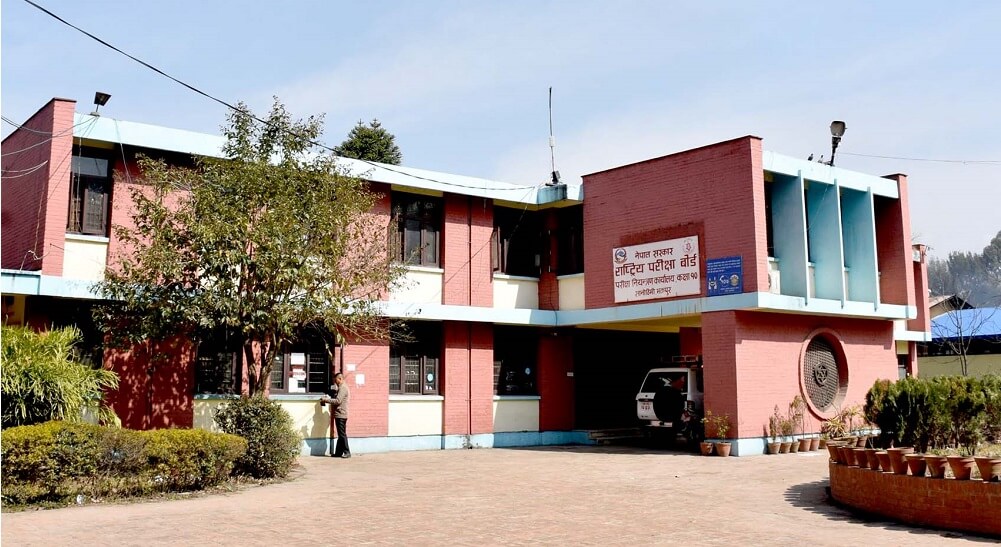
1. Background and Technical Backend Process
Many people assume results should be published immediately after exams end, but the board must pass through multiple stages to ensure accuracy.
Answer sheet collection and coding
Immediately after exams, answer sheets are securely collected from centers across the country. To keep student identity confidential, “coding” is done so that evaluators cannot know whose answer sheet they are checking. This ensures fairness.
Marking and moderation
Subject expert teachers check copies based on the board-approved Answer Key. A certain percentage of checked copies are again reviewed by experts through “moderation” to maintain uniformity in evaluation.
Data entry
Marks provided by evaluators are entered into the board’s central computer system twice (double entry). This helps reduce human error during entry to near zero.
Result processing and tabulation
Through software, theoretical and practical marks are combined. In this stage, grades are determined according to the Letter Grading system.
2. Grading System
In school education in Nepal, implementation of the “Letter Grading Directive, 2078” has made student evaluation more modern and quality-focused. This method is not only about converting marks into letters. It is also a way to scientifically categorize a student’s cognitive ability. Understanding this system deeply is essential for students, parents, and teachers because it directly shapes the path to higher education.
Grade and GPA structure
Under this system, marks are divided into 9 grades, from the highest “A+” (4.0 GPA) down to “D.” Students scoring below 35 percent are placed under “NG” (Not Graded). The “Grade Point Average” (GPA) reflects the average level across all subjects and is calculated on a 4.0 scale. This makes it easier to compare overall academic performance with international standards.
Seriousness and impact of “NG” (Not Graded)
Before 2078 BS, even very low marks still led to a grade and students could proceed to the next level. The new directive follows a policy of not compromising on academic quality. Now, if a student fails to score at least 35 percent in the theoretical exam, the result shows “NG.”
This means: if a student cannot secure at least 35 percent marks in the theoretical exam (that is, 27 marks out of 75 full marks), “NG” is written in the result. In this situation, students receive the basic grade sheet, but they are not considered eligible for admission to Bachelor level in any university.
Mandatory balance between theory and practical
One of the most challenging aspects is the rule that students must pass separately in theoretical and practical components. In the practical or internal assessment component, students must compulsorily achieve 40 percent marks.
Even if a student scores very well in practical but fails to reach 35 percent in theory, or passes theory but fails practical, the final result remains “NG.” This encourages students to become equally capable in practical skills and theoretical knowledge. The system aims to move Nepal’s education from “rote memorization” toward “learning” and “demonstrating competence.”
3. How to Check Results
When NEB decides to publish results, millions of students and parents try to access information at the same time. Due to heavy traffic, websites may become slow or servers may go down. In such cases, it is wise to patiently use only official and safe channels. The board ensures the following three official and reliable methods.
Official web portals
For students with internet access, this is the most effective method because it allows viewing and downloading the subject-wise grade sheet.
NEB–NTC result portal
Visit neb.ntc.net.np and enter the Symbol Number and Date of Birth. While entering the date of birth, follow the exact format mentioned in the form (for example: 2060/05/10).
Since this portal operates in coordination with Nepal Telecom, it is comparatively more stable.
Board’s main website
On www.neb.gov.np, users can find result-related notices and result links. Official press releases and statistical details related to results are also available there.
SMS service
When there is no internet, or when servers are very busy, this is often the fastest method.
Open the message box and type in capital letters:
NEB <space> Symbol Number
Send it to 1600.
Within a few seconds, the student receives a message showing the result along with the overall GPA. Sometimes the service may also be available through private providers (such as Sparrow SMS - 31003). The board publishes such information on the result day.
IVR system
This is a phone-based method to hear results.
From Nepal Telecom landline or mobile, dial 1601. After following the instructions and entering the Symbol Number, the result and grade information can be heard through voice.
Important safety warning and suggestions
On the day results are published, many unauthorized individuals and pages on social media (Facebook, TikTok, etc.) share misleading links claiming “click here to see results.” Such links may be phishing attempts that can steal personal data or spread viruses on mobile devices.
As a responsible educator, my suggestion is that students should always use only official and verified sources. If the website does not open on the first attempt, instead of repeatedly refreshing, it is better to wait for some time or use the SMS method. Also, technical errors in online display cannot be completely ruled out, so the official grade sheet received from the school should be treated as the final proof.
4. Post-Result Process: Retotalling
Sometimes there may be a large gap between a student’s expectation and the obtained grade. In such cases, disappointment is natural. To address such complaints and make the exam system more transparent and fair, the board provides a legal provision for “retotalling.”
If a student strongly believes that marks are lower than what their performance deserves, this process can be an important opportunity.
Time limit and seriousness
The application window is very limited. Generally, the student must submit the application within 15 days from the date results are published (up to the final deadline set by the board). The board does not process applications submitted after the deadline. Therefore, a serious analysis of grades and a timely decision are necessary immediately after results are published.
Application process and fee
The student must fill the application in the format set by the board. Under the current arrangement, the fee is Rs. 500 (five hundred) per subject. The amount must be deposited into the board’s official bank account, and the original voucher must be attached with the application.
Students can complete the process either at the board office in their province or at the central office in Sanothimi. In some cases, the board may also accept applications through an online method.
What happens in retotalling
Many students and parents misunderstand retotalling as “re-checking” of the answer sheet, which is technically incorrect. Retotalling checks only the following three points:
-
Whether the marks given on inner pages have been correctly transferred to the cover page.
-
Whether there is any mathematical error in totaling.
-
Whether the evaluator missed checking any question or missed awarding marks.
Only if an error is found in these checks will marks and grades change. If answers are weak and the marks are properly awarded under rules, retotalling will not increase grades. However, if retotalling shows a major difference in marks or reveals that a question was not checked at all, the board may take a special decision to send the answer sheet to an expert for re-evaluation.
Impact after retotalling
If a grade changes after retotalling, the board takes back the old grade sheet and provides a revised grade sheet free of cost.
As an educator, my suggestion is that retotalling is more beneficial when a lower grade occurred due to a shortfall of only one or two marks. If the gap is large, focusing on the Grade Improvement (Chance) Exam may be a more practical choice in terms of time and effort.
5. Grade Improvement or Chance Exam
For students who receive “NG” in one or two subjects, the board conducts a chance exam within the same year.
-
Eligibility: Students with “NG” in up to two subjects, or regular students who want to improve grades (as per rules), can participate.
-
Benefit: If the student passes, they get the opportunity to enroll in university within the same academic session. If there is “NG” in more than two subjects, the student may need to take all subjects again in the next year’s regular exam (as per the board’s prevailing rules).
6. Issuance of Certificates
Even if the result is visible online, it takes some time for official certificates to be issued.
-
Time: The board generally starts certificate distribution about 15 to 21 days after results are published.
Types of certificates
-
Grade Sheet: Initially received from the school.
-
Transcript: Combined result of Classes 11 and 12. Requires a separate online form or voucher.
-
Migration: Required for changing board (for university admission).
-
Provisional: Temporary document used before the permanent certificate is issued.
Application
The board has introduced online payment and online application in many places, which has reduced the need for students to travel to Sanothimi.
7. Common Result Issues and Solutions
While checking results, some technical indicators may appear, which can worry students.
-
Absent (ABS): If a student attended the exam but “ABS” appears, the student must take a verified copy of the attendance sheet from the exam center and submit an application to the board.
-
Withheld (W): The result may be withheld if student details (name, registration number) do not match, or if misconduct is found in the exam. In such cases, contact the board through the school.
-
Symbol Number Not Found: This appears if the symbol number or date of birth is entered incorrectly. Recheck details and try again.
8. Data Correction
Sometimes, due to board negligence or school errors, the name, surname, or date of birth may be printed incorrectly in the result.
-
Process: Applying within 6 months after result publication is easier. If delayed significantly, legal processes (such as a recommendation from the District Administration Office) may become complicated.
-
Required documents: Class 10 marksheet, citizenship/birth registration, and the school’s recommendation are mandatory.
9. Mental Health and Counseling After Results
As an educator, I want to stress that results are only an evaluation, not the final decision of life. Students who receive “NG” should not be discouraged. Parents and teachers should encourage them to prepare for the chance exam.
In Nepal, there are many technical and vocational pathways where students can build a strong future even if grades are relatively low.
10. Conclusion
Understanding the NEB result process means protecting one’s academic future. From result publication to certificate issuance, students must remain aware and careful at every stage. If there is any confusion, it is best to contact the board’s official website or provincial offices directly, instead of relying on unauthorized persons or “consultancy” services.
It is expected that this guide will help students and parents resolve the major technical and administrative questions related to results.
FAQs
What happens if my GPA is below 2.0?
GPA is not the only factor. A “D” grade (35 percent) is mandatory in each subject. If all subjects have “D” or above, admission to the next level is allowed.
Can I apply for retotalling in all subjects at once?
Yes, but a separate fee must be paid for each subject.
How long does result correction take?
Generally, details are corrected within 7 to 15 working days after submitting the application.
Can I take admission using the online marksheet?
Many colleges accept online results for preliminary admission, but for final admission, the board’s official grade sheet or transcript is required.
Where should I get attestation for foreign universities?
For this, attestation may be done at the board office in Sanothimi, and in some cases through the Foreign Study Permission Section (NOC) and the Department of Consular Services.
Service Details
- Service TypeEducation Board
- DurationYear
- Affiliated To National Examinations Board (NEB)
-
Offered At
NEB - National Examinations Board
Sanothimi, Bhaktapur
Other Services at NEB - National Examinations Board 2
Latest Updates & Notices
- 27 Aug 26 NEB Publishes Grade 12 Supplementary Re-totaling Result 2083
- 07 Aug 26 NEB Class 12 Supplementary Exam Result 2083: 81.19% Pass
- 24 Jul 26 NEB Publishes Class 12 Re-Totaling Results for 12 Subjects
- 08 Jul 26 SEE 2082 Grade Improvement Result: 64.68% Students Pass
- 08 Jul 26 SEE Pass Rate Improves, 85.37% Students Passing Overall
- 20 Jun 26 Class 12 Pass Rate Rises to 69.75%, Results Released Early
- 19 Jun 26 NEB Class 12 Result 2083 Published
- 19 Jun 26 NEB Class 12 Result 2083 Published: How to Check Your Result
Reviews
Questions & Discussions
Contact NEB - National Examinations Board, Bhaktapur
- AddressSanothimi, Bhaktapur, Bagmati Province, Nepal
- Phone+977-1-6630848
- Phone+977-1-6630747
- Emailinfo@neb.gov.np
- Websiteneb.gov.np
- Contact personNEB Central Office
Where else can you study Education Board?
- CTEVT - Council for Technical and Vocational Training
- Office of the Controller of Examinations (For SEE)
- Office of the Controller of Examinations (For SEE)
- CTEVT - Council for Technical and Vocational Training
- CTEVT - Council for Technical and Vocational Training
- CTEVT - Council for Technical and Vocational Training