



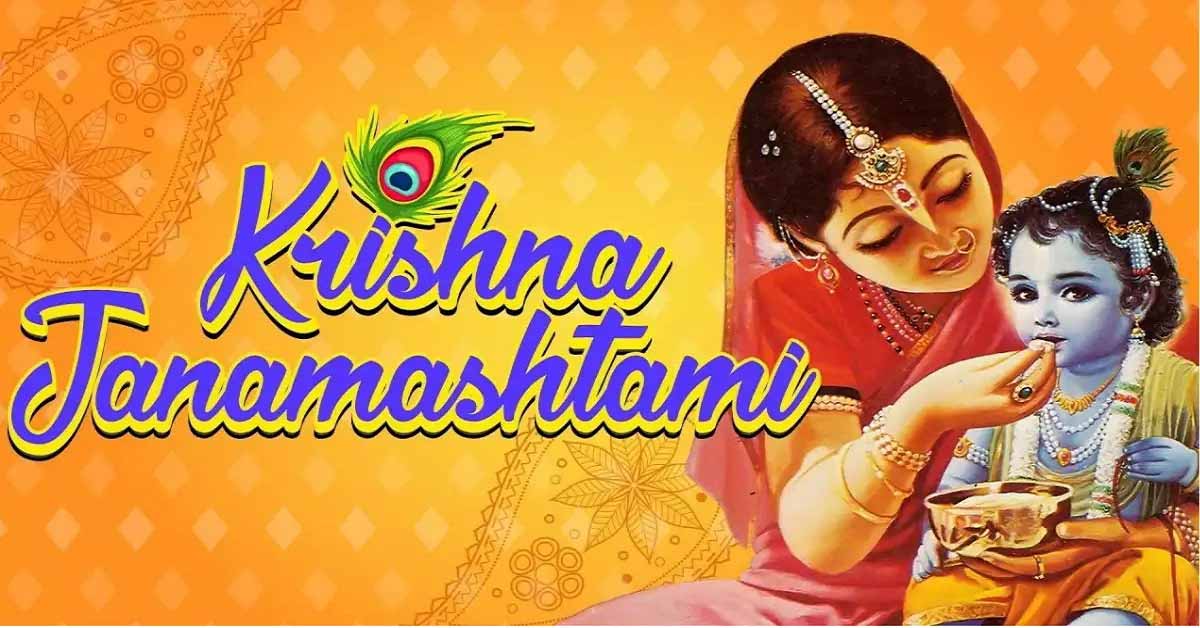
Shri Krishna Janmashtami: The Glory of Lord Krishna’s Birth, Puja Rituals, and the Message of the Gita
Hindu devotees celebrate Shri Krishna Janmashtami every year on Bhadra Krishna Ashtami by worshipping Lord Shri Krishna with faith and devotion. According to religious belief, when the Earth cried out because it could no longer bear the suffering and atrocities caused by the demons, Lord Vishnu was born as Shri Krishna in his complete incarnation to destroy the demons and establish peace in the world.
Lord Shri Krishna, regarded as the originator of Jnana Yoga, Karma Yoga, and Bhakti Yoga, was born on a Wednesday during a particular period of the Dvapara Yuga. According to astrological tradition, his divine birth took place during Shobhana Yoga, on the Ashtami Tithi of the Krishna Paksha in Bhadra, at midnight, under Rohini Nakshatra and in Vrishabha Rashi. For this reason, the day is also known as “Krishnashtami” and the night as “Moharatri.”
Family Background and Divine Birth
Shri Krishna’s family included his grandfather Shurasena, father Vasudeva, and mother Devaki. Vasudeva’s other wives included Pauravi, Rohini, Bhadra, Madira, Rochana, and Ila. After Kansa heard a divine prophecy that he would be killed by the child born from Devaki’s eighth pregnancy, he imprisoned Devaki and Vasudeva and had already killed seven of his nephews.
The scriptures state that immediately after Shri Krishna was born as the eighth child, Vasudeva took him to Gokul into the care of Nanda Baba and Yashoda and placed him in Rohini’s womb, while Yogamaya was born from Yashoda’s womb. When Kansa attempted to kill the infant girl, Yogamaya escaped from his hands, rose into the sky in the form of the Goddess, and foretold that the power destined to kill Kansa had already been born.
Nanda Baba and Yashoda were Shri Krishna’s foster parents. His maternal uncle was Kansa, while Asti and Prapti were his maternal aunts by marriage. His paternal aunts included Kunti, and he had eight brothers, including Balarama.
Childhood Deeds, Education, and the Destruction of Demonic Forces
During his childhood, when Shri Krishna was accused of eating soil, he showed Mother Yashoda the entire universe within his mouth. He easily destroyed terrifying demons sent by Kansa, including Putana, Trinavarta, Bakasura, Aghasura, the Keshi demon, Arishtasura, and Vyomasura. He also killed Chanura, Mushtika, the elephant Kuvalayapida, the tyrant Kansa, and Kansa’s brothers, thereby freeing his parents from imprisonment.
After handing the royal throne to his grandfather Shurasena, Shri Krishna went to Guru Sandipani’s ashram in Ujjain. There, after completing his Bratabandha ceremony, he attained complete mastery of the sixty-four arts and Dhanurveda.
Married Life and an Example of Simple Living
Shri Krishna’s marital and family life was extensive. He had many sons through his queens Rukmini, Jambavati, Satyabhama, Kalinda, Mitravinda, Satya, Bhadra, and Lakshmana. In addition, he freed 16,100 maidens who had been imprisoned by Bhaumasura (Narakasura) and provided them with social dignity and shelter.
Shri Krishna, known for high thinking and simple living, lovingly accepted the simple kanika brought by his close friend Sudama and the sitho served at Vidura’s home.
Role in the Mahabharata and the Message of the Gita
The Mahabharata describes Shri Krishna’s important role and pure conduct. When he went to the Kaurava court as a messenger of peace and asked for five villages, Duryodhana refused. Shri Krishna then revealed his vast cosmic form.
He protected Draupadi’s dignity during her disrobing, washed everyone’s feet during the Pandavas’ yajna, and averted a crisis by feeding Sage Durvasa and his disciples.
During the Mahabharata war, Shri Krishna supported the Pandavas and gave Arjuna the immortal wisdom of the “Shrimad Bhagavat Gita,” showing the path of action and devotion. In the Gita, Shri Krishna says that whenever sin and oppression increase in the world and dharma declines, he incarnates age after age to protect the righteous, destroy the wicked, and re-establish dharma.
After completing all his worldly, divine, and Yadu dynasty-related duties, Shri Krishna is believed to have entered samadhi and departed bodily for the supreme abode of Vaikuntha. Religious belief holds that truth, dharma, patience, and glory also departed with him.
Puja Rituals and Night Vigil
On Janmashtami, Krishna temples across the country hold worship of Lord Shri Krishna, religious discourses, and bhajans and kirtans. Women, in particular, traditionally observe a fast and remain awake through the night in vigil.
At midnight, marking the birth of Shri Krishna, devotees bathe a Shaligram or an image of Bal Krishna with Panchamrita or pure water. They offer clothes and the sacred thread, light incense and lamps, and perform worship.
Offerings such as halwa, peda, sweets, and fruits including bananas, pears, and apples are presented to the Lord as naivedya. The festival is observed with particular importance by the Vaishnava, Vallabha, Chaitanya, Radha-Krishna, Shri Krishna Pranami, and other traditions.
According to religious belief, in the Kali Yuga, remembering the name of God and engaging in bhajans and kirtans are regarded as the highest path to attaining moksha. Chanting the mantra “Om Shri Krishnaya Namah” is considered highly fruitful for attaining relief from the hardships and problems of life.
The main message of this great festival is to highlight Shri Krishna’s life and teachings of Nishkama Karma Yoga, or selfless action, along with the spirit of “Dharma Rakshatah Rakshitah.”

.png)

Comments 0
No comments yet. Be the first to start the conversation.