Gandaki Pradesh Lok Sewa Aayog
- Established2019
- Services 4 offered
About Gandaki Pradesh Lok Sewa Aayog
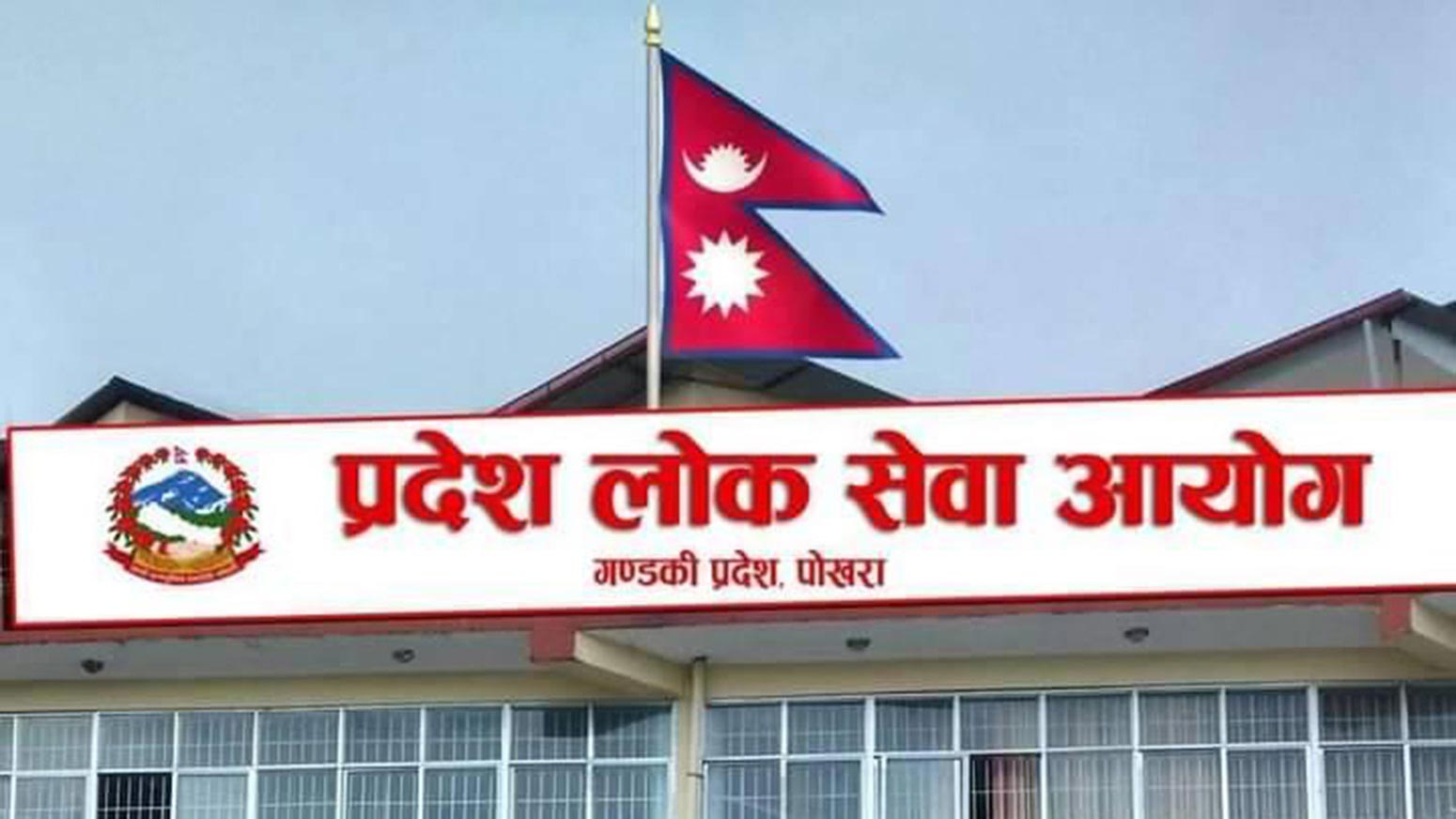
Gandaki Pradesh Lok Sewa Aayog (Province Public Service Commission, Gandaki Pradesh) (PPSC Gandaki- प्रदेश लोक सेवा आयोग गण्डकी प्रदेश), : From the historic Constituent Assembly. According to the spirit of federalism envisaged in the Constitution of Nepal promulgated in 2072 BS, Article 244 of the Constitution provides for the provision of a Public Service Commission in each province and the composition, functions, duties, and powers of the commission shall be in accordance with the provincial law. The commission was formed on 2077-12-11 and has started its work.
It will be the duty of the Pradesh Public Service Commission to select the right candidate for the posts of Province Civil Service, Province Other Government Service, Service of State Organized Institution, Local Government Service, and Service of Local Level Organized Institution.

Quick Facts
-
Official Name: Province Public Service Commission, Gandaki Province
-
Established: 2077/12/11 (24 March 2021) under the Province Public Service Commission Act 2076.
-
Headquarters: Pokhara, Kaski, Gandaki Province
-
Constitutional Basis: Article 244 of the Constitution of Nepal
-
Official Website: ppsc.gandaki.gov.np
-
Online Application Portal: onlineppsc.gandaki.gov.np
-
Core Function: Staff selection for positions under the Gandaki Province Civil Service and Local Service.
-
Jurisdiction: 11 districts and 85 local levels within Gandaki Province.
What the Commission Does
The Province Public Service Commission, Gandaki Province is a constitutional body that operates at the provincial level. Its primary objective is to strengthen provincial administration by selecting suitable candidates based on the merit system.
The Commission conducts examinations for appointments to posts under the Gandaki Province Civil Service, other provincial government services, and local services. In addition, there is a legal provision that the Commission also conducts written examinations for appointments to the Province Police Service, provincial organized institutions, and other government services.
Its core functions include publishing vacancy announcements, collecting applications, conducting written examinations, conducting practical tests and interviews, and recommending candidates to the concerned bodies for appointment. It also advises the provincial government on principles to be adopted regarding employee appointment, promotion, and departmental action.
Jurisdiction and Legal Basis
The Constitution of Nepal is the primary basis for the scope and authority of the Province Public Service Commission. Article 244 of the Constitution provides that each province shall have a Province Public Service Commission. Accordingly, after the Gandaki Province Assembly passed the “Province Public Service Commission Act, 2076,” the Commission came into implementation.
Its jurisdiction covers all ministries, directorates, division offices, and district-level government offices within Gandaki Province. It also holds the authority to select the technical and non-technical human resources required by metropolitan cities, municipalities, and rural municipalities within the province.
While carrying out its functions, the Commission follows the Province Public Service Commission (Operational) Directive, 2077 and the Province Public Service Commission Regulation, 2076. These legal documents ensure examination discipline, confidentiality in answer script evaluation, and transparency in interviews.
Services for Applicants
The Gandaki Province Public Service Commission has made service delivery technology-friendly, simple, and transparent for candidates who want to enter government service. The services it provides are not limited only to publishing vacancies and conducting examinations. It has organized the complete cycle of candidate assessment in both online and physical modes to make it accessible and manageable.
Under its major services, candidates can immediately access detailed vacancy notices and information from the Commission’s official website. This provides clear information on how many positions are required for which post and what the post level/category is. Along with the vacancy notice, the syllabus prescribed for the relevant post can also be downloaded easily, which helps candidates define a clear preparation roadmap and scope.
The online application system is one of the Commission’s most effective services. Through this system, once a candidate uploads personal details, academic certificates, and inclusive-group documents into a digital profile, they can store them safely for future use. This removes the repeated burden of filling in the same details for each new vacancy. The application approval status and the admit card can also be printed from the same portal.
After examinations, the Commission publishes information related to written exam results and interview schedules. Candidates can check whether they have passed or failed using their roll number from home using a mobile phone or computer. Final recommendations and merit lists are also made available transparently, supporting fairness and credibility in the selection process.
In addition, the Commission provides a collection of previous years’ question papers for study. This has been helpful for new candidates to understand the nature of examinations and the level of questions. The Commission’s annual reports and administrative decisions can also be studied by researchers or the public to assess its performance. If technical issues arise, the Commission provides a help desk service via email and phone, assisting with problems during online form submission or payment.
Through the official website, users can access the following services:
-
View and download vacancy advertisement details and notices.
-
Obtain syllabi for different services and groups.
-
Apply from home through the online application system.
-
Get information on written exam results and interview schedules.
-
View recommended candidates’ details and merit lists.
-
Study collections of previous exam question papers (old question papers).
-
Read annual reports and important legal documents of the Commission.
Recruitment & Exam Process
The Commission’s recruitment process follows a defined cycle and applies strict standards at each stage to maintain transparency and fairness.
-
Demand collection: Provincial ministries and local levels send the number and details of vacant posts to the Commission.
-
Advertisement publication: Based on received demands, the Commission publishes advertisements as per the annual schedule on Wednesdays on its website and in Gorkhapatra.
-
Application call: Interested candidates must apply through the online portal within the prescribed time.
-
Application verification and admit card: Applications are checked; eligible applications are approved, and admit cards are provided online.
-
Written examination: As per the syllabus, first-stage (objective) and second-stage (subjective) examinations are conducted.
-
Result publication: After answer script evaluation, the list of candidates who pass the written examination is published.
-
Computer skill test and interview: Practical tests and interviews are conducted depending on the nature of the post.
-
Final recommendation: Total scores of all stages are combined, and successful candidates are recommended for appointment according to merit order.
Eligibility, Age Limits, Inclusion/Reservation Basics
To participate in the recruitment process under the Gandaki Province Public Service Commission, candidates must meet certain standards prescribed by law. These standards are set to ensure the merit system and to provide access to capable and impartial individuals in government service.
Eligibility
The first mandatory condition for applying is being a Nepali citizen. There is no provision for non-Nepali citizens to participate in this process.
The second key aspect is educational qualification. The minimum educational qualification prescribed for the relevant post must be obtained from a recognized educational institution. If a candidate has obtained education from abroad, it is mandatory to submit official proof of equivalence determined by Tribhuvan University or the concerned body designated by the Government of Nepal.
In addition, a candidate’s character is given equal importance. The candidate must not have been punished by a court for a criminal offense indicating moral turpitude, and must not have been subjected to departmental action or dismissal that results in future disqualification from service in any government or organized institution.
Age Limits
Age is calculated based on the final date for application submission (within the single-fee period) mentioned in the advertisement.
For general administration posts, male candidates must have completed 18 years and must not have exceeded 35 years. For women and candidates with disabilities, the upper age limit is set at 40 years to encourage access to service opportunities.
For technical posts under health services, there is a more flexible provision, where candidates who have completed 18 years and have not exceeded 45 years can apply. However, the age limit does not apply to currently serving permanent employees of the Civil Service, any Provincial Civil Service, or Local Service, which makes it easier for experienced employees to move to higher positions.
Inclusion/Reservation
The Constitution of Nepal and the Province Public Service Commission Act adopt the principles of social justice and inclusion. Under this provision, 55 percent of the total vacant posts are filled through open competition, while the remaining 45 percent are reserved for inclusive groups. This reserved 45 percent is treated as 100 percent and then further divided among different sub-groups.
Inclusive groups include women, indigenous nationalities, Madhesi, Dalit, persons with disabilities, and candidates from backward areas. Candidates applying under an inclusive group must submit official documents proving their membership in that group.
For example, indigenous nationalities must submit a certificate of a listed ethnicity, and candidates from backward areas must submit a recommendation taken from the concerned local level and verified by the District Administration Office. According to Gandaki Province’s own specific act and regulations, these quotas may be revised from time to time, and detailed provisions are clearly stated in the relevant advertisement. This ensures representation opportunities in provincial administration for communities that have not been brought into the state mainstream.
Application System
The Commission currently uses a fully online application system, freeing candidates from having to appear physically at the office.
-
Online Portal: Candidates must create a profile at onlineppsc.gandaki.gov.np.
-
Registration: First-time users must click “Register” and enter personal details, email, and mobile number.
-
Documents: Upload citizenship certificate, a recent photo, scanned signature, and academic certificates (in PDF or JPG format).
-
Fees: Application fees can be paid online or offline via Connect IPS or a voucher of the designated bank.
-
Deadlines: Up to 7 days after the regular deadline, candidates can apply by paying a double fee.
-
Double Fee: The double-fee period is not counted for age, educational qualification, and experience purposes.
Exam Formats & Syllabus
The exam format and syllabus vary by service and group. Generally, the following formats are used:
Written Exam
-
First Paper: General Knowledge (GK) and General Aptitude Test (IQ), usually in objective multiple-choice (MCQ) format.
-
Second Paper: Subjective exam based on service-related or contemporary topics.
-
For technical posts, examinations are based on service-specific syllabi.
Skill Test
Practical examinations are conducted for computer-related posts or posts requiring typing skills.
Interview
Only those who pass the written and practical examinations are included in the interview. It is oral and tests the candidate’s personality and subject knowledge.
Exam Centers & Notice Types
The Commission conducts all its examinations at various schools and campuses within Pokhara. Regarding examinations, the Commission issues the following types of notices:
-
Vacancy Notice (Advertisement): Initial notice with number of posts and required qualifications.
-
Exam Schedule: Details of which post’s exam is held when and at what time.
-
Admit Card Notice: Information related to printing the admit card.
-
Center Allocation: Information on where a candidate will sit for the exam based on roll number.
-
Results: Notices of written, practical, and final results.
-
Correction/Amendment: Rectifications if there are errors in advertisements or notices.
How to Verify a Notice
To avoid fake notices and confusion spread through social media, candidates should check the following:
-
Domain Check: Confirm whether the website mentioned is ppsc.gandaki.gov.np.
-
Notice Number: Official notices always mention advertisement number and notice number.
-
Official Stamp/Signature: Official PDF files contain the Commission’s stamp and the concerned staff’s signature or a digital signature.
-
Facebook Page: Trust only the Commission’s official Facebook page (if any) that is linked from the website.
-
Cross-check: If any notice seems suspicious, directly call the Commission’s office for verification.
Common Mistakes Applicants Make
Many candidates lose opportunities due to small mistakes. Avoid the following:
-
Documents Upload: Uploading unclear photos or signatures. Always scan clearly visible documents.
-
Payment Delay: Paying on the last day may cause issues due to server traffic, where money is deducted but the voucher is not approved. Pay on time.
-
Incomplete Profile: Not filling experience or training details in the profile, which can create problems in promotions or special advertisements.
-
Center Confusion: Not reading the roll number and exam center name carefully.
-
MCQ Rules: Scratching answers or filling two circles in objective exams, which invalidates the answer.
-
Syllabus Update: Preparing based on an old syllabus. Always download the latest syllabus from the website.
Contact & Official Links
Office Address: Mustang Chowk, Pokhara, Kaski, Gandaki Province.
Phone: 061-467873 (Administration), 061-467872 (Examination)
Email: info.ppsc@gandaki.gov.np / ppsc.gandaki@gmail.com
Official Website: ppsc.gandaki.gov.np
Online Application: onlineppsc.gandaki.gov.np
Office Hours: 10:00 AM to 5:00 PM (until 4:00 PM in winter months), and until 3:00 PM on Fridays.
FAQ
If you forget your username and password while filling the online form, what should you do?
Click “Forgot Password” and recover using your email or mobile number.
Can citizens of other provinces apply in Gandaki Province?
Yes, any eligible Nepali citizen can apply from anywhere in the country.
What happens if your age exceeds the limit when applying with a double fee?
The double-fee period is not counted for age calculation. Your age must be within limit by the last date of the single-fee period.
After paying money at the bank, how long does it take for the application to be approved?
Generally, within 24 to 48 hours, the payment status becomes “Approved” in the online system.
Can you apply under multiple groups in the same advertisement?
Yes, but you must pay the prescribed additional fee for each additional inclusive group.
From where can you download the syllabus?
Go to the “Syllabus” menu on the Commission’s website, select the relevant service, and download.
Is it allowed to use a calculator in exams?
Generally, it is not allowed in objective exams, but it may be allowed in some technical subject exams as specified in the syllabus.
Who must certify the inclusive-group certificate?
It must be certified by the concerned District Administration Office or an official authority (such as the National Foundation for Development of Indigenous Nationalities).
When is equivalence required for educational qualification?
If you have obtained an education from a foreign institution, an equivalence certificate from Tribhuvan University or the concerned body is mandatory.
Where can you check written exam results?
You can check in the “Result” section of the Commission’s website or on the office notice board.
Get updates on Gandaki Pradesh Lok Sewa Aayog (Province Public Service Commission, Gandaki Pradesh) vacancy, exam, result, notice, syllabus, etc.
Sources Used: Constitution of Nepal (Article 244), Province Public Service Commission Act (Gandaki Province) 2076, Official Portal of PPSC Gandaki, Annual Reports of PPSC Gandaki.
Last Updated: 2025-12-24 (AD) / 2082-09-09 (BS)
Services Offered 4
Latest Updates & Notices
- 30 Sep 26 Gandaki Pradesh Lok Sewa Aayog Vacancies for 11th, 9th and 8th Levels
- 25 Feb 26 Gandaki Pradesh Lok Sewa Aayog Vacancy for Levels 9, 8, 7, 5, and 4
- 17 Feb 26 Gandaki PSC Alternative Candidate Recommended for 5th Level
- 09 Feb 26 Gandaki Pradesh Lok Sewa Aayog Technical Assistant First Phase Result 2082
- 04 Feb 26 Gandaki Pradesh Lok Sewa Aayog Gandaki Special Vacancy Schedule FY 2082/83
- 02 Feb 26 Gandaki PSC Sub-Engineer First Stage Written Exam Results 2082
- 27 Jan 26 Gandaki PSC Recommends Alternate Sub-Engineer (5th Level)
- 27 Jan 26 Gandaki PSC Recommends Alternate ANM (4th Level)
Contact Gandaki Pradesh Lok Sewa Aayog, Pokhara
- AddressGandaki Pradesh Lok Sewa Aayog, Pokhara, Gandaki Pradesh
- Phone +977-61-467873
- Email gandakipsc2076@gmail.com
- Website ppsc.gandaki.gov.np
- Contact personProvince Public Service Commission, Gandaki Pradesh
