




Nepal Government Preparing to Manage Staff Transfers Through Software
The government is preparing to manage employee transfers through a software system to permanently end long-standing irregularities in staff transfers.
The government plans to implement an employee transfer software system to end the situation where transfers always require lobbying, where employees with access remain in convenient offices, and where employees without access are forced to stay in remote-area offices.
Earlier Built Software, Now Moving Toward Implementation
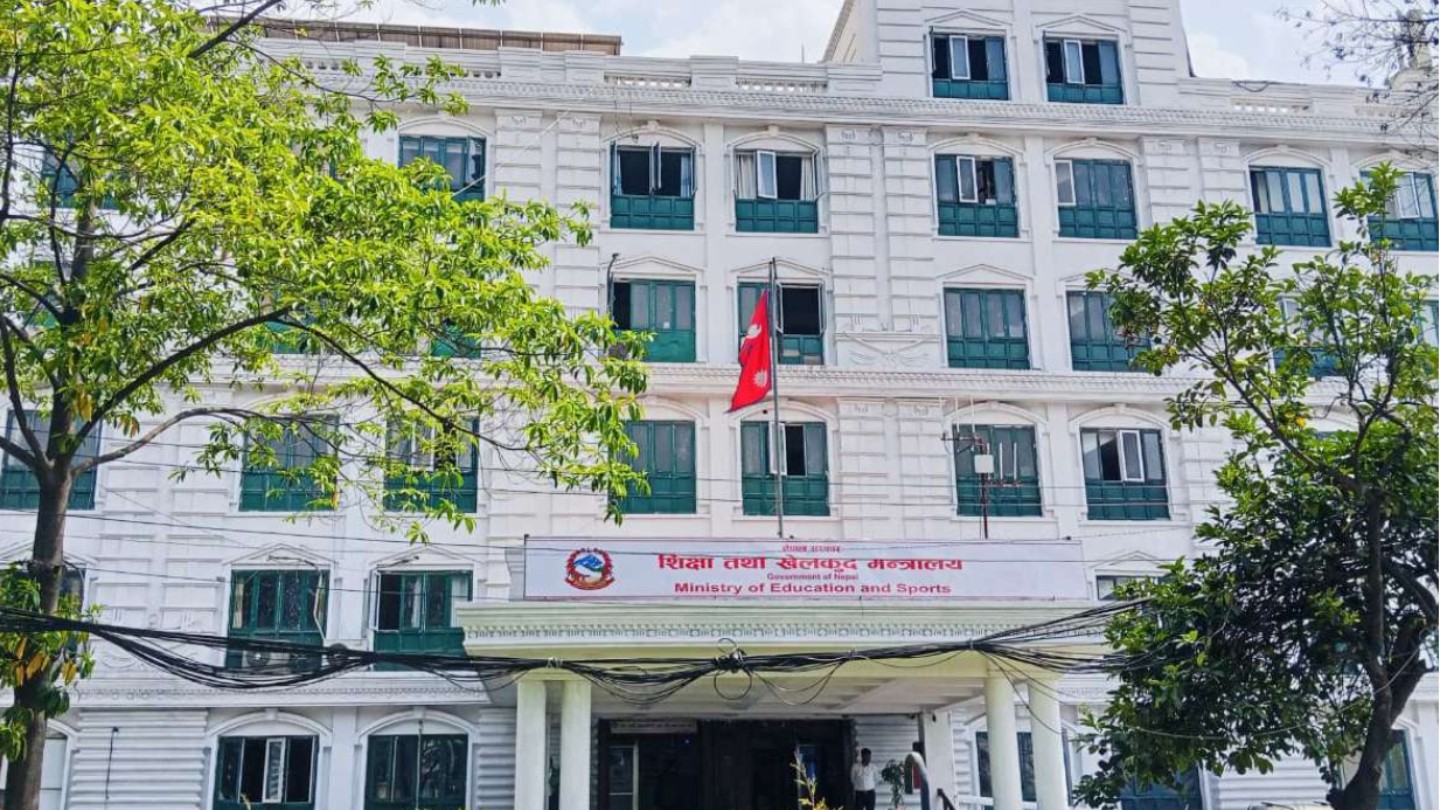
Although the Ministry of Federal Affairs and General Administration had already developed the transfer software earlier, it had not been implemented.
Now, the ministry plans to update employees’ personal details and carry out transfers through the software using the previously developed system.
How the System Is Expected to Work
According to the ministry, once a fixed period is completed, the system itself will carry out transfers and inform about employees and vacant offices.
This is expected to discourage the practice of transferring employees before their tenure is completed based on pressure and influence.
Aim: Fairness, Neutrality, and Reduced Hassle for Employees
The ministry plans to use the software-based transfer system to maintain fairness and neutrality.
The ministry notes that when employees who enter the civil service with enthusiasm after passing the Public Service Commission exams face complicated transfer hassles within a year or two, their motivation and energy can decline, increasing frustration.
Previously, employees seeking transfers from one office to another—especially from remote districts—often had to come to Kathmandu, stay in hotels for months, and visit power centers to get transferred.
Ministry Secretary’s Statement on Data and Selection
Ministry Secretary Chandrakala Paudel said:
“Once the software system comes into operation, it will be interlinked with the employee’s personal details, and the software will provide consolidated data showing how long an employee has served in any office—one month, one year, two years, or more. As per the system’s direction, names can be selected for transfers, and from there a proper transfer practice will be established.”
Linking With National Records and Processing Key HR Data
The ministry is preparing updated details of all employees.
The software will be linked with the National Book Center (Civil Service) software, enabling data processing to determine employee priorities based on qualification, special competencies, experience, seniority, and related factors.
The ministry is also preparing to develop the software so it can extract, analyze, and generate reports using data such as employee personal details, the organization’s position structure, the duration an employee has been working in a post, and vacant positions.
Ending Past Irregularities and Placing the Right Person in the Right Place
Undersecretary Anuj Ghimire of the ministry’s Administration Division says that transferring employees through software will end all earlier irregularities in staff transfers.
He said:
“This transfer software is being implemented to ensure the right person is in the right place. For that, the ministry has been working continuously.”
Transfer Criteria for Better Performance Across All Levels
The ministry believes the transfer management system will also be effective in improving the performance level of sectoral ministries and departments.
For this purpose, ministry- and department-level transfer criteria will be prepared and implemented.
The ministry is also preparing to manage transfers at the provincial and local levels on the basis of the same system.
Proposal Related to Posting Chief Administrative Officers in Local Levels
Since the system of deploying Chief Administrative Officers to local levels is not mentioned in the Civil Service Regulations and the Civil Service Act, it has been proposed in the software transfer criteria in a way that does not contradict the Local Government Operation Act and laws related to good governance.
With software-based transfers, the current situation—where local levels return the Chief Administrative Officer sent by the ministry and send them back to the ministry, and where returned employees are kept in the ministry’s additional group—is also expected to end.
Online Transfer Applications and Mandatory Record Updates
Transfer applications will be taken through an online medium.
For implementing software-based transfers, the ministry has already requested all employees to mandatorily update their personal details (PRS).
The software will be arranged so that only the employee who is being transferred can submit a transfer application.
After that, transfers will be carried out only after reviewing the justification and necessity of the transfer request.
Practical recommendations Nepal can implement
1) Put transfer rules in writing, then lock them into the system
-
Define minimum and maximum “time-in-post” by job type (e.g., finance, procurement, technical, admin).
-
Define hardship postings, rotation cycles, and exceptions (medical, spouse posting, security, special skills).
-
Make every exception require a recorded reason and approving authority, stored in the system (audit-ready).
2) Create a single, verified employee record as the source of truth
-
Make PRS updates mandatory with periodic re-validation (e.g., annually).
-
Add verification steps: document checks, supervisor confirmation, and automated consistency checks.
-
Do not process transfers for profiles with missing mandatory fields.
3) Implement position management before “smart matching”
-
Build a complete “Position Register” for every sanctioned post: grade, duty station, required skills, hardship score, and vacancy status.
-
Treat the position (not the person) as the core unit of planning—this is a standard approach in modern civil service HR design.
4) Use a rule-based matching engine (recommendation), not a fully automatic transfer order (decision)
-
The system should generate ranked recommendations using transparent weights (tenure completed, hardship rotation, skill match, vacancy priority).
-
Final approval stays with authorized officials, but every override must be logged with a reason.
5) Build interoperability, not one giant database
-
Keep key systems separate (National Book Center records, payroll, attendance, performance, vacancies) but connect them through a secure exchange layer.
-
Estonia’s X-Road is a widely cited model for secure data exchange across organizations; Nepal can adopt the principle even with a smaller platform.
6) Make audit logs non-negotiable (who did what, when, and why)
-
Every action: profile edits, vacancy updates, application submission, recommendation generation, approvals, and overrides.
-
Include tamper-evident logs, timestamps, and role-based access—X-Road style implementations emphasize secure, logged exchanges.
7) Introduce an online self-service transfer portal with eligibility gates
-
Only the eligible employee can apply (after meeting minimum tenure and other rules).
-
Show status tracking (received, under review, decision, effective date).
-
Enforce standard timelines (e.g., decision within X working days) to reduce informal follow-ups.
8) Create a structured appeals and grievance workflow inside the system
-
Separate “appeal” (rule/eligibility dispute) from “request” (personal need).
-
Time-bound decisions, documented outcomes, and anonymized reporting to reduce repeat disputes.
9) Publish transparency outputs without exposing personal data
-
Release periodic dashboards: number of transfers, hardship rotations completed, exceptions granted by category, vacancy durations.
-
This increases trust while protecting privacy.
10) Set up a small central HR transformation unit to own standards and support
-
A central team should set data standards, transfer criteria templates, training, and quality checks for all ministries/provinces.
-
Singapore’s Public Service Division structure highlights centralized capability to design HR solutions across agencies; Nepal can mirror this governance approach at an appropriate scale.
11) Modernize HR shared services gradually to reduce fragmented practices
-
Consolidate HR/payroll processes where feasible (common data definitions, shared workflows, fewer incompatible systems).
-
The UK’s Shared Services Strategy focuses on replacing legacy systems and modernizing government back-office capabilities—useful as a staged roadmap idea.
12) Treat mobility as workforce development, not only administration
-
Create structured mobility pathways (cross-ministry postings, temporary assignments) tied to skills and performance.
-
OECD highlights that mobility can reduce silos and spread good practices—Nepal can apply this through rules-based rotations and talent pools.


Comments 0
No comments yet. Be the first to start the conversation.