



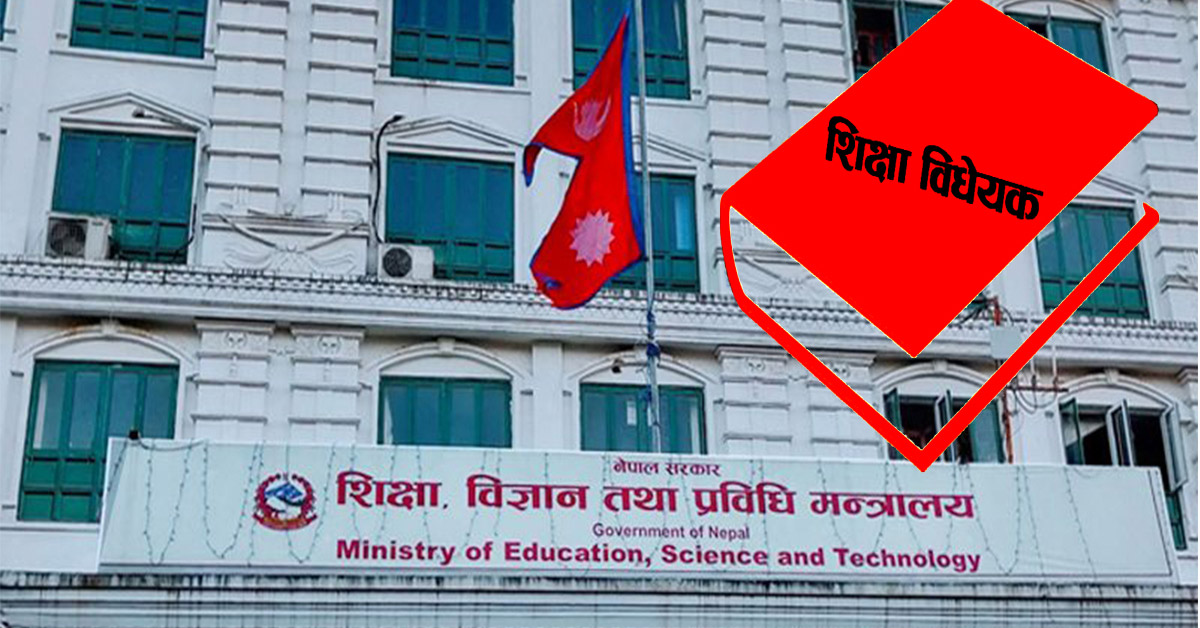
The Ministry of Education and Sports is preparing to finalize the School Education Bill, currently under discussion, in a manner acceptable to all stakeholders.
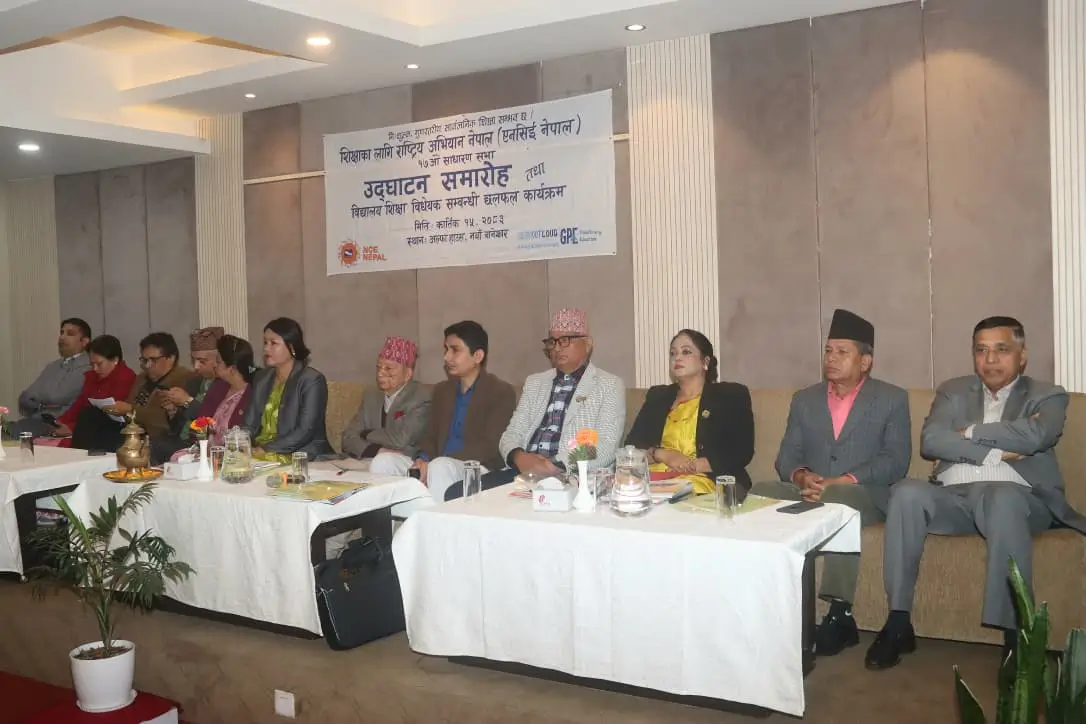
Speaking at a program held in Kathmandu on Sunday, Joint Secretary Shiva Kumar Sapkota said the bill was being developed to ensure that teachers, students, and parents would also feel a sense of ownership.
According to Joint Secretary Sapkota, the bill is being prepared within the constitutional framework established by the Constitution of Nepal, 2072 BS. This includes provisions for compulsory and free education and the authority of local governments over school-level education.
He expressed confidence that the bill would address existing gaps in the school education system.
Suggestions From Education Experts and Stakeholders
Currently, approximately 8.2 million children are enrolled in school-level education, including early childhood development programs. Stakeholders have emphasized that the Education Act should be introduced with the future of these children at its center.
Balananda Paudel, former Education Secretary and former Chairperson of the National Natural Resources and Fiscal Commission, said the Act should ensure the fulfillment of the government's commitments to free and compulsory education.
He stated that although school education falls under the jurisdiction of local governments, the federal government must remain directly involved in setting national education standards and formulating policies. He also stressed the need for coordinated efforts among all three levels of government.
Educationist Prof. Dr. Bidya Nath Koirala suggested allocating smaller education budgets to more accessible areas and larger allocations to disadvantaged local governments in remote regions to make school education more practical.
He also called for provisions to take action against local governments unable to implement the constitutional guarantees of free and compulsory education up to the basic level (Grade 8) and free education at the secondary level (Grades 9–12).
Similarly, Labaraj Oli, President of the National Campaign for Education Nepal (NCE Nepal), said public schools still lack adequate drinking water, toilets, and disability-friendly infrastructure.
He emphasized that the Education Act should address these problems through a unified approach.
Views Expressed by Members of Parliament
Members of Parliament representing different political parties also presented their views on the proposed School Education Bill during the program.
- Kushum Maharjan (House of Representatives Member, Rastriya Swatantra Party): Stated that improving education is a shared responsibility and called for extensive dialogue on the issues that should be included in the bill.
- Dr. Pramila Kumari Gachhadar (Member of Parliament, Nepali Congress): Called for allocating at least 20 percent of the total budget to the education sector and addressing the concerns raised by stakeholders.
- Guru Prasad Baral (Member of Parliament, CPN-UML): Emphasized that the government should introduce the School Education Bill appropriately and ensure that it is implementation-oriented.
- Sajida Khatun Siddiqui (Member of Parliament, CPN-UML): Stated that no external party should dominate the bill-drafting process.
- Hariprabha Khadgi (Bagmati Provincial Assembly Member): Called for resolving the confusion surrounding the distribution of powers among the three levels of government.

Comments 0
No comments yet. Be the first to start the conversation.