



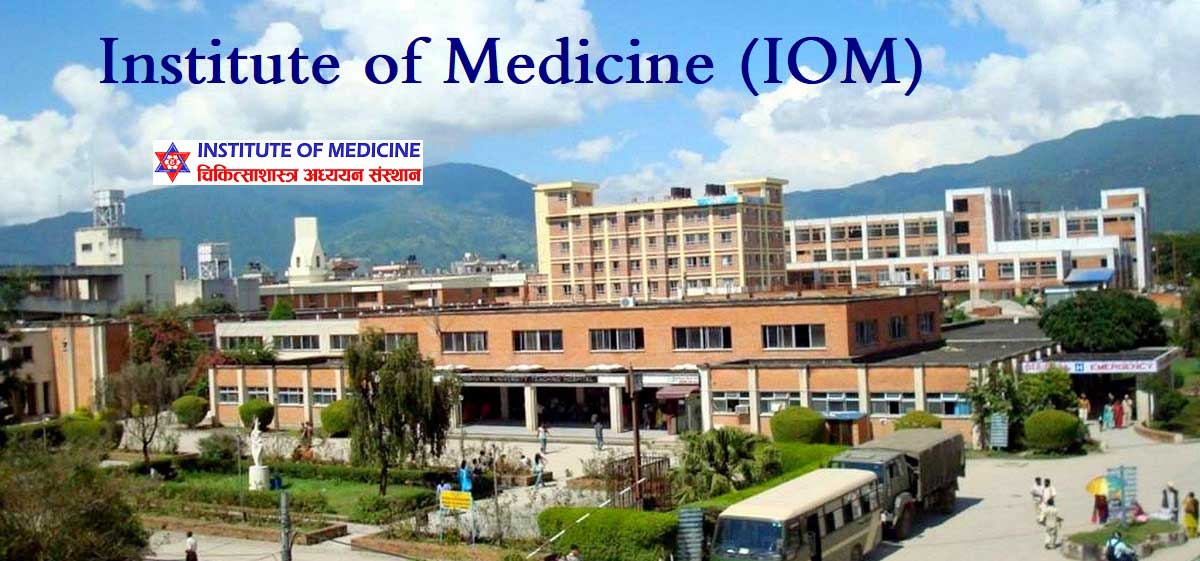
The Institute of Medicine (IOM) under Tribhuvan University has completed the revision of the MBBS, BDS, and 15 super-specialty program curricula in 2026. The revised curricula were approved by the University's Academic Council before the Tihar festival.
The Institute revised the curricula of undergraduate programs along with 15 super-specialty programs, comprising 9 Doctorate of Medicine (DM) and 6 Magister Chirurgiae (MCh) programs, within the same year.
The main feature of the revised curricula is the concept of Competency-Based Medical Education (CBME). This approach focuses on developing students' clinical skills, communication abilities, research capabilities, and professionalism alongside theoretical knowledge.
Major Changes in MBBS and BDS Curricula
- MBBS: Research Methodology has been included as an important subject. Geriatric Medicine has been added under Internal Medicine. The revised curriculum also gives special importance to Artificial Intelligence (AI), information technology, and medical ethics.
- BDS: The revised curriculum emphasizes practical dental skills, communication abilities, and the application of new technologies. Psychiatry has also been included as a separate subject.
- Assessment System: Formative Assessment has been strengthened, with a minimum weightage of 30% of the total marks allocated to continuous assessment in both theoretical and practical examinations. Modern assessment methods, including Mini-CEX, DOPS, OSCE, and portfolio-based assessment, have also been prioritized.
Revised Super-Specialty (DM/MCh) Curricula
The revised curricula of all 15 DM and MCh programs prioritize Workplace-Based Assessment, clinical decision-making skills, and research.
The curricula also incorporate digital technologies and Artificial Intelligence (AI), reflecting recent developments in medical science.
However, the prescribed duration of the super-specialty programs remains unchanged in accordance with national regulatory provisions.
According to the Institute of Medicine, the curriculum revision involved removing outdated and less relevant medical education content and introducing new and contemporary subject matter.
The Institute has also stated that the curricula of all remaining undergraduate and postgraduate academic programs are currently undergoing revision.
Comments 0
No comments yet. Be the first to start the conversation.