- DurationYear
About Education Services
Ministry of Education and Sports Services
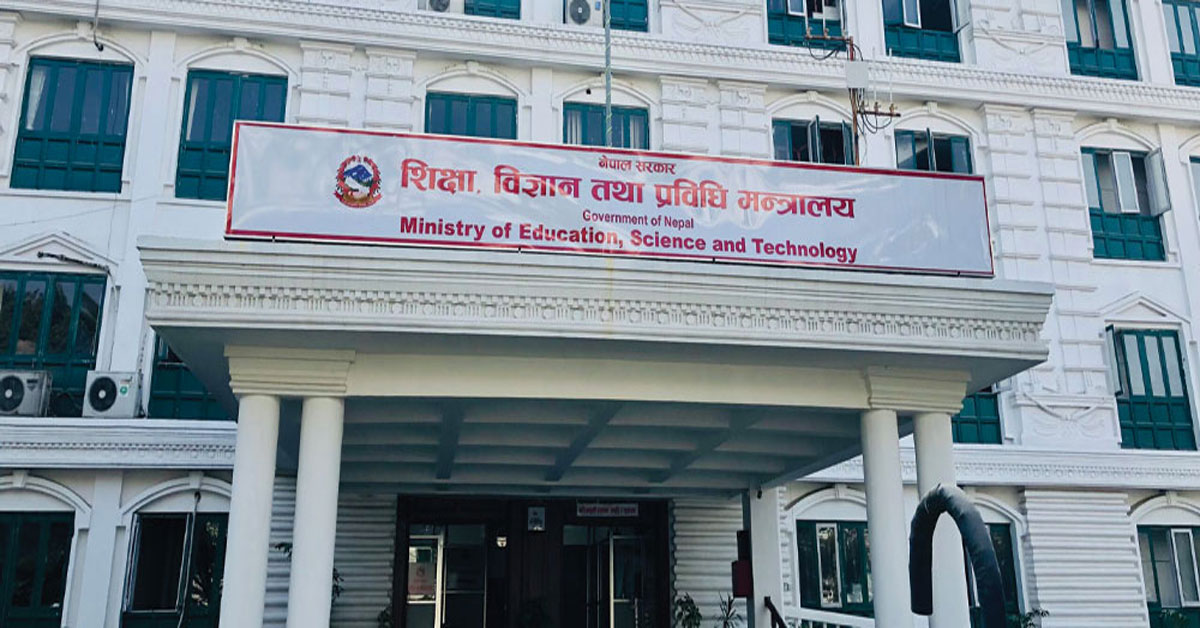
Ministry of Education and Sports (MoES) provides national-level education services in Nepal through policy work, planning, coordination, school education administration, higher education coordination, teacher management, examinations, curriculum, technical education, libraries, and science and technology functions.
The Government of Nepal decided on 30 Baishakh 2083 BS, corresponding to May 13, 2026 AD, to rename the Ministry of Education, Science, and Technology as the Ministry of Education and Sports. MoES works through central agencies, regional and district-level education offices, divisions, and branches that cover major areas of Nepal’s education administration.
Quick Highlights
-
Service authority: Ministry of Education and Sports (in Nepali: शिक्षा तथा खेलकुद मन्त्रालय)
-
Abbreviation: MoES
-
Former name: Ministry of Education, Science, and Technology
-
Renaming decision: 30 Baishakh 2083 BS / May 13, 2026 AD
-
Main service area: National education policy, planning, coordination, and administration
-
Location: Singha Durbar premises, Kathmandu, Nepal
-
Service coverage: School education, higher education, technical education, teacher management, examinations, libraries, science, and technology
Overview of MoES Services
MoES is the apex body for educational organizations in Nepal. Its services include preparing education policies and plans and carrying them out across the country through agencies and offices under the ministry.
Central Level Agencies design, run, and monitor educational programs. Five Regional Education Directorates and Seventy-Seven District Education Offices monitor and carry out education-related work at regional and district levels. These structures connect national education planning with local-level education administration.
MoES also coordinates education reform programs and academic planning. Its work extends from policy management to curriculum, teacher training, technical education, school examinations, higher education coordination, and educational quality assessment.
Policy, Planning, and Education Administration
Policy formulation and education planning are central service areas of MoES. The ministry handles policies, laws, and standards related to education, university affairs, teacher training, technical education, scientific research, and other education-sector functions.
The ministry also oversees the Department of Education, which manages school education plans. Regional education directorates and resource centers support coordination, monitoring, and teacher or school-related services.
Higher Education Services
Higher education services are connected with the University Grants Commission. The commission coordinates policies and programs related to higher education, while universities conduct their academic activities under Nepal’s higher education structure.
MoES also includes a Higher Education Division. Its branches cover higher education, overseas study permit services, academic counseling and certification, and scholarship-related work.
Teacher Management Services
The Teachers Service Commission handles school teacher selection, appointment, and promotion. Teacher management is part of the wider school education service structure linked with MoES.
Teacher development work is also connected with school education projects, training, and education resource support. These services help organize teacher-related administration within Nepal’s education system.
Examination Services
The National Examination Board conducts the Secondary Education Examination and the Secondary Education Passing Examination. Examination management is one of the major national services linked with MoES.
The ministry’s work area also includes standards for school-level examinations and secondary-level examination management.
Education and Human Resource Development
The Center for Education and Human Resource Development works on school education projects, teacher training, and educational materials. Its work includes training packages and audio or audio-visual learning materials.
The center is also connected with education programs at local and provincial levels, including coordination and progress reporting.
Curriculum and Textbook Services
The Curriculum Development Center develops and revises school curricula and textbooks. Curriculum work is part of the ministry’s school education service area.
MoES also manages service areas related to school-level curriculum frameworks, core subject curriculum, model textbooks, and related regulations.
Technical Education and Vocational Training
The Council for Technical Education and Vocational Training manages technical education and vocational training programs. These programs are connected with middle-level technical workforce preparation.
The Technical and Vocational Education Division includes branches for private and cooperative organization coordination, vocational training promotion, quality accreditation, and educational technology and electronic governance.
Educational Quality Assessment
The Educational Quality Testing Center evaluates school education performance. This service area supports education quality measurement and improvement within the school system.
MoES also handles educational quality standards, measurement, and regulation as part of its national education responsibilities.
Libraries, Reading Services, and Textbook Printing
The National Library, Keshar Library, and Dilliraman-Kalyani Regmi Memorial Library support reading culture and continuous learning. MoES operates two central libraries and an autonomous library.
The ministry also manages a government-owned institute for printing and distributing textbooks. This function connects the ministry with school textbook supply and public education resources.
Science and Technology Services
MoES covers science and technology-related functions. These include policies, laws, standards, scientific research, astronomical studies, technology data standards, and selected regulatory areas related to science and technology.
The Nepal Academy of Science and Technology, BP Koirala Memorial Planetarium Observatory, National Forensic Science Laboratory, and Science Museum are associated with research and discovery work in science and technology.
Divisions and Branches
Administration Division
The Administration Division includes the Staff Administration and Good Governance Promotion Branch, Internal Management Branch, Law and Judgment Implementation Branch, and Economic Administration Branch.
Planning and Monitoring Division
The Planning and Monitoring Division includes the Development Assistance Coordination Branch, Monitoring and Evaluation Branch, Planning and Budget Branch, Human Resources, Development Planning and Coordination Branch, and Statistics, Policy and Research Branch.
Technical and Vocational Education Division
The Technical and Vocational Education Division includes the Private and Cooperative Organizations Coordination Branch, Vocational Training Promotion Branch, Quality Accreditation Branch, and Educational Technology and Electronic Governance Branch.
Division of School Education
The Division of School Education includes the Early Childhood Education and School Nutrition Branch, School Education Branch, Voluntary Mobilization and Visa Branch, Library Coordination and Archives Branch, and Alternative and Continuing Education Branch.
Higher Education Division
The Higher Education Division includes the Higher Education Branch, Overseas Study Permit Branch, Academic Counseling and Certification Branch, and Scholarship Branch.
Science Technology Division
The Science Technology Division includes the Scientific Research Branch, Innovation and Innovation Branch, Appropriate Technology Branch, Space and Emerging Technologies Branch, Division of Nuclear Materials Management, Standards, Quality and Statistics Branch, Licensing, Regulation and Investigation Branch, and Chemicals and Laboratory Management Branch.
Service Details
- Service TypeUtility Service
- DurationYear
-
Offered At
Ministry of Education and Sports (MoES)
Singhadurbar, Kathmandu
Latest Updates & Notices
- 16 Oct 26 Rs 6.54 Billion Allocated for Infrastructure Development at 109 Community Schools; 89 Selected in First Phase
- 15 Oct 26 Nepal to Upgrade Infrastructure at 109 Large Community Schools with Rs 6.54 Billion Budget
- 10 Sep 26 MOES Education Department Orders Counseling Before School Classes
- 07 Sep 26 Free Education for 1,000 Flood-Affected Students in Nepal
- 05 Sep 26 National School Curriculum Revision Delayed for Feedback
- 03 Sep 26 Nepal School Education Act in Final Stage: Minister Pokharel
- 29 Aug 26 Education Minister Directs Universities to Suspend Exams
- 04 Aug 26 Eight New School-Level Curricula Recommended for Approval
Frequently Asked Questions
The Ministry of Education and Sports provides national education services related to policy, planning, school education administration, higher education coordination, teacher management, examinations, curriculum, technical education, libraries, and science and technology.
The Government of Nepal decided on 30 Baishakh 2083 BS, corresponding to May 13, 2026 AD, to rename the Ministry of Education, Science, and Technology as the Ministry of Education and Sports.
The Teachers Service Commission handles school teacher selection, appointment, and promotion.
The National Examination Board conducts the Secondary Education Examination and the Secondary Education Passing Examination.
The Curriculum Development Center develops and revises school curricula and textbooks.
The Council for Technical Education and Vocational Training manages technical education and vocational training programs.
The National Library, Keshar Library, and Dilliraman-Kalyani Regmi Memorial Library are connected with reading culture and continuous learning services.
Reviews
Questions & Discussions
Contact Ministry of Education and Sports (MoES), Kathmandu
- AddressSinghadurbar, Kathmandu, Nepal
- Phone+977-1-4200453
- Emailinfo@moest.gov.np
- Websitemoest.gov.np
- Contact personMinistry of Education