




Students encounter large amounts of information through lectures, textbooks, assignments, and classroom discussions. Understanding new material is important, but remembering it and applying it later can be equally challenging.
Simply reading or listening to information does not always lead to lasting learning. Students often need to engage with the material, connect new ideas to what they already know, and review important concepts over time.
The following five study techniques can help students understand information more clearly, improve memory retention, and make better use of their study time.
1. Visualize What You Are Learning
Visualization can help students understand and remember information by connecting ideas with mental images, diagrams, or other visual representations.
During a lecture, it is easy to lose track of important details, especially when the subject is unfamiliar or the explanation is lengthy. Creating a visual representation of the material can make complex information easier to organize and understand.
For example, students can use diagrams to understand scientific processes, timelines to remember historical events, or concept maps to identify relationships between ideas. Mental images may also be helpful when remembering lists, places, or sequences.
Visual learning does not always require forming pictures in your mind. Drawing a simple diagram, organizing information into a chart, or using an existing illustration can also help.
Research on using visuals alongside written and spoken explanations suggests that well-designed visual materials can support understanding and retention. However, their effectiveness depends on how closely they relate to the information being learned.
The goal is to use visuals that explain or organize information rather than adding unnecessary illustrations.
2. Teach Others What You Have Learned
Explaining a concept to another person can help students assess how well they understand it.
When students teach someone else, they must organize their thoughts, recall relevant information, and communicate ideas clearly. This process can reveal gaps in their understanding that might not be obvious when they simply reread their notes.
For example, after studying a chapter, try explaining its main ideas to a classmate without looking at the textbook. If you struggle to explain a particular point, return to the material and review that section.
Teaching also creates opportunities to receive questions and feedback. A classmate may ask something you had not considered, encouraging you to examine the subject more carefully.
You do not always need another person to benefit from this technique. Explaining a concept aloud in your own words can also help you check your understanding.
However, explaining something confidently does not necessarily mean your explanation is correct. Compare it with reliable course materials to identify and correct mistakes.
3. Focus on One Task at a Time
Concentrating on one learning task at a time can help students process information without unnecessary distractions.
Switching repeatedly between studying, messaging, social media, and unrelated activities can interrupt attention. This may make it harder to follow explanations, solve problems, or remember important details.
A more practical approach is to establish a clear objective for each study session. For example, students might focus on understanding one chapter, reviewing a particular concept, or completing a set of practice questions before moving to another task.
Keeping unnecessary notifications turned off and preparing the required study materials in advance can also reduce interruptions.
However, focusing on one task does not mean studying the same subject continuously for hours. Students can organize separate study periods for different subjects and return to important concepts over several days.
This approach supports spaced practice, which involves revisiting previously learned information after intervals of time. Research indicates that spaced learning generally supports longer-term retention better than concentrating all review into one session.
The important distinction is between planned changes in study activities and frequent, distracting interruptions.
4. Participate in Group Study
Studying with classmates can provide opportunities to discuss difficult topics, exchange explanations, and clarify misunderstandings.
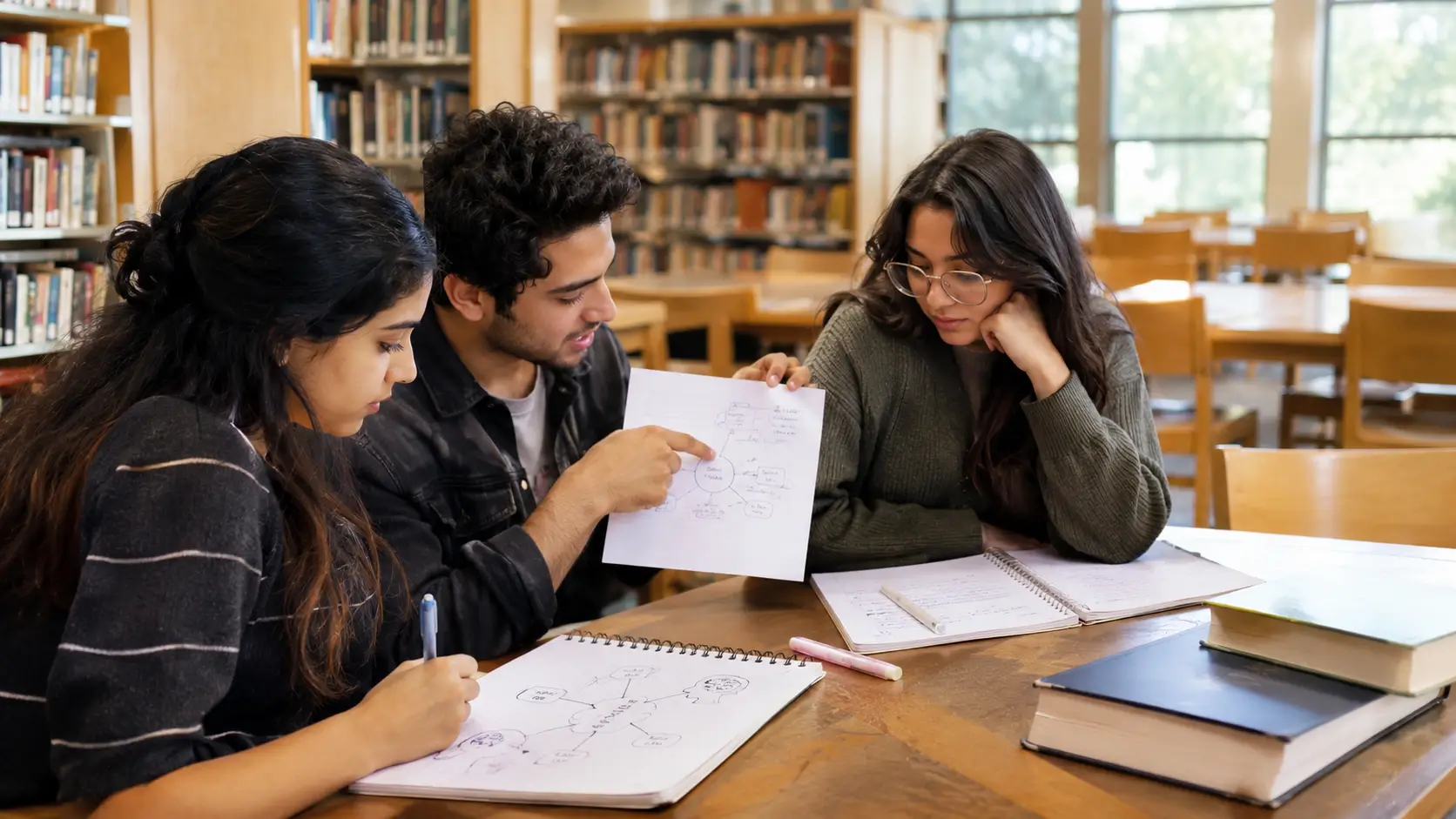
During a group study session, students can ask questions, compare answers, and explain concepts from different perspectives. Hearing another person's explanation may help make an unfamiliar idea easier to understand.
Group discussions can be especially useful when students are preparing for examinations, reviewing challenging material, or working through problems that require several steps.
However, effective group study requires active participation. Simply sitting with classmates while everyone reads separately may offer few additional benefits.
Students can make group sessions more useful by:
-
Choosing a specific topic or learning objective before starting.
-
Asking each member to explain an important concept.
-
Discussing difficult questions and comparing possible answers.
-
Checking explanations against textbooks or reliable learning materials.
-
Reviewing individually afterward to confirm what each person has understood.
Group study is not automatically more effective than studying alone. Its usefulness depends on the learning task, the group's organization, and the participation of its members.
A combination of independent study and purposeful group discussion may be more suitable than relying exclusively on either method.
5. Take Regular Breaks While Studying
Studying continuously for long periods can make it difficult to maintain concentration, particularly when the material requires sustained mental effort.
Short breaks give students an opportunity to step away from demanding tasks and return with renewed attention.
During a break, students might walk around, stretch, drink water, or rest quietly. The purpose is to allow a temporary change from the activity requiring concentration.
Research reported by the National Institutes of Health suggests that brief periods of rest can contribute to learning certain new skills. However, this does not establish that every type of study benefits equally from the same break schedule.
There is also no single break duration that works best for every student. The appropriate frequency depends on the task, the length of the study session, and individual concentration needs.
Taking a break should not replace reviewing or practicing the material. Students still need to revisit important information and check whether they can remember it.
How to Make These Study Techniques More Effective
The five techniques can be used together rather than treated as separate methods.
For example, students can begin by focusing on a particular topic, create a diagram to organize its main ideas, and explain what they have learned to someone else. A group discussion may help clarify remaining questions, while short breaks can make longer study sessions more manageable.
Students should also check what they remember without immediately consulting their notes. This technique, known as retrieval practice, involves actively recalling previously learned information.
Research on effective learning methods has found that retrieval practice and reviewing material across multiple sessions can improve long-term retention.
No single technique works equally well for every subject or learning situation. Students can benefit from choosing methods that match the material, assessing their understanding, and adjusting their study habits when necessary.
Learning effectively is not simply about absorbing more information in less time. It involves understanding what matters, remembering it over time, and being able to use that knowledge when needed.





Comments 0
No comments yet. Be the first to start the conversation.