



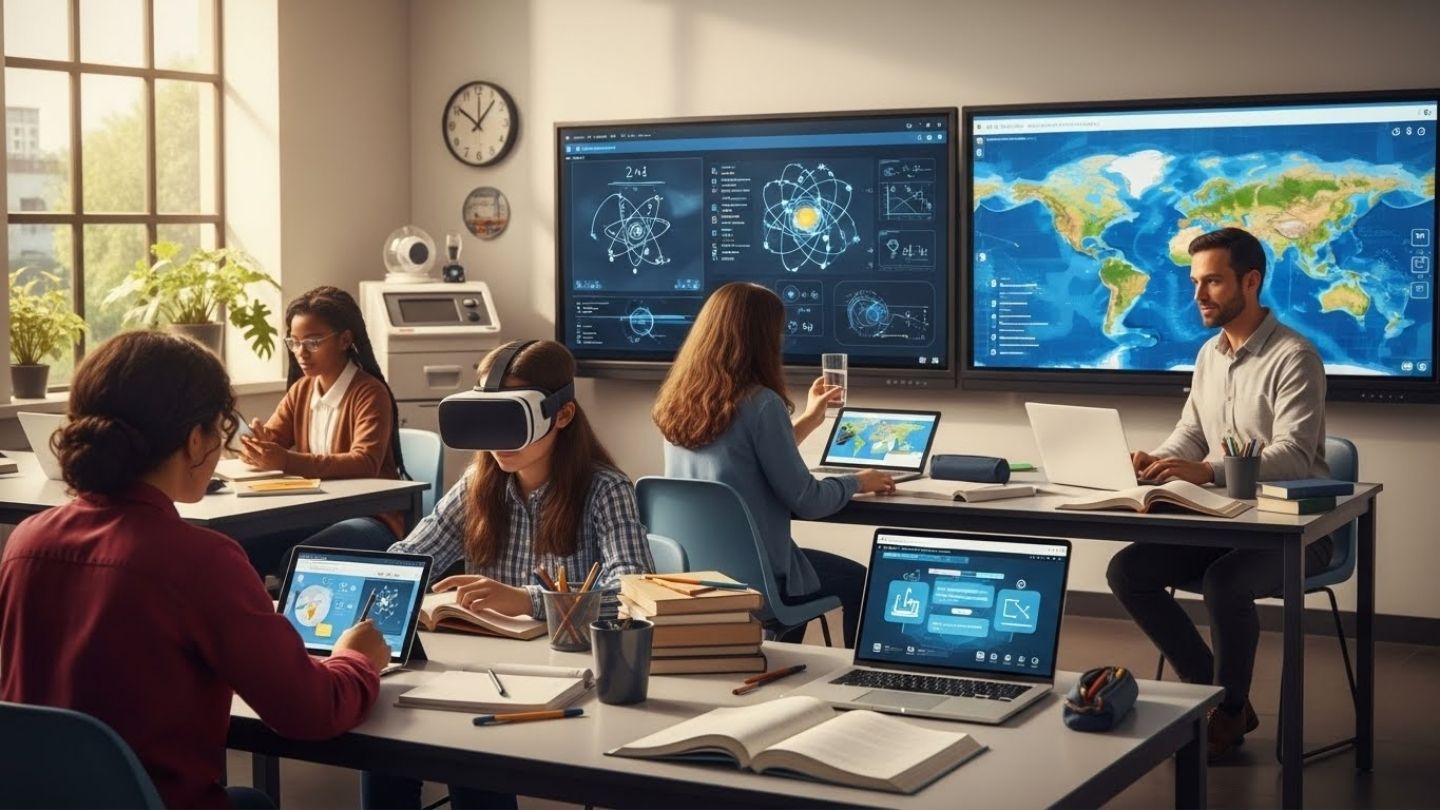
Global education is dealing with two realities at once. Many countries still face serious gaps in basic reading, writing, and numeracy. The World Bank’s recent updates on learning poverty highlight how large this challenge remains for children in many systems. At the same time, schools, colleges, and training centers are expected to prepare learners for shifting job roles and more flexible ways of working and learning.
Access to learning technology is improving, yet uneven. In 2025, around 74% of the world’s population uses the internet, leaving about 2.2 billion people offline. This gap shapes what future technologies can realistically achieve. A tool that works only with high-speed internet and costly devices will struggle to help learners in low-resource settings.
So a useful list of future technologies is not a list of shiny tools. It is a list of approaches that can strengthen learning quality, reduce access barriers, support teachers, and protect learners’ rights. UNESCO’s recent global guidance stresses that education technology should be chosen for learning value, equity, and evidence, not excitement.
The technologies below focus on that practical standard.
Table of Content
- What makes a future-ready education technology
- Future technology 1: Adaptive learning and smart practice tools
- Future technology 2: Learning analytics for early academic support
- Future technology 3: Virtual and augmented reality for safe skill practice
- Future technology 4: Remote and virtual laboratories
- Future technology 5: Open educational resources and open licensing
- Future technology 6: Micro-credentials and skills-based pathways
- Future technology 7: Accessibility and assistive learning tools
- Future technology 8: Low-bandwidth and offline-first learning design
- Future technology 9: Privacy-centered digital assessment
- Future technology 10: Teacher support platforms for planning and feedback
- How to evaluate these technologies at school and system level
- Conclusion
- FAQs
What makes a future-ready education technology
A technology is likely to matter over the next decade when it meets clear needs across diverse contexts.
It supports learning outcomes
Tools should help learners practice skills, receive feedback, and build confidence.
It respects access realities
Design that works with low bandwidth, shared devices, and local languages will serve more learners. The global connectivity numbers make this a clear priority.
It strengthens inclusion
Learners with disabilities, language barriers, or economic barriers should benefit, not be left behind. UNESCO’s resources on inclusive technology point to this as a long-term priority.
It has clear governance
Student data, consent, and accountability must be transparent, especially as learning platforms collect more information.
Future technology 1: Adaptive learning and smart practice tools
Adaptive learning platforms adjust tasks and feedback based on a learner’s performance. Think of it as a structured practice path that changes pace and difficulty as the student progresses.
This approach fits foundational subjects well. Learners who struggle with early reading or basic math often need steady, targeted practice with feedback that arrives at the right moment. Global education reports highlight that technology can help at scale when it is tied to clear learning goals and quality content.
Where it fits best
-
Remedial and bridge programs
-
After-class support centers
-
Self-paced adult learning
A realistic classroom scenario
A large Grade 8 class may have wide gaps in math skills. A teacher can assign an adaptive practice set for homework or lab time. Students who need more work on fractions receive extra practice. Students ready for algebra move ahead. This helps classroom time become more focused on explanation, discussion, and problem-solving.
Risks to address
These systems depend on student data. Schools should set clear rules for data collection and keep human oversight for important learning decisions.
Future technology 2: Learning analytics for early academic support
Learning analytics uses patterns from assignments, quizzes, logins, or participation to flag students who may need help. The value lies in early support rather than late rescue.
Research on ethics in learning analytics stresses privacy, transparency, and limited data collection as core principles.
Where it fits best
-
Large secondary schools
-
Universities with high dropout risk
-
Online and blended courses
What this looks like in practice
A first-year college course may lose many students halfway through the term. Analytics can identify early warning signs such as repeated missed tasks or unusually low quiz attempts. Counselors and teachers can then check in with students and offer tutoring or study planning support.
What institutions should avoid
Analytics should not become a silent scoring system that labels students without explanation. A student deserves to know what data is collected and how it is used.
Future technology 3: Virtual and augmented reality for safe skill practice
Virtual reality and augmented reality can create structured simulations for practice. These tools matter most in subjects where real equipment is scarce or real-world practice carries risk.
Large reviews suggest that well-designed VR training can improve skills and learning outcomes in applied fields. A 2023 research synthesis in school settings also found positive learning effects when VR was tied to clear instructional design.

Where it fits best
-
Technical and vocational education
-
Science learning where labs are limited
-
Safety training
A grounded example
A nursing or paramedic training center can use simulation modules for triage workflows or emergency response steps, lowering risk during early training stages. The same logic applies to engineering safety or industrial machine training.
Practical barriers
Hardware cost and teacher readiness are major hurdles. A careful start can focus on one topic within one course, with simple evaluation of learning gains.
Future technology 4: Remote and virtual laboratories
Remote labs allow learners to access real equipment through networked systems. Virtual labs use simulations structured around real lab logic. This broad category can reduce geographic and economic barriers.
System-level guidance from global education organizations often stresses shared infrastructure and scalable models rather than isolated purchases.
Where it fits best
-
Rural colleges with limited equipment
-
University STEM departments
-
Joint projects across institutions
Why it can last
A well-managed remote lab can serve many campuses. That spreads cost and helps standardize lab quality across regions.
Future technology 5: Open educational resources and open licensing
Open educational resources are learning materials shared under open licenses that allow reuse and adaptation. UNESCO’s OER Recommendation emphasizes policy support, inclusive content, sustainability, and capacity building.
Where it fits best
-
Public education systems
-
Teacher training institutions
-
Multilingual learning communities
Real-world value
A science textbook can be adapted into local languages or aligned with a national curriculum without starting from scratch. This reduces cost for students and helps teachers share improvements across schools.
A simple starting point
Institutions can begin with one subject collection, then train teachers on how to adapt and attribute content properly.
Future technology 6: Micro-credentials and skills-based pathways
Micro-credentials certify specific skills gained through shorter learning units. OECD research shows growing interest in these credentials as complements to degrees, especially for lifelong learning and shifting workforce needs.
Where it fits best
-
Working adults
-
University extension units
-
Short, applied technical fields
Why learners value them
A learner may complete a bachelor’s degree and add micro-credentials in project coordination, digital communication, or industry-specific tools. This builds a clearer skills profile for employers and supports career pivots.
Quality questions
Clear standards and transparent assessment matter. Without them, micro-credentials can become confusing for students and employers.
Future technology 7: Accessibility and assistive learning tools
Assistive technologies are moving from special support to mainstream learning. Tools such as screen readers, captions, speech-to-text, and flexible reading formats can help more students participate fully.
UNESCO’s work on inclusive technology highlights that digital tools can reduce barriers when aligned with policy and teacher capacity.
Where it fits best
-
Inclusive schools
-
Higher education disability support centers
-
Online learning platforms
A realistic example
A student with hearing impairment benefits from accurate classroom captions. A student with low vision benefits from adjustable text structure and audio support. The same tools often help second-language learners too.
Future technology 8: Low-bandwidth and offline-first learning design
Connectivity statistics show steady progress, yet large groups remain offline. Future learning systems must take this seriously.
Offline-first design includes:
-
downloadable lessons
-
local content servers
-
mobile-friendly formats
-
text-light, compressed resources
Where it fits best
-
Rural schools
-
Disaster-affected learning environments
-
Low-income communities
Why this is a core future strategy
A platform that continues working during poor connectivity is more reliable for teachers and students. Reliability builds trust, which matters more than flashy features.
Future technology 9: Privacy-centered digital assessment
Digital assessment is evolving beyond multiple-choice tests. Systems now support performance tasks, portfolios, and competency-based checks.
The key requirement is strong data governance. Research and policy discussions around learning analytics and education data stress transparency and minimization of sensitive data.
Where it fits best
-
Blended and online programs
-
Skill-focused training
-
Systems aiming for continuous formative assessment
Safeguards
High-stakes decisions should remain under human oversight. Students should know how their results are generated and stored.
Future technology 10: Teacher support platforms for planning and feedback
Teacher workload and burnout affect learning quality. Tools that help teachers plan lessons, track learner progress, and provide structured feedback can strengthen teaching time.
Global education frameworks emphasize that technology should support teachers and system improvement, not replace professional judgment.
Where it fits best
-
Large public schools
-
Community colleges
-
Test-heavy systems that demand frequent feedback
A grounded use case
A teacher may use a planning platform to organize weekly lesson sequences, align them with learning outcomes, and create differentiated practice sets for mixed-ability classrooms. This frees more time for mentoring and classroom discussion.

How to evaluate these technologies at school and system level
A simple evaluation lens helps institutions avoid costly missteps.
Learning value
Ask: what problem does this solve for learners? Connect the tool to measurable skill gains.
Equity impact
Ask: will this widen the gap between students with strong access and students with weak access? Global connectivity data makes this question unavoidable.
Cost and sustainability
Shared models, open resources, and phased rollouts often offer stronger long-term value than single-year pilots without follow-up.
Data protection
Adopt clear policies on data ownership, retention, consent, and reporting. Ethics literature around education data offers useful guardrails.
Conclusion
Future technologies in education will matter most when they address core learning needs, respect uneven access, and support teachers in daily practice. The global evidence points toward a balanced path. Adaptive practice tools, learning analytics with clear safeguards, simulation-based learning, remote labs, open resources, micro-credentials, accessibility tools, offline-first design, privacy-centered assessment, and teacher support platforms can all play meaningful roles when tied to curriculum goals and fair governance.
The deciding factor will not be novelty. It will be whether institutions choose tools that help more learners learn well, in settings that reflect real budgets, real classrooms, and real student lives.
FAQs
1) What are the most practical future technologies for low-resource schools?
Open educational resources, offline-first platforms, and accessibility-focused tools often deliver strong value with manageable cost.
2) How can schools adopt adaptive learning without risking unfair data use?
Start with clear data rules, limited collection, transparent reporting, and teacher oversight for learning decisions.
3) Are micro-credentials replacing university degrees?
Policy work suggests they are more likely to complement degrees, supporting shorter skill upgrades for lifelong learning.
4) What role do VR and AR play in mainstream education?
They fit best where practice is risky, costly, or hard to access in physical settings, especially in technical and applied training.
5) What is the biggest mistake institutions make with new education technology?
Buying tools before clarifying the learning problem, teacher readiness, and long-term support plan, which can lead to poor usage and weak outcomes.
Technology Future Education