



Asia e University (AeU) is a private university based in Subang Jaya, Selangor, Malaysia. Established in 2007, the university developed from Malaysia’s e-Education initiative within the Asia Cooperation Dialogue (ACD). Open and distance learning is central to its academic model, alongside fully online, blended and selected full-time or on-campus study routes.
AeU offers qualifications from foundation and diploma study through bachelor’s, master’s and doctoral levels. Its Malaysian accreditation is best understood at programme level: individual qualifications are recorded in the Malaysian Qualifications Register (MQR), which identifies their Malaysian Qualifications Framework level, credits, delivery method and accreditation history. This programme-specific approach is important because AeU’s academic catalogue, study modes and qualification records are not uniform across all programmes.
Last verified: 26 September 2026
| Field | Details |
|---|---|
| Official Name: | Asia e University (AeU) |
| Country: | Malaysia |
| Main Address: | Wisma Subang Jaya, No. 106, Jalan SS15/4, 47500 Subang Jaya, Selangor, Malaysia |
| Established: | 2007 |
| Institutional Type: | Private university in Malaysia |
| Academic Model: | Open and distance learning, fully online and blended study, with selected full-time/on-campus routes depending on programme |
| Regulatory Reference: | Malaysian Qualifications Agency and Malaysian Qualifications Register |
| Regional Origin: | Malaysia’s e-Education initiative within the Asia Cooperation Dialogue |
AeU’s establishment is tied to Malaysia’s role in the Asia Cooperation Dialogue rather than to the expansion of an older campus-based university. Malaysia served as a prime mover in the ACD’s e-Education area, and an ACD progress record states that the Malaysian Government formally approved the establishment of Asia e-University on 20 December 2006. The initiative was intended to be private-sector-led, with Malaysia’s Ministry of Higher Education identifying Asia E-Learning Sdn Bhd as the promoter.
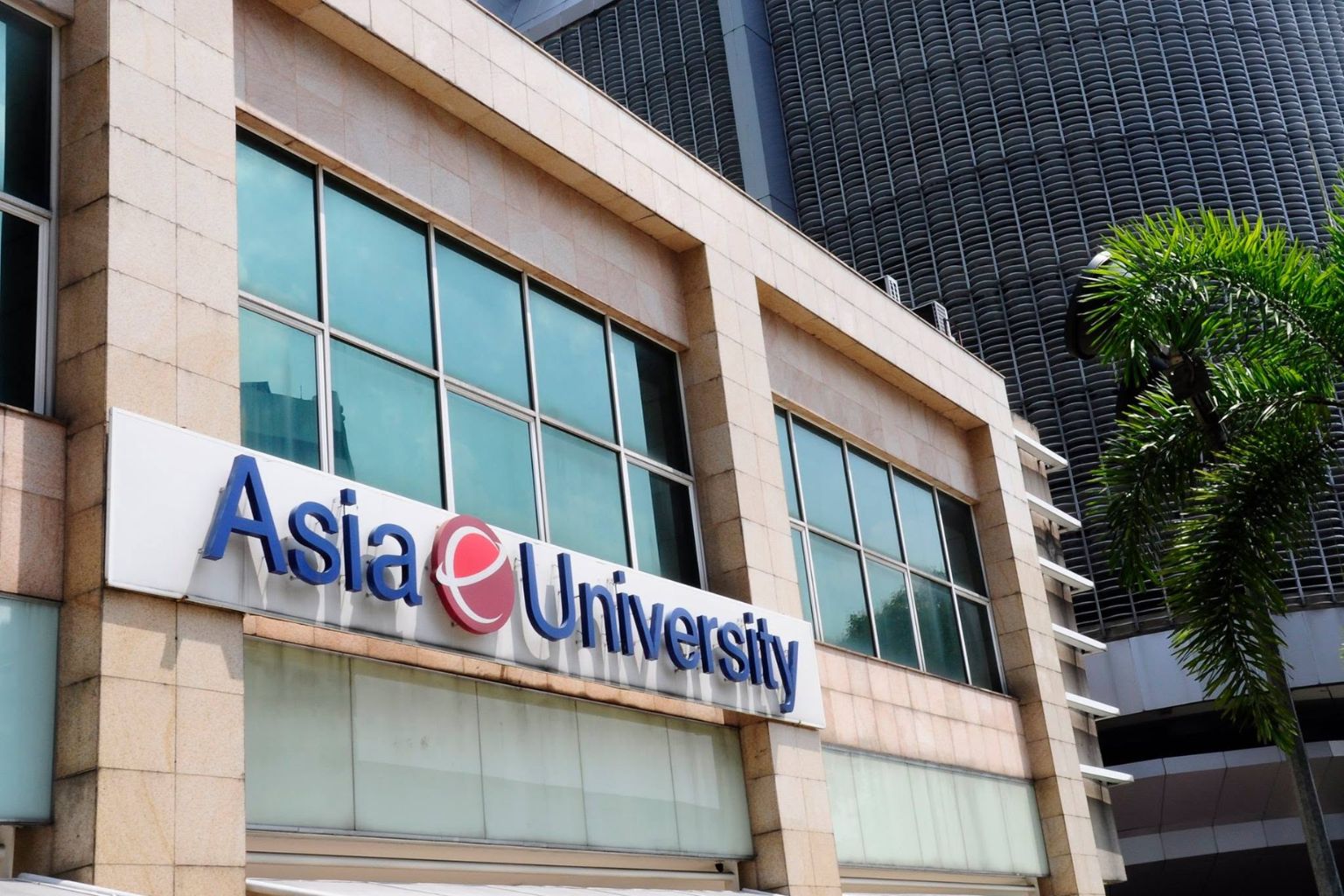
The university began operating in 2007. Its original regional purpose centred on widening access to higher education through e-learning, a history that helps explain the continuing importance of distance and digitally supported study within AeU.
The ACD relationship has a specific institutional and historical meaning. It does not make AeU a supranational university, nor does it establish automatic recognition of every AeU qualification throughout ACD countries. Historical ACD planning material linked quality assurance to Malaysia’s higher education system while also recognising the role of receiving-country authorities and professional bodies.
AeU is therefore a Malaysian private university with an ACD-linked origin and an academic model strongly associated with open and distance learning. Its Malaysian qualification status and the acceptance of a degree in another jurisdiction remain separate matters.
AeU’s main and registered address is Wisma Subang Jaya, No. 106, Jalan SS15/4, 47500 Subang Jaya, Selangor. Historical regulatory records also preserve an earlier Kuala Lumpur address, which accounts for older materials that may place the university elsewhere. The Subang Jaya address is the relevant main location in the current MQR record.
Wisma Subang Jaya is an eight-storey building used for the university’s academic and administrative operations. Identified facilities include classrooms, academic and resource areas, offices, an orientation hall, meeting and discussion rooms, conference and video-conferencing facilities, the Knowledge Centre and the Learner Service Centre.
These facilities need to be understood in relation to AeU’s delivery model. The physical campus serves a university whose students may study online, through blended arrangements or by selected campus-based routes. The institutional information available for AeU does not support describing it as a large residential campus with extensive sports infrastructure or a broad complex of specialist laboratories.
AeU also uses learning centres in Malaysia as part of its blended and distance-learning arrangements. Such centres can provide face-to-face elements for programmes that otherwise rely substantially on online study. Specific locations and partner arrangements can change, so a learning-centre network should not be treated as a fixed extension-campus system.
Location also has different practical implications for different students. A fully online learner may have little routine need to attend the Subang Jaya campus, while blended study can involve scheduled tutorials at designated centres. International students moving to Malaysia enter a separate administrative route involving full-time study and Malaysian Student Pass requirements.
AeU’s institutional administration includes both academic and governing structures. As of 2026, Professor Dr Noor Raihan Ab Hamid serves as Vice-Chancellor, while Yusoff bin Musa is identified as Registrar in the 2026 Student Handbook.
The Senate holds an important role in academic decision-making. Its responsibilities extend to matters such as specified admission decisions, academic progression, examinations, research-degree procedures and academic disciplinary outcomes.
A Board of Governors forms part of the university’s governing structure. The disciplinary appeal procedure, for example, provides a route from a Senate decision to the Chairman of the Board of Governors. This establishes a distinction between academic authority exercised through the Senate and the university’s broader governing arrangements.
Postgraduate research administration is coordinated centrally, although AeU’s naming of the relevant unit is not fully consistent. Current institutional materials use both “School of Graduate Studies” and “Centre of Graduate Studies.” The same issue affects the technology-related academic unit, where “School of Science & Technology” and “School of Artificial Intelligence & Digital Technologies” appear in different parts of the university’s online structure.
Rather than treating these labels as separate academic entities, they are better understood as unresolved naming differences within current university information.
AeU’s academic organisation covers management, education and cognitive science, technology and digital disciplines, arts, humanities and social sciences, postgraduate research and foundation study.
The most consistently identified academic units include the School of Management, School of Education & Cognitive Science and School of Arts, Humanities & Social Sciences. Technology-related study and postgraduate research are also established parts of the university’s academic organisation, subject to the naming differences noted above.
The university’s academic catalogue spans doctoral and professional doctorate study, master’s degrees, bachelor’s degrees, graduate diplomas, diploma study and foundation-level education. This range shows the breadth of qualification levels offered without implying that every programme follows the same delivery model, duration or admission route.
Doctoral provision includes the Doctor of Business Administration and Doctor of Education, together with PhD study in areas such as business administration, education, finance, humanities, information and communication technology, and social and behavioural science.
Master’s study includes management, business administration, education, human resource management, information and communication technology management and research-oriented management study.
At bachelor’s level, AeU has qualifications in areas including accounting, business administration, education, graphic design, digital creative media, new media communications, and information and communication technology. Education routes include Teaching English as a Second Language, Early Childhood Education, Teaching Malay Language in Primary School and Teaching Islamic Studies in Primary School.
Graduate diploma, diploma and foundation routes include graduate study in accounting, business management and early childhood education, alongside the Diploma in Islamic Studies and International Foundation Programme.
These examples are useful for understanding AeU’s academic range, but the university’s catalogue should not be treated as a simple count of currently accredited programmes. The MQR includes historical qualifications as well as active records. Some older qualifications, including the Master of Knowledge Management and Post Graduate Diploma in Higher Education Teaching, carry end dates. A raw total of MQR entries would therefore combine current and ceased qualifications.
For assessing the Malaysian accreditation of an AeU qualification, the Malaysian Qualifications Register is the central regulatory reference. The Malaysian Qualifications Agency maintains individual qualification records rather than one blanket entry that automatically covers every programme appearing in a university catalogue.
An MQR record can identify the formal qualification title, MQA reference, Malaysian Qualifications Framework level, credit value, mode of study, delivery method, duration and accreditation history. This is especially relevant at AeU because study modes differ between qualifications.
The Master of Business Administration, reference A9102, provides one example. Its MQR record identifies it as an MQF Level 7 master’s qualification with 42 credits, offered through ODL in full-time and part-time forms. The recorded durations are one year for full-time study and one year and eight months for part-time study.
The Bachelor of Business Administration (Honours), reference A9101, is recorded at MQF Level 6 with 120 credits and ODL delivery. Its MQR record notes an August 2023 compliance audit that maintained full accreditation.
The Master of Education, reference A9151, is recorded at MQF Level 7 with 40 credits, part-time study and ODL delivery. Its record also notes the August 2023 compliance audit maintaining full accreditation.
These records illustrate how Malaysian accreditation should be read: programme by programme. The details of one qualification cannot be applied automatically to another AeU degree with a different title, level or mode of study.
The MQR also explains why an older accreditation start date should not automatically be interpreted as evidence that a qualification has expired. For many qualifications accredited from 2007 onward, accreditation does not carry a conventional expiry date, subject to relevant maintenance and compliance arrangements. Where accreditation has ceased or been revoked, the register can record that status.
Malaysian accreditation does not by itself determine how a qualification will be treated in every other country.
An AeU degree recorded in the MQR has a defined position within Malaysia’s quality-assurance system. Recognition abroad may involve a different decision-maker depending on the intended use of the qualification. A university may assess it for further study, an employer for employment, a government authority for public-service purposes, a professional regulator for licensing, or a credential-evaluation body for formal equivalency.
This distinction is particularly important for regulated professions. MQA accreditation does not replace licensing or registration requirements imposed by a professional council in another jurisdiction. Cross-border distance qualifications may also be subject to local rules concerning foreign or online education.
AeU’s ACD origin does not remove these jurisdictional differences. The regional initiative explains the university’s historical purpose, but it should not be converted into a general statement that AeU qualifications receive automatic recognition throughout Asia or elsewhere.
Open and distance learning is a central part of AeU’s academic model, but the university does not operate through one uniform study format. Its provision includes fully online, blended and selected full-time or campus-based routes.
The approved regulatory delivery method depends on the qualification. The MQR identifies the mode attached to particular programme records, while the university’s academic arrangements determine how that mode operates for students.
AeU uses myPLS as its learning platform. The system provides access to learning materials, module and course information, schedules, forums and online academic interaction. For distance learners, myPLS works alongside electronic library access and other online services.
Blended study combines online learning through myPLS with face-to-face tutorials. The 2026 study arrangements describe tutorials as normally taking place about once a month, or three times during a semester, at a designated learning centre. Tutorial attendance is encouraged rather than stated as a universal requirement for every blended programme.
Fully online study reduces routine face-to-face attendance. AeU also provides study-from-home arrangements for international learners outside Malaysia. This does not mean that every qualification can be taken from every country under identical conditions. Programme availability, assessment arrangements and the eventual treatment of a distance qualification can vary according to programme and jurisdiction.
Selected qualifications can also use conventional or campus-based delivery. MQR records show that some AeU qualifications are classified as ODL, others as conventional, and some have more than one approved delivery method. AeU is therefore more accurately described as a multi-mode university with a strong ODL base than as an exclusively online institution.
The Knowledge Centre serves as AeU’s physical and digital library function. Its services include access to subscribed databases, electronic resources, institutional repository materials, theses and project papers, past examination papers and research-support resources.
Digital access is particularly significant within AeU’s study model because many learners do not attend the main campus regularly. Academic information and library resources are therefore part of both the physical and online university infrastructure.
The Learner Service Centre functions as a student-facing administrative point. Its areas of support include admissions, registration, academic records, fees and identification-related services.
The 2026 Student Handbook also identifies access to learning systems, library and e-library facilities, counselling, academic information, support services and formal routes for complaints or feedback. Orientation involves institutional units such as the Registry, international student affairs, the library, graduate studies and ICT services.
For online students, myPLS and digital library access are particularly important operational services. For campus users, teaching rooms, meeting facilities, conference spaces, the Knowledge Centre and administrative support complement the digital systems.
AeU’s research activity is closely linked to its postgraduate provision. Its graduate-studies function coordinates postgraduate research administration and activities intended to support research development.
Research support includes work on research planning, research paradigms and methodology, research ethics, intellectual property and technology transfer, academic writing, proposal development, literature review, research funding and publication preparation.
The university also has research-oriented qualifications. The Master of Science (Management), for example, is classified as a research programme in the MQR and carries both conventional and ODL delivery information. AeU also offers research doctorates across several academic areas.
AeU publishes the Journal of Asian Cases in Management. The journal began with an inaugural issue in October 2025, uses double-blind review and is published twice a year. Its scope covers management-related fields and case-based scholarship.
The existence of research degrees, research-support activities, repository services and an institutional journal establishes identifiable scholarly functions. These facts should not be extended into claims about research ranking, citation impact or institution-wide research intensity without separate evidence.
AeU distinguishes between international students studying remotely from another country and those physically relocating to Malaysia.
The Office of International Student Affairs (OISA) coordinates much of the university’s international-student administration. Its functions include assistance with immigration matters, orientation, medical insurance, accommodation searches and airport pickup for eligible newly arrived students. It also has responsibilities relating to student exchange and international cooperation.
International students studying from their home country can use AeU’s distance-learning arrangements where available. Students moving to Malaysia follow a different route tied to full-time study and Malaysian immigration requirements.
For international students offered a place to study physically in Malaysia, a Student Pass is required. The 2026 arrangements state that the application is submitted through the university, with status checking through Education Malaysia Global Services (EMGS). Health insurance is also part of the onshore international-student process.
Accommodation support should be distinguished from university-owned housing. OISA assists students in finding accommodation, but AeU’s institutional information does not establish a university-owned residential-college or hall system.
AeU does not use a single academic entry threshold for all programmes. Admission requirements vary by qualification level and field.
Doctoral admission can require a relevant master’s degree accepted by the Senate. Master’s programmes can distinguish between related and non-related bachelor’s degrees, minimum CGPA requirements, relevant work experience and internal assessment. Bachelor’s and foundation programmes apply their own qualification and subject requirements.
English-language requirements for international students also differ by programme. AeU connects its English Language Competency Requirements with recognised tests and CEFR levels, but no single score applies across the entire university.
Accreditation of Prior Experiential Learning, or APEL, appears within parts of AeU’s admission and credit arrangements. These routes can depend on criteria such as age, experience, programme level and assessment. APEL is therefore an alternative pathway for eligible applicants rather than a general exemption from academic admission standards.
At institutional level, the admissions sequence is best understood as programme-specific: the applicant selects the intended qualification and mode of study, checks the applicable academic and English requirements, follows the required application process and then proceeds through offer, registration and fee arrangements. International students moving to Malaysia also enter the Student Pass process.
AeU’s international activity includes cross-border distance study, support for international students in Malaysia, institutional exchange and academic cooperation.
In April 2026, the university received a delegation from the Open University of Tanzania for discussions that included open and distance learning and continuing education. This records institutional exchange but does not by itself establish a formal joint-degree arrangement.
AeU also operates professional and continuing education alongside its formal qualification portfolio. The School of Professional and Executive Education Development, commonly referred to as SPEED, provides professional-learning and online-course activities.
In September 2026, SPEED reported an agreement with Yayasan Selangor connected with the PROSPEK skills and entrepreneurship initiative. Such activity belongs to AeU’s continuing and professional education role and should remain distinct from MQR-listed degree qualifications. Short courses, professional programmes and microcredentials are not automatically equivalent to university degrees.
AeU serves Malaysian and international learners through online, blended and campus-linked study. Public university pages, however, have carried inconsistent figures for student numbers, graduate totals and the number of countries represented.
A precise current student or alumni total is therefore not used here. The same caution applies to a simple count of active programmes because MQR records include both current and historical qualifications.
No institution-wide graduate-employment rate is presented. A reliable employment figure would require a defined graduate cohort, reporting period, response rate and methodology rather than testimonials or general institutional statements.
Rankings are also separate from regulatory accreditation. A third-party ranking reflects the methodology and edition of the organisation producing it; it does not determine whether an AeU qualification is accredited in Malaysia.
For understanding AeU as an institution, its established date, Subang Jaya base, ACD-linked history, academic organisation, multi-mode delivery structure, programme-level MQR records, learning systems, research functions and student services provide a firmer basis than unreconciled scale or reputation claims.
Asia e University is a private university in Malaysia established in 2007. It is based in Subang Jaya, Selangor, and developed from Malaysia’s e-Education initiative within the Asia Cooperation Dialogue.
AeU’s main address is Wisma Subang Jaya, No. 106, Jalan SS15/4, 47500 Subang Jaya, Selangor, Malaysia.
AeU qualifications are recorded individually in the Malaysian Qualifications Register. An MQR record can identify a programme’s qualification title, MQA reference, MQF level, credits, study mode, delivery method and accreditation history.
Yes. Open and distance learning is central to AeU, with fully online and blended study forming part of its academic model. Selected qualifications can also use conventional or campus-based delivery, depending on the programme.
No. Accreditation and delivery information are programme-specific. MQR records show that AeU qualifications can differ in MQF level, credit value, mode of study, duration and delivery method.
AeU provides distance-study arrangements for international learners studying from their home country. Availability and assessment arrangements depend on the programme, while acceptance of a foreign distance qualification can also depend on the rules of the country where it will later be used.
The Office of International Student Affairs assists international students with accommodation searches. AeU’s institutional information does not establish a university-owned residential-college or hall system.
AeU’s academic portfolio includes doctoral and professional doctorate study, master’s degrees, bachelor’s degrees, graduate diplomas, diploma study and an International Foundation Programme.
