



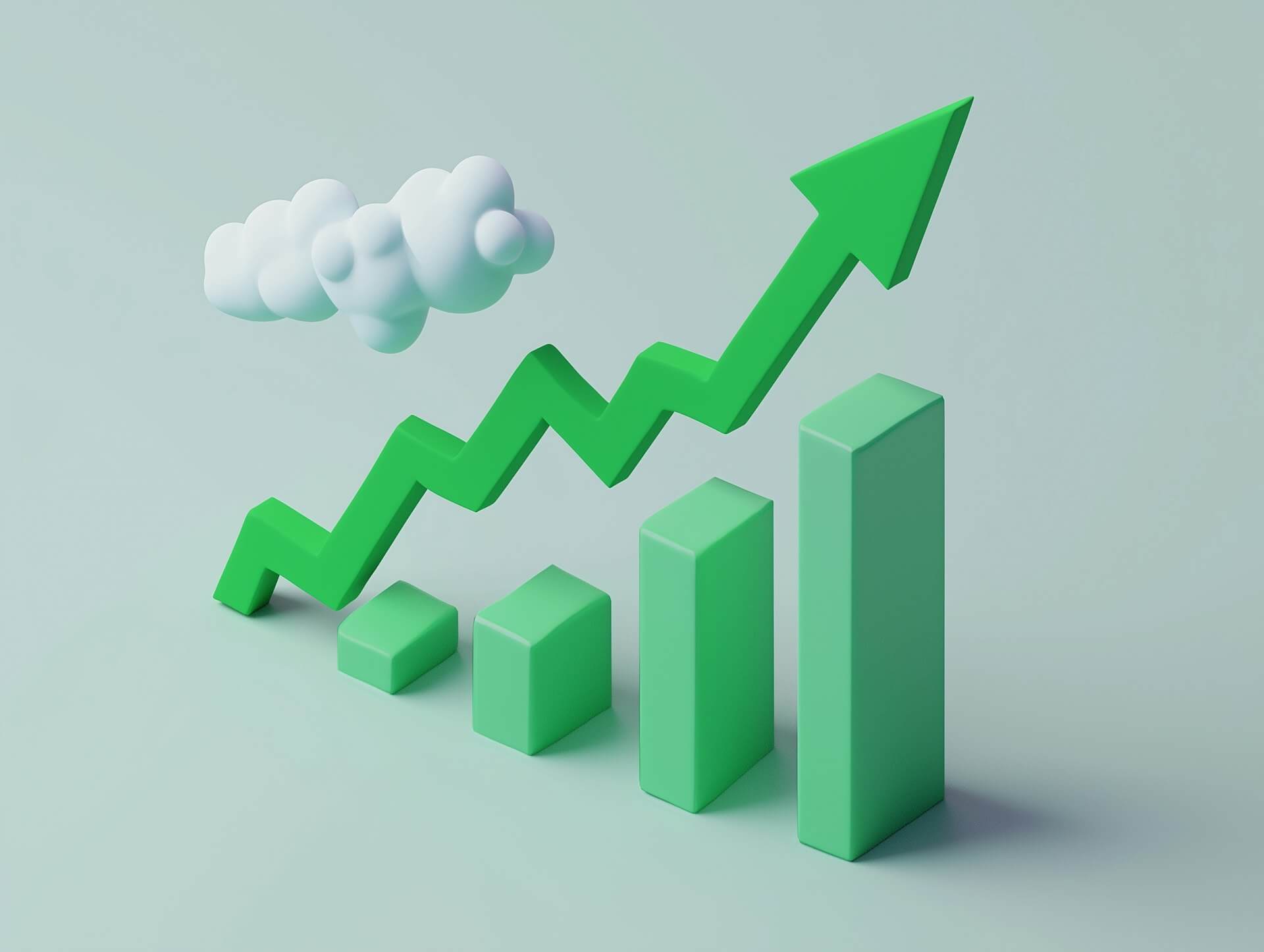
Economic forecasting is essentially about using data, economic indicators, and analytical models to get a clearer picture of where the economy might be heading. Governments and businesses rely on these forecasts to prepare for shifts in growth, inflation, employment, consumer demand, interest rates, and broader market conditions.
Now, forecasting doesn't make uncertainty disappear — nothing does. But it gives decision-makers something far better than guesswork. It lets them compare possible outcomes, plan with real information, and avoid the kind of costly mistakes that come from relying purely on assumptions.
For governments, that means smarter fiscal planning, more informed spending decisions, and better tax and debt management. For businesses, it means clearer thinking around investment, hiring, production, pricing, and risk.
Table of Content
- The Challenge: Economic Uncertainty
- How Economic Forecasting Supports Government Planning
- How Economic Forecasting Supports Business Planning
- Common Economic Forecasting Methods
- Accuracy and Limitations of Economic Forecasting
- Conclusion
The Challenge: Economic Uncertainty
Both governments and businesses have to operate without knowing exactly what's coming next. Inflation could spike. Interest rates might shift. Exchange rates move, supply chains break down, consumer confidence dips, employment changes — any of these can throw off even the most careful financial plan.
And the consequences of getting it wrong are real. Governments can end up with budget shortfalls, ballooning debt, or policies that simply don't work. Businesses can overproduce, underinvest, misread demand, or get caught flat-footed when the economy slows down.
That's precisely where economic forecasting earns its place. It gives policymakers and business leaders a structured, disciplined way to think through what's likely ahead.
How Economic Forecasting Supports Government Planning
Fiscal Policy and Budget Planning
When governments sit down to build budgets, they're working with forecasts whether they realize it or not. Projections of GDP growth, inflation, employment, and household income all feed into decisions about taxation, welfare spending, infrastructure, and public services.
Say forecasts point toward slower economic growth — a government might rethink its spending priorities or put measures in place to support employment and investment. If inflation looks like it's going to stay high, fiscal policy may need to shift to take some of the pressure off prices.
It's worth noting that interest rate decisions typically sit with central banks, not governments. But fiscal policy and monetary policy are deeply connected, and both often respond to the same economic signals.
Debt Management
Forecasting also helps governments answer a fundamental question: can we actually afford what we're planning to borrow? If growth is expected to slow, tax revenues will likely fall, and the pressure on public finances grows.
Having reliable forecasts lets officials think clearly about borrowing needs, repayment capacity, and whether the debt path is sustainable over time. That matters enormously for maintaining investor confidence and keeping the financial system stable.
Public Spending Priorities
Where and when to spend public money is never a purely economic question — but forecasting gives it a much stronger factual foundation. When growth looks healthy, governments can lean into investment in infrastructure, education, healthcare, or technology. When the outlook is weaker, the focus tends to shift toward essential services, targeted support, or pulling back on spending.
The political dimension never goes away, but good forecasting at least ensures those decisions are grounded in evidence.
How Economic Forecasting Supports Business Planning
Market Trends and Consumer Demand
For businesses, economic forecasts are really about understanding people — specifically, how changing economic conditions might affect what customers want and can afford. Inflation, employment levels, wages, interest rates, and consumer confidence all shape spending behavior in pretty direct ways.
When the economy is humming along, people and businesses tend to spend more freely. When things tighten up, demand softens and customers become much more price-conscious. Good forecasting lets companies get ahead of those shifts — adjusting production, inventory, pricing, and marketing before the changes hit.
Resource Allocation and Risk Management
Forecasting also shapes how businesses deploy their resources — capital, people, materials, and more. If demand looks set to grow, a company might build up inventory, bring on more staff, or invest in capacity. If the outlook is softer, the smarter move might be to control costs, hold off on expansion, or build up cash reserves.
Beyond day-to-day planning, forecasting is a real risk management tool. It gives businesses the lead time to develop contingency plans, diversify their supplier base, review debt exposure, or adjust revenue strategies before economic pressure starts to bite.
Investment and Expansion Decisions
Some of the biggest calls a business makes — entering new markets, opening new locations, buying equipment, adopting new technology, or acquiring a competitor — are often shaped by economic forecasts. When growth is expected, companies are more willing to take those leaps. When a downturn looks likely, the wiser move is often to protect liquidity, delay large commitments, and focus on running things more efficiently.
Common Economic Forecasting Methods
Time Series Analysis
Time series analysis looks at historical data to spot patterns that repeat over time — trends, cycles, seasonal swings — in things like sales figures, inflation, unemployment, or GDP growth.
It works well when the past gives you genuine insight into the future. The catch is that it can struggle when something unexpected breaks the historical pattern entirely.
Econometric Models
Econometric models go a step further by using statistical methods to map out the relationships between economic variables. How does a shift in interest rates affect consumer spending? What happens to investment when inflation rises? These models let analysts test different scenarios and understand the knock-on effects of policy or market changes.
Governments, financial institutions, and large businesses use them regularly to stress-test assumptions and explore "what if" questions.
Trend Analysis
Trend analysis is simpler — it focuses on the general direction things are moving over time. Businesses use it to pick up on shifts in consumer demand, technology adoption, cost pressures, or industry growth patterns.
It's particularly useful for longer-term planning, but it works best when paired with other methods. Trends can reverse quickly, and relying on them alone can leave you caught off guard.
Accuracy and Limitations of Economic Forecasting
Data Quality Matters
A forecast is only as good as the data behind it. Governments and businesses draw on national statistics, financial data, industry reports, surveys, and market research — and when that underlying data is strong, the forecasts tend to be stronger too.
But even the best data can't make forecasts perfect. Pandemics, wars, financial crises, natural disasters, political upheaval, sudden regulatory shifts — these things can make yesterday's forecast look like ancient history almost overnight.
Technology and Forecasting
Technology has genuinely changed the game here. Artificial intelligence, machine learning, and advanced data tools can process enormous datasets, spot patterns humans might miss, and refresh forecasts far faster than traditional methods ever could.
That said, technology doesn't eliminate uncertainty — it just helps you work within it more effectively. Sound economic judgment, careful model design, and regular review still matter just as much as ever.
Reducing Forecasting Risk
Since no forecast comes with a guarantee, it's risky to hang everything on a single prediction. The smarter approach is to run multiple models, compare different scenarios, revisit assumptions regularly, and plan for a range of outcomes rather than just one.
Scenario planning, sensitivity analysis, and stress testing all help decision-makers understand how their plans might hold up under different conditions — which is really the whole point.
Conclusion
Economic forecasting isn't about predicting the future with certainty — it's about making better decisions in the face of uncertainty. For governments, it supports revenue estimates, debt management, spending priorities, and evidence-based policy. For businesses, it informs investment planning, resource allocation, demand anticipation, and risk preparation.
Forecasts will always have limits. But in a world where the economic ground can shift quickly, having a disciplined, structured way to think about what's coming makes a very real difference — to the quality of decisions, the strength of plans, and the resilience of strategies when things don't go exactly as expected.





Comments 0
No comments yet. Be the first to start the conversation.