Adarsha Multiple Campus (आदर्श बहुमुखी क्याम्पस, धादिङ) is a community-based, non-profit campus located in Gajuri, Dhading. Established in 2063 BS (2007 AD), AMC was founded through the collective commitment of local education advocates, social workers, parents, and community leaders to expand access to higher education in southern Dhading.
The campus is affiliated with Tribhuvan University (TU) and runs academic programs in Education and Management. Alongside bachelor-level programs, AMC has expanded to postgraduate study through the Master of Education (M.Ed.), supporting learners who seek university education close to home.
| Item | Details |
|---|---|
| College Name | Adarsha Multiple Campus (AMC) / आदर्श बहुमुखी क्याम्पस |
| Location | Gajuri, Dhading, Nepal (Ward No. 1 of the former Gajuri rural municipality) |
| Established | 2063 BS (2007 AD) |
| Type | Community-based, non-profit campus |
| Affiliation | Tribhuvan University (TU) |
| Faculties | Education, Management |
| Programs | B.Ed., BBS, M.Ed. |
| Campus Area | 13.5 ropanis (initially 13 ropanis managed through local and government support) |
| Student Community | About 300 students |
| Local Identity | Commonly known as “Buhari Campus” due to strong participation of married women continuing higher education |
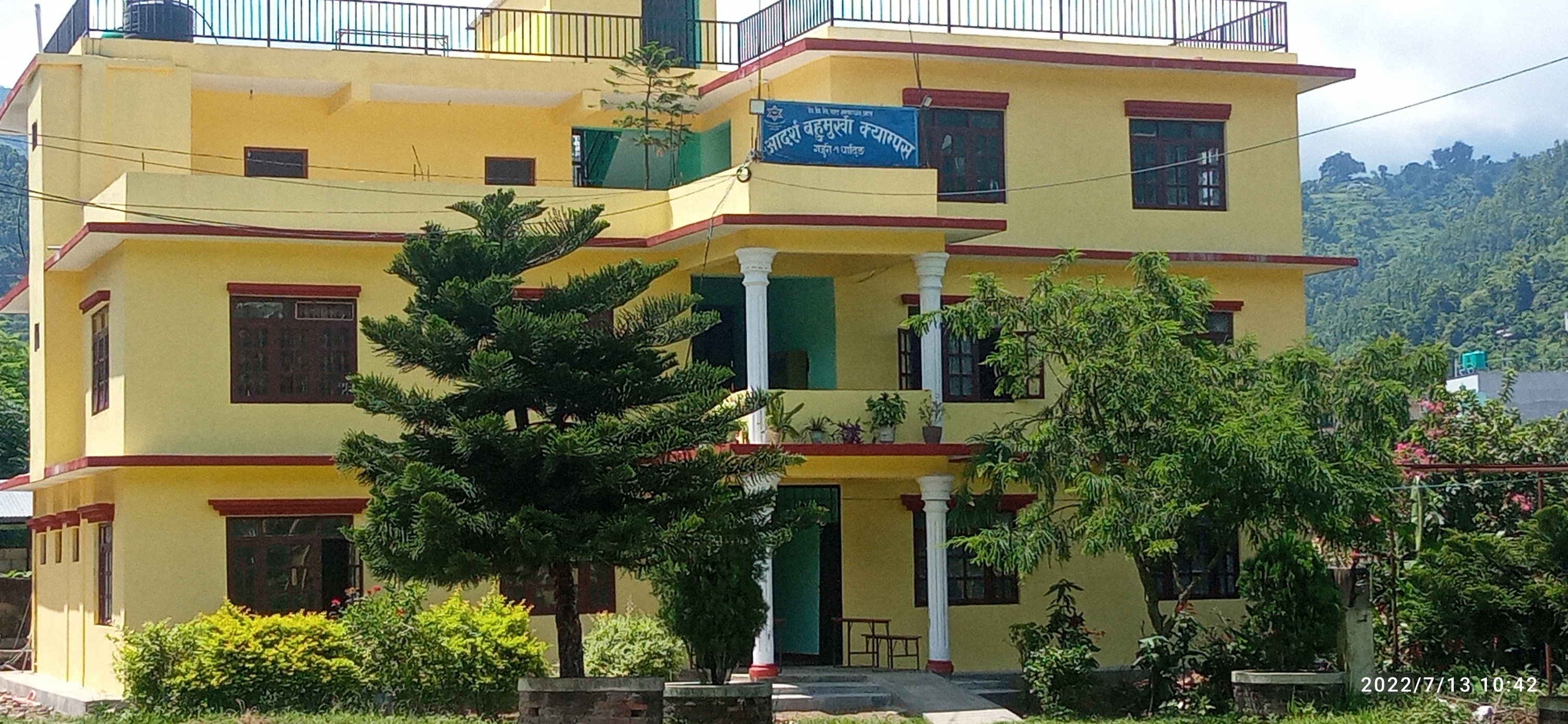
AMC was established through a shared local vision to bring higher education to communities that faced barriers to city-centered study due to economic and family responsibilities. The campus was founded with the initiation of Rajendra Prasad Pandey, recognized for his public leadership and social engagement.
Land management was an early institutional priority. With NPR 5,000,000 support from the Ministry of Local Development and strong local contribution, the campus developed access infrastructure, managed 13 ropanis of land, and constructed a 7-room permanent building. Continued institutional development has been supported by bodies such as the Dhading District Council, the University Grants Commission (UGC), and the Gajuri Village Council, alongside community labor and local partnership.
AMC’s institutional direction centers on expanding access to higher education at community level while supporting academic growth, civic responsibility, and practical competence among students.
AMC operates through structured committees that support governance, administration, and academic functions. Key committees include:
Finance Committee
Procurement Committee
Construction Committee
Grievance Hearing Committee
Purchase Committee
Extracurricular Activities (ECA) Committee
Scholarship Distribution Committee
Examination Committee
Academic leadership includes the Campus Chief and program coordination roles, including M.Ed. coordination. Administrative and student services include dedicated support such as library/EMIS and campus operations staff.
AMC runs TU-affiliated bachelor’s programs in Education and Management:
Bachelor of Education (B.Ed.)
Bachelor of Business Studies (BBS)
Within the Education stream, subject areas taught include:
Nepali Education
English Education
Population Education
Economics Education
AMC offers postgraduate study through the Master of Education (M.Ed.), running since 2075 BS. At master’s level, subject areas include:
Nepali Education
Education Planning and Management (EPM)
Teaching and academic delivery at AMC is supported by faculty across Education, Management, English, Nepali, Population, and related academic areas. Academic coordination supports program continuity, internal evaluation, and student guidance.
Learning support structures include:
Library services with library management oversight
EMIS (Education Management Information System) support and record management
Student support and guidance systems, including Student Quality Circle (SQC) and Student Support and Guidance Committee (SSGC)
Academic assessment includes internal examinations and structured academic monitoring. AMC has an Examination and Internal Evaluation Committee (EIAC), established on 2076 Kartik 22, strengthening internal assessment practices and quality assurance in examinations, result processing, and academic reporting.
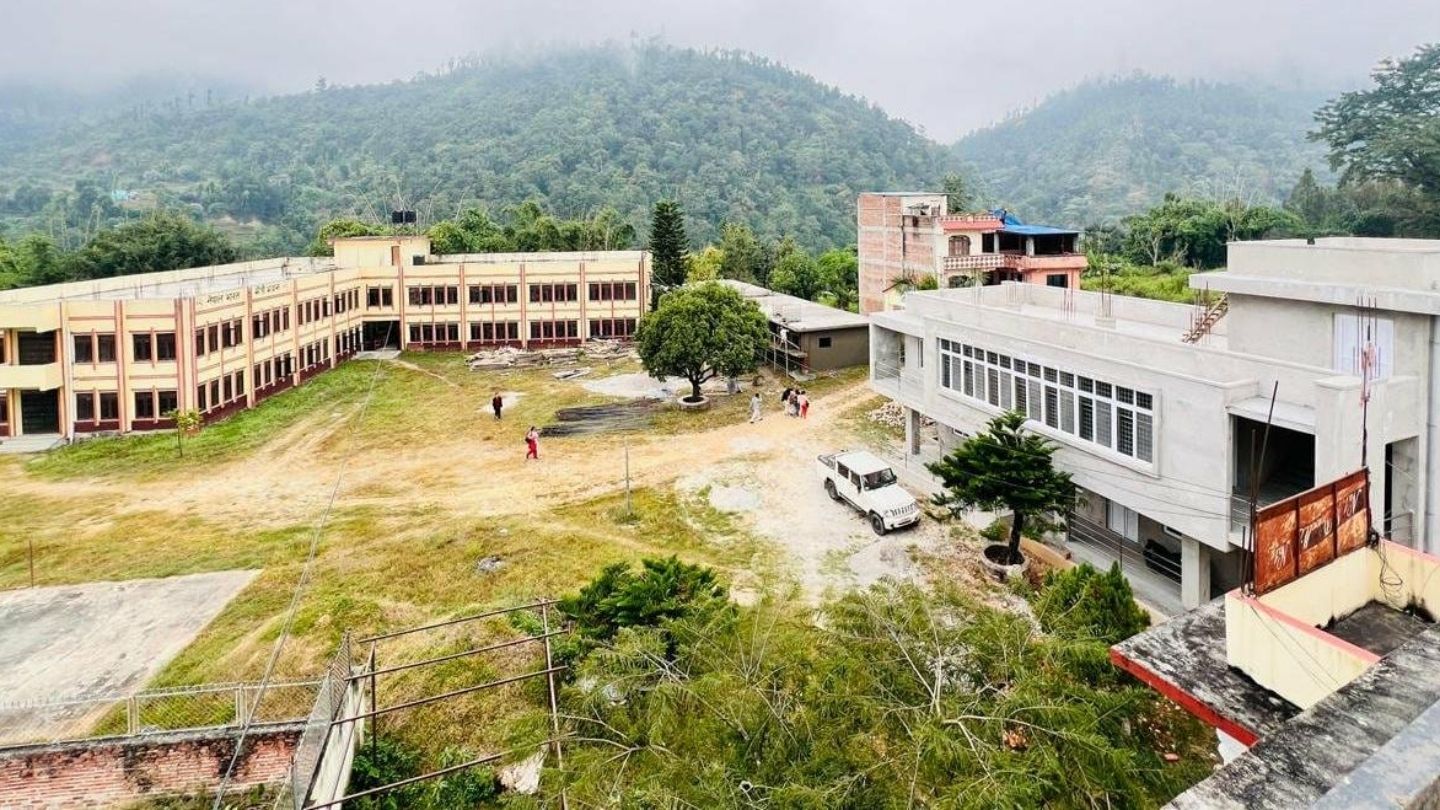
AMC operates on its own land and has built essential infrastructure through community investment, institutional grants, and development support. Core facilities and services include:
Campus landholding spanning 13.5 ropanis
Classroom and administrative spaces developed through phased construction
Library and learning resource management
Internet and communication services used for academic administration
Campus transport support (vehicle operations are part of annual income and expenditure management)
Planned campus initiatives include:
Placement of CCTV cameras in priority areas
Improved canteen management
Student health-support coordination, including arrangements for sick-room support through local cooperation
Student hygiene support, including a sanitary-pad vending mechanism for students
AMC serves a diverse student population from Dhading and surrounding areas. The campus is widely known as “Buhari Campus,” reflecting a strong culture of married women continuing higher education alongside family responsibilities.
Student engagement includes structured extracurricular programming. On the occasion of the 19th anniversary, AMC conducted ECA activities during 2081/11/01 to 2081/11/06, including:
Volleyball and badminton
Musical chair, chess competitions
Poem and essay writing competitions
Awards, trophies, medals, and certificates were distributed through campus leadership under the coordination of the ECA Committee.
Scholarship support is a key part of AMC’s community mandate. The campus provides full and partial scholarships for students from disadvantaged backgrounds, including learners from economically constrained families, Dalit communities, indigenous groups, and students facing social barriers.
Scholarship distribution is included as a structured financial head in campus planning and budgeting. Institutional financing also reflects support through:
Student fees
University Grants Commission (UGC) grants
Local government support (including Gajuri Rural Municipality)
Provincial support (listed as Province No. 3)
QAA-related support aligned to benchmark needs
AMC has engaged in structured quality assurance work aligned with the QAA process. Milestones in QAA engagement include:
Letter of Intent (LOI) submission to QAA: May 24, 2019
Self-Assessment Tool (SAT) submission to QAA: September 10, 2023
Self-Study Report (SSR) and annex submissions to QAA: February 5, 2025
Institutional development planning includes budgeting for QAA-related activities, research and journal functions through the Research Management Cell (RMC), and structured student guidance systems.
Adarsha Multiple Campus (AMC) stands as a community-rooted TU-affiliated institution in Gajuri, Dhading, created to widen access to higher education through local ownership and sustained institutional development. With bachelor programs in Education and Management and the addition of M.Ed. at postgraduate level, AMC continues to serve students seeking university education within their community environment while strengthening governance, academic evaluation, and quality assurance systems.
AMC is located in Gajuri, Dhading, established as a community higher-education institution serving southern Dhading and surrounding areas.
AMC is affiliated with Tribhuvan University (TU).
AMC offers B.Ed., BBS, and M.Ed. programs under TU affiliation.
AMC has been running the Master of Education (M.Ed.) program since 2075 BS, including study areas in Nepali Education and Education Planning and Management (EPM).
AMC spans 13.5 ropanis of land, developed through phased land management and infrastructure work.
AMC is popularly known as “Buhari Campus” because many married women and daughters-in-law continue higher education through the campus.
AMC runs extracurricular and anniversary programs including sports and academic competitions such as volleyball, badminton, chess, essay writing, and poetry activities.
Contact Adarsha Multiple Campus's administrative office for detailed information on the course, admissions, location, fees, scholarships, facilities, counseling or eligibility.
Adarsha Multiple Campus, Dhading
Email Address: amcgajuri616@gmail.com
Phone Number: +977-10-692020, +977-10-402332
Location: Gajuri Bazar-1, Dhading