Bardibas Janata Multiple Campus (बर्दिवास जनता बहुमुखी क्याम्पस, महोत्तरी) is a community-based higher education institution in Bardibas, Mahottari, Madhesh Province, Nepal. Established in 2007 AD (2064 BS), the campus was founded through the collective effort of social workers, teachers, educationists, academics, and local organizations.
It is affiliated with Tribhuvan University and approved by the University Grants Commission of Nepal. The campus offers bachelor’s and master’s programs in Management and Education and maintains a focus on accessible higher education, academic development, and institutional improvement.
Established: 2007 AD (2064 BS)
Institution Type: Community-based, non-profitable campus
Location: Bardibas, Mahottari, Madhesh Province, Nepal
Affiliation: Tribhuvan University
Approval: University Grants Commission of Nepal
Programs Offered: BBS, B.Ed., M.Ed.
Program Duration: Four-year full-time bachelor’s programs; two-year master’s program
Scholarship Support: Economically backward, Janajati, Dalit, and Madhesi students
Key Facilities: Library, E-lab, science lab, computer lab, multimedia, sports, counseling, conference hall, journal, and extracurricular activities
Contact: +977-44-550118, +977-44-550363 | bjmc2064@gmail.com | www.bjmc.edu.np
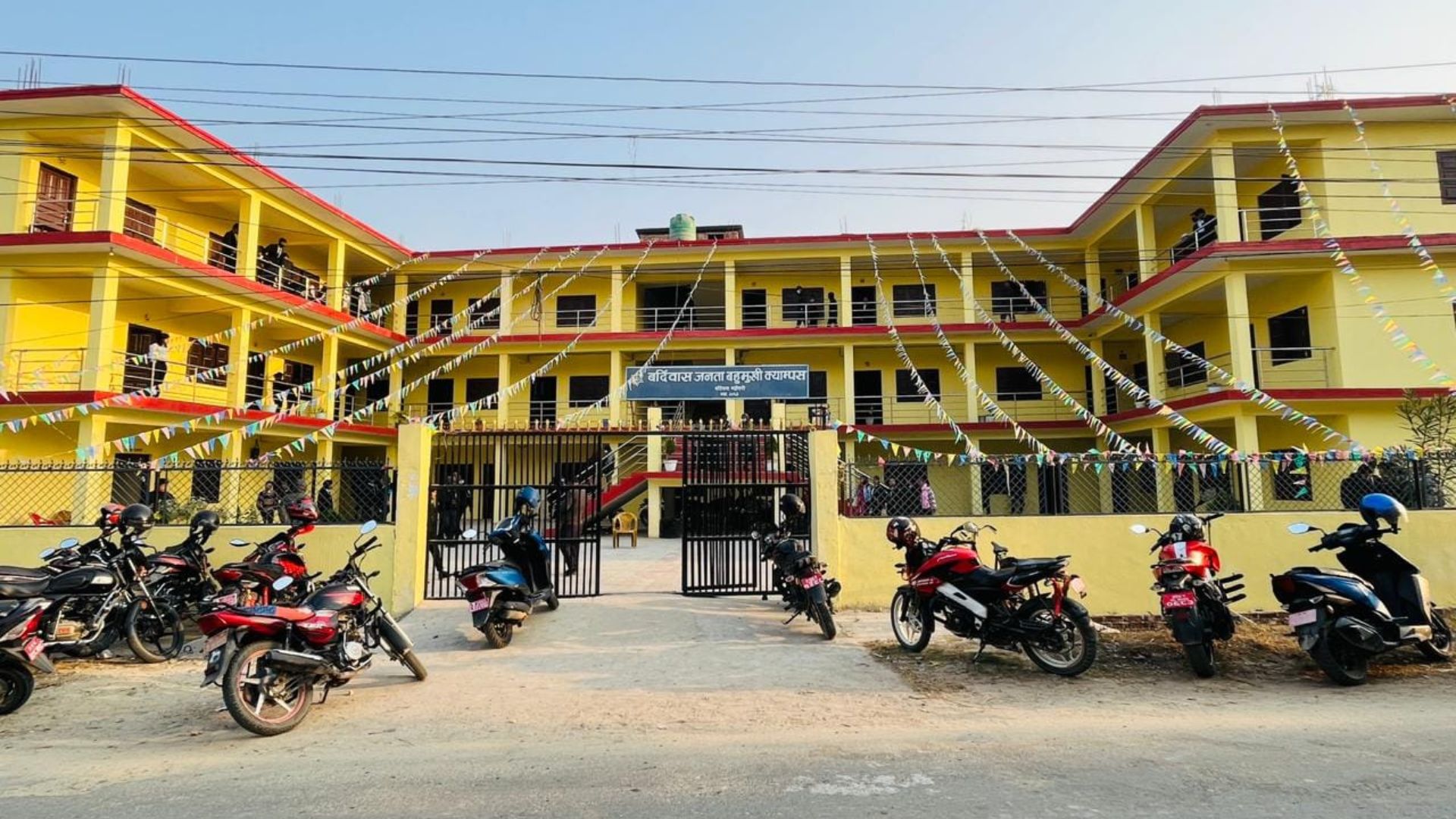
Bardibas Janata Multiple Campus serves students from the western part of Mahottari district and nearby areas. It was established to expand access to higher education at an affordable cost within the local community. Its community-based foundation remains central to its identity and institutional purpose.
The campus reflects a model of higher education shaped by local participation and public-minded academic service. Its establishment involved educationists, social workers, businesspersons, local leaders, and other stakeholders who contributed to building an institution intended to serve the region. That orientation continues to shape its academic direction and institutional priorities.
The campus has grown through a process of steady institutional development. Earlier challenges included finance, infrastructure, institutional systems, student enrollment, and pass percentage. These conditions became part of the broader push toward academic improvement, stronger administration, and long-term planning.
An important stage in this process was its selection for Performance Based Funding under the Higher Education Reforms Project. Under the related memorandum of understanding, the campus prepared a five-year strategic plan. This planning framework linked academic quality, relevance, efficiency, infrastructure management, staff management, and internal systems with the goal of institutional strengthening.
The campus also moved forward through the UGC quality process. Progress in infrastructure, financial condition, staff management, self-study work, and quality-oriented development formed part of this phase. Institutional improvements included work related to research structures, digital library development, reference materials, broadband Wi-Fi, presentation facilities, and designated spaces for academic and administrative functions.
The vision of Bardibas Janata Multiple Campus is to become a sustainable higher educational institution through sound academic programs. Its mission is centered on expanding and strengthening academic and job-oriented programs that contribute qualified and competent human resources needed by the nation.
Its institutional goal is defined as academic excellence through research-oriented academic programs. The campus also emphasizes equitable access to quality higher education for students seeking academic advancement.
Its stated objectives include increasing stakeholder participation, implementing market-oriented courses, creating a supportive academic environment, increasing student enrollment and pass percentage, encouraging student participation in campus activities, extending physical facilities, strengthening library services with modern information technology, increasing the enrollment of educationally deprived students from the catchment area, and attracting highly qualified human resources.
The campus also prioritizes institutional reform, support for unprivileged and disadvantaged students, the promotion of lecturer research, improvement of physical facilities, wider use of information technology, the introduction of technical subjects, progress toward QAA certification, and stronger student participation in campus life.
Bardibas Janata Multiple Campus offers academic programs in the faculties of Management and Education. At the bachelor’s level, it runs the Bachelor of Business Studies (BBS) and Bachelor of Education (B.Ed.), both identified as four-year full-time programs under Tribhuvan University affiliation. At the master’s level, it offers the Master of Education (M.Ed.), a two-year (4 Semesters) program.
Admission, course curriculum, annual examinations, and results follow Tribhuvan University rules, guidelines, and the university’s annual calendar. Students who successfully complete their studies receive the respective certificate from Tribhuvan University.
The academic profile of the campus remains focused and clearly defined. Its principal offerings are concentrated in Management and Education, reflecting both its current academic structure and its broader commitment to strengthening existing programs while improving academic quality and support systems.
The campus provides a range of facilities and services that support teaching, learning, and student engagement. These include a library, sports facilities, science lab, computer lab, multimedia support, journal access, counseling, classrooms, conference hall, dance, music, tour activities, and extracurricular activities.
Library development and academic resource expansion form an important part of the campus environment. Students have access to an open-access library system and E-lab facilities. The campus has also worked toward strengthening digital access and reference support as part of its broader academic development.
Additional improvements include broadband Wi-Fi, classroom support materials, and presentation-based learning practices. Together, these resources contribute to a more supportive environment for both academic work and student participation beyond the classroom.
Research and quality development are part of the campus’s ongoing institutional direction. The campus has initiated research activity through the formation of RMC and has established internal structures related to IQAC, SAT, departments, staff rooms, the account section, and the information desk. These developments indicate an effort to strengthen both academic coordination and administrative organization.
Its strategic planning framework connects institutional challenges with the need for improved performance, stronger academic outcomes, and better efficiency. At the same time, the campus recognizes the importance of sustained effort in maintaining effective academic and administrative systems.
Campus leadership has also placed emphasis on quality assurance. The institution achieved the LOI certificate from UGC, Nepal, and remains in the process of QAA. This reflects a continuing effort to strengthen academic standards while maintaining regular university programs.
Bardibas Janata Multiple Campus provides scholarships for economically backward, Janajati, Dalit, and Madhesi students. This scholarship support aligns with its broader commitment to equitable access and inclusion in higher education.
Its community-based character is closely tied to this educational mission. The campus was founded through collective local effort and continues to function as a regional academic institution with a strong public-service orientation. Affordable education, local participation, and stakeholder engagement remain central to its institutional identity.
The chairperson’s message emphasizes affordable education, community effort, and support from founders, parents, students, and stakeholders. It also reflects the campus’s public character and its continuing work on quality assurance. The message is signed by Bharat Bahadur Hamal, Chairperson.
The campus chief’s message reflects on the campus’s 17-year journey since 2064 and notes the achievement of the LOI certificate and movement toward Quality Assurance and Accreditation. It also emphasizes the campus environment, qualified and trained lecturers, and the role of efficient human resources in maintaining academic standards. The message is signed by Chet Bahadur Khadka, Campus Chief.
Together, these messages reinforce the campus’s core themes of community foundation, affordable higher education, academic progress, staff contribution, and institutional development.
The student code of conduct presents academic life as a combination of discipline, responsibility, and institutional respect. Students are expected to follow campus acts, rules, procedures, notices, and directives issued by the concerned authority. Regular students are expected to remain active in the prescribed academic program and stay dedicated to study with diligence and effort.
The code also expects students to uphold the dignity, prestige, and reputation of the campus while maintaining goodwill and courtesy toward others. Respectful behavior toward campus officials, teachers, and staff is a formal expectation. Students are also prohibited from providing false information related to age, address, academic qualification, or other records in matters related to admission, scholarships, medals, concessions, or institutional responsibilities.
Administrative responsibilities are also clearly defined. Students are expected to pay campus fees on time, carry identity cards, wear the prescribed dress, return borrowed library materials, and clear dues after the completion of the academic session.
The prohibited activities section covers both academic and behavioral conduct. Unauthorized public meetings, exhibitions, sports events, dances, songs, dramas, film screenings, cultural programs, or entertainment activities are not allowed without approval. The campus also prohibits vandalism, abusive or indecent behavior, disruption of the academic environment, pollution of the premises, misuse of campus property, entry into restricted areas, and unauthorized entry into academic spaces during teaching hours.
The code further prohibits entering the campus after consuming intoxicants, smoking, alcohol, or other addictive substances. It also restricts the use of mobile phones in campus premises and during examinations. These rules reflect a structured approach to discipline, campus safety, and the maintenance of an orderly learning environment.
Contact Bardibas Janta Multiple Campus's administrative office for detailed information on the course, admissions, location, fees, scholarships, facilities, counseling or eligibility.
Campus Name: Bardibas Janata Multiple Campus
Phone Number: +977-44-550118, +977-44-550363
Website: www.bjmc.edu.np
Email: bjmc2064@gmail.com
Location: Bardibas, Mahottari, Madhesh Province, Nepal
The campus is affiliated with Tribhuvan University.
The campus was established in 2007 AD (2064 BS).
It is located in Bardibas, Mahottari, Madhesh Province, Nepal.
The campus offers Bachelor of Business Studies (BBS), Bachelor of Education (B.Ed.), and Master of Education (M.Ed.).
BBS and B.Ed. are four-year full-time bachelor’s programs, and M.Ed. is a two-year program.
Yes. The campus provides scholarships for economically backward, Janajati, Dalit, and Madhesi students.
Admission, course curriculum, annual examinations, and results follow Tribhuvan University rules, guidelines, and the TU annual calendar.
The campus includes a library, E-lab, science lab, computer lab, multimedia support, sports facilities, journal access, counseling, classrooms, conference hall, dance, music, tour activities, and extracurricular activities.
Students who successfully complete their studies receive the respective certificate from Tribhuvan University.
Students are expected to follow campus rules, remain active in their studies, respect teachers and staff, maintain discipline, carry identity cards, wear the prescribed dress, and avoid prohibited activities.