In the history of higher education in Nepal, Tribhuvan University (TU) has played a foundational role. Among the different faculties under the university established in Bikram Sambat (BS) 2016, the Faculty of Management (FOM) is regarded as the largest and one of the most dynamic faculties. The main academic and administrative hub that leads this faculty is the Central Department of Management (CDM).
Located at the university campus in Kirtipur, Kathmandu, this department is not only an academic unit but also a center for management education policy-making in Nepal, curriculum development, and the production of high-level human resources.
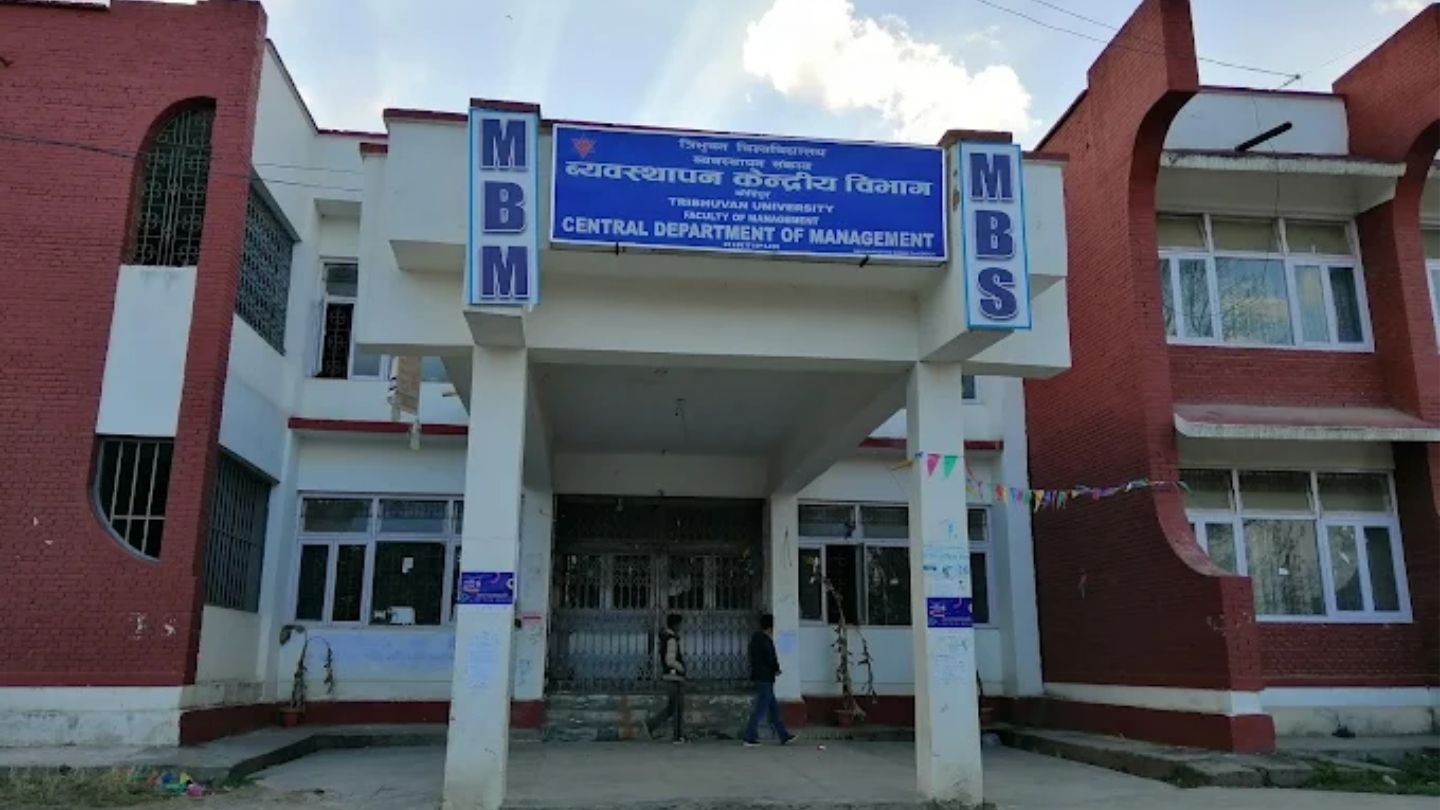
When observing the foundation and development of higher education in Nepal, the role of Tribhuvan University stands out as paramount. Among TU’s academic units, the Faculty of Management is considered one of the most dynamic and extensive faculties. As the academic leadership center of this faculty, the Central Department of Management (CDM) is established at Kirtipur, Kathmandu.
The journey of commerce education that began alongside the establishment of Tribhuvan University in BS 2016 has been refined over time and has reached today’s modern discipline of management. This department is not limited to classroom-based academics; it is a key pillar for management education policy-making in Nepal, curriculum development, and the production of highly skilled human resources.
Through programs mainly at the graduate (Master’s), M.Phil, and PhD levels, the department has been producing leadership-oriented human resources needed for the country’s economic, financial, and administrative sectors. Programs such as MBS, MBA, MBM, MTTM, and MHM strengthen students theoretically while also giving equal priority to market-based practical needs and applied skills.
Situated in the calm and natural academic environment of the Kirtipur campus, the department aims to provide international-standard education at low cost. Teaching approaches here place particular emphasis on research, case studies, and practical work.
With the establishment of Tribhuvan University, the foundation of modern education in Nepal was laid. In the early days, this field was limited to commerce, but over time it developed into management.
In the BS 2030s, as the industrial and banking sectors began to expand in Nepal, the need for skilled managers was strongly felt. To meet this need, TU reformed its commerce department and established it as the Central Department of Management. As of today, this department has been providing high-level education from undergraduate to graduate, M.Phil, and PhD levels.
The Central Department of Management mainly runs Master’s-level and higher programs. The programs operated here can be classified as follows.
The largest and most popular program at CDM is the Master of Business Studies (MBS). In recent years, the department has also introduced various specialized programs in line with market demand.
Previously operated under an annual system, this program is now fully based on the semester system. Students can specialize in Accounting, Finance, Marketing, and Human Resource Management (HRM). This program is particularly intended for students who want to pursue higher education alongside employment and for those interested in research.
The MBA program run by CDM is full-time in nature. It emphasizes practical skills, leadership capacity, and entrepreneurship. Case studies, group discussions, and internships are made mandatory.
This program is designed especially for preparing candidates for mid- and higher-level managerial roles. It addresses managerial challenges in both the public and private sectors.
Considering Nepal’s tourism potential, this program is conducted to produce high-level human resources for the tourism sector.
For those who want to develop expertise in the hotel and hospitality sector, this is a strong technical and managerial academic program.
To develop intellectual leadership in the field of management, CDM runs the following programs.
This is a preparatory stage before pursuing a PhD, and it is also a complete academic degree in itself. It provides students with deep knowledge of research methodology and theories.
For scholars who want to make an original contribution in the field of management, this is the highest degree. CDM supervises and manages PhD studies with specialization across different areas.
To gain admission to CDM, students must pass a highly competitive process. This process is transparent and merit-based.
To enter most Master’s-level programs, students must pass the CMAT examination conducted by the Faculty of Management. This exam has four main sections:
Verbal Ability: Tests English grammar and vocabulary.
Quantitative Ability: Questions related to arithmetic, algebra, and statistics.
Logical Reasoning: Measures analytical ability.
General Awareness: Knowledge of current affairs, the economy, and the business world.
After passing CMAT, the final merit list is published based on academic qualification (Bachelor’s percentage), group discussion, and interview.
A major advantage of the central department being located in Kirtipur is the infrastructure and academic environment.
CDM has its own dedicated library for management studies. In addition, because TU’s Central Library is nearby, students gain access to millions of books, journals, and online databases.
The department has a separate research cell that publishes a reputed journal named “Management Dynamics.” It encourages
students and faculty to write and publish research papers.
Because the role of technology in modern management is significant, the department provides a computer lab and Wi-Fi facilities.
One of CDM’s strongest aspects is its faculty members. Prominent economists, management experts, and policy-makers in Nepal teach here. Most faculty members hold PhD degrees and have research experience at both national and international levels.
Teachers do not only deliver textbook-based education; they also share practical experiences related to Nepal’s industrial environment and government policies. This helps students understand real market conditions.
Currently, all programs at CDM are based on the semester system. Key features and points students should pay attention to include:
Continuous Assessment: Unlike the annual system, it is not enough to take only an end-of-year exam. Attendance, class participation, presentations, and internal exams play a major role.
Strict Schedule: Since a semester finishes within about six months, students must pay close attention to time management.
Practical Work: The semester system emphasizes assignments and practical work more than purely theoretical learning.
Graduates from CDM have strong demand in the market. Alumni find opportunities in the following areas:
Banking and Financial Sector: Many senior positions in Nepal’s banks and financial institutions are held by CDM graduates.
Government Service (Public Service): For those with a management background, there are strong opportunities in Nepal Administrative Service and the accounts group.
Corporate Sector: Managerial roles in multinational companies, cement industries, and service sectors.
Entrepreneurship: Many students are starting their own startups and businesses.
Academic Sector: Opportunities to teach in colleges and work in research institutions.
As a government institution, CDM’s fees are much lower and more affordable than private colleges.
Regular Quota: Study is available at a low fee.
Full Paying: Some programs require slightly higher fees, but these are still cheaper than private institutions.
Scholarships: Various scholarships are available under merit-based and inclusive (quota system) provisions. There is also a provision to waive fees for students who top each semester.
Tribhuvan University’s Central Department of Management (CDM) is a widely recognized name in Nepal’s management education. Studying here is not only about earning a degree; it also involves closely understanding Nepal’s economic and managerial environment.
Strengthen foundational knowledge: While preparing for CMAT, do not focus only on mathematics and English; also take interest in contemporary economic issues.
Be active: Do not limit yourself to the classroom; participate in seminars and workshops held in the department.
Networking: Studying in Kirtipur helps build connections with students from different backgrounds and regions, which becomes an invaluable asset for future careers.
Self-study: In TU’s environment, students must put in more effort on their own. Teachers are facilitators; the ultimate source of knowledge is your own study.